
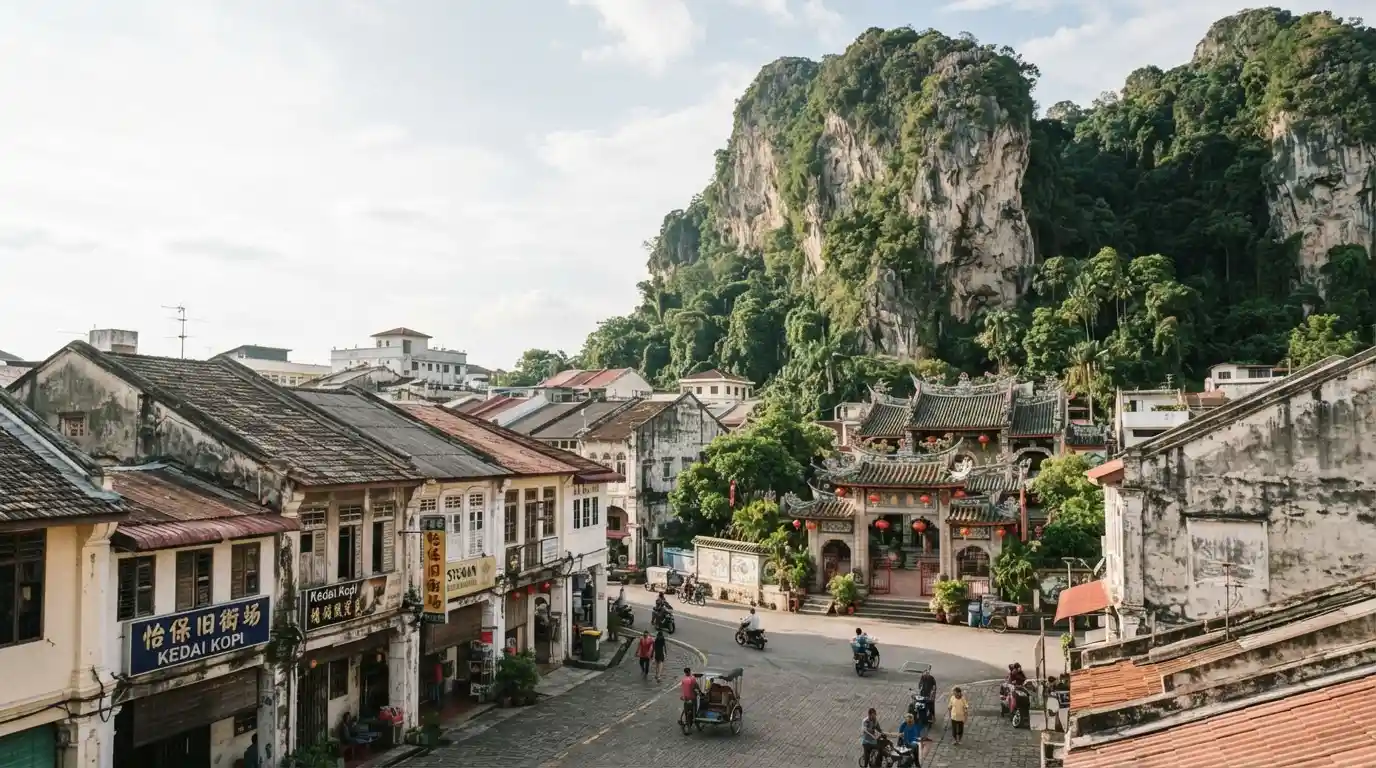
From the atmospheric streets of Old Town to the dramatic limestone hills surrounding the city, there are plenty of things to see and do in Ipoh. Whether you are planning a weekend getaway, a family trip, a food-focused vacation, or a longer Malaysia itinerary, these attractions can help you experience the city’s different sides.
If you enjoy discovering destinations around the world, you may also want to explore our guides to places to visit around the world and top places to visit around the world for additional travel inspiration.
Why Visit Ipoh?
Ipoh has a distinctive character shaped by its history as a major tin-mining center. Today, the city blends heritage buildings and traditional neighborhoods with modern cafés, restaurants, recreational attractions, and natural scenery.
The surrounding Kinta Valley is particularly appealing to travelers who enjoy limestone landscapes. Several dramatic hills and cave temples sit close to the city, making it possible to combine cultural sightseeing with nature without spending hours traveling between attractions.
Ipoh can also work well as part of a wider Southeast Asian vacation. Travelers comparing destinations may find inspiration from our guides covering places to visit in New Zealand, places near Manila in the Philippines, and places to visit in Saitama, Japan.
1. Ipoh Old Town
Ipoh Old Town is one of the best places to begin exploring the city. Historic streets, traditional shop houses, cafés, murals, and heritage architecture give this part of Ipoh a distinctive atmosphere.
Walking through Old Town is an easy way to experience the city at a relaxed pace. Stop for local food, explore small shops, photograph historic buildings, and take your time discovering the streets rather than trying to rush through every attraction.
For travelers who enjoy historic urban destinations, our guide to the Asian side of Istanbul offers another example of how local neighborhoods can become an important part of a travel itinerary.
2. Concubine Lane
Concubine Lane is one of Ipoh’s most recognizable heritage streets. The narrow lane is lined with traditional buildings, cafés, food stalls, souvenir shops, and small businesses.
It is a good place to explore on foot, particularly if you want to combine sightseeing with local snacks and shopping. The compact layout also makes it easy to include Concubine Lane while exploring other parts of Ipoh’s Old Town.
3. Kek Lok Tong Cave Temple
Kek Lok Tong is one of the most memorable attractions around Ipoh. The temple is built within a limestone cave and combines religious architecture with dramatic natural surroundings.
Inside the cave, visitors can see Buddhist statues and distinctive rock formations before continuing toward the gardens and open areas beyond the cave. The combination of limestone scenery, gardens, and peaceful surroundings makes it particularly appealing to visitors interested in culture and nature.
4. Sam Poh Tong Temple
Sam Poh Tong is another major cave temple in Ipoh’s Gunung Rapat area. The attraction combines a place of worship with limestone scenery and traditional religious artwork.
The surrounding landscape adds to the experience, especially for travelers who enjoy photographing natural formations alongside cultural landmarks. It can also be combined with other nearby cave temples during the same outing.
5. Perak Tong Cave Temple
Perak Tong Cave Temple is located on the northern side of Ipoh and is known for its large Buddha statue, colorful murals, and cave setting. Visitors who are comfortable with stairs can climb higher into the limestone hill for elevated views of the surrounding area.
Because of the combination of architecture, religious artwork, limestone formations, and panoramic scenery, Perak Tong is worth considering when planning a cultural sightseeing day in Ipoh.
6. Lost World of Tambun
Families looking for things to do in Ipoh should consider Lost World of Tambun. The attraction combines water-based activities, amusement rides, wildlife experiences, natural hot springs, and adventure activities in a limestone setting.
It can be particularly useful for family itineraries because different travelers can enjoy different activities in the same destination. Some visitors may prefer water attractions and rides, while others can spend time around the natural hot springs or animal-related experiences.
If family travel is your priority, you can also explore our guide to family-friendly places to visit in Puerto Rico, as well as places in France to visit with kids.
7. Tasik Cermin
Tasik Cermin, often associated with its mirror-like appearance, is a scenic natural attraction surrounded by limestone formations. It offers a quieter alternative to the busier attractions in central Ipoh.
The combination of water, greenery, and towering limestone scenery makes this a strong choice for travelers interested in photography and nature. It is also an excellent addition to an itinerary that already includes the cave temples around Gunung Rapat.
8. Birch Memorial Clock Tower
The Birch Memorial Clock Tower is an important historical landmark in Ipoh. Located near the city’s heritage district, the clock tower provides an easy stop while exploring the surrounding streets.
Travelers interested in architecture and history can combine the clock tower with Old Town, Concubine Lane, and other nearby heritage attractions to create a walking-focused sightseeing route.
9. Ipoh Railway Station
Ipoh Railway Station is another notable architectural landmark. Its distinctive design has earned it a place among the city’s recognizable historic structures.
Even if you are not traveling by train, the station can be included in a heritage itinerary. Its location also makes it convenient to visit alongside other central attractions.
10. Han Chin Pet Soo
Han Chin Pet Soo offers an opportunity to learn more about Ipoh’s tin-mining heritage and the history of the city’s Chinese community. The attraction is particularly interesting for travelers who want their visit to include more than sightseeing and photography.
Understanding Ipoh’s mining history adds context to the city’s development and helps explain why the surrounding Kinta Valley became such an important economic area.
11. Qing Xin Ling Leisure and Cultural Village
Qing Xin Ling is a recreational and cultural destination that combines natural scenery with themed structures and outdoor spaces. Its setting among limestone hills gives visitors a chance to enjoy a slower-paced experience away from the busiest parts of the city.
It can work particularly well for travelers who want to mix sightseeing with scenic walks and photography.
12. Gunung Lang Recreational Park
Gunung Lang Recreational Park provides another opportunity to experience Ipoh’s limestone scenery. The park’s combination of greenery, water, and dramatic rock formations creates a relaxing environment for visitors.
It is a useful option when you want a break from museums, heritage buildings, and busy shopping areas. Nature-focused travelers may want to include it alongside Tasik Cermin and the nearby cave temples.
13. Geological Museum
The Geological Museum is a good choice for visitors interested in the natural history of Perak and the geology behind the region’s distinctive landscape.
A museum visit can make the limestone hills around Ipoh more meaningful because travelers gain additional context about the rocks, minerals, fossils, and geological features associated with the region.
14. Kinta Riverfront Walk
The Kinta Riverfront area offers a more relaxed way to experience Ipoh, particularly later in the day. The riverfront environment provides space for walking and enjoying the city’s atmosphere without following a tightly scheduled sightseeing route.
Consider adding a riverfront walk after visiting central heritage attractions, especially if you want to slow down before dinner.
15. Kellie’s Castle
Kellie’s Castle is located outside central Ipoh in Batu Gajah, making it a worthwhile nearby excursion. The unfinished mansion has an unusual history and distinctive architectural character.
Its combination of heritage, mystery, and unusual architecture makes it appealing to photographers and travelers who enjoy exploring historic buildings. It is particularly practical to visit as part of a day that includes other attractions around the wider Kinta Valley.
16. Ipoh’s Local Food Scene
No guide to the best places to visit in Ipoh Malaysia would be complete without mentioning food. Ipoh is widely associated with dishes and drinks that have become part of the city’s identity.
Look for local specialties such as Ipoh white coffee, chicken with bean sprouts, traditional noodles, dim sum, and other dishes served in neighborhood restaurants and heritage cafés.
Food-focused travelers can also compare Ipoh’s culinary experiences with destinations covered in our guide to other travel destinations in the sitemap while planning a broader Malaysia itinerary.
Best Time to Visit Ipoh
Ipoh can be visited throughout the year, but weather conditions can influence outdoor activities. If you plan to explore limestone attractions, parks, and outdoor heritage sites, it is useful to keep flexible plans in case of rain.
Morning sightseeing can be especially comfortable for walking-heavy itineraries. You can then spend the hotter part of the day in cafés, museums, shopping areas, or other indoor attractions before continuing in the afternoon.
Seasonal travel planning is also useful when comparing destinations. For example, travelers planning trips at different times of year can explore our guides to Albania in winter, Europe in winter, and places to visit in fall.
How Many Days Do You Need in Ipoh?
A two- or three-day trip can provide enough time to experience many of Ipoh’s major attractions without making the itinerary unnecessarily rushed.
Day 1: Focus on Old Town, Concubine Lane, the Railway Station, Birch Memorial Clock Tower, local cafés, and heritage attractions.
Day 2: Explore the cave temples, limestone landscapes, and natural attractions around the city, including places such as Kek Lok Tong, Sam Poh Tong, Perak Tong, or Tasik Cermin.
Day 3: Visit Lost World of Tambun, Qing Xin Ling, or take a nearby excursion to Kellie’s Castle depending on your interests.
Tips for Exploring Ipoh
- Wear comfortable shoes because several attractions involve walking or stairs.
- Start outdoor sightseeing earlier in the day when possible.
- Allow extra time for cave temples and scenic areas rather than treating them as quick photo stops.
- Keep some flexibility in your schedule for weather changes.
- Try local food instead of limiting your meals to familiar international restaurants.
- Consider staying near the heritage district if you want easy access to Old Town attractions.
- For attractions outside the city center, plan transportation in advance.
More Travel Inspiration
If Ipoh is part of a larger travel-planning project, you can continue exploring destinations across our travel collection. Consider reading about the best places to visit in the Northeast in winter, places to visit in the Eastern US, or unique places in North America.
You can also compare Ipoh with international destinations through our guides to Greece, Bali, unique places in Japan, and Ireland.
Final Thoughts
The best places to visit in Ipoh Malaysia range from historic streets and traditional food spots to peaceful cave temples, limestone landscapes, family attractions, museums, and nearby heritage sites. What makes Ipoh particularly interesting is the way these experiences fit together within a relatively compact destination.
For a first visit, combine Ipoh Old Town and Concubine Lane with several cave temples, a nature-focused attraction such as Tasik Cermin, and either Lost World of Tambun or Kellie’s Castle. Add plenty of time for local food, and you can experience a much broader picture of Ipoh than a simple checklist of tourist attractions provides.



