
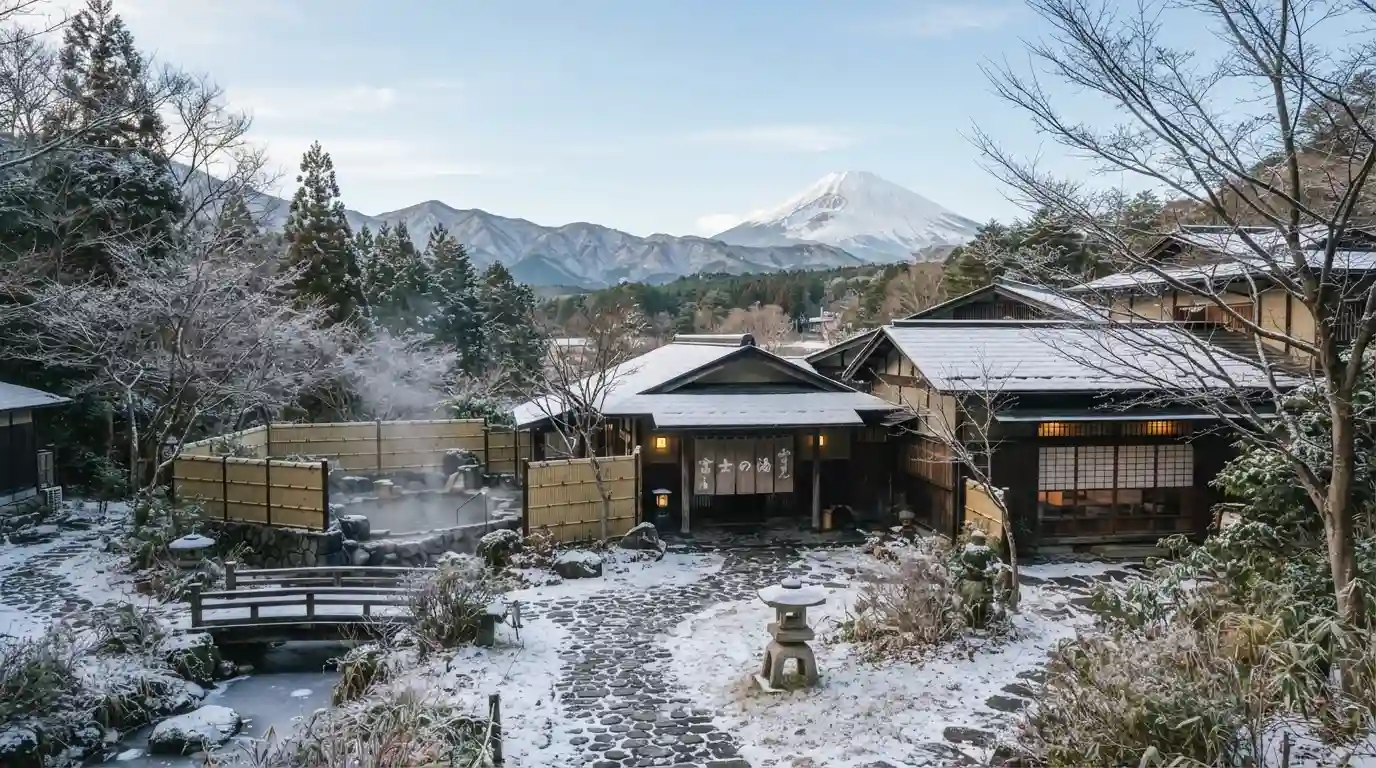
From the hot springs of Hakone and Kusatsu Onsen to the snowy mountains of Yuzawa and the historic temples of Nikko, there are plenty of winter day trips and overnight escapes to choose from. Some destinations are ideal for a quick day trip, while others are better suited to an overnight stay.
Best Places to Visit Near Tokyo in Winter
The best winter destinations near Tokyo depend on the experience you want. Hakone is a strong choice for hot springs and mountain scenery, Kawaguchiko is excellent for Mount Fuji views, Nikko combines culture with snowy mountain landscapes, and Yuzawa is one of the easiest choices for reliable snow and winter sports.
- Hakone: Best for hot springs, mountain scenery, and a relaxing escape
- Kawaguchiko: Best for winter views of Mount Fuji
- Nikko: Best for temples, waterfalls, forests, and snow
- Kusatsu Onsen: Best for a traditional snowy hot spring town
- Yuzawa: Best for skiing and reliable winter snow
- Kamakura: Best for temples, history, and a quieter coastal day trip
- Enoshima: Best for winter coastal scenery and views
- Karuizawa: Best for a peaceful mountain getaway
- Minakami: Best for hot springs, snow, and outdoor activities
- Chichibu: Best for mountain scenery and a quieter escape
- Yokohama: Best for an easy urban day trip
- Mount Takao: Best for a short winter hiking escape
1. Hakone
Hakone is one of the easiest winter escapes from Tokyo and a particularly good choice if you want to combine hot springs with mountain scenery. The area is known for its onsen, Lake Ashi, museums, forested mountains, and views toward Mount Fuji on clear days.
Winter can be especially enjoyable in Hakone because the cold weather makes an outdoor hot spring experience even more appealing. You can spend part of the day exploring the area before relaxing in a traditional bath or staying overnight at a ryokan.
The famous Hakone sightseeing route also gives visitors several ways to experience the region, including mountain railways, cable cars, ropeways, buses, and the sightseeing boats on Lake Ashi. Weather can change quickly in the mountains, so keep your itinerary flexible if Mount Fuji views are a priority.
Why visit Hakone in winter?
- Excellent onsen experiences
- Mountain scenery and Lake Ashi
- Possibility of clear Mount Fuji views
- Easy to visit as a day trip or overnight stay
- Good selection of museums and traditional accommodations
2. Lake Kawaguchiko
Lake Kawaguchiko is one of the best places near Tokyo for dramatic winter views of Mount Fuji. The colder season often brings clearer visibility, making winter a particularly attractive time for photographers and travelers hoping to see the iconic mountain.
The lake sits within the Fuji Five Lakes region and offers several viewpoints along the shoreline. On a clear morning, the snow-covered summit of Mount Fuji can create an impressive backdrop across the lake.
Winter mornings can be very cold, so dress in layers and plan outdoor sightseeing around daylight hours. If you have enough time, consider staying overnight so you can experience both sunset and early-morning views.
Best things to do around Kawaguchiko
- Photograph Mount Fuji from the lake
- Walk along the lakeshore
- Visit local viewpoints and observation areas
- Relax at a hotel or ryokan with a mountain view
- Explore nearby Fuji Five Lakes attractions
3. Nikko
Nikko is a rewarding winter destination for travelers who want to combine Japanese history with mountain scenery. The area is home to famous shrines and temples, cedar forests, lakes, waterfalls, and higher-elevation landscapes that can receive substantial snow during winter.
The lower parts of Nikko do not always have deep snow, but the higher Okunikko area around Lake Chuzenji can provide a much more wintry landscape. Frozen waterfalls, snowy forests, and quiet mountain roads can make the region feel dramatically different from Tokyo.
Nikko is also a good option for travelers who want more than scenery. The area’s historic religious sites provide an opportunity to experience some of Japan’s most important cultural attractions during a quieter season.
4. Kusatsu Onsen
Kusatsu Onsen is one of the most atmospheric winter destinations within reach of Tokyo. This mountain hot spring town is particularly appealing when snow covers the streets and steam rises from the hot spring waters.
The town’s central Yubatake, or hot water field, is its most recognizable landmark. The surrounding streets contain traditional inns, restaurants, shops, public baths, and foot baths, making Kusatsu a destination where the hot spring culture is part of the entire experience rather than just one attraction.
Because the journey is considerably longer than trips to Hakone or Kamakura, Kusatsu is better suited to an overnight stay. Staying in a ryokan and enjoying an onsen after walking through the snowy town can make the extra travel worthwhile.
5. Yuzawa
For travelers specifically looking for snow, Yuzawa is one of the strongest choices near Tokyo. Located in Niigata Prefecture, the area is well known for heavy winter snowfall, ski resorts, snow activities, and hot springs.
One of Yuzawa’s biggest advantages is accessibility. The Joetsu Shinkansen can connect Tokyo with the region quickly, making it possible to enjoy a snow-filled day without spending hours on local roads.
Gala Yuzawa is particularly convenient for visitors who want a straightforward introduction to winter sports. Even if you do not ski, snow parks, mountain scenery, and hot spring experiences provide alternatives.
Why choose Yuzawa?
- Reliable winter snow
- Multiple ski resorts
- Easy Shinkansen access from Tokyo
- Snow activities for non-skiers
- Hot springs and mountain scenery
6. Kamakura
Kamakura is one of the easiest winter day trips from Tokyo and works well for travelers who prefer temples, history, and coastal scenery instead of deep snow.
The historic city is famous for its temples and shrines, including the Great Buddha at Kotoku-in and Tsurugaoka Hachimangu. Winter generally brings fewer visitors than the busiest sightseeing periods, which can make exploring the historic streets more comfortable.
You can also combine Kamakura with nearby Enoshima for a full day of sightseeing. The coast can be chilly in winter, but clear days may provide beautiful views across Sagami Bay.
7. Enoshima
Enoshima is another excellent winter escape if you want ocean views rather than snow. The island is located close enough to combine with Kamakura, creating a varied day trip that includes temples, coastal scenery, local food, and viewpoints.
Winter can be a pleasant time to explore Enoshima because the cooler season can bring clearer skies and excellent visibility. On suitable days, views toward Mount Fuji add another dimension to the coastal landscape.
Allow enough time to explore the island’s pathways, viewpoints, gardens, and caves. Comfortable walking shoes are useful because the island involves stairs and walking on uneven sections.
8. Karuizawa
Karuizawa is a popular mountain resort destination that takes on a quieter atmosphere during winter. Located in Nagano Prefecture, it offers snowy scenery, forests, shopping, cafés, and outdoor activities.
The area is a good choice if you want a relaxed winter escape without building the entire trip around skiing. You can explore the resort area, enjoy seasonal scenery, shop at local outlets, or simply spend time in a mountain hotel.
Karuizawa can also be combined with other destinations in a longer Japan itinerary, particularly for travelers who want to experience a change from Tokyo’s urban environment.
9. Minakami
Minakami is another strong option for travelers looking for snow, hot springs, and mountain scenery. The area in Gunma Prefecture is known for its outdoor activities and traditional onsen experiences.
Winter brings opportunities for skiing and snow-related activities, while hot springs provide a relaxing way to finish the day. Minakami is particularly appealing to travelers who want a more nature-focused escape rather than a conventional sightseeing town.
Some attractions around the region are spread out, so check transportation and weather conditions before planning a winter itinerary.
10. Chichibu
Chichibu offers a quieter alternative to some of the better-known destinations around Tokyo. Its mountain landscapes, shrines, traditional atmosphere, and outdoor attractions make it suitable for travelers who want to experience a less urban side of the region.
Winter can be peaceful in Chichibu, particularly on clear days when the surrounding mountains stand out against the cold sky. The destination is also useful for travelers who want a day trip that feels different from Tokyo without committing to a long-distance journey.
Because winter temperatures can be low in the mountains, dress appropriately and check local transportation conditions before leaving Tokyo.
11. Yokohama
Yokohama is one of the easiest places to visit near Tokyo in winter because it combines urban attractions with waterfront scenery and excellent food. It is close enough to visit for a few hours or spend an entire day.
Winter is a good time to explore areas such as the waterfront, historic districts, Chinatown, and shopping areas without dealing with the heat and humidity of summer.
Yokohama is also a convenient choice if you want an easy trip with minimal transportation planning. You can return to Tokyo the same evening without needing accommodation outside the capital.
12. Mount Takao
Mount Takao is one of the most convenient nature escapes from central Tokyo. The mountain is close enough for a half-day or full-day outing and offers hiking trails, forest scenery, temples, and viewpoints.
Winter hiking can be particularly enjoyable on clear days when the air is crisp and visibility is good. Snow is not guaranteed, so Mount Takao is better for travelers who want winter mountain scenery rather than a dedicated snow destination.
Wear suitable footwear and check trail conditions before hiking, especially after rain, ice, or snowfall.
How to Choose the Best Winter Day Trip From Tokyo
The best destination depends on the experience you want. If you are primarily interested in snow, Yuzawa is a strong choice. For hot springs, Hakone and Kusatsu Onsen stand out. If Mount Fuji is the priority, Kawaguchiko offers some of the most recognizable winter scenery.
| Destination | Best For | Winter Experience | Trip Style |
|---|---|---|---|
| Hakone | Onsen and scenery | Mountain views and hot springs | Day trip or overnight |
| Kawaguchiko | Mount Fuji | Clear winter views | Day trip or overnight |
| Nikko | Culture and nature | Snowy mountains and historic sites | Day trip or overnight |
| Kusatsu Onsen | Hot springs | Snow-covered onsen town | Overnight |
| Yuzawa | Snow and skiing | Deep snow and winter sports | Day trip or overnight |
| Kamakura | History | Quiet temples and coast | Day trip |
| Enoshima | Coastal scenery | Winter sea views | Day trip |
| Karuizawa | Mountain escape | Snow and resort atmosphere | Day trip or overnight |
| Minakami | Outdoor activities | Snow and onsen | Day trip or overnight |
| Chichibu | Nature | Mountain scenery | Day trip |
| Yokohama | Urban sightseeing | Waterfront and food | Day trip |
| Mount Takao | Hiking | Crisp mountain air | Half or full day |
When Is the Best Time for Winter Day Trips From Tokyo?
December can be a good choice if you want cooler weather without the deepest winter conditions. January and February are generally more suitable if your priority is snow, skiing, or snowy mountain scenery.
Snow conditions vary considerably by elevation and destination. Tokyo itself may have little or no lasting snow while mountain destinations several hours away can be covered in snow. Always check the local forecast and transportation conditions before traveling.
Tips for Visiting Places Near Tokyo in Winter
Check the weather before leaving
Winter weather can affect mountain transportation, visibility, and road conditions. A destination that looks perfect on a clear day can be much less enjoyable when heavy snow or fog arrives.
Start early
Winter daylight hours are shorter than in summer. Leaving Tokyo early gives you more time to explore before sunset and reduces the risk of returning after the busiest evening travel period.
Dress for the destination
Temperatures in Tokyo can be significantly warmer than those in mountain destinations. If you are heading to Nikko, Yuzawa, Kusatsu, or another snowy area, bring warm layers, waterproof footwear, gloves, and suitable outerwear.
Allow extra time for winter transportation
Snow and ice can affect trains, buses, and mountain roads. Avoid planning an itinerary with extremely tight connections, especially when traveling to higher elevations.
Consider staying overnight
Destinations such as Kusatsu, Hakone, Kawaguchiko, Nikko, and Minakami can be more enjoyable when you stay overnight. An extra night gives you more time for hot springs, evening walks, early-morning scenery, and a slower pace.
Final Thoughts
The best places to visit near Tokyo in winter range from snowy mountain resorts and traditional hot spring towns to historic temple cities and coastal escapes. You do not need to travel extremely far from Tokyo to experience a completely different side of Japan during the colder months.
Choose Yuzawa if snow is your main goal, Hakone or Kusatsu Onsen for hot springs, Kawaguchiko for Mount Fuji scenery, Nikko for culture and mountains, and Kamakura or Enoshima for an easier coastal day trip. With the right destination and a little flexibility around weather, winter can be one of the most rewarding seasons for exploring the area around Tokyo.



