
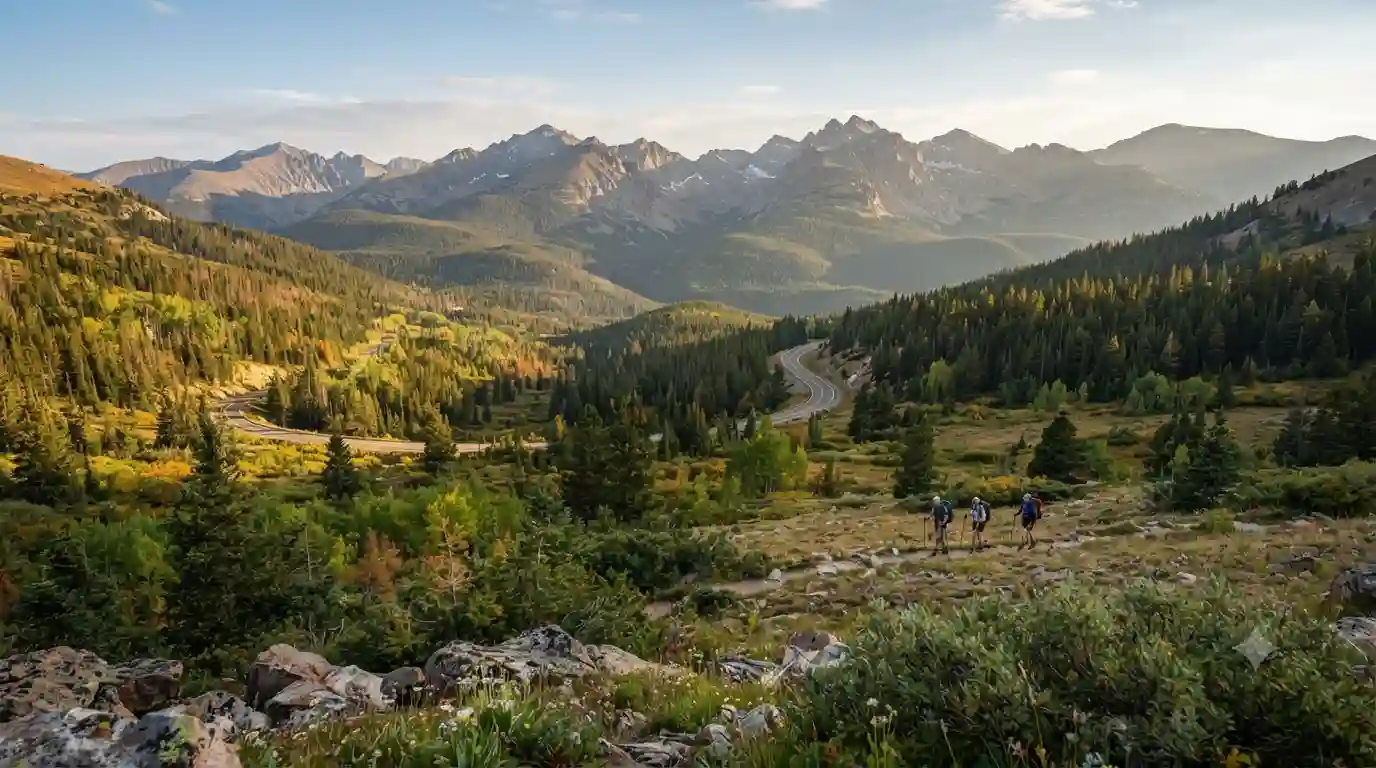
The best mountain destination depends on what you want from the trip. Some places are ideal for hiking and national parks, others for skiing and winter activities, while mountain towns such as Asheville, Jackson, Aspen, and Gatlinburg combine spectacular scenery with restaurants, lodging, culture, and year-round attractions.
This guide focuses on some of the most rewarding mountain destinations in the United States and explains what makes each one worth visiting, the best activities to consider, the ideal seasons, and how to choose the right mountain getaway for your travel style.
Why Visit the Mountains?
Mountain vacations offer much more than dramatic views. They create opportunities to disconnect from busy cities and spend time outdoors, whether that means hiking through forests, watching wildlife, exploring waterfalls, skiing snowy slopes, or simply enjoying a scenic drive.
The National Park Service highlights mountain landscapes across the Appalachians, Rockies, Sierra Nevada, Cascades, Alaska Range, and other regions, demonstrating just how geographically diverse America’s mountain destinations are.
Mountain trips can also work throughout the year. Summer brings hiking and sightseeing, fall adds colorful foliage, winter creates opportunities for skiing and snow activities, and spring can offer waterfalls, wildflowers, and quieter trails depending on elevation and location.
Best Places to Visit in the Mountains
1. Asheville, North Carolina
Best for: Blue Ridge scenery, food, arts, scenic drives, and couples
Asheville is one of the best mountain destinations in the eastern United States because it combines mountain scenery with a lively cultural scene. The city sits near the Blue Ridge Mountains and provides easy access to scenic roads, hiking areas, waterfalls, and mountain communities.
Visitors can explore downtown Asheville, drive sections of the Blue Ridge Parkway, visit the Biltmore Estate, discover local galleries, and use the city as a base for outdoor adventures.
For travelers who prefer a mountain vacation with restaurants, accommodation choices, and cultural attractions rather than a remote wilderness trip, Asheville is an excellent starting point.
2. Great Smoky Mountains National Park, Tennessee and North Carolina
Best for: Hiking, waterfalls, wildlife, scenic drives, and families
Great Smoky Mountains National Park is one of America’s most accessible mountain destinations. Its forested ridges, valleys, streams, waterfalls, and abundant wildlife create a classic Appalachian experience.
The park is particularly attractive for families because visitors can combine short walks and scenic drives with longer hikes. Fall is also a popular season for experiencing the changing foliage across the mountains.
Nearby Gatlinburg and other gateway communities provide accommodation, restaurants, and attractions for travelers who want more amenities outside the park.
3. Blue Ridge Mountains, North Carolina and Virginia
Best for: Scenic drives, fall foliage, hiking, and relaxing road trips
The Blue Ridge Mountains are ideal for travelers who want a slower mountain journey rather than a single destination. The region stretches across parts of the Appalachian Mountains and offers forests, overlooks, hiking trails, waterfalls, and mountain towns.
The Blue Ridge Parkway is one of the signature ways to experience the region. It allows travelers to combine scenic driving with stops for hiking, photography, overlooks, and nearby communities.
For a broader mountain itinerary, you can combine the Blue Ridge region with Asheville and other destinations in western North Carolina.
4. Gatlinburg, Tennessee
Best for: Families, Smoky Mountain access, cabins, and attractions
Gatlinburg is one of the most recognizable mountain towns in the Southeast. Its location beside Great Smoky Mountains National Park makes it convenient for visitors who want both outdoor adventures and a substantial selection of restaurants, attractions, cabins, and hotels.
The town is particularly popular with families because a mountain vacation does not have to mean spending every hour on a hiking trail. Visitors can mix national park excursions with local attractions and scenic drives.
5. Aspen, Colorado
Best for: Skiing, luxury, hiking, dining, and year-round mountain vacations
Aspen is one of America’s best-known mountain towns. It is strongly associated with winter skiing, but the destination also works exceptionally well during warmer months when hiking, cycling, scenic drives, and outdoor recreation take center stage.
The town combines dramatic Colorado scenery with upscale accommodation, restaurants, shopping, and a polished mountain-town atmosphere.
Choose Aspen if you want your mountain vacation to include both outdoor adventure and a sophisticated town experience.
6. Rocky Mountain National Park, Colorado
Best for: Hiking, alpine scenery, wildlife, photography, and outdoor adventure
Rocky Mountain National Park is an excellent choice for travelers who want dramatic alpine scenery. High peaks, mountain lakes, forests, meadows, and wildlife create a destination with opportunities ranging from short scenic walks to demanding hikes.
Estes Park is the primary gateway for many visitors and provides accommodation, restaurants, and services before or after a day in the park.
Because conditions can change quickly at higher elevations, visitors should check current road, trail, weather, and seasonal access information before heading into the mountains.
7. Breckenridge, Colorado
Best for: Skiing, snowboarding, hiking, mountain-town charm, and families
Breckenridge offers the classic Colorado mountain-town experience. Historic architecture, mountain scenery, ski terrain, restaurants, and outdoor activities make it popular in both winter and summer.
Winter travelers can focus on skiing and snowboarding, while warmer months bring hiking, mountain biking, festivals, and scenic exploration.
Its combination of outdoor recreation and a walkable town center makes Breckenridge particularly convenient for travelers who want to spend evenings exploring restaurants and shops.
8. Jackson Hole, Wyoming
Best for: Mountains, wildlife, skiing, national parks, and adventure
Jackson Hole is one of the strongest choices for a mountain trip centered on dramatic scenery and outdoor adventure. The valley provides access to Grand Teton National Park and is also within reach of Yellowstone for longer itineraries.
Travelers can combine hiking, wildlife viewing, scenic drives, skiing, horseback riding, and western-style town experiences.
Jackson is especially attractive if you want a destination where a mountain town and major national park landscapes can be part of the same vacation.
9. Grand Teton National Park, Wyoming
Best for: Mountain photography, hiking, wildlife, lakes, and scenic drives
Grand Teton National Park is famous for its sharply defined mountain skyline rising above Jackson Hole. The combination of peaks, lakes, forests, meadows, and wildlife creates some of the most recognizable mountain scenery in the country.
Popular experiences include scenic drives, hiking, photography, boating in permitted areas, and wildlife watching.
For photographers, sunrise and sunset can be particularly rewarding when the weather and light cooperate.
10. Yellowstone National Park
Best for: Wildlife, geothermal features, mountains, lakes, and road trips
Yellowstone is much more than a mountain destination, but its high-elevation landscapes and surrounding ranges make it a powerful addition to a mountain-focused trip.
Visitors can experience mountains, forests, rivers, lakes, wildlife, geysers, hot springs, and enormous open landscapes within one itinerary.
Yellowstone is best approached as a multi-day destination because distances within the park can be significant. Seasonal road access can also vary, so planning around current conditions is essential.
11. Glacier National Park, Montana
Best for: Alpine scenery, hiking, lakes, wildlife, and scenic drives
Glacier National Park offers some of the most dramatic mountain scenery in the northern Rocky Mountains. Rugged peaks, alpine meadows, clear lakes, forests, and wildlife create a destination that rewards outdoor travelers.
The Going-to-the-Sun Road is one of the park’s defining experiences when conditions and access allow. Hiking opportunities range from accessible trails to demanding mountain routes.
Because the mountain environment is highly seasonal, check current road and trail conditions before traveling.
12. Lake Tahoe, California and Nevada
Best for: Mountains, skiing, lakes, beaches, hiking, and year-round recreation
Lake Tahoe provides an unusual combination of mountain and lake scenery. Visitors can enjoy beaches and water activities in warmer months and skiing and snowboarding during winter.
The surrounding Sierra Nevada landscape also provides opportunities for hiking, scenic drives, mountain biking, and photography.
Lake Tahoe is especially useful for travelers who want a mountain destination that offers more than traditional hiking or skiing.
13. Yosemite National Park, California
Best for: Granite cliffs, waterfalls, hiking, photography, and iconic scenery
Yosemite is one of America’s most famous mountain landscapes. Massive granite formations, waterfalls, forests, meadows, and high-country terrain make it one of the country’s essential destinations for outdoor travelers.
Yosemite Valley is the obvious starting point for many visitors, but travelers with additional time can explore trails and viewpoints farther into the park.
Plan ahead for seasonal access, parking, road conditions, and any reservation requirements that may apply during your travel dates.
14. Bend, Oregon
Best for: Outdoor recreation, mountains, hiking, cycling, and relaxed adventure
Bend offers an excellent gateway to the Cascade Mountains and surrounding high-desert landscapes. The city combines outdoor recreation with restaurants, breweries, accommodation, and a relaxed atmosphere.
Visitors can use Bend as a base for hiking, mountain biking, scenic drives, river activities, and exploring nearby volcanic landscapes.
It is a particularly good option for travelers who want mountain activities without staying in a traditional resort town.
15. Mount Rainier National Park, Washington
Best for: Hiking, wildflowers, waterfalls, mountain views, and photography
Mount Rainier dominates the surrounding landscape and provides one of Washington’s most recognizable mountain experiences. The park includes forests, waterfalls, meadows, glaciers, and high-elevation terrain.
Summer can be especially attractive for hiking and wildflowers, while shoulder-season and winter conditions can dramatically change the character of the park.
Always check current access conditions because mountain weather can affect roads and trails.
16. North Cascades, Washington
Best for: Wilderness, hiking, alpine scenery, lakes, and solitude
North Cascades National Park offers a more rugged and remote mountain experience than many better-known destinations. Sharp peaks, glaciers, forests, and alpine lakes create an impressive landscape for travelers seeking nature and fewer urban distractions.
The region is particularly rewarding for experienced hikers and photographers, although visitors who prefer shorter walks can also find scenic viewpoints and accessible areas.
17. Lake Placid and the Adirondacks, New York
Best for: Lakes, hiking, fall foliage, winter sports, and small-town escapes
The Adirondacks provide a different kind of mountain experience from the Rockies. Instead of towering western peaks dominating every view, the region combines forested mountains, lakes, small communities, scenic roads, and outdoor recreation.
Lake Placid is one of the most recognizable destinations in the region and offers a strong base for hiking, paddling, winter activities, and exploring the surrounding Adirondack landscape.
Fall is particularly appealing for travelers who want mountain scenery combined with colorful foliage.
18. Stowe, Vermont
Best for: Fall foliage, skiing, scenic drives, couples, and New England charm
Stowe offers a classic New England mountain getaway. Mount Mansfield and the surrounding Green Mountains provide the scenery, while the town offers restaurants, inns, shops, and seasonal activities.
Autumn is one of the most visually appealing times to visit, while winter attracts skiers and snowboarders. Summer provides hiking, cycling, and scenic drives.
Stowe is an excellent choice if you want mountain scenery with a charming small-town setting rather than a large national park.
19. Park City, Utah
Best for: Skiing, snowboarding, mountain biking, dining, and resort vacations
Park City is one of the most versatile mountain destinations in Utah. It is best known for winter sports but also works well as a summer and fall destination.
Visitors can combine outdoor recreation with a historic downtown, restaurants, galleries, and resort amenities.
Choose Park City if you want a mountain vacation with extensive infrastructure and activities available beyond hiking.
20. Telluride, Colorado
Best for: Dramatic scenery, skiing, hiking, photography, and couples
Telluride is surrounded by dramatic Colorado peaks and offers a more intimate mountain-town atmosphere. Its historic character and spectacular setting make it especially attractive for travelers looking for a scenic getaway.
Winter brings skiing and snow activities, while warmer months are ideal for hiking, mountain biking, scenic drives, and outdoor festivals.
The destination is farther from major urban centers than some Colorado resorts, which can be part of its appeal for travelers seeking a more secluded mountain experience.
Best Mountain Destinations by Travel Style
- Best for first-time mountain travelers: Asheville, Rocky Mountain National Park, Lake Tahoe, or the Great Smoky Mountains.
- Best for hiking: Rocky Mountain National Park, Glacier National Park, Yosemite, Grand Teton, and North Cascades.
- Best for skiing: Aspen, Breckenridge, Park City, Telluride, and Stowe.
- Best for families: Gatlinburg, Great Smoky Mountains, Lake Tahoe, and Breckenridge.
- Best for couples: Asheville, Telluride, Stowe, Aspen, and Lake Placid.
- Best for fall foliage: Blue Ridge Mountains, Great Smoky Mountains, Adirondacks, and Stowe.
- Best for wildlife: Yellowstone, Grand Teton, Glacier, and Great Smoky Mountains.
- Best for scenic drives: Blue Ridge Parkway, Grand Teton, Glacier, Rocky Mountain National Park, and the Adirondacks.
- Best for a luxury mountain vacation: Aspen, Park City, and Telluride.
- Best for solitude: North Cascades, Glacier, and parts of the Adirondacks.
Mountain Town or National Park: Which Is Better?
One of the first decisions to make is whether you want to stay in a mountain town or spend most of your time inside a national park.
Choose a Mountain Town If You Want:
- Restaurants and cafés within easy reach.
- More accommodation choices.
- Shopping and entertainment.
- Convenient access to outdoor activities.
- A balance between nature and comfort.
Choose a National Park If You Want:
- More immersive natural scenery.
- Hiking and wildlife experiences.
- Scenic drives and viewpoints.
- Fewer urban distractions.
- More time surrounded by wilderness.
A combination is often the best approach. Staying in a mountain town while spending one or more days exploring a nearby national park provides both convenience and access to spectacular landscapes.
Best Time to Visit the Mountains
Spring
Spring can be an excellent time for lower-elevation mountain destinations. Waterfalls may be flowing strongly, forests become greener, and some destinations have fewer visitors. Higher-elevation trails may still be covered by snow.
Summer
Summer is generally the most straightforward season for hiking, scenic drives, camping, and high-elevation sightseeing. It is also one of the busiest periods in popular national parks and resort towns.
Fall
Fall is one of the best seasons for travelers who prioritize scenery. The Appalachian and New England mountains are particularly attractive for foliage, while western destinations can offer crisp weather and changing alpine landscapes.
Winter
Winter transforms many mountain destinations into ski and snow-sport destinations. Aspen, Breckenridge, Park City, Telluride, Stowe, and Lake Tahoe are strong options for travelers who want skiing or a snowy mountain getaway.
Best Mountain Activities
Hiking
Hiking is one of the simplest ways to experience mountain landscapes. Choose trails according to your fitness level, elevation, weather, and experience rather than judging difficulty solely by distance.
Scenic Drives
Mountain destinations are ideal for road trips. Routes such as the Blue Ridge Parkway and major national park roads can provide dramatic scenery without requiring a strenuous hike.
Wildlife Watching
Mountain environments support a wide variety of wildlife. Yellowstone, Grand Teton, Glacier, and Great Smoky Mountains are particularly attractive for travelers interested in observing animals in natural environments.
Skiing and Snowboarding
Western mountain resorts provide extensive winter recreation, while destinations in the Northeast offer their own distinctive ski-town experiences.
Photography
Mountain landscapes are naturally suited to photography. Sunrise and sunset can provide especially dramatic light, while changing weather can create entirely different views from the same overlook.
How Many Days Do You Need for a Mountain Vacation?
The ideal trip length depends on whether you are visiting one destination or building a larger road trip.
- 2–3 days: Ideal for a mountain-town weekend.
- 4–5 days: Enough for a national park plus nearby attractions.
- 6–8 days: Better for combining several mountain destinations.
- 10–14 days: Suitable for a larger Rocky Mountain, Appalachian, or Pacific Northwest road trip.
For most travelers, spending more time in fewer locations is better than trying to cover an enormous mountain region in a short period.
Tips for Planning a Mountain Trip
- Check elevation: High-elevation destinations can feel very different from lower-altitude cities.
- Check the weather: Mountain weather can change rapidly, even during summer.
- Plan around daylight: Scenic drives and hiking routes can take longer than expected.
- Research seasonal access: Snow can close roads, trails, and facilities at higher elevations.
- Reserve accommodation early: Popular mountain towns can become expensive during peak seasons.
- Carry appropriate layers: Temperatures can vary substantially between morning, afternoon, and evening.
- Do not underestimate trails: Distance alone does not tell you how difficult a mountain hike will be.
- Keep emergency supplies in your vehicle: Water, food, warm layers, and basic supplies can be useful on remote mountain roads.
- Check park requirements: Some parks and attractions may have timed-entry systems, reservations, permits, or seasonal restrictions.
- Respect wildlife: Observe animals from a safe distance and never approach or feed them.
What Is the Best Place to Visit in the Mountains?
There is no single destination that is best for everyone. If you want a balanced mountain vacation with food, culture, scenic drives, and outdoor access, Asheville is one of the strongest choices.
If dramatic alpine scenery is your priority, consider Rocky Mountain National Park, Grand Teton, Glacier, or Yosemite. For skiing and resort experiences, Aspen, Breckenridge, Park City, and Telluride stand out. For fall foliage and a slower eastern mountain escape, the Blue Ridge Mountains, Adirondacks, and Stowe are excellent options.
The National Park Service’s mountain resources similarly span the Appalachians, Rockies, Sierra Nevada, Cascades, Alaska Range, and other mountain systems, underscoring the breadth of choices available to travelers.
Final Thoughts
The best places to visit in the mountains offer much more than beautiful views. They provide opportunities to hike, ski, photograph wildlife, explore charming towns, take scenic drives, discover waterfalls, and reconnect with nature.
For Appalachian scenery, consider Asheville, the Great Smoky Mountains, or the Blue Ridge Parkway. The Rocky Mountains, look toward Rocky Mountain National Park, Aspen, Breckenridge, Jackson Hole, Grand Teton, Glacier, and Telluride. For Pacific mountain landscapes, Lake Tahoe, Yosemite, Mount Rainier, and the North Cascades offer exceptional choices. In the Northeast, Lake Placid and Stowe provide a more intimate mountain experience.
Choose your destination according to the season, activities, travel time, and atmosphere you prefer. Whether you want a peaceful cabin surrounded by trees, an action-packed ski vacation, or a national park adventure beneath towering peaks, there is a mountain destination in the United States that can match your ideal trip.