
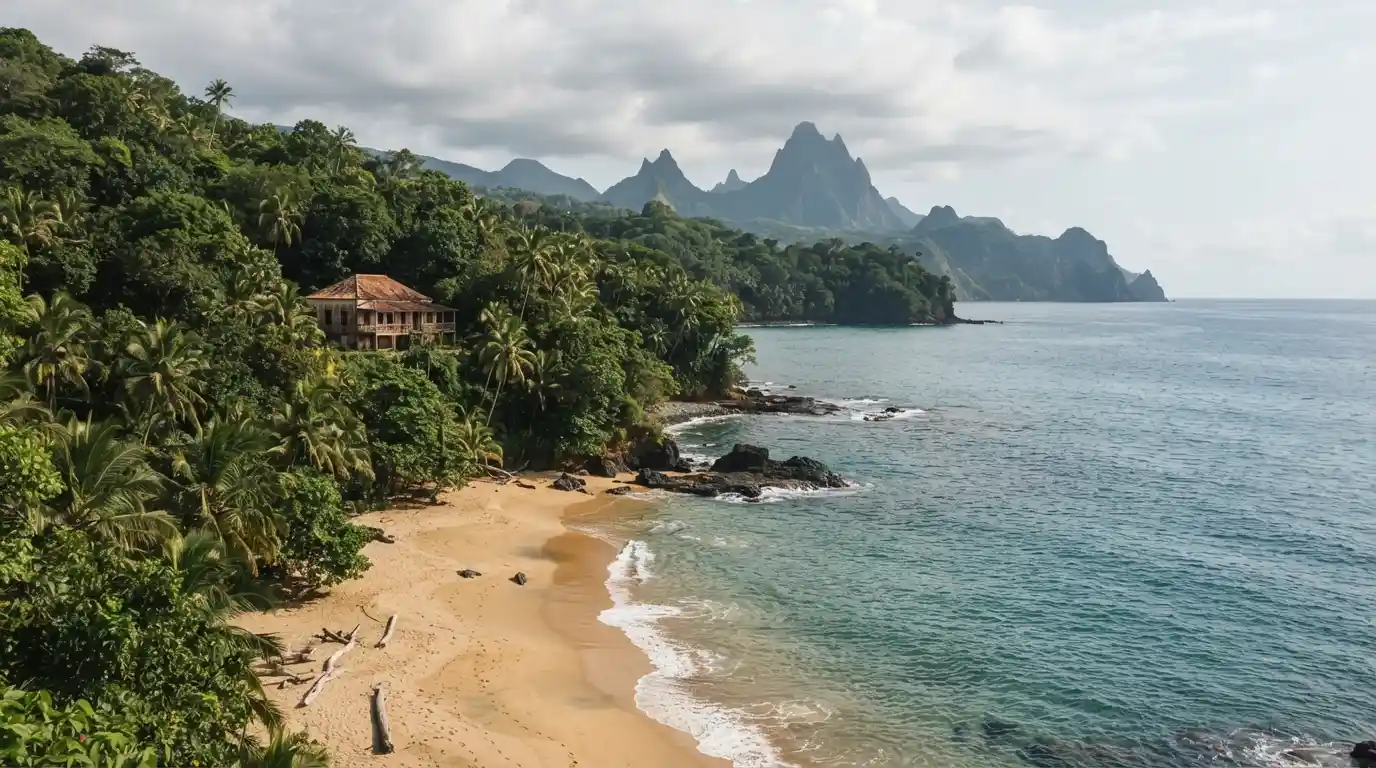
The two main islands, São Tomé and Príncipe, offer very different experiences while sharing the same remarkable blend of nature and history. São Tomé has a lively capital, historic roças, dramatic southern landscapes, waterfalls, beaches, and access to protected rainforest. Príncipe feels quieter and more secluded, with forest-covered hills, spectacular beaches, small villages, and an exceptionally rich natural environment.
If you are planning a trip focused on scenery and culture, these are some of the best places to visit in São Tomé and Príncipe.
1. São Tomé City
Start your journey in São Tomé, the country’s capital and one of the best places to experience its cultural character. The city combines Portuguese-influenced architecture with African and Creole traditions, giving its streets a distinctive atmosphere.
Walking through the central areas allows visitors to see historic buildings, public squares, colorful markets, churches, waterfront views, and everyday local life. It is also a useful base for exploring the rest of São Tomé Island.
Spend time exploring the city rather than simply passing through. Local food, music, markets, and conversations with residents provide an important introduction to the country’s culture.
2. Príncipe Island
Príncipe is one of the most rewarding destinations for travelers seeking untouched landscapes and a slower pace. Much of the island is covered by dense tropical vegetation, while its coastline features secluded beaches, rocky viewpoints, and clear Atlantic waters.
The island is particularly appealing to nature lovers, photographers, hikers, and travelers interested in sustainable tourism. Its forests provide habitat for numerous endemic species, while its coastline offers opportunities for swimming, snorkeling, boating, and wildlife watching.
Príncipe is also closely connected to the history of cocoa plantations, making it possible to combine outdoor adventures with cultural exploration.
3. Praia Banana
Praia Banana is one of the most recognizable beaches in Príncipe. Its curved stretch of pale sand, deep green vegetation, and blue Atlantic water creates the classic tropical-island setting many visitors hope to find.
The beach is particularly attractive for travelers who want a peaceful coastal experience surrounded by natural scenery. The nearby viewpoints also make the area worthwhile for photography.
Rather than treating Praia Banana as a quick photo stop, allow enough time to enjoy the landscape and the quiet atmosphere.
4. Pico Cão Grande
Pico Cão Grande is one of São Tomé’s most dramatic natural landmarks. The towering volcanic rock formation rises sharply above the surrounding rainforest and creates an unforgettable contrast between dark rock and dense green vegetation.
The landmark is especially impressive when viewed from the southern landscapes of São Tomé. Travelers interested in photography should consider visiting when the light creates strong contrast across the forest and volcanic formation.
The surrounding region also offers opportunities to experience the wilder side of the island, making Pico Cão Grande an important stop for adventurous travelers.
5. Praia Jalé
Praia Jalé is a beautiful southern beach known for its golden sand, tropical surroundings, and importance for sea turtle conservation. During the appropriate nesting season, visitors may have opportunities to learn about efforts to protect turtles and their nesting habitat.
The beach is a strong choice for travelers who want to combine relaxation with responsible nature tourism. Its relatively remote setting also gives it a more peaceful character than many heavily developed beach destinations.
Visitors should always follow local conservation guidance and avoid disturbing wildlife.
6. Ilhéu das Rolas
Ilhéu das Rolas is a small island south of São Tomé that is famous for its location along the Equator. Reaching the island adds a memorable experience to a São Tomé itinerary because visitors can explore tropical scenery while visiting the Equator landmark.
The island also has attractive beaches, viewpoints, and lush vegetation. Boat trips to the area can make the journey itself part of the experience.
For travelers interested in geography, nature, and photography, Ilhéu das Rolas offers an unusual combination of all three.
7. Boca do Inferno
Boca do Inferno is a striking coastal formation where Atlantic waves push into volcanic rock formations. The force of the water creates dramatic sprays and movement, making this one of the more memorable coastal viewpoints on São Tomé.
The attraction demonstrates how the island’s volcanic geology has shaped its coastline. It is especially interesting for travelers who enjoy landscapes that feel more rugged than traditional sandy beaches.
8. Roça Água Izé
São Tomé’s historic roças are essential for understanding the country’s cultural and economic history. Roça Água Izé is one of the best-known former plantation complexes and provides insight into the agricultural system that shaped the islands.
Cocoa became especially important to São Tomé’s economy, and plantation landscapes remain an important part of the country’s heritage. Exploring these sites adds historical depth to a trip otherwise dominated by beaches and rainforest.
Travelers interested in architecture, agriculture, colonial history, and local heritage should make time for at least one plantation visit.
9. Roça Monte Café
Roça Monte Café is another important plantation destination, particularly for travelers interested in coffee. Located in the mountainous interior of São Tomé, the area combines agricultural heritage with beautiful tropical scenery.
The Monte Café Coffee Museum offers additional context about coffee production and the role of the crop in the island’s history. The surrounding landscape is also well suited to travelers who want to explore the greener, mountainous side of São Tomé.
10. Obô Natural Park
Obô Natural Park is one of the most important places to experience São Tomé’s rainforest environment. Its dense vegetation, mountains, waterways, and rich biodiversity make it a natural highlight for hikers and wildlife enthusiasts.
The park is particularly valuable for visitors who want to move beyond the coastline and see the ecological character of the islands. Hiking routes can reveal forest scenery, waterfalls, rare plants, and birdlife.
Because rainforest conditions can change quickly, travelers should prepare properly and consider using a knowledgeable local guide for longer or more challenging routes.
11. São Nicolau Waterfall
São Nicolau Waterfall is one of the most impressive waterfalls in the central region of São Tomé. Surrounded by lush vegetation, it provides a refreshing contrast to the island’s coastal attractions.
The waterfall is an excellent addition to an itinerary that includes Monte Café and other central highland destinations. Combining several nearby natural and cultural attractions can make exploration of the interior more efficient.
12. Mionga Falls
Mionga Falls is another scenic natural attraction in southern São Tomé. The waterfall and surrounding forest demonstrate the dramatic combination of tropical vegetation and mountainous terrain that defines much of the island.
For travelers who enjoy short hikes, photography, and less urban environments, Mionga Falls can provide a peaceful break from the more famous coastal landmarks.
13. Malanza Mangrove Forest
The Malanza mangrove area offers a different type of natural experience. Instead of dramatic mountains or open beaches, visitors can explore a coastal wetland ecosystem where mangrove vegetation provides habitat for birds, aquatic life, and other wildlife.
A traditional canoe excursion through the mangrove environment can be a memorable way to experience this side of São Tomé. It also highlights why wetlands are important for maintaining healthy coastal ecosystems.
Nature-focused travelers should treat the area as a wildlife environment rather than simply a sightseeing attraction and follow local guidance during excursions.
14. Roça Sundy
Roça Sundy is one of Príncipe’s most significant historic plantation sites. The former cocoa plantation combines cultural heritage with the island’s extraordinary natural surroundings.
The location is also associated with an important moment in the history of science. In 1919, an expedition at Roça Sundy observed a solar eclipse as part of an experiment related to Einstein’s theory of relativity.
Today, visiting Roça Sundy provides an opportunity to understand both the plantation history of Príncipe and its place in the wider history of scientific exploration.
15. Santo António, Príncipe
Santo António is the main town of Príncipe and offers a very different atmosphere from larger cities around the world. Its compact streets, waterfront setting, historic buildings, and relaxed pace make it an enjoyable place to explore on foot.
The town provides a useful cultural counterpoint to Príncipe’s beaches and forests. Visitors can observe local daily life, explore public spaces, and use the town as a starting point for discovering the rest of the island.
16. Praia Grande
Praia Grande is another beautiful coastal destination on Príncipe. The beach is surrounded by natural scenery and can feel remarkably secluded, making it particularly appealing to travelers who prefer quiet beaches over busy resort areas.
The wider coastline is also important for sea turtle nesting. Responsible visitors should respect marked areas, avoid disturbing nesting animals, and follow conservation instructions.
17. Ponta do Sol
Ponta do Sol is a scenic coastal area on Príncipe known for its ocean views and sunsets. The combination of rugged coastline, tropical vegetation, and open Atlantic scenery makes it a rewarding place for photographers.
Visiting around sunset can provide some of the most atmospheric views of the island. It is also a good reminder that some of São Tomé and Príncipe’s best experiences come from simply slowing down and appreciating the landscape.
18. Pico Papagaio
Pico Papagaio is a forest-covered volcanic peak on Príncipe that provides another opportunity to explore the island’s interior. Hiking through the dense vegetation can reveal birds, plants, and other wildlife that are difficult to encounter from the coastline.
The experience is best suited to travelers who enjoy walking and nature rather than those looking for a quick sightseeing stop. Weather and trail conditions should be considered before setting out.
19. Praia Piscina
Praia Piscina is named for the natural pools created by volcanic rocks along the coast. These formations can create calmer areas where seawater collects, offering a different coastal experience from wide open beaches.
The location is particularly interesting for visitors who want to see how volcanic geology influences the islands’ beaches, swimming areas, and coastline.
20. Cocoa and Coffee Plantations
One of the best ways to understand São Tomé and Príncipe is through its agricultural heritage. Cocoa and coffee have played an important role in the islands’ history, and plantation visits connect travelers with both the landscape and local traditions.
Roças can reveal historic architecture, agricultural practices, food traditions, and stories about the communities that developed around plantation life. Where available, guided visits can provide much more context than simply viewing the buildings from outside.
How to Experience São Tomé and Príncipe Beyond the Beaches
The best itinerary does not focus exclusively on beaches. A richer trip combines coastal scenery with rainforest, plantations, villages, food, and historic sites.
- Spend time exploring São Tomé City before heading into the countryside.
- Visit at least one historic roça to understand the islands’ plantation heritage.
- Explore rainforest landscapes through guided hiking.
- Include southern São Tomé for volcanic scenery and secluded beaches.
- Visit Príncipe for a quieter and more nature-focused experience.
- Try locally prepared seafood and traditional island dishes.
- Learn about cocoa and coffee production from local communities.
- Respect wildlife and conservation rules, especially around sea turtle nesting areas.
When Is the Best Time to Visit São Tomé and Príncipe?
São Tomé and Príncipe has a tropical equatorial climate, so conditions are generally warm throughout the year. However, rainfall and humidity can vary between regions and seasons.
Travelers planning hiking, wildlife viewing, photography, or beach activities should consider the specific conditions of the areas they want to visit rather than relying on a single nationwide weather assumption.
If outdoor exploration is the main priority, flexible planning is useful because tropical weather can change quickly. Checking local conditions before excursions is particularly important for forest trails and boat trips.
How Many Days Do You Need in São Tomé and Príncipe?
A short trip can cover the capital, several beaches, and one or two plantation or nature excursions. However, travelers who want to experience both São Tomé and Príncipe should allow additional time.
A week can provide a useful introduction to the country, while a longer trip allows more time for hiking, wildlife experiences, plantation visits, and quieter coastal destinations without rushing between locations.
Why Visit São Tomé and Príncipe?
São Tomé and Príncipe stands out because its attractions are not limited to a single type of travel experience. The country brings together tropical forests, volcanic landscapes, beaches, marine ecosystems, historic plantations, local cuisine, and Creole cultural traditions in a relatively compact destination.
For travelers searching for a destination that feels less conventional and more connected to nature, these islands offer plenty to explore. From the volcanic silhouette of Pico Cão Grande to the beaches of Príncipe and the historic roças scattered across the islands, the journey can combine adventure with cultural discovery.
Final Thoughts
The best places to visit in São Tomé and Príncipe are the ones that reveal the country’s variety. São Tomé City introduces visitors to local culture, while historic roças explain the islands’ agricultural past. Obô Natural Park and the southern landscapes showcase extraordinary biodiversity and volcanic scenery, while beaches such as Praia Jalé and Praia Banana provide peaceful coastal escapes.
Príncipe adds another dimension with its secluded beaches, forests, plantations, and relaxed communities. Taken together, these destinations make São Tomé and Príncipe an excellent choice for travelers who want natural beauty and culture in the same journey.



