
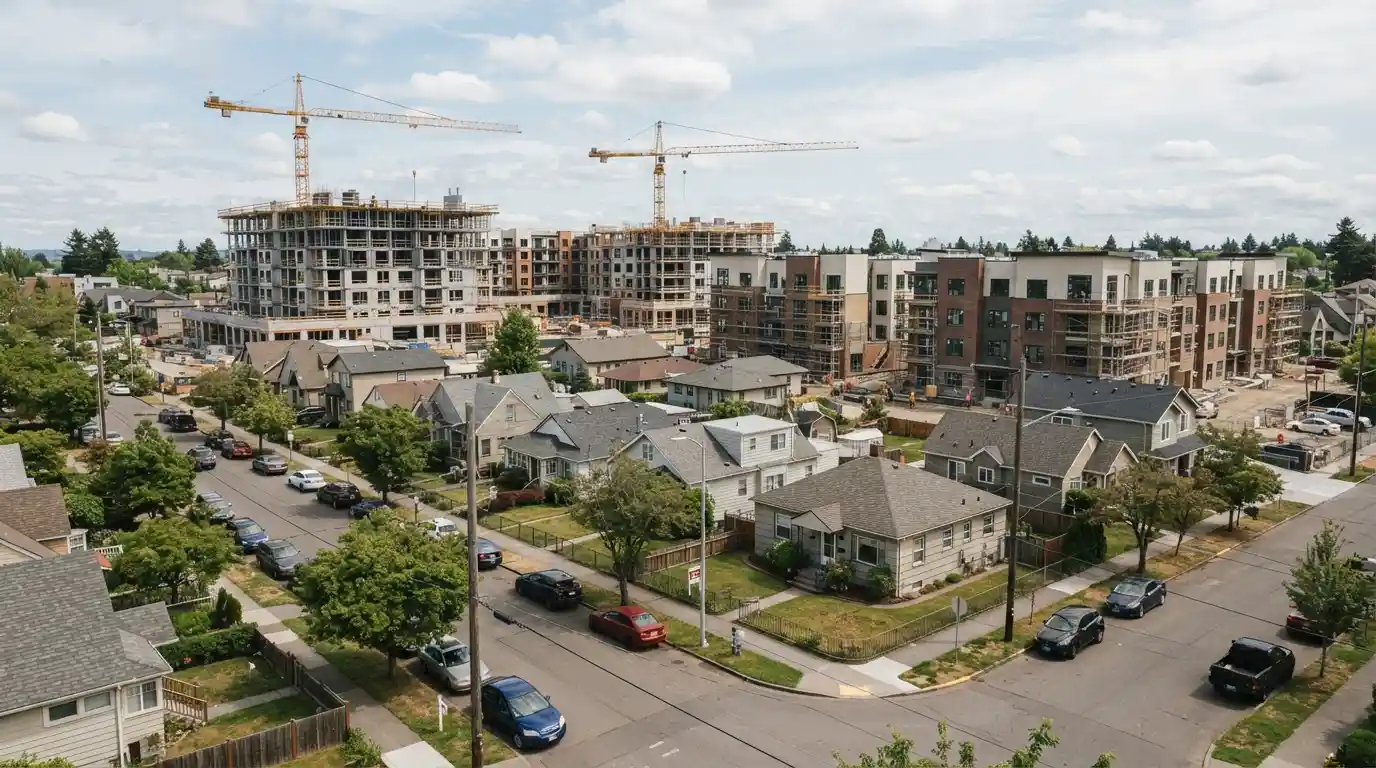
That is why a major policy shift could have an impact far beyond a single housing program. Changes to zoning rules, development regulations, housing incentives, financing structures, or local approval processes could alter how quickly new homes reach the market and how much those homes ultimately cost.
The key question is not whether one policy can solve the housing crisis overnight. It cannot. The more important question is whether policymakers can remove enough barriers to increase housing supply while making development economically viable for builders and attainable for households.
Why the Housing Crisis Has Become So Difficult to Solve
Housing affordability is the result of several forces operating at the same time. In many markets, household demand has remained strong while the supply of homes has failed to keep pace with population growth, household formation, and changing preferences.
At the same time, the cost of producing housing has increased. Builders must account for land, labor, materials, insurance, financing, infrastructure, taxes, fees, and regulatory requirements. When several of these costs rise together, the final price of a home can increase substantially.
Renters experience a similar problem. When there are not enough homes available, competition for existing rental properties can increase. Higher rents then make it harder for households to save for a down payment and transition into homeownership.
This creates a cycle in which expensive rentals make saving difficult, expensive homes make buying difficult, and limited construction keeps pressure on both markets.
The Policy Shift: Focus on Housing Supply
One of the most important potential changes is a stronger policy emphasis on increasing housing supply.
For decades, housing policy has often concentrated on helping households afford homes through subsidies, tax benefits, or financing programs. These tools can be valuable, particularly for lower-income households and first-time buyers, but they do not automatically create additional homes.
A supply-focused approach asks a different question: What prevents the market from producing enough housing in the first place?
That question leads directly to zoning, land-use regulations, permitting, development standards, infrastructure capacity, and the economics of construction.
Why Zoning Reform Could Matter
Zoning determines what can be built on particular parcels of land. In some communities, large areas are reserved primarily for low-density housing even when demand would support apartments, townhomes, duplexes, or other forms of housing.
Allowing a wider range of housing types can make better use of existing infrastructure and land. A neighborhood that previously allowed only detached homes, for example, might be able to accommodate more residents if duplexes, accessory dwelling units, or small multifamily buildings become permissible.
That does not mean every neighborhood needs high-rise towers. Effective zoning reform can take many forms and can be designed around local infrastructure, transportation, neighborhood character, and environmental considerations.
The underlying economic principle is straightforward: when more housing can legally be created in areas where people want to live, the potential supply becomes larger.
Permitting Is Another Major Piece of the Puzzle
Even when developers are willing to build, projects can take a long time to move from planning to construction.
Lengthy approval processes create uncertainty. Developers may have to spend substantial amounts of money on architectural plans, engineering, financing, legal work, environmental studies, and other requirements before knowing whether a project will receive final approval.
Time also has a financial cost. Construction loans accrue interest, land must be carried, and market conditions can change while a project waits for approval.
Streamlining permitting does not necessarily mean eliminating safety or building standards. Instead, the goal can be to make the approval process more predictable, transparent, and efficient.
Faster approvals can reduce development uncertainty and potentially allow completed homes to reach buyers and renters sooner.
Building More Homes Is Not Enough on Its Own
A common misunderstanding is that increasing housing supply automatically makes every home affordable. The reality is more nuanced.
New construction can be expensive, particularly in high-cost markets. A newly built home may still be beyond the reach of many households even when additional units are being created.
However, increasing supply can influence the broader market by reducing pressure on existing housing. When households have more options, competition for older homes and rental units can ease.
Over time, a larger housing stock can also make it easier for people to move without bidding aggressively against one another for a limited number of available properties.
This is one reason housing policy needs to consider the entire market rather than focusing only on the price of newly constructed homes.
The Role of Missing-Middle Housing
One policy area receiving increasing attention is the expansion of so-called missing-middle housing.
This category generally includes housing types that are denser than traditional detached homes but less intensive than large apartment towers. Examples can include duplexes, triplexes, fourplexes, townhomes, courtyard buildings, and smaller multifamily properties.
These homes can provide additional choices for households that do not need or cannot afford a large detached house.
They can also fit into established neighborhoods more easily than very large developments, particularly when zoning rules are designed thoughtfully.
Housing Supply and the Cost of Land
Land is one of the largest components of housing development costs.
When only a limited number of parcels can accommodate meaningful residential development, competition for those parcels can increase their value. Developers then have to recover higher land costs through the homes or apartments they build.
Allowing more housing on suitable land can change the economics of development. A parcel that supports only a small number of homes has a very different financial profile from one that can accommodate a larger residential project.
This is why land-use policy can have such a significant influence on housing affordability even though zoning itself does not directly set the price of a house.
Mortgage Rates Still Matter
Housing policy cannot be separated completely from financing conditions.
Mortgage rates influence the monthly cost of purchasing a home. When rates rise, buyers may qualify for smaller loans or face higher monthly payments. When rates fall, purchasing power can increase, potentially strengthening demand.
However, lower mortgage rates alone cannot solve a structural shortage of housing.
If supply remains constrained, stronger purchasing power can increase competition for available homes. That can put upward pressure on prices and reduce some of the affordability benefits created by cheaper financing.
A durable housing strategy therefore needs to consider both the cost of financing and the availability of housing.
Could Policy Reform Help First-Time Buyers?
First-time buyers are particularly exposed to housing affordability problems because they often lack accumulated home equity.
Existing homeowners can sometimes use proceeds from a previous property to fund a new purchase. A first-time buyer, by contrast, may need to build a down payment from wages while also dealing with rent, transportation, childcare, and other household expenses.
Programs that reduce upfront costs can help, but they work best when combined with policies that expand the underlying housing supply.
Otherwise, additional purchasing assistance can increase demand without creating enough additional homes to accommodate it.
What About Renters?
A supply-oriented housing strategy can also benefit renters.
When rental supply is limited, landlords have greater pricing power because tenants have fewer alternatives. Building more rental housing can give renters additional choices and reduce competition for individual units.
Different forms of housing can serve different stages of life. Young adults may prefer smaller apartments, families may need larger units, and older residents may prefer lower-maintenance homes.
A more flexible housing market can accommodate those changing needs without forcing every household into the same type of property.
Investors and the Housing Market
Real estate investors are another part of the housing discussion. Investment can provide capital for construction, redevelopment, and rental housing, but investor activity can also generate debate when available housing is limited.
The important distinction is between policies that discourage productive housing investment and policies that address specific market problems.
Understanding how property investment works is therefore useful when evaluating housing policy. Related real-estate topics can also help explain how development, financing, rental income, and property values interact.
For readers interested in the broader property-investment landscape, PropertyRecs and real-estate investment tools provide a related perspective on how technology is changing property investment.
Could Technology Make Housing Development More Efficient?
Technology is unlikely to solve the housing shortage by itself, but it can improve parts of the development process.
Digital planning tools, property-data platforms, construction software, automated permitting systems, and improved market analysis can help developers make faster and better-informed decisions.
Better information can also make it easier to identify underused land, evaluate potential development opportunities, and understand local market conditions.
Technology becomes particularly valuable when combined with policy reform because faster information and streamlined regulations can reinforce one another.
The Infrastructure Problem Cannot Be Ignored
One reason communities resist additional housing is concern about infrastructure.
More residents can create additional demand for roads, schools, water systems, wastewater treatment, public transportation, parks, and emergency services.
For housing reform to work, infrastructure planning needs to move alongside development policy.
That means communities may need to identify where additional housing can be supported efficiently rather than simply allowing unlimited growth everywhere.
Why Local Governments Matter
Housing policy is not controlled by one level of government.
Federal programs can influence financing, taxation, housing assistance, and national economic conditions. State governments can establish broader rules for land use and development. Local governments often control zoning, permitting, building approvals, and many infrastructure decisions.
This division of responsibility makes housing reform complicated.
A policy change at the federal level may have limited effects if local regulations continue to prevent housing construction. Conversely, local reforms may struggle if financing conditions or broader economic forces make development uneconomical.
The Risk of Policies That Increase Demand Without Supply
Housing assistance can be valuable, but policymakers need to consider its interaction with supply.
If a program gives buyers more purchasing power while the number of available homes remains fixed, some of that additional purchasing power can be reflected in higher prices.
This does not mean demand-side programs should be abandoned. It means they should be paired with measures that make it easier to create additional housing.
The combination of demand assistance and supply expansion is more likely to produce lasting affordability improvements than either strategy by itself.
What a Successful Housing Policy Shift Could Look Like
A comprehensive approach could combine several reforms rather than relying on one policy.
- Allow more housing types in appropriate areas.
- Make residential permitting faster and more predictable.
- Encourage housing near jobs and transportation.
- Support infrastructure capable of handling responsible growth.
- Preserve targeted assistance for households facing affordability barriers.
- Encourage construction of both rental and owner-occupied housing.
- Reduce unnecessary regulatory costs without weakening safety standards.
- Use better housing data to identify supply gaps and development opportunities.
The objective would not be to eliminate every housing-market problem. It would be to create a system capable of responding to demand more effectively.
Could This Actually Change the Housing Crisis?
A meaningful policy shift could change the trajectory of the U.S. housing market, but the effects would probably develop gradually.
Housing is a physical asset. Even after regulations change, developers need time to acquire land, secure financing, obtain approvals, construct buildings, and bring those homes to market.
That means housing reform should be evaluated over years rather than weeks.
The most important signal may be whether communities are becoming capable of producing housing consistently in locations where people want to live.
What Homebuyers and Renters Should Watch
Consumers do not need to become policy experts to understand how housing reform could affect them.
Several indicators are particularly useful:
- Changes in local zoning rules.
- New housing permits and construction activity.
- Rental vacancy conditions.
- Mortgage-rate trends.
- Local home-price growth.
- Changes in development fees and approval timelines.
- New housing incentives for builders or buyers.
- Infrastructure investments in growing communities.
Looking at several indicators together provides a more complete picture than focusing on home prices alone.
The Bigger Lesson for the U.S. Housing Market
The housing crisis is not simply a problem of expensive houses. It is a problem involving land, regulation, construction, financing, infrastructure, household income, and supply.
That is why a policy shift focused on making housing easier to build could have consequences throughout the market.
If communities can increase housing production while maintaining appropriate safety and infrastructure standards, buyers and renters may eventually gain more choices.
The change would not happen instantly, and no single reform would guarantee affordable housing everywhere. But improving the system’s ability to respond to demand could be one of the most important steps toward addressing the long-term housing shortage.
Frequently Asked Questions
What policy could have the biggest effect on the housing crisis?
Policies that increase housing supply, particularly zoning and permitting reforms, could have a significant long-term effect because they address barriers that limit how many homes can be built.
Can building more homes lower housing costs?
Increasing supply can reduce pressure in housing markets over time, particularly when new homes are built in areas where demand is strong. The effect depends on location, housing type, construction costs, and the scale of new development.
Does lowering mortgage rates solve the housing crisis?
No. Lower mortgage rates can improve affordability for some buyers, but if housing supply remains constrained, stronger demand can also contribute to higher prices.
Why is zoning important to housing affordability?
Zoning determines which types of housing can be built and where. Restrictive rules can limit housing supply, while carefully designed reforms can allow more homes to be created in suitable locations.
Will housing reform immediately make homes affordable?
Usually not. Housing construction takes time, so the effects of structural reforms generally appear gradually as new development moves through the planning and construction process.
What should policymakers prioritize?
A balanced strategy should address housing supply, infrastructure, financing, development costs, and targeted assistance for households that face the greatest affordability challenges.