
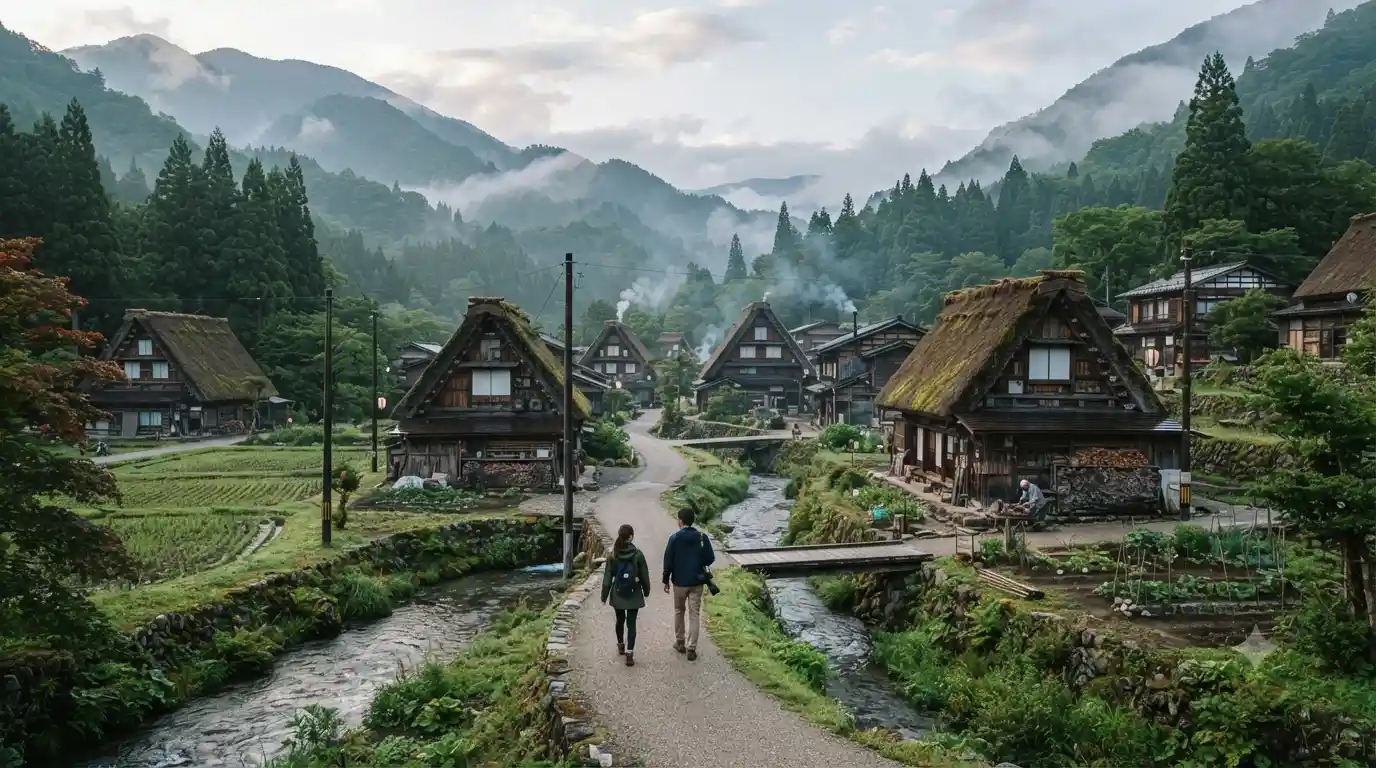
Why Japan’s Hidden Villages Are a Must-Visit in 2026
Japan is famous for Tokyo’s energy, Kyoto’s temples, Osaka’s food culture, and Hiroshima’s history. Yet a different side of the country is attracting travelers who want quieter, more meaningful experiences: its rural villages.
From traditional thatched farmhouses and mountain landscapes to family-run inns, local food, hot springs, and centuries-old customs, rural Japan offers a slower way to experience the country. The growing interest is also connected to overcrowding in some major tourist destinations, encouraging travelers to explore lesser-known regions.
Japan’s rural renaissance is not simply about finding a place without crowds. It is about experiencing living communities, traditional architecture, seasonal landscapes, and local culture while supporting destinations beyond the country’s busiest tourist hubs.
Why Travelers Are Looking Beyond Japan’s Major Cities
Tokyo, Kyoto, and Osaka remain essential destinations, but high visitor numbers can change the experience of popular attractions. Crowded streets, busy transportation networks, and long lines have encouraged some travelers to consider a slower itinerary.
Rural villages provide a different rhythm. Instead of moving between major attractions, visitors can spend more time walking through historic settlements, meeting local hosts, eating regional food, and enjoying the surrounding mountains and forests.
This approach also fits the broader rise of slow travel, where travelers prioritize deeper cultural experiences over checking as many famous landmarks as possible.
What Makes Japan’s Hidden Villages So Appealing?
1. Traditional Architecture
One of the strongest reasons to visit rural Japan is the opportunity to see historic buildings in their original environments. Traditional homes, wooden structures, thatched roofs, and old village layouts create a visual connection with earlier periods of Japanese life.
Shirakawa-go and Gokayama are among the best-known examples. Their distinctive gassho-zukuri houses have steeply pitched roofs designed for the region’s heavy snowfall. The historic villages were registered as UNESCO World Heritage sites in 1995.
Many traditional houses are not simply preserved as museum pieces. Some continue to function as homes, museums, guesthouses, or cultural spaces, giving visitors a more tangible connection with the communities that maintain them.
2. Miyama’s Rural Character
Located around 50 kilometers north of Kyoto City, Miyama is another strong example of rural Japan. The area is known for its collection of traditional thatched-roof farmhouses, many of which remain private homes.
Visitors can explore the historic village, learn about traditional architecture, and stay in selected thatched-roof accommodations. Its proximity to Kyoto also makes it appealing to travelers who want to combine a major cultural destination with a quieter countryside experience.
3. Seasonal Scenery
Rural Japan changes dramatically throughout the year. Spring brings fresh greenery and blossoms, summer provides cooler mountain environments, autumn covers forests in vivid foliage, and winter can transform traditional villages into snow-covered landscapes.
This seasonal variety means the same destination can feel completely different depending on when you visit. Travelers interested in photography, hiking, nature, or cultural festivals can plan their trips around the season that best matches their interests.
Rural Japanese Food Is Part of the Experience
Food is another major reason to venture beyond Japan’s largest cities. Rural cuisine often reflects the ingredients, climate, farming traditions, and preservation methods of each region.
Depending on the destination and season, travelers may encounter mountain vegetables known as sansai, freshwater fish, locally produced miso, regional pickles, rice dishes, and other foods prepared with ingredients sourced close to the community.
The appeal is not necessarily sophistication. Instead, rural dining can provide a closer look at how Japanese food traditions are connected to agriculture, geography, seasonality, and family life.
Onsen, Forests, and the Appeal of Slow Travel
Rural destinations can also provide a natural setting for relaxation. Mountain areas across Japan are home to hot spring communities where visitors can combine traditional accommodation with bathing and regional food.
The experience can be particularly appealing after hiking or exploring a village on foot. Staying at a family-run ryokan or minshuku can further deepen the experience by introducing travelers to traditional rooms, local meals, and Japanese hospitality.
Forest environments also encourage a slower pace. Rather than moving quickly between attractions, visitors can spend time walking through wooded landscapes, observing seasonal changes, and experiencing the quiet atmosphere of rural communities.
Notable Rural Destinations to Consider
- Shirakawa-go, Gifu: Famous for its traditional gassho-zukuri farmhouses and dramatic mountain setting.
- Gokayama, Toyama: A historic mountain area known for preserved traditional architecture and rural landscapes.
- Miyama, Kyoto: A countryside destination with well-preserved thatched-roof farmhouses within reach of Kyoto.
- Ine, Kyoto: Known for its distinctive waterfront funaya boat houses and fishing-community character.
- Ouchijuku, Fukushima: A historic post town where traditional thatched buildings recall the Edo period.
These destinations are not identical. Some are architectural heritage sites, while others are working communities shaped by farming, fishing, forestry, or historic transportation routes. That variety is part of what makes rural Japan worth exploring.
How to Reach Japan’s Rural Villages
Transportation is one of the biggest differences between rural Japan and major cities. Some villages are easily reached by train and connecting buses, while others require more planning or a rental car.
Travelers should research the final connection before booking accommodation. A convenient rail journey to a regional city does not necessarily mean the village itself is easy to reach.
Where public transportation is available, regional trains and local buses can provide an excellent way to experience the countryside. Renting a car can offer greater flexibility in more remote areas, particularly when visiting several small communities.
When Is the Best Time to Visit?
There is no single best season for every rural destination in Japan.
Spring
Spring brings fresh greenery, flowers, and mild conditions in many regions. It can be an attractive period for walking and photography, although popular cherry-blossom locations can become busy.
Summer
Mountain villages can provide a refreshing alternative to hotter urban environments. Summer is also suitable for hiking, outdoor activities, and exploring agricultural landscapes.
Autumn
Autumn is especially attractive for travelers interested in colorful foliage. Mountain forests can create spectacular scenery around traditional villages and rural roads.
Winter
Snow transforms destinations such as Shirakawa-go into dramatic winter landscapes. However, snow can also affect transportation, road conditions, and accessibility, so travelers should check local conditions before departure.
Do You Need to Speak Japanese?
English availability can be more limited in rural areas than in Tokyo, Kyoto, or Osaka. That does not make rural travel impossible, but preparation becomes more important.
Translation apps, offline maps, reservation confirmations, and basic Japanese phrases can make the journey easier. Travelers should also remember that many rural communities are residential areas, not open-air theme parks.
How to Travel Responsibly in Rural Japan
The growing popularity of hidden destinations creates an important responsibility for visitors. A village may look like a tourist attraction online while still being an ordinary place where people live, work, and raise families.
Visitors should stay on permitted paths, avoid entering private property, keep noise under control, follow photography restrictions, dispose of waste properly, and respect local customs.
Supporting locally owned accommodation, restaurants, guides, shops, and cultural experiences can also help tourism revenue remain within the communities travelers came to experience.
Why Rural Japan Represents a New Kind of Travel
The appeal of Japan’s hidden villages reflects a broader change in travel preferences. For some visitors, the goal is no longer to see the maximum number of famous attractions in the shortest possible time.
Instead, travelers are increasingly interested in local experiences, nature, heritage, food, wellness, and meaningful interactions. Rural Japan brings these elements together in places where traditional culture remains part of everyday life.
That does not mean every village is truly “hidden,” and some famous rural destinations now attract substantial visitor numbers. The more useful idea is to travel beyond Japan’s most concentrated tourist corridors and explore rural communities thoughtfully.
Frequently Asked Questions
What are the best hidden villages to visit in Japan?
Shirakawa-go, Gokayama, Miyama, Ine, and Ouchijuku are strong choices, each offering a different combination of traditional architecture, nature, and local culture.
Is Shirakawa-go worth visiting?
Yes. Shirakawa-go is particularly notable for its preserved gassho-zukuri farmhouses, mountain scenery, and UNESCO World Heritage status. Staying overnight can provide a slower experience than a short daytime visit.
Can I visit rural Japan without renting a car?
Yes. Some rural destinations can be reached through combinations of regional trains and local buses. However, accessibility varies considerably, so transportation should be planned destination by destination.
What is a minshuku in Japan?
A minshuku is a traditional family-run lodging establishment, often similar to a Japanese-style bed-and-breakfast. Staying in one can provide a more personal experience of rural hospitality.
What is the best season for rural Japan?
Autumn is excellent for colorful foliage, winter is ideal for snow-covered villages, spring offers fresh greenery and blossoms, and summer is attractive for mountain activities and cooler rural environments.
Final Thoughts
Japan’s rural villages offer something increasingly valuable in modern travel: time to slow down. Traditional architecture, seasonal landscapes, local food, hot springs, and community-based experiences create a richer alternative to a fast-paced sightseeing itinerary.
The rural renaissance is not about abandoning Tokyo, Kyoto, or Osaka. It is about adding another layer to a Japan itinerary. By traveling respectfully and supporting local communities, visitors can experience a quieter side of the country while helping preserve the traditions and landscapes that make these places special.