
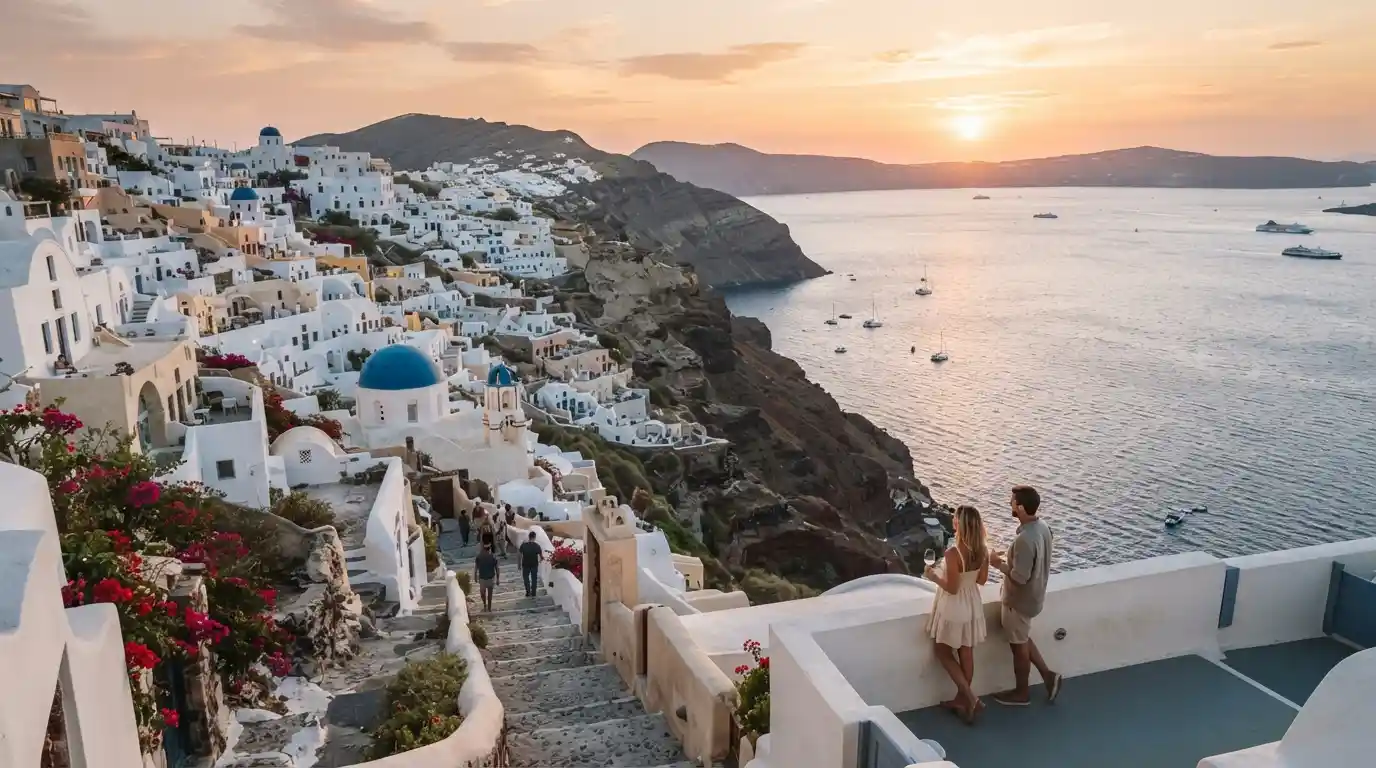
From the Acropolis in Athens and the volcanic cliffs of Santorini to the beaches of Crete, the medieval streets of Rhodes, and the dramatic monasteries of Meteora, Greece offers a different experience in almost every region. Some destinations are ideal for first-time visitors, while others are better suited to travelers looking for quieter beaches, outdoor adventures, local food, or cultural experiences.
This 2026 guide focuses on the best places to visit in Greece and explains what makes each destination worthwhile, who it suits best, how long to stay, and how to build a practical itinerary without spending most of your vacation moving between locations.
Why Greece Should Be on Your 2026 Travel List
Greece offers an unusually broad mix of experiences in one country. You can explore archaeological sites in the morning, swim in clear Mediterranean water in the afternoon, and enjoy a long dinner in a traditional taverna at night.
The country is also suitable for different styles of travel. Couples may prefer Santorini or Paros, families can find excellent choices in Crete and Naxos, history enthusiasts can focus on Athens and the Peloponnese, while travelers seeking nature can explore Meteora, mainland mountain regions, and less-developed islands.
Travelers interested in comparing Greece with other international destinations can also explore our broader guide to the top places in the world to visit for additional itinerary inspiration.
1. Athens — Best for History, Culture, and First-Time Visitors
Athens is the natural starting point for many trips to Greece and deserves more than a quick overnight stop. The capital combines some of the world’s most recognizable ancient monuments with modern neighborhoods, museums, restaurants, markets, and nightlife.
The Acropolis and Parthenon are the obvious highlights, but the experience becomes much richer when you explore the surrounding historic areas. Plaka, Monastiraki, the Ancient Agora, the Acropolis Museum, and the neighborhoods around the historic center can easily fill several days.
Athens is particularly valuable for first-time visitors because it provides cultural context for the rest of a Greek vacation. Understanding the country’s ancient history before visiting archaeological sites and islands can make the entire trip more meaningful.
Best things to do in Athens
- Visit the Acropolis and Parthenon.
- Explore the Acropolis Museum.
- Walk through Plaka and Anafiotika.
- Explore Monastiraki and the Ancient Agora.
- Enjoy Greek food in a traditional neighborhood taverna.
- Watch the sunset from a city viewpoint.
Recommended stay: 2–3 days.
Best for: History, culture, food, museums, nightlife, and first-time visitors.
2. Santorini — Best for Iconic Scenery and Romantic Escapes
Santorini is one of Greece’s most recognizable destinations, famous for whitewashed villages, blue-domed buildings, dramatic caldera views, volcanic landscapes, and spectacular sunsets.
Fira and Oia are the island’s best-known settlements, but Santorini offers more than its famous viewpoints. Ancient Akrotiri provides a glimpse into the island’s archaeological past, while volcanic beaches and boat excursions offer a different perspective of the island.
Santorini is especially attractive to couples and travelers celebrating honeymoons, anniversaries, or special occasions. Because it is one of Greece’s most popular destinations, planning accommodation and major activities in advance is particularly important during peak periods.
Best things to do in Santorini
- Walk through Oia.
- Watch the sunset over the caldera.
- Explore Fira.
- Visit the archaeological site of Akrotiri.
- Take a boat trip around the caldera.
- Explore Santorini’s volcanic beaches and villages.
Recommended stay: 2–4 days.
Best for: Couples, photography, scenery, sunsets, and luxury travel.
3. Crete — Best for Beaches, Food, History, and Long Stays
Crete is one of the best choices for travelers who want a destination capable of filling an entire vacation. Greece’s largest island combines beaches, mountain scenery, historic towns, archaeological sites, hiking opportunities, and a strong culinary culture.
Chania is a favorite base for travelers who enjoy historic architecture and atmospheric streets. Its old harbor, Venetian influences, waterfront restaurants, and surrounding beaches make it especially appealing.
Rethymno offers another excellent historic base, while Heraklion provides access to important archaeological attractions and the wider eastern part of the island.
Crete is also a strong option for travelers who want a more relaxed itinerary. Instead of constantly changing islands, you can rent a car, choose a convenient base, and explore different parts of the island at your own pace.
Why visit Crete?
- Beautiful beaches and clear water.
- Historic towns including Chania and Rethymno.
- Ancient Minoan archaeological heritage.
- Mountain villages and dramatic landscapes.
- Excellent local cuisine.
- Hiking and outdoor adventures.
Recommended stay: 5–10 days, depending on how much of the island you want to explore.
Best for: Families, couples, food lovers, beach travelers, history enthusiasts, and longer vacations.
4. Mykonos — Best for Nightlife and Upscale Island Experiences
Mykonos is the destination to consider when nightlife, stylish beach clubs, waterfront dining, and a lively island atmosphere are high on your list.
The island’s famous windmills, narrow streets, whitewashed buildings, and waterfront neighborhood of Little Venice create the classic Mykonos atmosphere. During the day, visitors can enjoy beaches and boat trips before transitioning into the island’s evening entertainment scene.
Mykonos is not necessarily the best choice for travelers seeking the quietest or most budget-friendly Greek island. Instead, it works particularly well for visitors who want a social, energetic, and polished vacation.
Recommended stay: 2–4 days.
Best for: Nightlife, couples, groups of friends, beach clubs, and luxury travel.
5. Naxos — Best Greek Island for Balance and Value
Naxos is one of the strongest choices for travelers who want beautiful beaches and traditional Greek scenery without building an itinerary entirely around the most famous tourist hotspots.
The island combines long sandy beaches, mountain villages, agricultural landscapes, archaeological attractions, and a charming main town. It is also large enough to provide variety without requiring visitors to move to another island every few days.
Naxos works particularly well for families and travelers who want a slower pace. You can spend one day at the beach, another exploring villages, and another taking a boat trip or visiting historic sites.
Recommended stay: 3–6 days.
Best for: Families, couples, beaches, food, value, and relaxed island travel.
6. Paros — Best for Couples and Relaxed Island-Hopping
Paros combines attractive beaches, traditional villages, stylish restaurants, and a lively but generally more relaxed atmosphere than some of Greece’s biggest names.
Naoussa is particularly popular for its picturesque harbor and evening atmosphere, while Parikia provides a convenient base for exploring the island. Travelers can also combine Paros with nearby Cycladic destinations when building an island-hopping itinerary.
Paros is an excellent middle ground for travelers who want beautiful scenery and nightlife without choosing a destination based entirely on either extreme.
Recommended stay: 3–5 days.
Best for: Couples, friends, beaches, dining, and island-hopping.
7. Milos — Best for Unique Beaches and Natural Scenery
Milos stands out because of its unusual geological landscape. The island features colorful rock formations, sea caves, dramatic coastlines, and beaches that look different from the classic sandy beaches found elsewhere in Greece.
A boat trip is one of the best ways to appreciate the island because some of its most impressive coastal landscapes are easier to experience from the water.
Milos is particularly appealing to photographers, couples, and travelers who prioritize natural scenery over nightlife.
Recommended stay: 3–5 days.
Best for: Nature, photography, beaches, boat trips, and couples.
8. Rhodes — Best for Medieval History and Beaches
Rhodes provides one of the most interesting combinations of history and beach travel in Greece. Its medieval Old Town is the centerpiece, offering fortified walls, historic streets, and architecture reflecting the island’s long and complex past.
The town of Lindos adds another major attraction with its hilltop Acropolis and views over the coastline. Outside the historic areas, Rhodes offers beaches, mountain landscapes, villages, and resort areas.
This makes Rhodes especially suitable for travelers who do not want to choose between sightseeing and relaxing by the sea.
Recommended stay: 4–7 days.
Best for: History, families, beaches, couples, and first-time island visitors.
9. Corfu — Best for Green Landscapes and European Influences
Corfu has a noticeably different visual character from the dry, white-and-blue imagery associated with the Cyclades. Its landscape is greener, with olive groves, hills, coastal scenery, and historic architecture.
Corfu Town is one of the island’s major highlights. Visitors can combine historic sightseeing with beach excursions and day trips around the island.
Corfu is an excellent choice for travelers who want a Greek island with a strong sense of history, lush scenery, and a more varied landscape.
Recommended stay: 4–7 days.
Best for: Families, couples, history lovers, nature, and relaxed vacations.
10. Meteora — Best for Dramatic Landscapes and Monasteries
Meteora is one of mainland Greece’s most spectacular destinations. Historic monasteries sit dramatically on towering rock formations, creating a landscape unlike the country’s famous island scenery.
The destination is especially rewarding for travelers who want to add something different to a Greek itinerary. Instead of beaches and island villages, Meteora provides mountains, hiking opportunities, panoramic views, and extraordinary religious and architectural heritage.
Meteora can work as a dedicated overnight destination or as part of a wider mainland itinerary.
Recommended stay: 1–2 days.
Best for: History, photography, hiking, architecture, and nature.
11. Nafplio — Best for a Romantic Mainland Getaway
Nafplio is an excellent choice for travelers who want charming streets, waterfront views, historic architecture, and access to some of the Peloponnese’s most important archaeological sites.
The city works particularly well as a base for exploring the surrounding region. Travelers can combine a stay here with visits to ancient sites and coastal areas while avoiding the constant movement associated with island-hopping.
Recommended stay: 2–3 days.
Best for: Couples, history lovers, road trips, and slower travel.
12. Delphi — Best for Ancient Greek History
Delphi is one of the most important archaeological destinations in Greece and a natural choice for travelers fascinated by ancient Greek civilization.
The mountainous setting adds to the experience, making Delphi more than simply a collection of archaeological remains. The combination of ancient monuments and dramatic scenery makes it one of the strongest cultural stops on a mainland Greek itinerary.
Travelers interested in historic destinations worldwide can also compare Delphi with other culturally significant locations through our guide to unique places to visit in North America.
Recommended stay: 1–2 days.
Best for: Archaeology, history, culture, and mountain scenery.
13. Zakynthos — Best for Coastal Scenery and Boat Adventures
Zakynthos is known for striking coastal scenery and bright blue water. It is a popular option for travelers who want a combination of beach days, boat excursions, and lively resort areas.
The island’s coastline is its main attraction, so travelers should consider spending at least part of their visit exploring the water rather than remaining in one resort.
Recommended stay: 3–5 days.
Best for: Beaches, boat trips, couples, groups, and photography.
14. Kefalonia — Best for Scenic Drives and Natural Beauty
Kefalonia is another strong Ionian Island choice, especially for travelers who enjoy scenic drives, dramatic coastlines, mountain landscapes, and quieter experiences.
Its size gives visitors plenty of opportunities to explore different beaches and villages. Renting a car can make it easier to experience more of the island without depending entirely on organized tours.
If you enjoy planning scenic international journeys, you may also like our guide to places to visit in Madeira by car, another destination where road-based exploration can add considerable value to a trip.
Recommended stay: 4–6 days.
Best for: Nature, road trips, beaches, couples, and outdoor travelers.
15. Thessaloniki — Best for Food, Culture, and Urban Travel
Thessaloniki offers a different city experience from Athens. It is known for its waterfront, food culture, historic landmarks, markets, and energetic atmosphere.
It is an especially useful destination for travelers exploring northern Greece or looking for a city break that feels distinct from the capital.
Because Thessaloniki is less commonly included in first-time island-focused itineraries, adding it can make a second Greek trip feel substantially different from the classic Athens-and-islands route.
Recommended stay: 2–3 days.
Best for: Food, culture, nightlife, architecture, and city breaks.
How to Choose the Best Place in Greece for Your Trip
The best Greek destination depends heavily on what you want from your vacation. There is no single island or city that is perfect for everyone.
| Travel Goal | Best Choice | Why |
|---|---|---|
| First trip to Greece | Athens + one island | Combines history and island scenery |
| Romantic getaway | Santorini or Paros | Scenery, dining, sunsets, and atmosphere |
| Family vacation | Crete or Naxos | Beaches, activities, food, and variety |
| Nightlife | Mykonos | Clubs, beach venues, and evening entertainment |
| History | Athens, Delphi, Rhodes, or Meteora | Ancient, medieval, and religious heritage |
| Nature | Crete, Milos, Kefalonia, or Corfu | Mountains, beaches, cliffs, and green landscapes |
| Relaxed island vacation | Naxos or Paros | Good balance between attractions and downtime |
Best Time to Visit Greece in 2026
The ideal time to visit depends on the type of trip you want. Summer is the classic season for island holidays, but the shoulder seasons can offer a more comfortable balance between weather, crowds, and sightseeing.
Spring
Spring can be excellent for travelers interested in walking, sightseeing, archaeology, and outdoor exploration. Temperatures are generally more comfortable for spending long periods outdoors than during the hottest summer weeks.
Summer
Summer is the traditional peak season for Greek islands. It is particularly attractive for beach-focused trips, but popular destinations can become busy. Travelers visiting Santorini, Mykonos, Crete, Rhodes, or other major destinations should plan accommodation and transportation carefully.
Fall
Early fall can be one of the most appealing periods for travelers who want warm weather without making their entire vacation about peak-season crowds. It can also be a strong time for combining islands with mainland sightseeing.
For more seasonal travel inspiration, see our guide to the top places to visit in the fall.
Winter
Winter is better suited to travelers interested in cities, cultural attractions, food, and mainland destinations rather than a traditional beach vacation. Athens and Thessaloniki can still provide worthwhile city experiences outside the summer season.
If winter travel interests you, our guides to the best places to visit in Europe in winter and best places to visit in Albania in winter can help with broader European trip planning.
How Many Days Do You Need in Greece?
A short trip can still work, but Greece rewards travelers who resist the temptation to visit too many destinations in a limited amount of time.
5–7 Days
Choose Athens plus one island. This is usually more enjoyable than trying to squeeze several islands into one week.
8–10 Days
Consider Athens plus two destinations that connect efficiently. A combination such as Athens, Naxos, and Santorini can provide a balanced first introduction to Greece.
10–14 Days
This gives you more flexibility. You can combine Athens with two islands, or explore an island such as Crete in greater depth.
Two Weeks or More
With additional time, you can explore mainland Greece, the Peloponnese, or several islands without turning transportation into the central feature of the vacation.
For travelers planning multiple international destinations in one trip, our guides to the top places to visit around the world and some of the best places to visit in the world provide additional planning ideas.
Greece Travel Tips for First-Time Visitors
Do not plan too many islands
Island-hopping sounds simple until ferry schedules, airport transfers, hotel check-ins, and travel time start consuming your vacation. Two well-chosen islands can often provide a better experience than four rushed stops.
Mix famous destinations with quieter areas
There is nothing wrong with visiting Santorini or Mykonos. They are famous for good reasons. But adding Naxos, Crete, Milos, Paros, or a mainland destination can create a more balanced trip.
Leave room for local food
Greek cuisine is an important part of the travel experience. Instead of scheduling every meal around major tourist attractions, explore neighborhood tavernas, local bakeries, markets, and regional specialties.
Allow extra transportation time
Ferries and flights connect many Greek destinations, but schedules can vary by route and season. Avoid planning important international connections too tightly around a domestic transfer.
Look beyond the most photographed locations
Greece has far more to offer than the famous blue domes of Santorini. Historic towns, mountain villages, archaeological sites, hidden beaches, and smaller islands can become the most memorable parts of a trip.
How Greece Compares With Other Mediterranean Destinations
Greece is particularly attractive because it combines beaches with an unusually deep cultural and historical experience. Travelers deciding between several Mediterranean destinations may also want to explore our guide to the best coastal places to visit in Spain or our recommendations for the best place to visit in Algarve, Portugal.
Travelers who prefer combining culture with family-friendly attractions can also compare Greece with the best places in France to visit with kids, while those looking for a more tropical family experience may consider the best places to visit in Puerto Rico with family.
Frequently Asked Questions About Visiting Greece in 2026
What is the best place to visit in Greece for the first time?
Athens is the best starting point for most first-time visitors because it combines major historical attractions with easy connections to the Greek islands. Pairing Athens with one island creates a well-balanced first trip.
Is Santorini still worth visiting in 2026?
Yes. Santorini remains one of Greece’s most distinctive destinations, particularly for its caldera scenery, volcanic landscape, architecture, and sunsets. Travelers should simply plan around its popularity and avoid assuming that the island represents all of Greece.
Which Greek island is best for families?
Crete and Naxos are strong choices because they offer a broad combination of beaches, food, attractions, activities, and accommodation options.
Which Greek destination is best for history lovers?
Athens is the obvious starting point, while Delphi, Meteora, Rhodes, and the Peloponnese provide additional historical experiences.
How many Greek islands should I visit?
For a one-week trip, one island plus Athens is usually enough. With 10–14 days, two islands can provide variety without creating excessive travel time.
Is Greece good for a road trip?
Yes. Mainland Greece, the Peloponnese, Crete, and several larger islands can work particularly well for road trips. A car provides greater flexibility for reaching villages, beaches, viewpoints, and archaeological sites.
Final Thoughts
The best places to visit in Greece in 2026 depend on what you want from the trip. Athens is the strongest choice for history and culture, Santorini delivers iconic scenery, Crete provides variety, Mykonos excels at nightlife, Naxos offers a balanced island experience, Milos stands out for natural beauty, and Rhodes combines beaches with medieval history.
The biggest mistake is trying to see everything at once. Greece is better experienced slowly, with enough time to enjoy a beach, explore a village, linger over a meal, or simply watch the sunset without checking the clock.
Whether you are planning your first Mediterranean vacation or returning for a deeper exploration of the country, Greece offers enough diversity for multiple trips. Start with the destinations that best match your interests, build a realistic route, and leave room for the unexpected experiences that often become the highlights of a Greek holiday.
More Travel Inspiration
If Greece is part of a larger travel-planning project, explore our guides to the best places to visit in Bali, places to visit in Japan for anime lovers, and places to visit in Tokyo for first-timers.
You can also revisit our existing Greece travel guide for additional destination inspiration and use this updated 2026 guide to build a more current itinerary.