
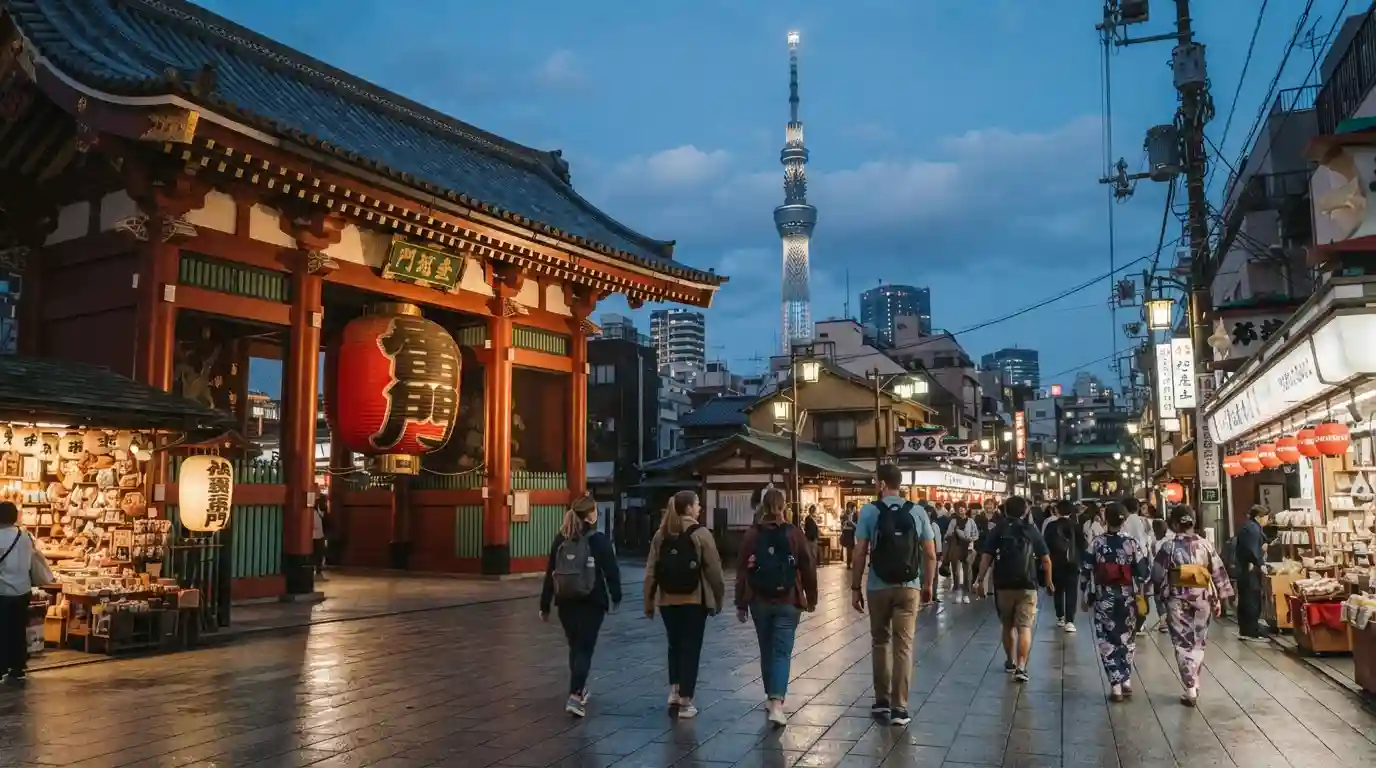
The best approach is to group attractions by neighborhood and use Tokyo’s rail network to move efficiently between areas. This Tokyo itinerary for first-time visitors focuses on the places that best introduce travelers to the city’s traditional, modern, cultural, and culinary sides without turning every day into a race.
If you are still researching Japan beyond the capital, you can also explore our guide to the most unique places to visit in Japan and our overview of Japan’s hidden villages for ideas after Tokyo.
Why Tokyo Is Ideal for First-Time Visitors
Tokyo gives travelers an unusually broad introduction to Japan in one destination. In the same trip, you can visit a centuries-old Buddhist temple in Asakusa, walk through the forest surrounding Meiji Shrine, experience the famous Shibuya Crossing, explore anime and gaming culture in Akihabara, and finish the evening with ramen, sushi, or another Japanese specialty.
The city is also easier to navigate than its enormous size initially suggests. Tokyo’s extensive train and subway network connects the major sightseeing districts, while IC cards make many everyday transit journeys simpler. The official Tokyo travel guide recommends public transportation as one of the most practical ways to move around the city.
For travelers interested in Japan’s pop-culture side, our guide to places to visit in Japan for anime lovers is a useful companion to a Tokyo trip.
How Many Days Do You Need in Tokyo?
For a first visit, five days in Tokyo provides a comfortable balance. Three days can cover many major attractions, but five days allows you to slow down, explore neighborhoods, eat without rushing, and leave room for shopping or an unexpected discovery.
If you only have three days, prioritize Asakusa and Ueno, Shibuya and Harajuku, and Shinjuku with one additional area. If you have five days, the itinerary below gives you a more complete introduction to the city.
Day 1: Asakusa, Senso-ji, Tokyo Skytree and Ueno
Start your first full day in eastern Tokyo, where traditional Japan and modern Tokyo exist side by side.
1. Senso-ji Temple and Asakusa
Begin at Senso-ji Temple, one of Tokyo’s most recognizable cultural landmarks. Enter through Kaminarimon, or Thunder Gate, and walk along Nakamise-dori toward the temple grounds.
Give yourself time to explore rather than simply taking a photograph and leaving. The surrounding streets contain traditional shops, snacks, souvenirs, small restaurants, and historic architecture that make Asakusa particularly rewarding for first-time visitors.
2. Sumida River Area
After exploring Senso-ji, walk toward the Sumida River. The riverside provides a different perspective of the city and offers views toward Tokyo Skytree.
3. Tokyo Skytree
Continue to Tokyo Skytree, one of the defining landmarks of the modern Tokyo skyline. The observation decks provide expansive views across the metropolitan area, while Tokyo Solamachi at the base offers restaurants and shopping.
4. Ueno Park and Ameyoko
Finish the day around Ueno. Ueno Park is home to museums, cultural attractions, green spaces, and seasonal scenery. Nearby Ameyoko is a lively shopping and food area that gives visitors a more energetic street-level experience.
Day 2: Meiji Shrine, Harajuku, Shibuya and Tokyo Nightlife
Day two introduces the fashionable and youthful side of Tokyo.
5. Meiji Shrine
Start the morning at Meiji Shrine. Its forested setting creates a striking contrast with the busy streets surrounding Harajuku. Morning is a particularly pleasant time to visit because the atmosphere is generally calmer.
6. Harajuku and Takeshita Street
From Meiji Shrine, explore Harajuku. Takeshita Street is known for youth fashion, colorful shops, snacks, and distinctive Japanese pop culture. For a more relaxed experience, continue toward Omotesando and explore its architecture, boutiques, cafes, and side streets.
7. Shibuya Crossing
Walk or take a short train ride to Shibuya. The famous Shibuya Scramble Crossing is an obvious first-time stop, but the neighborhood deserves more than a quick photograph.
Explore the surrounding shopping areas, department stores, cafes, restaurants, and observation points. The area becomes especially atmospheric after dark when the surrounding signs and buildings light up.
8. Shibuya at Night
Keep the evening flexible. Shibuya has restaurants, izakayas, dessert shops, bars, entertainment venues, and late-night shopping. If you prefer a quieter evening, head toward nearby Daikanyama or Nakameguro.
Day 3: Shinjuku, Tokyo Metropolitan Government Building and Food
Day three focuses on the skyscrapers, entertainment, shopping, and nightlife of western central Tokyo.
9. Shinjuku Gyoen
Begin at Shinjuku Gyoen National Garden. The expansive gardens provide an important change of pace after two busy sightseeing days. The landscape is particularly attractive during spring blossoms and autumn foliage.
If seasonal travel is important to you, our guide to the top places to visit in the fall can help with broader autumn trip planning.
10. Tokyo Metropolitan Government Building
Next, walk toward the Tokyo Metropolitan Government Building. Its observation facilities are a useful way to appreciate just how enormous Tokyo is.
11. Shinjuku Shopping District
Spend the afternoon exploring Shinjuku’s department stores, electronics shops, bookstores, restaurants, and entertainment areas. Shinjuku Station is enormous, so allow extra time for navigating the surrounding streets and station exits.
12. Omoide Yokocho and Golden Gai
For the evening, explore areas such as Omoide Yokocho and Golden Gai. These compact districts offer a very different atmosphere from Tokyo’s giant shopping complexes, with narrow streets, small establishments, and distinctive local character.
Day 4: Imperial Palace, Tokyo Station, Ginza and Akihabara
Day four combines imperial history, modern architecture, luxury shopping, and technology culture.
13. Imperial Palace and East Gardens
Begin around the Imperial Palace. While access to the palace itself is restricted, visitors can explore designated areas and gardens. The surrounding stone walls, bridges, moats, and landscaped grounds provide a fascinating look at Tokyo’s historical center.
14. Tokyo Station and Marunouchi
Continue to Tokyo Station and Marunouchi. The station’s historic red-brick facade contrasts with the modern business district surrounding it.
This is also a convenient area for lunch because there are numerous restaurants within and around the station complex.
15. Ginza
Walk or take a short train journey to Ginza. The district is known for luxury shopping, department stores, sophisticated cafes, galleries, and major Japanese and international brands.
16. Akihabara
End the day in Akihabara if you enjoy electronics, gaming, manga, anime, collectibles, or Japanese pop culture. Even visitors who are not dedicated fans can find the neighborhood’s visual atmosphere and specialized stores fascinating.
If Japan’s unusual destinations appeal to you, our guide to the most unique places to visit in Japan provides additional inspiration beyond Tokyo.
Day 5: Flexible Tokyo Day for Shopping, Culture or a Nearby Excursion
Your fifth day should remain flexible because Tokyo has too many possibilities to fit into a rigid schedule.
Option A: Explore More of Tokyo
Use the final day to revisit an area you enjoyed or discover neighborhoods such as Nakameguro, Daikanyama, Kichijoji, Odaiba, or Roppongi.
Option B: Take a Day Trip Near Tokyo
If you want to see more of the region, consider a day trip outside central Tokyo. Our guide to places to visit near Tokyo in winter is particularly useful for travelers planning a colder-season trip.
For another nearby Japanese destination, you can also explore the best places to visit in Saitama.
Option C: Plan Around the Season
Tokyo changes significantly throughout the year. Spring is popular for cherry blossoms, summer brings festivals and fireworks, autumn offers comfortable sightseeing weather and colorful foliage, and winter combines colder weather with illuminations and clear views.
Travelers specifically planning a cherry blossom trip can continue with our guide to the best places to visit for sakura in Japan.
For winter travelers, our dedicated guide to the best places to visit in Tokyo in winter offers additional seasonal ideas.
Best Tokyo Neighborhoods for First-Time Visitors
Choosing the right neighborhood makes a major difference to a first Tokyo trip.
- Shinjuku: Best for nightlife, restaurants, shopping, transportation connections, and skyscraper views.
- Shibuya: Great for younger travelers, shopping, nightlife, cafes, and modern Tokyo energy.
- Asakusa: Excellent for traditional atmosphere, temples, street food, and historic surroundings.
- Ueno: Useful for museums, parks, markets, and convenient rail connections.
- Ginza: Ideal for luxury shopping, restaurants, and a polished city-center atmosphere.
- Tokyo Station/Marunouchi: Convenient for transportation, business districts, dining, and access to major attractions.
- Harajuku: Best for fashion, youth culture, Meiji Shrine, and creative neighborhoods.
How to Get Around Tokyo as a First Timer
Tokyo’s public transportation network is one of the biggest advantages for visitors. Trains and subways connect most major sightseeing areas, but the system can initially appear complicated.
Use a rechargeable IC card where available, plan routes before leaving your hotel, and pay attention to station exits. Two attractions that look close on a map can still require a substantial amount of walking once station transfers and large station complexes are considered.
For detailed transportation information, consult the official Tokyo transportation guide. Travelers arriving by air can also review the official information about getting to Tokyo from Narita and Haneda airports.
Best Time to Visit Tokyo for First Timers
There is no single perfect month for everyone. Spring and autumn are often attractive for travelers who prioritize comfortable walking conditions, while summer suits visitors interested in festivals and seasonal events. Winter can be excellent for travelers who prefer cooler temperatures, illuminations, and potentially clearer views.
Tokyo’s official travel guidance notes that summer can be hot and humid, while winter is colder and generally drier. Spring and autumn are often comfortable for outdoor sightseeing.
If you are planning a winter-focused Japan itinerary, you may also want to compare Tokyo with other winter destinations before finalizing your travel plans.
For travelers planning around New Year’s celebrations, our guide to the best places to visit for New Year celebrations can help you compare options.
Tokyo Travel Tips for First-Time Visitors
1. Wear Comfortable Shoes
You will probably walk much more than expected. Even when using trains, station transfers, shopping streets, and large attractions can add thousands of steps to each day.
2. Avoid Overloading Your Schedule
Tokyo rewards exploration. Instead of visiting ten attractions in one day, group nearby sights and leave time for restaurants, side streets, cafes, and unexpected discoveries.
3. Carry Some Cash
Cards are widely used in Tokyo, but carrying some Japanese yen remains useful for smaller businesses, traditional establishments, vending machines, and certain local experiences.
4. Learn Basic Train Etiquette
Keep your voice low, avoid blocking train doors, and follow station signage. Tokyo’s transport system works efficiently partly because passengers follow established routines.
5. Reserve Popular Experiences Ahead of Time
Some restaurants, observation decks, exhibitions, museums, and immersive experiences can become busy. Check reservation requirements before your trip rather than assuming you can always walk in.
6. Keep Your Hotel Location Practical
For a first trip, staying near a well-connected railway or subway station can save significant time. Shinjuku, Shibuya, Ueno, Tokyo Station, and other central districts can all work well depending on your budget and travel style.
Where to Go After Tokyo?
Tokyo can easily become the starting point for a wider Japan itinerary. If you have more time, consider combining the capital with destinations that offer a different side of Japanese culture and landscapes.
Travelers who want quieter scenery can explore Japan’s lesser-known areas through our guide to hidden Japanese villages. Those interested in tropical landscapes can look at places to visit on Okinawa’s main island.
If you are planning a broader international trip after Japan, our guides to 25 places in the world to visit, top places around the world, and some of the best places to visit in the world can provide additional destination ideas.
For travelers who enjoy unusual geography and culturally distinctive destinations, our guide to unique places to visit in North America offers another source of travel inspiration.
Frequently Asked Questions
How many days should a first-time visitor spend in Tokyo?
Five days is a strong starting point because it allows you to experience major districts while leaving room for food, shopping, cultural attractions, and a flexible day. Three days can work if your schedule is shorter.
What are the best places to visit in Tokyo for first timers?
First-time visitors should consider Asakusa and Senso-ji, Shibuya, Shinjuku, Meiji Shrine, Harajuku, Ueno, Tokyo Station, the Imperial Palace area, Ginza, Tokyo Skytree, and Akihabara.
Is Tokyo easy to navigate for tourists?
Yes. Tokyo’s rail and subway network is extensive and efficient, although large stations and multiple lines can take some getting used to. Planning your route and checking station exits before traveling can make the experience much easier.
What is the best area to stay in Tokyo for first-time visitors?
Shinjuku, Shibuya, Ueno, Tokyo Station, and other well-connected central neighborhoods are practical choices. The best area depends on whether you prioritize nightlife, shopping, traditional atmosphere, transportation convenience, or budget.
When is the best time to visit Tokyo?
Spring and autumn are popular for comfortable sightseeing, while winter offers cooler weather and seasonal illuminations. Summer can be hot and humid but provides festivals and other seasonal experiences.
Can I visit Tokyo without speaking Japanese?
Yes. Major stations and tourist areas commonly provide multilingual signage, and translation apps can help when communication becomes difficult. Learning a few basic Japanese phrases is still useful and appreciated.
Final Thoughts
The best Tokyo itinerary for first-time visitors is not about checking every attraction off a list. It is about experiencing the contrasts that make the city memorable: ancient temples beside modern towers, peaceful gardens surrounded by dense neighborhoods, traditional food alongside futuristic entertainment, and quiet residential streets only minutes from major commercial centers.
Start with Asakusa, Shibuya, Shinjuku, Harajuku, Ueno, Tokyo Station, Ginza, and Akihabara, then use your final day to explore somewhere unexpected. With sensible neighborhood planning and Tokyo’s excellent public transportation, first-time visitors can experience a surprisingly rich introduction to Japan’s capital without spending the entire trip rushing between attractions.
Authoritative travel references: For current transportation, arrival, seasonal, and visitor-planning information, consult the official GO TOKYO travel guide and the Japan National Tourism Organization’s Tokyo guide.