
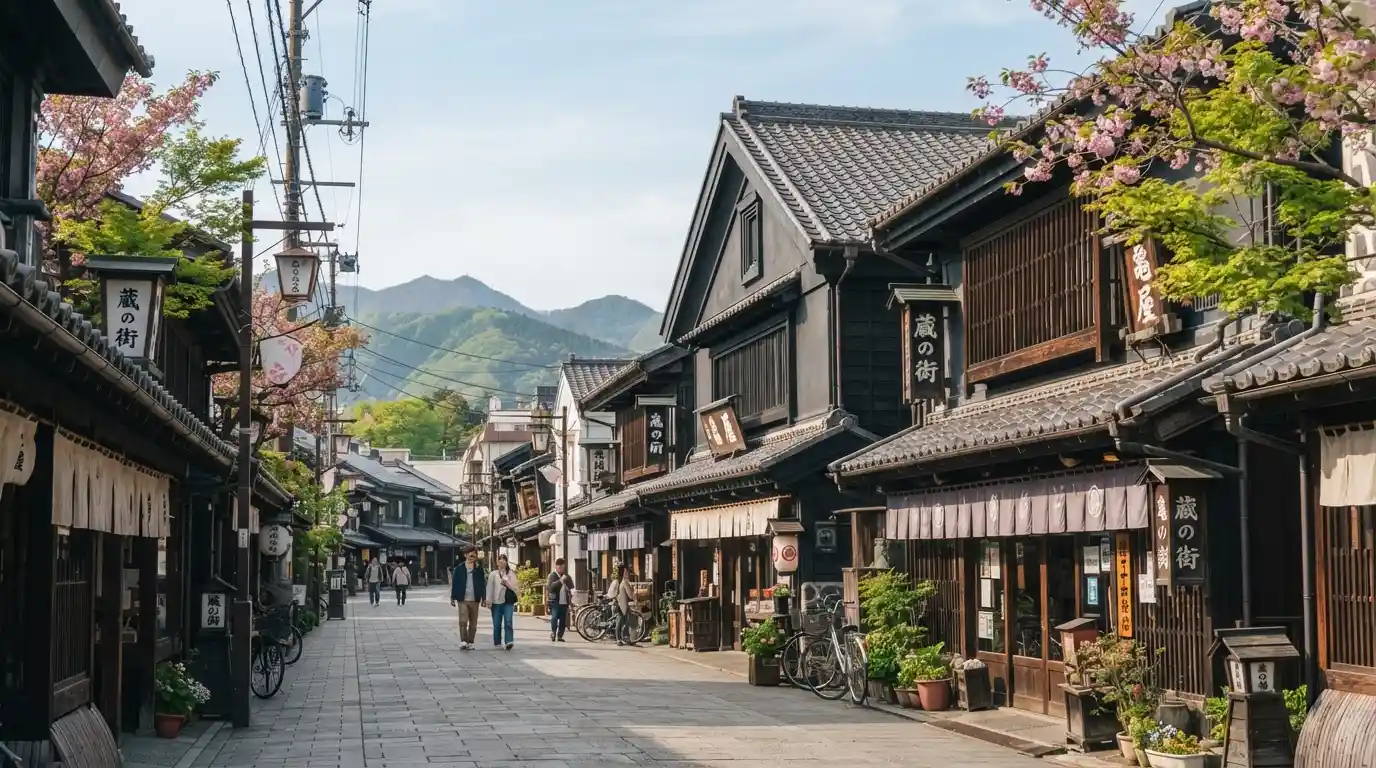
For travelers searching for the best places to visit in Saitama, Japan, the biggest advantage is variety. You can explore the preserved streets of Kawagoe in the morning, discover bonsai culture in Saitama City, and finish the day surrounded by mountains in the Chichibu area.
Whether you are planning a day trip from Tokyo or staying in the prefecture for several days, these destinations provide a useful starting point for exploring Saitama.
1. Kawagoe
Kawagoe is one of the most atmospheric places to visit in Saitama. Often associated with the nickname “Little Edo,” the historic district features traditional warehouse-style buildings, old merchant streets, shrines, temples, and local sweets.
The Kurazukuri Warehouse District is particularly appealing for travelers who want to experience historic Japanese architecture. The famous bell tower, traditional shops, and narrow streets create an excellent setting for walking and photography.
Do not miss Candy Alley, where visitors can browse traditional Japanese sweets and snacks. Kawagoe also has important cultural sites such as Kitain Temple, Kawagoe Hikawa Shrine, and Kawagoe Castle’s Honmaru Goten.
If you enjoy historic destinations, you may also want to explore our guide to the most unique places to visit in Japan.
2. Nagatoro
Nagatoro is one of the best choices in Saitama for travelers who want scenery and outdoor activities. The small mountain town sits along the Arakawa River and is known for dramatic rock formations, forested hills, river cruises, and seasonal landscapes.
The Iwadatami Rocks and Nagatoro Gorge are major highlights. A traditional boat ride along the river provides another way to experience the area’s scenery, while walking and cycling are good options for visitors who prefer to explore at a slower pace.
Nearby Mount Hodo adds another attraction to the area, particularly when seasonal flowers transform the landscape.
3. Chichibu
Chichibu combines mountain scenery, temples, traditional culture, festivals, and outdoor experiences. It is one of the most rewarding areas to explore if you want to move beyond Saitama’s urban attractions.
The region is especially attractive during spring and autumn. Hiking trails, valleys, forests, and rivers create opportunities for nature-focused trips, while the area’s temples and shrines provide a cultural dimension.
Chichibu is also known for the Chichibu Night Festival, a major winter event featuring illuminated floats and traditional performances.
Travelers interested in scenic destinations can also compare this experience with places to visit in Tokyo for first-time travelers.
4. Hitsujiyama Park
Located in Chichibu, Hitsujiyama Park is especially famous for its colorful shibazakura, or moss phlox, fields. During the blooming season, the slopes become covered in pink, purple, white, and other vibrant shades.
Mount Buko provides a dramatic natural backdrop, making the park popular with photographers and travelers looking for seasonal scenery.
Spring is the main reason many visitors put Hitsujiyama Park on their Saitama itinerary, but the surrounding Chichibu landscape also makes the area worth exploring beyond the flower season.
If seasonal scenery is part of your travel planning, take a look at our guide to the best places to visit for sakura in Japan.
5. Omiya Park
Omiya Park is a convenient choice for travelers who want greenery without traveling far into the mountains. The large urban park features landscaped areas, trees, recreational spaces, a zoo, and access to cultural attractions.
Cherry blossom season is one of the most popular times to visit. The park is also close to Musashi Ichinomiya Hikawa Shrine, allowing visitors to combine nature and traditional culture in one outing.
For visitors building a broader Japan itinerary around seasonal landscapes, our guide to places to visit in Tokyo in winter can provide additional ideas.
6. Omiya Bonsai Village
Saitama has a strong connection with the traditional Japanese art of bonsai, and Omiya Bonsai Village is one of the most distinctive places to experience it.
The area contains bonsai nurseries and gardens where visitors can see carefully cultivated miniature trees. The nearby Omiya Bonsai Art Museum provides additional context about bonsai history, techniques, and culture.
For travelers interested in Japanese traditions, this is a quieter alternative to some of the country’s busiest sightseeing destinations. It also works well for visitors who enjoy photography, gardens, art, and cultural experiences.
7. Omiya Bonsai Art Museum
The Omiya Bonsai Art Museum is a natural companion to a visit to Bonsai Village. The museum focuses specifically on bonsai and presents the art form in a way that is accessible to both beginners and experienced enthusiasts.
Visitors can learn how bonsai trees are shaped and maintained while seeing examples that demonstrate different styles and stages of development.
If your Japan trip is centered on cultural experiences, you may also enjoy exploring places to visit in Japan for anime lovers and other specialized travel destinations.
8. Musashi Ichinomiya Hikawa Shrine
Musashi Ichinomiya Hikawa Shrine is one of the important traditional sites in the Saitama area. Its large grounds, traditional gates, pathways, and peaceful atmosphere make it a worthwhile stop for visitors interested in Japanese shrine culture.
The shrine can easily be combined with Omiya Park, making it convenient to visit both attractions during the same outing.
Travelers who enjoy historic and cultural locations can continue their exploration with unique places to visit in Japan.
9. Railway Museum
The Railway Museum in Saitama is an excellent attraction for families, transportation enthusiasts, and anyone interested in Japan’s railway history.
Japan’s rail network plays a major role in everyday life and tourism, and the museum provides an opportunity to explore the development of railway technology through exhibits and preserved vehicles.
Because the museum offers an indoor experience, it can also be a practical choice when weather conditions make outdoor sightseeing less appealing.
10. Saitama Museum of Modern Art
Travelers interested in art can add the Saitama Museum of Modern Art to their itinerary. The museum combines modern architecture with exhibitions featuring Japanese and international artists.
It provides a useful contrast to Saitama’s traditional shrines, historic districts, and natural attractions. A visit here can be particularly appealing for travelers who prefer a balanced itinerary rather than spending the entire trip outdoors.
11. Kawagoe Hikawa Shrine
Kawagoe Hikawa Shrine is another important cultural attraction in Kawagoe. Its traditional architecture and peaceful grounds provide a different experience from the busy shopping streets of the historic district.
The shrine can easily be incorporated into a walking itinerary through Kawagoe, alongside the warehouse district, bell tower, traditional shops, and other historic attractions.
12. Mt. Hodo
Mt. Hodo near Nagatoro is a good destination for travelers who want panoramic scenery and access to nature without committing to a demanding mountain expedition.
The area is known for seasonal flowers and scenic views. A visit to Mt. Hodo can also be combined with Nagatoro’s river scenery, Iwadatami Rocks, and Hodosan Shrine.
If you enjoy combining mountain landscapes with city travel, you may also want to explore our guide to the best places to visit in the mountains.
13. Hodosan Shrine
Hodosan Shrine is a traditional shrine located near Nagatoro and Mt. Hodo. Its natural setting makes it particularly appealing to travelers who want to combine spiritual and outdoor experiences.
The shrine can be visited as part of a wider Nagatoro itinerary, allowing travelers to experience the river, mountain scenery, traditional architecture, and local culture in the same area.
14. Chichibu Shrine
Chichibu Shrine is another important cultural site in the Chichibu area. It is closely connected with local traditions and the region’s famous festival culture.
Visitors interested in Japanese festivals, architecture, and regional history can combine the shrine with other Chichibu attractions for a full day of sightseeing.
15. Iwatsuki
Iwatsuki is known for its traditional doll-making culture and offers a different perspective on Saitama’s heritage. The area has a long connection with Japanese dolls and related craftsmanship.
For travelers looking beyond the most famous tourist attractions, Iwatsuki can provide a quieter cultural experience while adding variety to a Saitama itinerary.
16. Kasukabe and the Metropolitan Area Outer Underground Discharge Channel
Kasukabe is home to one of Saitama’s most unusual attractions: the Metropolitan Area Outer Underground Discharge Channel. The enormous underground infrastructure was designed as part of flood-control efforts and has become an interesting destination for visitors fascinated by engineering and large-scale infrastructure.
The attraction offers a completely different experience from temples, gardens, and historic streets, making it a good option for travelers who enjoy unusual sightseeing experiences.
17. Sayama Hills
Sayama Hills offers a greener side of Saitama with wooded landscapes and a more relaxed atmosphere. The area is particularly suitable for travelers who want walking, nature, and countryside scenery without traveling deep into the prefecture’s mountainous regions.
Its proximity to the Tokyo metropolitan area also makes it useful for visitors looking for a short escape from the city’s busy environment.
18. When Is the Best Time to Visit Saitama?
Saitama can be visited throughout the year, but the best season depends on what you want to see.
- Spring: Cherry blossoms, flower parks, and comfortable conditions for sightseeing make spring popular.
- Summer: Festivals, rivers, and mountain areas provide opportunities for outdoor activities.
- Autumn: Chichibu and Nagatoro become especially attractive when the surrounding forests change color.
- Winter: Winter festivals and quieter sightseeing conditions can appeal to travelers who prefer fewer crowds.
For more seasonal travel inspiration, see our guides to Tokyo in winter, places near Tokyo in winter, and top places to visit in the fall.
19. How to Get Around Saitama
Rail travel is one of the easiest ways to explore Saitama. Major stations connect the prefecture with Tokyo, while local railway services provide access to destinations such as Kawagoe, Omiya, Chichibu, and Nagatoro.
For a first trip, consider grouping attractions by area rather than attempting to cover the entire prefecture in one day. Kawagoe works well as its own walking-focused day trip, while Omiya attractions can be combined into a shorter urban sightseeing route.
For mountain destinations such as Chichibu and Nagatoro, allow additional travel time and check transportation schedules before leaving.
20. How Many Days Do You Need in Saitama?
A single day is enough to experience one major area, especially if you are traveling from Tokyo. Kawagoe is particularly suitable for a day trip because its historic attractions are concentrated within a manageable area.
With two days, you can combine Kawagoe or Saitama City with a nature-focused trip to Nagatoro or Chichibu. Three or more days allow a slower itinerary that includes cultural attractions, gardens, museums, mountain scenery, and seasonal destinations.
Final Thoughts
The best places to visit in Saitama, Japan, range from historic streets and traditional shrines to bonsai gardens, museums, mountain landscapes, rivers, and unusual engineering attractions.
Kawagoe is a strong choice for historic Japan, Omiya is ideal for parks and bonsai culture, while Nagatoro and Chichibu are excellent options for nature and outdoor experiences. By combining several areas according to your interests, you can create a Saitama itinerary that feels very different from a typical Tokyo sightseeing trip.
If you are continuing your Japan journey, explore more ideas through our guides to the best places to visit in Bali, the best places to visit in New Zealand, and Northland, New Zealand.
For travelers who want even more inspiration, our guides covering top places to visit around the world, 25 places in the world to visit, and some of the best places to visit in the world can help with planning future trips.



