
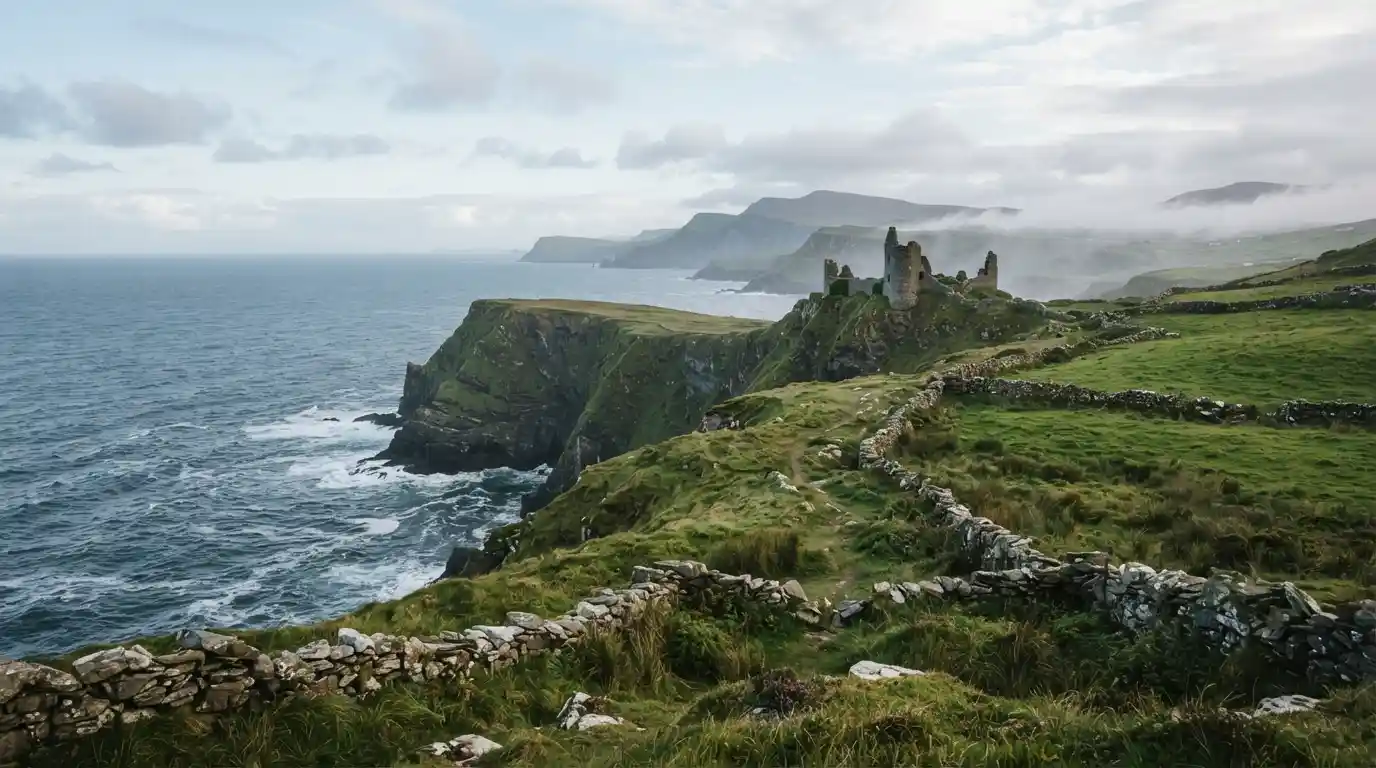
If you are searching for the most amazing places to visit in Ireland, the best itinerary is not necessarily about seeing as many attractions as possible. It is about combining different experiences: spectacular landscapes, historic landmarks, charming towns, cultural traditions, and scenic drives. This guide highlights some of the places that best represent Ireland’s character while also helping you decide where to go based on the type of experience you want.
1. Cliffs of Moher, County Clare
The Cliffs of Moher are one of the most recognizable landscapes in Ireland and an obvious choice for travelers seeking dramatic scenery. Rising above the Atlantic along County Clare’s western coast, the cliffs provide sweeping views across the ocean and toward the Aran Islands on clear days.
The surrounding Burren region adds another layer to the experience. Its unusual limestone landscape, coastal villages, walking routes, and traditional Irish atmosphere make it worth exploring beyond the main viewpoint.
Allow enough time to walk along the designated paths rather than simply stopping for a photograph. Weather can change quickly on the west coast, so practical clothing and sturdy footwear are useful.
2. Killarney National Park, County Kerry
Killarney National Park is ideal for travelers who want Ireland’s famous green landscapes combined with lakes, mountains, forests, and historic buildings. The park surrounds the lakes of Killarney and provides numerous opportunities for scenic walks and outdoor exploration.
Muckross House and Gardens is one of the area’s major attractions, while Torc Waterfall provides an easy way to add a natural landmark to a day of sightseeing. The combination of mountains, woodland, water, and heritage makes Killarney particularly appealing for photographers and road-trip travelers.
The town of Killarney also works well as a base for exploring the wider region, including the scenic landscapes of other European destinations when planning a broader itinerary.
3. Ring of Kerry
For a classic Irish road-trip experience, few routes are as appealing as the Ring of Kerry. The circular route through County Kerry combines coastal scenery, mountain landscapes, lakes, villages, beaches, and historic attractions.
The route is especially attractive because the journey itself becomes part of the destination. Instead of focusing on one landmark, travelers can stop at viewpoints, explore small communities, take short walks, and discover sections of the coastline at their own pace.
Travelers who enjoy scenic road trips may also want to compare the experience with exploring Madeira by car, another destination where driving allows visitors to experience landscapes beyond the main tourist centers.
4. Dublin
Dublin is the natural starting point for many international visitors and deserves more than a quick airport stop. Ireland’s capital combines historic architecture, museums, literary heritage, traditional pubs, parks, and modern neighborhoods.
Trinity College, Dublin Castle, St. Patrick’s Cathedral, and the historic streets around the city center provide plenty of opportunities to explore Ireland’s past. Phoenix Park offers a change of pace with expansive green space close to the center.
Dublin is also useful as the first or final stop on a longer Irish itinerary. Travelers who enjoy historic European capitals can compare its atmosphere with London’s cultural and historic attractions.
5. Galway
Galway offers a different side of Ireland. The city is known for its colorful streets, artistic atmosphere, traditional music, restaurants, and proximity to some of the country’s most dramatic western landscapes.
Walking through the city center is one of the simplest ways to experience Galway. The compact streets make it easy to move between shops, cafés, historic areas, and entertainment venues.
Galway also makes an excellent base for exploring Connemara and the wider west coast. If your trip focuses on scenery and local culture rather than major-city sightseeing, Galway can be one of the most rewarding stops in Ireland.
6. Connemara, County Galway
Connemara is one of Ireland’s most atmospheric regions, with rugged mountains, lakes, boglands, stone walls, quiet roads, and a powerful sense of open space. It is especially appealing to travelers who want to experience rural Ireland.
The landscape changes dramatically as you drive through the region. Some sections feel wild and remote, while small villages provide opportunities to stop for food, local crafts, or a traditional Irish experience.
For travelers who prioritize scenery, Connemara belongs near the top of an Ireland itinerary. It also provides a useful contrast with the country’s larger urban destinations.
7. Dingle Peninsula
The Dingle Peninsula combines rugged Atlantic scenery with beaches, mountains, small villages, and a strong connection to Irish culture. The coastal roads provide some of the country’s most memorable driving experiences.
Dingle town is an enjoyable place to slow down after exploring the peninsula. Its restaurants, cafés, colorful buildings, and traditional atmosphere make it more than simply a place to sleep between sightseeing stops.
The peninsula is particularly suited to travelers who want a slower trip with plenty of opportunities to stop and admire the landscape.
8. The Rock of Cashel, County Tipperary
For travelers interested in Ireland’s historic sites, the Rock of Cashel is one of the most impressive places to include. Perched above the surrounding countryside, the site brings together several important medieval structures in a dramatic setting.
The complex includes a round tower, cathedral, chapel, high cross, and other historic remains. Its elevated position also makes the surrounding landscape part of the experience.
The Rock of Cashel is particularly useful for travelers who want to balance natural scenery with architecture and Irish history. It can also be incorporated into a wider road trip between major destinations.
9. Kilkenny
Kilkenny is one of Ireland’s best choices for travelers who want a strong medieval atmosphere without visiting a huge city. The historic center is compact enough to explore on foot, while Kilkenny Castle provides a major architectural highlight.
The city combines historic buildings, narrow streets, cultural attractions, restaurants, and a lively atmosphere. Kilkenny Castle itself has a long connection with the Butler family and has been extensively restored, making it particularly interesting for visitors fascinated by historic homes.
Those planning a broader European sightseeing trip may also enjoy comparing Kilkenny’s medieval character with historic European city experiences in destinations such as Stuttgart.
10. The Burren
The Burren offers a landscape unlike almost anywhere else in Ireland. Its extensive limestone pavement creates a rugged environment where stone, grass, wildflowers, caves, archaeological sites, and Atlantic scenery come together.
The region is particularly rewarding for travelers who enjoy combining natural attractions with ancient history. Megalithic monuments and archaeological remains can be found throughout the wider landscape.
Because the Burren is close to the Cliffs of Moher, the two destinations can easily be combined into a western Ireland itinerary. Together they demonstrate how dramatically the scenery can change within a relatively small area.
11. Glendalough, County Wicklow
Glendalough is a beautiful choice for travelers looking for a mixture of mountain scenery and early medieval heritage. Located in the Wicklow Mountains, the valley is known for its lakes, walking routes, forests, and historic monastic settlement.
The ancient monastery gives the landscape a distinctive character. Visitors can combine a heritage-focused visit with a walk around the valley, making Glendalough particularly suitable for travelers who do not want to choose between nature and history.
Its location also makes it a practical addition to trips that begin in Dublin and continue toward other parts of Ireland.
12. Cork
Cork provides a lively southern alternative to Dublin and Galway. Built around the River Lee, the city combines historic architecture, food culture, markets, museums, and easy access to nearby coastal attractions.
One of Cork’s strengths is its position within southern Ireland. Travelers can use the city as a base while exploring nearby towns, castles, coastal scenery, and countryside.
Visitors interested in food should leave time to explore the city’s culinary scene, while those interested in history can combine Cork with nearby heritage attractions.
13. Waterford
Waterford is a strong choice for travelers interested in Irish history, especially because of its long association with the country’s Viking and medieval past. The city sits in southeastern Ireland and offers a combination of historic attractions and modern waterfront experiences.
Its location also makes Waterford useful when creating a route through Ireland’s Ancient East. Travelers who enjoy historic European destinations can easily incorporate the city into a wider cultural itinerary.
14. Sligo
Sligo is an excellent option for travelers who prefer dramatic scenery without the same level of attention received by Ireland’s most famous attractions. Mountains, coastline, lakes, archaeological sites, and literary history all contribute to the area’s appeal.
Benbulben is the region’s most recognizable natural landmark, while the surrounding countryside offers opportunities for walking, photography, and scenic drives.
Sligo works particularly well for visitors traveling along Ireland’s western and northern regions and looking for a destination that combines nature and culture.
15. Donegal
Donegal is one of the best areas to consider if your ideal Ireland trip involves rugged landscapes, quiet roads, remote beaches, and dramatic coastal views. The region feels distinctly different from the busier tourist centers farther south.
From coastal cliffs to mountain landscapes and traditional communities, Donegal offers plenty of opportunities to experience a slower side of Ireland.
Travelers interested in scenic destinations around the world may also enjoy exploring other destination guides within the BizHorizone travel collection when planning future trips.
16. Trim and the Boyne Valley
The Boyne Valley is an excellent choice for travelers fascinated by Ireland’s deeper history. The region contains important prehistoric and medieval sites, while Trim provides a particularly striking medieval setting.
Travelers who enjoy castles and ancient monuments can spend time exploring the area’s heritage rather than treating it as a simple day trip. The combination of archaeological history and green countryside creates a very different experience from Ireland’s coastal attractions.
17. The Wild Atlantic Way
Rather than a single attraction, the Wild Atlantic Way is a long coastal touring route that connects many of Ireland’s most spectacular western destinations. It is an excellent framework for travelers who want to experience the country by road.
Depending on your route, you can combine the Cliffs of Moher, Galway, Connemara, Mayo, Sligo, Donegal, and other coastal areas into one extended journey.
Because the route includes such varied landscapes, it works well for travelers who want scenic photography, walking, local food, historic sites, and small-town experiences in the same vacation.
18. Skellig Islands
The Skellig Islands offer one of Ireland’s most unusual combinations of natural beauty and historic heritage. Located off the coast of County Kerry, the islands are known for their dramatic Atlantic setting and early monastic history.
Access can depend heavily on weather and seasonal conditions, so this is a destination that requires more planning than many mainland attractions. When conditions allow, however, the experience can be unforgettable.
For travelers interested in remote destinations, the Skellig Islands add something genuinely different to a conventional Ireland itinerary.
How to Choose the Best Places in Ireland for Your Trip
The best destinations depend on what you want from your vacation. If dramatic scenery is your priority, focus on the west coast, including the Cliffs of Moher, Connemara, Dingle, Donegal, and the Wild Atlantic Way.
If history is more important, consider Dublin, the Rock of Cashel, Kilkenny, Glendalough, the Boyne Valley, and Waterford. These destinations provide a stronger concentration of castles, ancient monuments, medieval architecture, and historic stories.
For a balanced first trip, combine a major city with several regional destinations. Dublin, Galway, Killarney, the Cliffs of Moher, and a scenic road-trip section can provide a broad introduction without trying to cover every corner of the island.
Travelers planning a wider European vacation can also compare Ireland with Spain’s coastal destinations, southern Italy, southwestern France, and family-friendly places in France.
Best Time to Visit Ireland
Ireland can be visited throughout the year, but the experience changes significantly with the seasons. Late spring and summer generally provide longer daylight hours and favorable conditions for road trips, walking, and outdoor sightseeing.
Autumn brings changing colors and a quieter atmosphere, while winter can offer fewer crowds but shorter days and more unpredictable weather. Because Ireland’s scenery is one of its greatest attractions, flexibility is valuable regardless of when you travel.
If you enjoy comparing seasonal travel experiences, you may also want to explore European winter destinations or Albania in winter when planning future trips.
Tips for Exploring Ireland
- Build in extra driving time: Rural roads can be slower than they appear on a map.
- Check weather conditions: Atlantic weather can change quickly, especially along exposed coastal areas.
- Do not overpack your itinerary: Ireland is better experienced at a relaxed pace.
- Combine cities and countryside: A balanced itinerary provides a much broader experience of the country.
- Reserve popular attractions when appropriate: Some major heritage sites and tours can become busy during peak travel periods.
- Wear practical footwear: Historic sites, cliffs, trails, and rural attractions often involve uneven ground.
- Allow time for spontaneous stops: Some of the most memorable views can appear between major attractions.
Final Thoughts
The most amazing places to visit in Ireland are not limited to one type of attraction. The country’s appeal comes from the way dramatic landscapes and centuries of history exist side by side.
You can begin your journey in Dublin, explore medieval Kilkenny, walk beside the Atlantic at the Cliffs of Moher, drive through Connemara, discover the lakes of Killarney, and finish among the rugged landscapes of Donegal. Each region offers a different perspective on Ireland.
For travelers who value scenic views, historic sites, authentic towns, and memorable road trips, Ireland remains one of Europe’s most rewarding destinations. The key is to choose a route that leaves enough time to enjoy the journey rather than simply checking attractions off a list.
If you’re still comparing destinations, continue exploring top places around the world, some of the world’s best destinations, and global travel ideas for inspiration.



