
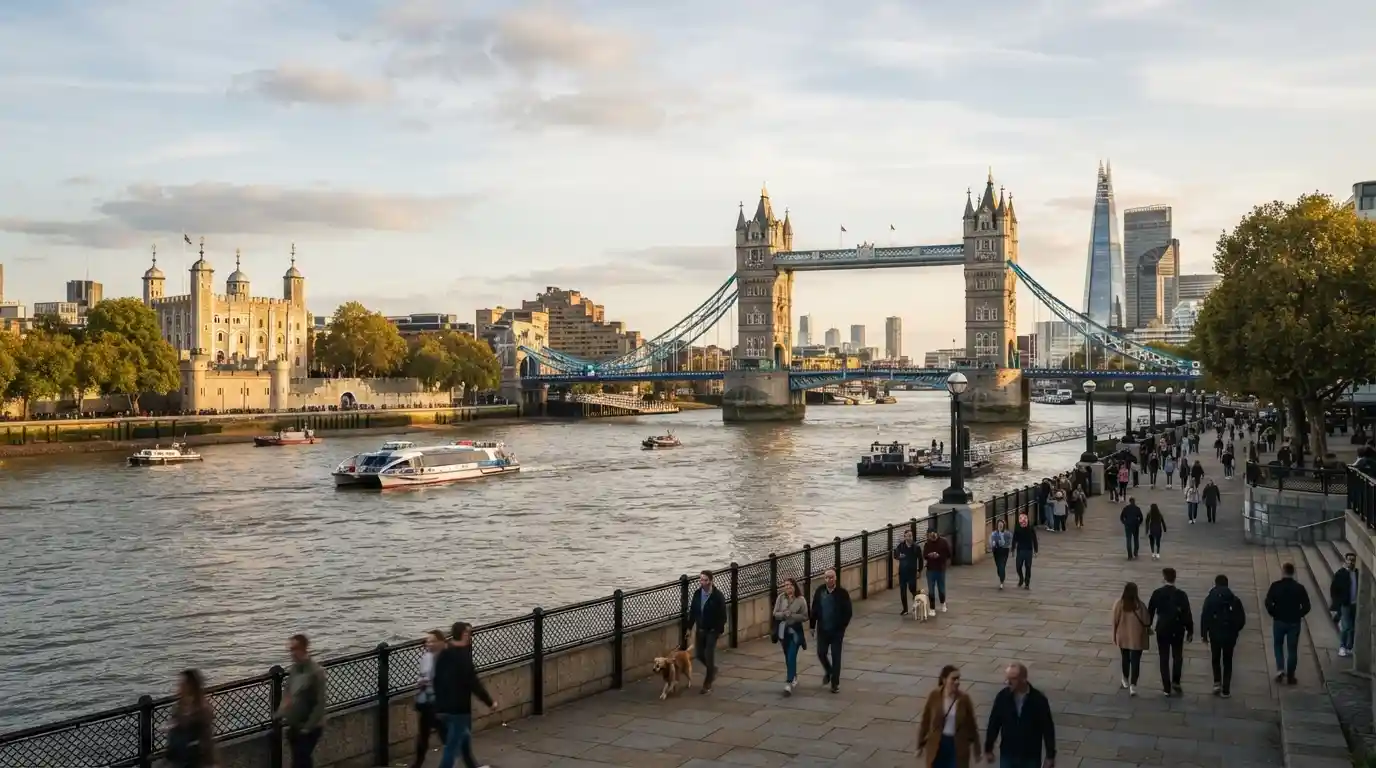
The most interesting places to visit in London are not limited to one part of the city. Westminster offers royal and political history, the City of London reveals layers of the capital’s medieval past, South Bank combines culture with Thames views, Kensington is ideal for museums, and Greenwich blends maritime heritage with open green spaces. Exploring these different areas makes it possible to experience London from several perspectives rather than seeing only its most photographed landmarks.
Whether you are interested in history, art, architecture, literature, royal heritage, local culture, or scenic walks, London has something worth building into your itinerary. This guide highlights some of the city’s most interesting destinations and explains what makes each one special.
1. Tower of London
The Tower of London is one of the best places to begin if history is your main reason for visiting the city. The fortress has played several roles throughout London’s history, including royal residence, defensive stronghold and prison.
Visitors can explore its imposing medieval architecture, learn about famous historical events, and see the Crown Jewels. The surrounding riverside setting also makes the Tower an excellent starting point for exploring the Thames and nearby historic attractions.
For travelers interested in historic cities, the Tower demonstrates how London’s past remains physically connected to its modern urban landscape.
2. Westminster Abbey
Westminster Abbey is one of London’s most important historic and architectural landmarks. Its connection with British royal ceremonies, prominent historical figures and centuries of national history gives the building an unusual depth.
The interior is particularly rewarding for visitors who appreciate architecture. Stonework, chapels, monuments and memorials create an environment where different periods of British history can be explored within a single building.
Because Westminster contains several major sights within a relatively compact area, you can combine the abbey with historic government districts and landmarks in other capital cities when planning broader cultural travel.
3. Big Ben and the Houses of Parliament
Few London views are as recognizable as Big Ben beside the Houses of Parliament. The landmark is especially impressive when viewed from across the River Thames, where the architecture can be appreciated as part of the wider Westminster skyline.
Big Ben is officially the nickname of the Great Bell, while the famous clock tower is known as the Elizabeth Tower. The surrounding Palace of Westminster remains closely associated with Britain’s political history.
For photographers, the area offers several perspectives, including views from Westminster Bridge, the South Bank and nearby riverside paths.
4. Buckingham Palace
For travelers interested in royal history, Buckingham Palace is an obvious addition to a London itinerary. The palace is strongly associated with the British monarchy and remains one of the capital’s most recognizable buildings.
The surrounding area is equally worthwhile. St James’s Park provides a peaceful green setting close to the palace, while The Mall creates a ceremonial route toward Trafalgar Square.
Visiting this part of London allows travelers to combine royal heritage, architecture, photography and a relaxing park walk without traveling far between attractions.
5. British Museum
The British Museum is one of London’s most significant cultural destinations for anyone interested in world history and ancient civilizations. Its galleries cover an enormous range of cultures and historical periods.
Rather than trying to see everything in one visit, choose several collections that match your interests. Ancient Egypt, Greece, Rome, the Middle East and other regions provide opportunities to explore how civilizations developed, traded, created art and recorded their histories.
If you enjoy combining museums with international travel, you can also compare the experience with destinations covered in our guides to cultural places to visit in Japan, Tokyo attractions for first-time visitors, and interesting places to visit in Munich.
6. National Gallery and Trafalgar Square
Trafalgar Square is one of the liveliest public spaces in central London and an excellent place to combine art, architecture and city life. The National Gallery overlooks the square and provides access to an extensive collection of European paintings.
Even if you are not planning a long museum visit, Trafalgar Square itself is worth exploring. Its fountains, monuments, surrounding buildings and pedestrian activity make it an excellent location for observing the rhythm of central London.
Art lovers can continue toward nearby cultural venues, galleries and the West End, creating a natural walking route through some of the city’s most important cultural districts.
7. St Paul’s Cathedral
St Paul’s Cathedral is one of London’s defining architectural landmarks. Its large dome dominates the skyline and has become an important part of the visual identity of the City of London.
The cathedral is particularly interesting for visitors who enjoy architecture, religious history and panoramic city views. Its location also makes it easy to combine with a walk through the historic City of London.
The City has a unique character because ancient street patterns and historic landmarks exist alongside modern office towers and contemporary architecture.
8. Tower Bridge
Tower Bridge combines engineering, architecture and history in one memorable destination. Its distinctive towers and bascules make it one of London’s most recognizable structures.
Walking across the bridge is free, while visiting the elevated walkways provides a different perspective over the Thames. The surrounding area is also excellent for photography, especially when the bridge is viewed from the riverbanks.
Travelers who enjoy architectural landmarks may also appreciate comparing London’s bridges and skyline with destinations such as Montreal or the eastern United States.
9. South Bank and the River Thames
South Bank is one of the best areas in London for combining cultural attractions with scenic walking. The riverside promenade offers views toward Westminster, the City and several famous bridges.
The area is home to major cultural venues, restaurants, public spaces and attractions. It is particularly enjoyable in the late afternoon when the changing light creates attractive views across the Thames.
A walk along South Bank can easily be combined with the London Eye, Tate Modern, Shakespeare’s Globe and nearby Borough Market.
10. Tate Modern
Tate Modern is a strong choice for travelers who want to experience London’s contemporary cultural side. Housed in a former power station beside the Thames, the gallery offers an impressive combination of industrial architecture and modern art.
The surrounding riverfront is just as important to the experience. After visiting the galleries, walk along the Thames toward Millennium Bridge for one of the most enjoyable urban sightseeing routes in central London.
If modern culture is an important part of your travel style, London provides a useful contrast to destinations focused more heavily on historic architecture, such as Ireland’s historic and scenic destinations.
11. Shakespeare’s Globe
Shakespeare’s Globe provides a connection to one of the most influential figures in English literature. The reconstructed theater near the Thames offers visitors an opportunity to understand how Shakespearean performance connects with London’s theatrical history.
The surrounding Bankside area is ideal for travelers who enjoy literature, theater, architecture and riverside walks. It can easily be combined with Tate Modern and Millennium Bridge in a single cultural outing.
12. Greenwich
Greenwich is one of London’s most rewarding areas for visitors who want history and scenery in the same destination. The neighborhood is strongly associated with Britain’s maritime heritage and the development of navigation and timekeeping.
The area includes Greenwich Park, the Royal Observatory, the National Maritime Museum and the Cutty Sark. The park also provides elevated views across London, making Greenwich especially attractive to photographers.
Greenwich feels noticeably different from the dense center of London, which makes it a useful addition to an itinerary that needs some breathing room.
13. Natural History Museum
The Natural History Museum is one of London’s most visually impressive museums. Its architecture alone makes it worth visiting, while its collections provide an engaging introduction to the natural world.
The museum works particularly well for families, students and travelers who enjoy science alongside culture. It is located in Kensington, an area that also contains several other major museums and cultural attractions.
Visitors who enjoy combining museums with outdoor sightseeing can move from the museum district toward Hyde Park and Kensington Gardens.
14. Victoria and Albert Museum
The Victoria and Albert Museum is a fascinating destination for anyone interested in design, decorative arts, fashion and material culture. Its collections demonstrate how artistic ideas have evolved across different societies and historical periods.
Because it is located close to the Natural History Museum and Science Museum, travelers can create a full cultural day around Kensington without spending much time traveling between attractions.
15. Hyde Park and Kensington Gardens
London’s cultural attractions become even more enjoyable when balanced with green spaces. Hyde Park provides a large open area in the heart of the city, while nearby Kensington Gardens offers landscaped scenery and historic features.
These parks are ideal for travelers who want a slower part of the itinerary. A morning museum visit followed by a walk through the parks can provide a pleasant contrast to busy central streets.
For travelers interested in scenic urban destinations, London’s parks also demonstrate why the city is more than its buildings and museums. You can explore similar green-space experiences through our guides to Salt Lake City and Vermont destinations for families.
16. Regent’s Park and Primrose Hill
Regent’s Park offers a different atmosphere from the formal sights of Westminster. The park contains gardens, open lawns and walking routes, while nearby Primrose Hill is known for its elevated city views.
It is a good choice for travelers who want scenic photography without leaving London. The combination of greenery, neighborhood streets and skyline views creates a more relaxed side of the capital.
17. Camden Market
Camden is one of the best places to experience London’s alternative and multicultural character. The market area combines food, fashion, independent shopping, street art and entertainment.
Unlike the formal atmosphere of royal landmarks, Camden gives visitors a chance to see a more energetic side of contemporary London. It is particularly suitable for travelers who enjoy browsing markets, trying different foods and exploring distinctive neighborhoods.
For a broader international perspective on markets and urban culture, you can compare Camden with destinations such as Mumbai and Salem, Massachusetts.
18. Portobello Road and Notting Hill
Portobello Road is a strong choice for visitors who prefer neighborhood exploration to traditional sightseeing. The area is known for its colorful streets, market atmosphere, antique shopping and distinctive architecture.
Notting Hill also offers an opportunity to experience London’s multicultural character through restaurants, shops and local businesses. It is a particularly enjoyable area to explore on foot because the journey between streets and markets becomes part of the experience.
19. The City of London
The City of London is the historic core of the capital and one of the most interesting areas for understanding how old and new London exist side by side.
Medieval street patterns, churches, historic landmarks and modern skyscrapers create an unusual architectural contrast. A walking route through the City can include St Paul’s Cathedral, historic lanes, markets, riverside views and modern financial buildings.
This part of London is especially rewarding for travelers who want to understand the city rather than simply photograph its most famous attractions.
20. Richmond Park
Richmond Park is an excellent choice when scenic landscapes become a priority. Its broad open spaces, woodland, ponds and deer create an atmosphere that feels surprisingly distant from central London’s busy streets.
The park is ideal for walking, photography and taking a break from museums and historic buildings. It can be especially appealing during autumn when the changing foliage adds another layer of visual interest.
21. Hampstead Heath
Hampstead Heath offers another perspective on London’s relationship with nature. Its large open spaces, woodland paths and elevated viewpoints make it one of the city’s most enjoyable places for scenic exploration.
Parliament Hill is particularly popular for skyline views. On a clear day, the elevated position provides a memorable perspective across the city.
22. London Museum Docklands
London’s history is not limited to palaces and medieval buildings. The Docklands area tells another important story involving trade, shipping, industry and the transformation of London’s eastern waterfront.
London Museum Docklands provides useful context for understanding how the River Thames supported the development of the city. It is a worthwhile option for visitors who want to explore a less conventional side of London’s history.
23. The West End
For travelers interested in performing arts, the West End is an essential part of the London experience. The theater district offers musicals, plays and other performances throughout the year.
The area also connects naturally with Covent Garden, Soho, Leicester Square and Trafalgar Square, allowing visitors to combine entertainment with restaurants, shopping and evening walks.
24. Borough Market
Borough Market adds a culinary dimension to a cultural London itinerary. Food markets are useful places to experience the international character of the city, and Borough Market is particularly convenient for travelers exploring South Bank and Bankside.
Rather than treating food as a separate part of sightseeing, consider using markets as stops between museums, historic landmarks and riverside walks.
25. London at Night
London changes considerably after sunset. Historic buildings become illuminated, bridges reflect across the Thames and busy entertainment districts develop a different atmosphere.
For travelers interested in evening sightseeing, a riverside walk can connect several landmarks without requiring a long journey. Westminster, South Bank, Tower Bridge and the City all offer distinctive nighttime views.
For a more focused guide, see our resource on free places to visit in London at night.
How to Experience London’s Cultural and Historical Side
The best way to explore London is to organize your itinerary geographically instead of crossing the entire city repeatedly. Grouping nearby attractions saves travel time and gives you more opportunities to walk through the neighborhoods between major sights.
For history lovers
Start with the Tower of London, Tower Bridge, the City of London, St Paul’s Cathedral and Westminster Abbey. These places provide a strong introduction to London’s medieval, royal, religious and political history.
For art and culture
Build a route around the British Museum, National Gallery, Tate Modern, Victoria and Albert Museum and the West End. Add Shakespeare’s Globe if literature and theater are particularly important to you.
For scenic experiences
Prioritize Greenwich Park, Hyde Park, Kensington Gardens, Regent’s Park, Primrose Hill, Hampstead Heath and Richmond Park. The Thames also provides some of the city’s best urban viewpoints.
For neighborhood exploration
Spend time in Camden, Notting Hill, Portobello Road, Covent Garden, Soho and Greenwich. These areas reveal a more everyday and contemporary side of London beyond its major monuments.
Best Areas to Stay for Exploring London
Choosing the right area can make a major difference to your experience. Westminster is convenient for royal and political landmarks, while South Bank works well for riverside attractions. Kensington is useful for museum-focused trips, and the City is ideal for travelers interested in historic architecture and central sightseeing.
Visitors who prefer restaurants, nightlife and neighborhood atmosphere may enjoy Soho, Covent Garden or Notting Hill. Greenwich is a good choice for travelers who want a quieter setting with strong historical and scenic appeal.
Tips for Planning a London Sightseeing Itinerary
- Group nearby attractions: Plan each day around one or two connected areas rather than traveling randomly across the city.
- Mix indoor and outdoor activities: Pair museums with parks, markets or riverside walks.
- Allow walking time: Some of London’s best experiences happen between major attractions.
- Check current opening information: Ticketing, opening hours and temporary exhibitions can change.
- Start popular attractions early: Major landmarks can become busy later in the day.
- Use public transportation: London’s extensive transport network makes it practical to combine different neighborhoods.
- Leave room for discovery: Do not fill every hour with scheduled attractions. London’s streets, markets and parks are part of the experience.
Final Thoughts
The most interesting places to visit in London are not defined by one category. The city’s appeal comes from the way history, culture, architecture, nature and modern urban life overlap.
You can begin the morning among medieval walls at the Tower of London, explore world history in a museum, walk beside the Thames in the afternoon, watch a West End performance in the evening and finish the day with an illuminated city skyline.
For travelers seeking cultural, historical and scenic experiences, London rewards curiosity. Instead of trying to see every famous attraction in one trip, choose several neighborhoods and explore them deeply. That approach reveals the layers of the city and creates a much richer travel experience.
If you are planning additional international trips, explore our guides to top places to visit around the world, 25 places around the world worth visiting, and some of the world’s best destinations for more travel inspiration.



