
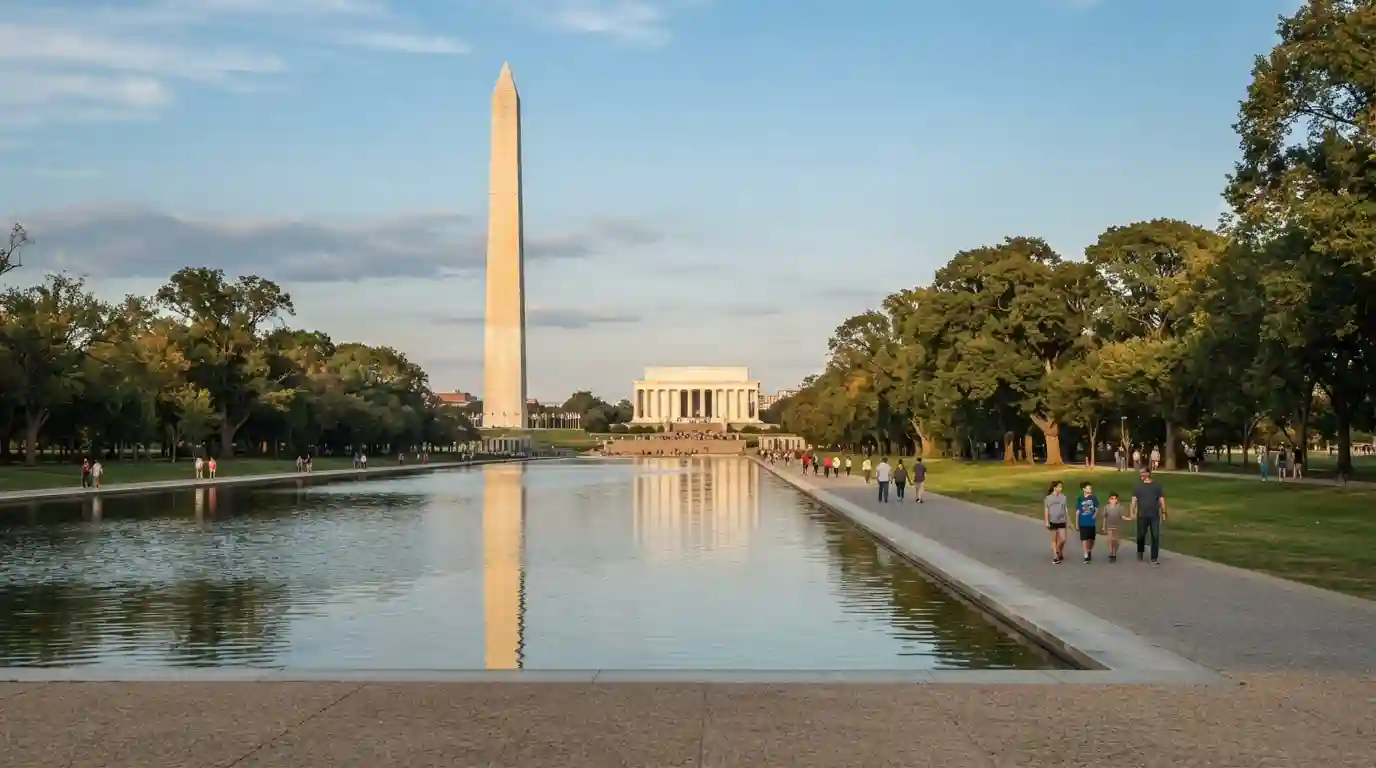
Washington, DC is one of the best cities in the United States for travelers who want to combine history, culture, museums, architecture, and memorable city experiences in one trip. The capital is especially rewarding for first-time visitors because many of its most famous attractions are concentrated around the National Mall, while neighborhoods such as Georgetown, Capitol Hill, and Dupont Circle offer a different side of the city.
If you are planning a short getaway or a longer Washington, DC vacation, knowing which attractions deserve priority can make your itinerary much easier to organize. From iconic monuments and presidential landmarks to world-class museums and historic neighborhoods, these are the top ten places to visit in Washington DC.
1. The National Mall
The National Mall is the natural starting point for almost any first trip to Washington, DC. This expansive civic space connects some of the city’s most recognizable monuments, memorials, museums, and government landmarks.
A walk across the Mall can take you past the Washington Monument, World War II Memorial, Vietnam Veterans Memorial, Lincoln Memorial, and several Smithsonian museums. Because so many major attractions are concentrated here, you can spend several hours exploring without needing to travel far between stops.
The National Mall is also particularly impressive around sunrise and sunset, when the monuments take on a different atmosphere and the crowds can be lighter.
For travelers who enjoy discovering major American destinations, our guide to the best places to visit in the Eastern US can also help you plan a broader regional trip.
2. Lincoln Memorial
The Lincoln Memorial is one of the most recognizable landmarks in Washington, DC. The enormous seated statue of Abraham Lincoln overlooks the Reflecting Pool and provides one of the city’s most memorable views toward the Washington Monument.
The memorial is especially meaningful for visitors interested in American history and civil rights. The site is associated with major moments in the nation’s history, including Martin Luther King Jr.’s famous 1963 “I Have a Dream” speech.
Visit during the early morning for a quieter experience or after sunset for a dramatic view of the illuminated memorial and Reflecting Pool.
3. Washington Monument
The Washington Monument is another essential stop for anyone visiting the nation’s capital. This towering obelisk honors George Washington, the country’s first president, and is one of the defining features of the Washington, DC skyline.
The monument stands near the center of the National Mall, making it convenient to combine with several other attractions. The surrounding grounds also provide excellent opportunities for photographs, particularly when the monument is reflected in nearby water features.
If you want to see several landmarks in a single outing, plan your route around the Washington Monument rather than treating it as an isolated attraction.
4. Smithsonian National Air and Space Museum
The Smithsonian National Air and Space Museum is one of the most popular choices for families, aviation enthusiasts, and travelers fascinated by exploration and technology.
Its exhibits explore the development of aviation, spaceflight, aircraft, spacecraft, and other milestones in human exploration. Even visitors who are not normally interested in museums can find something engaging because many exhibits connect scientific achievements with real historical events.
Allow several hours if you want to explore the museum at a comfortable pace. During busy travel periods, check visitor-entry requirements before building your day around the museum.
If technology and innovation are part of your interests, you may also enjoy exploring our article about how AI applications are changing everyday technology.
5. Smithsonian National Museum of Natural History
Another standout Smithsonian attraction is the National Museum of Natural History. It is an excellent choice for families and anyone interested in animals, fossils, geology, human history, and the natural world.
The museum’s large-scale displays make it easy to spend much of a day exploring different galleries. Highlights can include prehistoric specimens, gemstones, animal exhibits, and displays explaining the development of life on Earth.
One advantage of visiting this museum is its location along the National Mall. You can combine it with other Smithsonian institutions and monuments instead of dedicating an entire day to a single attraction.
6. United States Capitol
The United States Capitol is one of Washington, DC’s most important architectural and political landmarks. Located at the eastern end of the National Mall, the building is closely connected with the country’s legislative history.
Even if you do not take a formal tour, the surrounding Capitol grounds are worth exploring. The architecture, open spaces, and views toward the Mall make this an important stop on a sightseeing itinerary.
Visitors who want to explore the area around Capitol Hill should consider combining the Capitol with nearby attractions rather than visiting only for a quick photograph.
7. The White House
No list of the best places to visit in Washington DC would be complete without the White House. The building is both the official residence and workplace of the President of the United States and has become one of the world’s most recognizable political landmarks.
For most travelers, seeing the White House from the surrounding public areas is a straightforward addition to a city sightseeing route. More extensive access requires advance planning and follows specific visitor procedures.
The White House is particularly easy to combine with other downtown and National Mall attractions, making it a practical stop even during a short weekend trip.
8. National Gallery of Art
Art lovers should make time for the National Gallery of Art. Located near the eastern side of the National Mall, the museum provides an opportunity to explore an extensive range of European and American artwork.
The gallery is a strong choice when you want a slower-paced experience after visiting several monuments. Its collections cover different periods and artistic movements, giving visitors plenty to explore regardless of their particular interests.
Consider visiting the gallery during the middle of the day, especially if you plan to spend the morning walking around the monuments.
9. National Museum of African American History and Culture
The National Museum of African American History and Culture offers an important perspective on the American experience. Its exhibitions explore African American history, culture, achievements, struggles, and contributions across different periods.
The museum is located prominently on the National Mall and has become one of Washington, DC’s most significant cultural institutions.
Because the subject matter is extensive and many visitors want time to reflect on the exhibits, avoid rushing through the building. Give yourself enough time to explore the galleries thoughtfully.
If you enjoy combining history and culture with travel, you may also want to explore our guide to the best places to visit in New York for another major US destination.
10. Georgetown
Georgetown provides a completely different experience from the monumental core of Washington, DC. Known for its historic architecture, cobblestone streets, waterfront setting, shops, restaurants, and walkable streets, the neighborhood is ideal for travelers who want to experience the city beyond its famous government landmarks.
Spend an afternoon walking through the historic streets, browsing local stores, enjoying a meal, or heading toward the waterfront. Georgetown is particularly appealing if you have already spent several hours visiting museums and monuments and want a more relaxed part of the city.
It is also a good area to explore in the evening when you want to transition from sightseeing into dining and entertainment.
How to Plan Your Washington DC Sightseeing Itinerary
Washington, DC can look compact on a map, but a full day of sightseeing can involve a significant amount of walking. The easiest way to make the most of your trip is to organize attractions by location.
For a One-Day Washington DC Trip
If you only have one day, prioritize the National Mall. Start near the Capitol or Washington Monument and work your way toward the Lincoln Memorial. Choose one or two museums rather than attempting to visit every Smithsonian institution.
A practical one-day route could include:
- United States Capitol
- Washington Monument
- National Mall
- One Smithsonian museum
- World War II Memorial
- Lincoln Memorial
- White House
For a Two-Day Trip
With two days, you can slow down and add Georgetown, more museums, and additional memorials. Use the first day for the National Mall and the second day for museums, neighborhoods, and attractions outside the central monument corridor.
If you enjoy seasonal travel, you can also compare this itinerary with other US destination ideas, such as our guide to the top places to visit in the fall.
For a Three-Day Trip
Three days gives you much more flexibility. You can explore the major monuments, visit several museums, spend time in Georgetown, and leave room for neighborhoods, restaurants, parks, or less crowded attractions.
A longer trip also gives you more flexibility to adjust your plans around weather, museum schedules, and special events.
Best Time to Visit Washington DC
Washington, DC can be visited throughout the year, but each season offers a different experience.
Spring
Spring is one of the most popular periods to visit because of the city’s famous cherry blossoms. The combination of flowering trees, the Tidal Basin, and historic monuments creates some of the most recognizable scenery in the capital.
Spring can also bring heavier visitor demand, so advance planning is useful if specific museums or attractions are priorities.
Summer
Summer offers long daylight hours and plenty of opportunities for sightseeing, but temperatures and humidity can make extended outdoor walks tiring. Start outdoor activities earlier in the day and use museums as breaks from the heat.
If you’re comparing summer destinations across North America, our guide to the best natural places to visit in Ontario offers another option for a different type of vacation.
Fall
Fall is an excellent time for walking tours because temperatures are generally more comfortable than during the peak of summer. The city’s parks and tree-lined neighborhoods also become particularly attractive as foliage changes.
Travelers planning an autumn road trip can also explore our guide to Upstate New York places to visit in fall or our recommendations for Massachusetts in fall.
Winter
Winter can be quieter, although colder weather means you will need to plan carefully around outdoor attractions. Museums can become especially appealing during colder days.
If you enjoy winter travel, consider comparing Washington with destinations featured in our guides to the best places to visit in the Northeast in winter and New England in winter.
Tips for First-Time Visitors to Washington DC
Wear Comfortable Shoes
Many of the best Washington, DC attractions are connected by walking routes. Comfortable shoes can make a significant difference, especially if you plan to explore several monuments and museums in one day.
Group Attractions by Area
Avoid crossing the city repeatedly. Group the National Mall attractions together, then dedicate separate time to Georgetown, Capitol Hill, or other neighborhoods.
Allow More Time Than You Expect
Museums can take longer than planned, and large memorial areas are more spread out than they appear. Build some flexibility into your itinerary instead of scheduling every hour.
Check Entry Requirements in Advance
Some Washington attractions use timed entry, reservations, or visitor procedures that can change. Check the current requirements before your trip, particularly for popular museums and government-related attractions.
Consider Public Transportation
Driving and parking in central Washington can add unnecessary complexity to a sightseeing trip. Public transportation and walking can often make it easier to move between major attractions.
Where to Go After Washington DC
Washington, DC also works well as part of a larger East Coast itinerary. Travelers with additional vacation time can continue toward other major American cities and scenic destinations.
For example, our guide to the best places to visit on the West Coast can help if you’re planning a much larger US trip. You can also explore the most unique places to visit in North America for less conventional destination ideas.
Travelers interested in seasonal US vacations can also compare Washington with top places to visit in Oklahoma, the best places to visit in Wisconsin, and top places to visit in Salt Lake City.
If your itinerary includes New York, you can continue your planning with our guide to popular places to visit in Los Angeles when building a broader US travel route.
Frequently Asked Questions About Visiting Washington DC
What is the number one place to visit in Washington DC?
The National Mall is the best starting point for most first-time visitors because it provides access to numerous major monuments, memorials, museums, and landmarks within one area.
How many days do you need in Washington DC?
Two to three days is a good starting point for seeing many of the city’s major attractions without rushing. A longer stay is better if you want to explore multiple museums and neighborhoods in greater depth.
Is Washington DC good for a family vacation?
Yes. Washington, DC offers museums, monuments, outdoor spaces, and educational attractions that can appeal to both children and adults. Families should balance museums with outdoor sightseeing so younger travelers do not become overwhelmed.
Can you visit Washington DC without a car?
Yes. A car is not necessary for many popular sightseeing itineraries. Walking, public transportation, and other local transportation options can make it easier to move between major attractions.
What should I see first in Washington DC?
For a first visit, begin with the National Mall and prioritize the Lincoln Memorial, Washington Monument, major memorials, and one or two Smithsonian museums. You can then explore the White House, Capitol Hill, Georgetown, and other neighborhoods depending on the length of your trip.
Final Thoughts
Washington, DC offers far more than government buildings and political landmarks. Its combination of monumental architecture, American history, free cultural attractions, museums, neighborhoods, parks, and walkable sightseeing areas makes it one of the most rewarding city destinations in the United States.
For first-time visitors, the best strategy is to start with the National Mall, choose museums according to your interests, and leave enough time to experience neighborhoods such as Georgetown. Whether you’re planning a quick weekend or a longer East Coast adventure, these top ten places to visit in Washington DC provide a strong foundation for an unforgettable trip.