
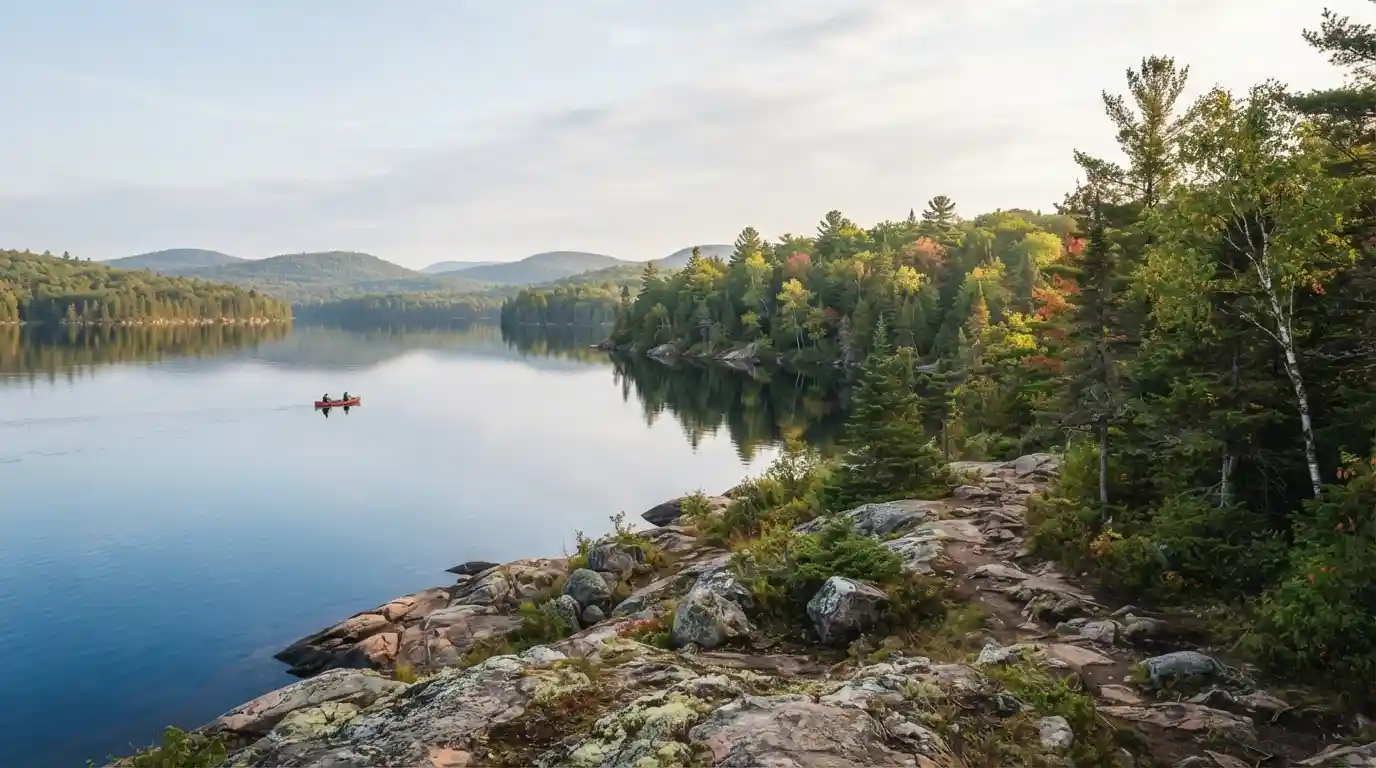
From the canoe routes of Algonquin Provincial Park to the turquoise waters and limestone cliffs of Bruce Peninsula, the best natural places to visit in Ontario offer something for hikers, paddlers, campers, photographers, birdwatchers, families, and travelers looking for a quieter escape.
Ontario is also exceptionally diverse geographically. Southern Ontario has escarpments, forests, wetlands, beaches, and conservation areas, while Northern Ontario opens into larger wilderness landscapes shaped by the Canadian Shield and Great Lakes.
If you are comparing Ontario with other nature-focused destinations, you may also enjoy our guides to Ontario’s natural landscapes, the best places to visit in Banff in summer, and unique places to visit in North America.
What Makes Ontario a Great Nature Destination?
Ontario’s natural appeal comes from its extraordinary mix of ecosystems. The province contains thousands of lakes, extensive boreal and mixed forests, wetlands, grasslands, rocky Canadian Shield landscapes, and long stretches of Great Lakes shoreline.
Its protected areas also support a wide range of outdoor activities. Depending on the destination, travelers can hike, canoe, kayak, swim, camp, cycle, watch wildlife, photograph landscapes, or simply spend time away from busy urban environments.
For travelers who enjoy scenic destinations across Canada, our guides to the best places to visit in Montreal, the best places to visit in Calgary in summer, and the best places to visit in Kelowna, BC provide useful comparisons.
17 Best Natural Places to Visit in Ontario
1. Algonquin Provincial Park
Algonquin Provincial Park is one of Ontario’s classic wilderness destinations and a natural starting point for anyone planning an outdoor trip in the province.
The park is known for its forests, lakes, rivers, canoe routes, wildlife, hiking trails, and extensive camping opportunities. Its combination of accessible front-country areas and deeper backcountry experiences makes it suitable for both first-time visitors and experienced outdoor travelers.
Canoeing is one of the signature ways to experience Algonquin because water routes connect many areas of the park. Hiking, cycling, camping, wildlife watching, and photography are also popular.
Ontario Parks currently lists activities including biking, camping, backcountry recreation, and access to lakes, rivers, and forest landscapes. The Old Railway Bike Trail provides a relatively accessible cycling option through scenic surroundings.
2. Bruce Peninsula National Park
Bruce Peninsula National Park is one of the most visually dramatic natural destinations in Southern Ontario. Located between Lake Huron and Georgian Bay, the park combines rugged limestone formations, forests, cliffs, caves, and remarkably clear blue water.
The famous Grotto is one of the area’s most recognizable natural attractions, but the broader landscape deserves just as much attention. Hiking trails follow rocky terrain and wooded sections, while the shoreline provides striking views across Georgian Bay.
Parks Canada describes the park as a landscape of dolomite bedrock, mixed forests, lakes, and important habitats. It is also part of the Niagara Escarpment World Biosphere Reserve.
Because popular areas such as the Grotto can become busy, visitors should plan ahead and check current access and reservation requirements before traveling.
3. Killarney Provincial Park
Killarney Provincial Park is a favorite among hikers, canoeists, photographers, and travelers seeking a more rugged wilderness atmosphere.
The park is particularly known for its rocky ridges, clear lakes, pine forests, and distinctive landscapes of the La Cloche Mountains. Canoeing and kayaking provide an excellent way to explore the interior lakes, while hiking trails lead to elevated viewpoints.
Killarney also offers opportunities for birdwatching, camping, winter recreation, and backcountry travel. Its combination of dramatic geology and waterways makes it one of Ontario’s most rewarding destinations for landscape photography.
4. Sleeping Giant Provincial Park
On the northwestern shore of Lake Superior, Sleeping Giant Provincial Park offers a completely different wilderness experience from Southern Ontario.
The park is named after the Sleeping Giant landform, which creates an impressive silhouette along the Lake Superior shoreline. Visitors can explore hiking trails, forests, rocky landscapes, lakes, beaches, and viewpoints.
Sleeping Giant is especially attractive to hikers who want a longer wilderness adventure. Camping and backcountry opportunities are available, while Marie Louise Lake provides facilities for day use and recreation.
The park operates year-round, with camping seasons varying by facility and date, so travelers should check current operating information before planning an overnight visit.
5. Pukaskwa National Park
Pukaskwa National Park is one of the strongest choices for travelers who want a genuinely remote Ontario experience.
Located along the northern shore of Lake Superior, Pukaskwa combines Canadian Shield landscapes, boreal forest, rugged coastline, rivers, beaches, and backcountry trails.
The park is particularly well suited to experienced hikers and campers who want to spend more time immersed in wilderness rather than simply visiting a scenic viewpoint.
Its location also makes it a useful addition to a broader Lake Superior road trip through Northern Ontario.
6. Georgian Bay Islands National Park
Georgian Bay Islands National Park offers a unique island-based nature experience. The park is part of the world’s largest freshwater archipelago and features forests, rocky Canadian Shield landscapes, shoreline habitats, and diverse wildlife.
Beausoleil Island is the main visitor destination and includes hiking trails, camping, docks, and roofed accommodations.
One important difference is access: visitors reach the park by boat. Travelers should therefore arrange transportation and reservations before arriving.
The park is particularly appealing during the warmer months when visitors can combine hiking, swimming, boating, photography, and camping.
7. Thousand Islands National Park
Thousand Islands National Park is ideal for travelers who prefer water-based scenery, islands, paddling, and short hikes.
The park lies along the St. Lawrence River, where granite islands and rugged shorelines create an unusually scenic landscape. Visitors can explore by kayak, canoe, boat, or on foot.
Overnight options include campsites and oTENTiks, while trails around areas such as Mallorytown Landing provide opportunities for land-based exploration.
The park is also an excellent choice for travelers combining Ontario and Quebec. For another Quebec destination, see our guide to free places to visit in Quebec City.
8. Point Pelee National Park
Point Pelee National Park is one of Ontario’s most distinctive nature destinations because of its location at the southernmost point of mainland Canada.
The park is especially famous for birdwatching, wetlands, forests, beaches, and its long peninsula extending into Lake Erie. Visitors can walk the Marsh Boardwalk, explore trails, cycle, paddle, swim, or travel toward the Tip.
Point Pelee is a strong choice for travelers interested in wildlife and bird migration rather than mountain-style scenery.
9. Sandbanks Provincial Park
Sandbanks Provincial Park is one of Ontario’s best choices for combining nature with a traditional beach getaway.
The park is known for its sandy beaches, dunes, clear water, and extensive shoreline along Lake Ontario. It works particularly well for families and travelers who want outdoor recreation without committing to a remote backcountry trip.
Swimming, hiking, camping, photography, and beach activities are among the main reasons people visit.
10. Bon Echo Provincial Park
Bon Echo Provincial Park is famous for Mazinaw Lake and the impressive rock face rising above the water.
The park’s combination of cliffs, forests, lakes, and canoe routes creates an excellent setting for paddling and hiking. Visitors can also explore the shoreline and enjoy views of the distinctive rock landscape.
Bon Echo is a good option for travelers who want a scenic wilderness destination that remains relatively accessible from Southern Ontario.
11. Forks of the Credit Provincial Park
For a nature escape closer to the Greater Toronto Area, Forks of the Credit Provincial Park is an appealing choice.
The park sits within the Niagara Escarpment landscape and features forested trails, rolling terrain, streams, and waterfalls. It is particularly popular for hiking and fall scenery.
The destination can work well as a day trip when you want natural scenery without committing to a multi-day wilderness adventure.
12. Mono Cliffs Provincial Park
Mono Cliffs Provincial Park provides another excellent opportunity to explore the Niagara Escarpment.
The landscape includes cliffs, forests, wetlands, meadows, and hiking trails. Its geological features make it particularly interesting for travelers who enjoy understanding how landscapes are formed as much as they enjoy taking photographs.
For visitors traveling through Southern Ontario, Mono Cliffs can be combined with other escarpment destinations for a longer weekend itinerary.
13. Awenda Provincial Park
Located on Georgian Bay, Awenda Provincial Park combines forests, wetlands, rocky shorelines, and beaches.
Its natural environment is particularly appealing to travelers who want a quieter alternative to some of Ontario’s busier beach destinations.
Hiking, camping, swimming, canoeing, and wildlife observation are among the activities that make Awenda a versatile summer destination.
14. Lake Superior Provincial Park
Lake Superior Provincial Park is one of the most impressive places to experience Ontario’s northern Great Lakes landscape.
The park stretches along the eastern shore of Lake Superior and combines forests, rocky coastlines, rivers, waterfalls, beaches, and interior lakes.
Its location makes it an excellent stop on a Northern Ontario road trip. Travelers can experience dramatic lake views while also exploring inland trails and wilderness areas.
15. French River Provincial Park
French River Provincial Park is a particularly strong destination for canoeing and paddling.
The river’s interconnected waterways pass through rocky Canadian Shield scenery and forested landscapes before reaching Georgian Bay.
Rather than focusing on one iconic viewpoint, French River rewards travelers who want to explore an entire natural landscape by water.
16. Presqu’ile Provincial Park
Presqu’ile Provincial Park is located on a peninsula extending into Lake Ontario and is known for beaches, wetlands, forests, and important bird habitat.
The park offers a balance between recreation and nature observation. Visitors can walk along the beach, hike, cycle, camp, swim, and explore the area’s ecological features.
It is particularly attractive during warmer months and during periods of bird migration.
17. Rouge National Urban Park
Rouge National Urban Park demonstrates that you do not have to travel deep into the wilderness to experience meaningful nature in Ontario.
Located within the Greater Toronto Area, Rouge contains forests, wetlands, meadows, waterways, agricultural landscapes, and wildlife habitat.
It is a useful option for travelers with limited time or visitors staying in Toronto who want to add a nature-focused day to their itinerary.
Best Ontario Natural Destinations by Experience
Best for Hiking
Bruce Peninsula, Killarney, Sleeping Giant, Lake Superior Provincial Park, Mono Cliffs, and Forks of the Credit are excellent choices for hiking-focused trips.
If you enjoy mountain landscapes beyond Ontario, you can also compare the experience with our guides to the best places to visit in the mountains and the best places to visit on the West Coast of the USA.
Best for Canoeing and Kayaking
Algonquin, Killarney, French River, Georgian Bay Islands, and Thousand Islands are among the strongest choices for paddling.
Algonquin is particularly well known for its interconnected lakes and canoe routes, while Thousand Islands provides a very different experience centered on island exploration and the St. Lawrence River.
Best for Beaches and Swimming
Sandbanks, Presqu’ile, Awenda, Point Pelee, and parts of Bruce Peninsula are strong choices when swimming and beaches are a priority.
Best for Wildlife and Birdwatching
Point Pelee is especially well known for birdwatching, while Algonquin, Georgian Bay Islands, Rouge National Urban Park, and Presqu’ile offer varied opportunities to observe wildlife and native ecosystems.
Best for Remote Wilderness
Pukaskwa, Sleeping Giant, Killarney, Lake Superior Provincial Park, and French River are excellent choices for travelers who want a stronger sense of wilderness and extended outdoor adventure.
When Is the Best Time to Visit Ontario’s Natural Attractions?
Summer is generally the easiest season for swimming, paddling, camping, and enjoying long daylight hours. It is also one of the busiest periods at popular parks, so reservations and advance planning can be important.
Fall is one of Ontario’s most visually impressive seasons. Forests across the province turn into vibrant shades of yellow, orange, and red, making destinations such as Algonquin, Killarney, and the Niagara Escarpment particularly attractive.
For more autumn travel inspiration, see our guides to the top places to visit in the fall, Upstate New York in fall, and Massachusetts in fall.
Winter transforms many Ontario landscapes into snowy wilderness. Snowshoeing, cross-country skiing, winter hiking, and other cold-weather activities can be available depending on the park and conditions.
Travelers interested in winter landscapes can also explore our guide to the best places to visit in the Northeast in winter and New England in winter.
Tips for Planning an Ontario Wilderness Trip
- Check official park information: Operating dates, trail conditions, access rules, reservations, and facilities can change.
- Reserve early: Popular parks and attractions can fill quickly during summer and holiday periods.
- Prepare for changing weather: Conditions can change rapidly, particularly around Lake Superior and other large bodies of water.
- Pack appropriate footwear: Many Ontario trails include rocks, roots, mud, uneven terrain, and wet sections.
- Respect wildlife: Keep a safe distance from animals and follow park-specific wildlife guidelines.
- Leave no trace: Carry out waste and avoid damaging vegetation, rocks, waterways, and wildlife habitat.
- Download maps when useful: Cellular service may be limited in remote areas, so offline navigation can be valuable.
- Check fire and camping restrictions: Restrictions can vary according to weather and local conditions.
How Ontario Compares With Other Nature Destinations
Ontario is particularly strong for travelers who enjoy lakes, forests, paddling, wildlife, and four-season outdoor recreation. Its natural attractions are less concentrated around dramatic mountain scenery than destinations such as Banff, but the province offers an enormous variety of freshwater and forest landscapes.
For a broader comparison, you can explore our guides to the top places in the world to visit, places to visit around the world, and some of the best places to visit in the world.
Final Thoughts
The best natural places to visit in Ontario range from easily accessible beaches and urban wilderness to remote backcountry landscapes that can take days to explore.
Algonquin is an excellent all-around choice for forests, lakes, canoeing, and classic Ontario wilderness. Bruce Peninsula stands out for dramatic limestone scenery and clear Georgian Bay waters. Killarney offers rugged Canadian Shield landscapes, while Sleeping Giant and Pukaskwa deliver some of the province’s most memorable Lake Superior experiences.
For wildlife lovers, Point Pelee deserves special attention, while Thousand Islands and Georgian Bay Islands offer distinctive water-based adventures. Travelers who want something closer to Toronto can turn to destinations such as Rouge National Urban Park, Mono Cliffs, and Forks of the Credit.
Whatever type of outdoor experience you prefer, Ontario’s combination of forests, freshwater, cliffs, wetlands, beaches, and protected wilderness makes it one of Canada’s most versatile destinations for nature-focused travel.