
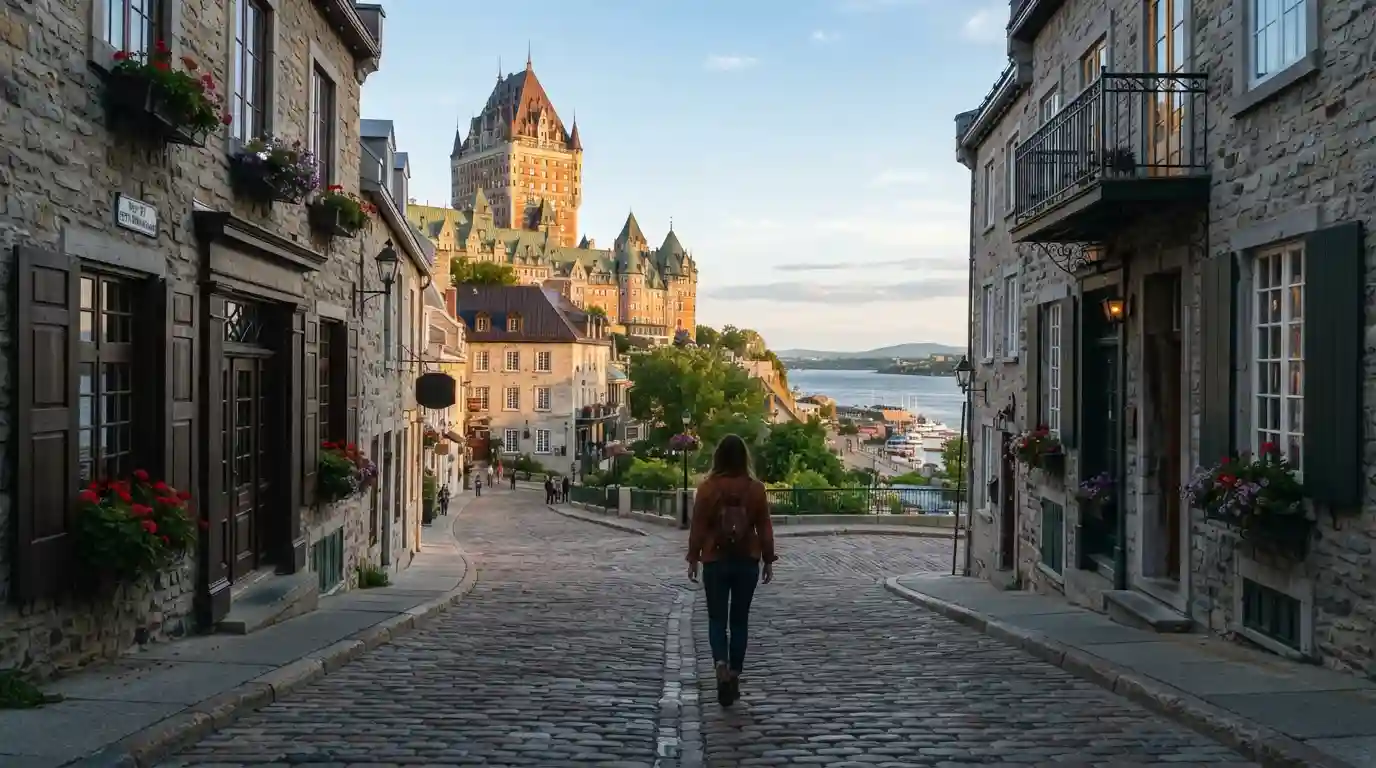
For travelers searching for the best free places to visit in Quebec City, the biggest advantage is that many of the city’s most memorable experiences happen outdoors. You can walk through Old Quebec, photograph Château Frontenac from Dufferin Terrace, explore Place Royale, stroll through the Plains of Abraham, admire the Saint Lawrence River, and discover historic streets without buying an attraction ticket.
Old Quebec is particularly valuable for budget travelers. UNESCO recognizes the Historic District of Old Québec for its preserved ramparts, bastions, gates, defensive works, religious buildings, and historic urban character. The district remains one of the most distinctive fortified historic areas in North America.
This guide focuses on places where the experience itself can be enjoyed for free, while also pointing out when a particular activity, tour, museum, or special program may require payment.
Why Quebec City Is Excellent for a Free Sightseeing Trip
Quebec City is unusually walkable for travelers interested in history and architecture. Instead of moving between expensive attractions, visitors can build an entire sightseeing day around public streets, viewpoints, parks, waterfront areas, historic squares, and outdoor heritage sites.
The city’s Upper Town and Lower Town offer very different perspectives. Upper Town provides elevated river views, monumental architecture, fortified streets, and access to Parliament Hill and the Plains of Abraham. Lower Town offers cobblestone streets, Place Royale, Petit-Champlain, the Old Port, and some of the city’s most photogenic historic buildings.
If you are planning a wider Canadian trip, you can also compare this experience with the best places to visit in Montreal or explore other Canadian destinations covered in our guide to natural places to visit in Ontario.
1. Walk Through Old Quebec
Old Quebec should be the first stop on any free sightseeing itinerary. Simply walking through its streets gives you access to some of the city’s strongest combination of history, architecture, and scenery.
The district is divided broadly into Upper Town and Lower Town, and both areas reward slow exploration. Look for stone façades, historic doorways, narrow streets, decorative balconies, churches, public squares, and viewpoints toward the Saint Lawrence River.
You do not need a guided tour to appreciate the character of the neighborhood. A self-guided walking route can easily occupy several hours, especially if you stop for photographs and explore side streets.
For additional inspiration, travelers can compare this historic walking experience with interesting places to visit in London or scenic and historic places in Ireland.
2. Dufferin Terrace
Dufferin Terrace is one of the easiest choices for travelers looking for free scenic views in Quebec City. The long promenade beside Château Frontenac overlooks the Saint Lawrence River and provides an excellent perspective across the surrounding landscape.
The terrace has been a public gathering place for generations. Today, it remains popular for walking, photography, people-watching, seasonal entertainment, and simply enjoying the view.
It is particularly attractive around sunrise, late afternoon, and sunset when changing light highlights the river, rooftops, and historic buildings.
Visit Québec City describes Dufferin Terrace as a major viewpoint overlooking the Saint Lawrence River and surrounding area. The promenade can be enjoyed throughout the year, although seasonal conditions naturally change the experience.
3. Château Frontenac Exterior
You do not have to book a room at Château Frontenac to appreciate one of Quebec City’s most recognizable landmarks. The exterior can be admired from Dufferin Terrace, nearby streets, and several viewpoints across Old Quebec.
Its dramatic towers and château-style architecture make it one of the city’s most photographed buildings. For budget travelers, photographing the building from different angles is an easy way to experience its architectural character without paying for accommodation or a formal tour.
The best approach is to combine the exterior with a walk through Dufferin Terrace and nearby historic streets rather than treating it as a separate attraction.
4. Petit-Champlain
Petit-Champlain is one of the most atmospheric parts of Quebec City. The narrow pedestrian-friendly streets, stone buildings, decorative façades, artisan storefronts, and European character make the neighborhood feel dramatically different from a modern North American shopping district.
Walking through the area costs nothing, although shopping, restaurants, and paid attractions naturally require a budget.
Visit Québec City identifies Petit-Champlain and Place Royale as places where visitors can step back into the history of Quebec’s founding. The district sits below Cap Diamant and close to the Saint Lawrence River.
If you are interested in visually distinctive destinations around the world, our guides to places to visit in Japan for anime lovers and Tokyo for first-time visitors provide another type of urban travel inspiration.
5. Place Royale
Place Royale is one of the most important historic squares in Quebec City. It sits in the heart of Lower Town and is closely connected to the city’s early French colonial history.
The square is particularly rewarding for travelers who enjoy historic architecture. Its surrounding buildings, cobblestones, and church create an intimate setting that feels far removed from a typical modern city center.
Place Royale is also an easy stop to combine with Petit-Champlain because the two areas are located close together. Rather than paying for separate attractions, you can build a free walking route connecting both neighborhoods.
6. Notre-Dame-des-Victoires Church Exterior
Notre-Dame-des-Victoires Church stands beside Place Royale and is one of the most recognizable historic religious buildings in Lower Town.
The church dates to the late 17th century and occupies a location deeply connected to the early settlement of Quebec. Even when you are not visiting the interior, the exterior contributes significantly to the atmosphere of Place Royale.
Always check current opening arrangements before planning an interior visit, because free outdoor sightseeing and free admission to a building are not necessarily the same thing.
7. Breakneck Steps
The Breakneck Steps, or Escalier Casse-Cou, connect Lower Town and Upper Town and provide one of the city’s classic walking experiences.
The staircase is steep, historic, and photogenic. From different points along the route, you can look down toward Petit-Champlain and Lower Town or photograph the surrounding architecture.
The official Quebec City tourism site identifies the staircase as one of the oldest stairways in Quebec City and a strong photographic viewpoint.
Wear comfortable shoes and take your time, particularly during winter when snow or ice can make steep streets and steps more difficult.
8. Pierre-Dugua-De-Mons Terrace
For travelers prioritizing panoramic scenery, Pierre-Dugua-De-Mons Terrace is an excellent free viewpoint. The elevated location provides a different perspective over Old Quebec and the river landscape.
The terrace is especially useful for photographers who want to capture the relationship between the historic city, the Saint Lawrence River, and the surrounding terrain.
Because the viewpoint is part of a larger walking network around the historic district, it can be incorporated into a longer route rather than requiring a separate trip.
9. The Plains of Abraham
The Plains of Abraham are one of the best free places to visit in Quebec City for travelers who want both history and open scenery.
The historic urban park was the site of major battles in 1759 and 1760 and today provides a large green space in the heart of the city. The park is accessible for free year-round according to its official visitor information.
Visitors can walk along paths, enjoy open spaces, discover monuments, admire the landscape, and learn about the site’s history through plaques and interpretation panels.
The park also provides access to scenic areas near the cliff and river. For travelers who enjoy combining urban sightseeing with nature, it is one of the strongest choices in the city.
If you enjoy seasonal outdoor travel, you may also like our guides to the best places to visit in New England in winter and winter destinations in the Northeast.
10. Parliament Building and Parliament Hill Area
The National Assembly of Quebec offers an unusually strong free cultural experience. The parliamentary precinct is close to Old Quebec and features impressive architecture, gardens, public spaces, exhibitions, and educational opportunities.
The National Assembly currently lists several free visitor activities, including self-guided experiences and other cultural programming. Some activities may require reservations and photo identification, so check the official visitor information before arriving.
The Parliament Building is particularly worthwhile for travelers interested in architecture, political history, and Quebec’s cultural identity.
11. The Fortification Walls and Historic Gates
One of Quebec City’s defining characteristics is its surviving defensive architecture. UNESCO notes that the Historic District of Old Québec is distinguished by its preserved ramparts, bastions, gates, and defensive works.
Walking around the public streets beside the fortifications allows visitors to appreciate the scale and character of the historic defenses without necessarily paying for a guided experience.
Keep in mind that specific Parks Canada programs, tours, and controlled-access experiences can have separate fees. Check current conditions if you want to enter a particular managed attraction rather than simply explore the surrounding public areas.
The fortifications also connect naturally with other Old Quebec landmarks, making them ideal for a self-guided walking itinerary.
12. Governor’s Garden
The Governor’s Garden near Château Frontenac provides another peaceful stop for visitors exploring the Upper Town. It is a good place to slow down after walking through the busier historic streets.
Small green spaces such as this can make a major difference to a budget itinerary because they provide places to pause, photograph historic surroundings, and enjoy the atmosphere without purchasing an attraction ticket.
13. Parc du Cavalier-du-Moulin
Parc du Cavalier-du-Moulin is a compact green space within the historic area. It is useful for travelers who want to escape the busiest pedestrian streets for a short break while remaining close to Old Quebec’s major landmarks.
Its location makes it easy to combine with a walking route through the fortified district, particularly if you are spending most of the day exploring on foot.
14. Old Port and Waterfront Walk
The Old Port is another strong option for travelers who want free outdoor sightseeing. You can walk along public areas, watch boats and river traffic, photograph the historic waterfront, and enjoy the changing atmosphere throughout the day.
The waterfront is especially appealing around golden hour when the light creates reflections across the river and historic buildings.
Nearby, the Québec Public Market provides an opportunity to experience local food culture. Browsing is free, although purchasing food or products is not.
15. Rue du Petit-Champlain and the Historic Side Streets
Do not limit your walk to the main tourist streets. Some of the best free discoveries in Quebec City happen when you turn onto smaller historic lanes.
Rue du Petit-Champlain is especially photogenic, but nearby streets and stairways can reveal quieter architectural details, stone walls, old façades, and interesting perspectives.
The official tourism board regularly highlights Old Quebec’s historic streets as a major part of the visitor experience. This makes walking one of the simplest ways to experience the city’s heritage without building a large attraction budget.
16. Saint-Charles River Linear Park
If you want to add more nature to your free Quebec City itinerary, consider exploring sections of the Saint-Charles River Linear Park.
The trail system provides a greener alternative to the dense historic center and can be useful for travelers who want walking, scenery, and a quieter environment.
Quebec City Tourism describes the linear park as a trail running from the Saint-Charles area toward the Old Port, creating an oasis of calm within the city.
17. Joan of Arc Garden
Located within the Plains of Abraham, the Joan of Arc Garden adds another scenic stop to a historic park visit. Seasonal planting and open lawns make it an enjoyable place for photography and a relaxed walk.
Because the garden is part of the larger Plains of Abraham experience, you can combine it with monuments, trails, viewpoints, and historic interpretation during the same free outing.
18. Explore the City on a Self-Guided Walking Route
One of the smartest ways to experience Quebec City on a budget is to create your own walking loop rather than purchasing multiple tours.
A practical route can begin at Parliament, continue toward the fortification area, move through Old Quebec, reach Dufferin Terrace, descend toward Petit-Champlain and Place Royale, continue toward the Old Port, and then return through another section of the historic district.
This approach lets you see many of the city’s signature sights in one day while keeping attraction costs close to zero.
For travelers comparing destinations, our guides to the best places in New York, the best places to visit in the eastern U.S., and places near Denver, Colorado can help with planning a broader North American itinerary.
Best Free Places to Visit in Quebec City at a Glance
| Place | Best For | Typical Cost to Explore Outdoors |
|---|---|---|
| Old Quebec | History and architecture | Free |
| Dufferin Terrace | River views and photography | Free |
| Château Frontenac exterior | Architecture and photos | Free |
| Petit-Champlain | Historic streets and atmosphere | Free to walk |
| Place Royale | Colonial history | Free |
| Breakneck Steps | Views and walking | Free |
| Plains of Abraham | History and nature | Free |
| Parliament precinct | Architecture and culture | Many activities free |
| Historic fortification areas | Military history | Public-area exploration free |
| Old Port | Waterfront views | Free to explore public areas |
How to Plan a Free Day in Quebec City
You can see a surprising amount of Quebec City without paying for major attractions if you organize your route geographically.
Morning: Upper Town
Begin around Parliament and walk toward the historic fortifications. Continue into Old Quebec and explore the architecture before heading toward Dufferin Terrace.
Late Morning: Dufferin Terrace and Old Quebec
Spend time photographing Château Frontenac and the Saint Lawrence River. Continue through nearby historic streets and viewpoints before descending toward Lower Town.
Afternoon: Petit-Champlain and Place Royale
Explore Petit-Champlain, Place Royale, Notre-Dame-des-Victoires, and the Breakneck Steps. Take your time rather than trying to rush between attractions.
Late Afternoon: Old Port
Walk toward the Old Port and waterfront. This is a good time to relax and photograph the river as the light begins to change.
Evening: Plains of Abraham
If you still have energy, finish the day at the Plains of Abraham for an open-air walk and a different perspective of the city.
Tips for Visiting Quebec City on a Budget
- Wear comfortable walking shoes: Historic streets and steep stairways can make a full day of walking surprisingly demanding.
- Bring water: Carrying your own bottle can reduce unnecessary spending during long sightseeing days.
- Check official schedules: Free admission, public programs, and seasonal access can change.
- Separate free areas from paid attractions: A landmark may be free to photograph from outside while tours or interior visits cost extra.
- Use public spaces for scenic breaks: Parks, terraces, squares, and waterfront areas provide inexpensive alternatives to paid attractions.
- Visit early: Early mornings can provide quieter streets and better opportunities for photography.
- Plan around the weather: Winter scenery can be spectacular, but snow and ice can make steep streets more challenging.
If you are extending your trip into the United States, consider pairing Quebec City with seasonal destinations such as New York in fall, top fall destinations, or Colorado destinations for Thanksgiving.
Are the Best Historic Sites in Quebec City Free?
Not all of them. Quebec City has many historic landmarks where the surrounding public space can be explored for free, while museums, guided tours, special exhibitions, and certain managed historic-site experiences may charge admission.
The safest strategy is to distinguish between free outdoor sightseeing and free admission to an attraction. For example, you can admire Château Frontenac from outside without paying for a hotel stay, walk through Place Royale, and explore the Plains of Abraham for free. A particular guided experience at a historic site may have a separate fee.
Parks Canada currently publishes site-specific admission information for the Fortifications of Québec and Saint-Louis Forts and Châteaux National Historic Site, so visitors should check the current official information before planning around admission rules.
Best Time to Explore Free Places in Quebec City
Summer offers long daylight hours and comfortable conditions for extended walking, while fall brings colorful foliage and crisp temperatures. Winter transforms Old Quebec into a snowy architectural landscape, although visitors need to prepare for icy surfaces and shorter daylight.
Spring can be quieter, but weather conditions are less predictable. If your priority is photography, early morning and late afternoon can provide attractive natural light in almost every season.
Travelers planning a broader seasonal trip can also explore New York State in winter, winter destinations near Sacramento, Tennessee in fall, or Tennessee in summer.
Final Thoughts
The best free places to visit in Quebec City prove that a memorable trip does not have to depend on an expensive attraction list. The city’s greatest strengths are its historic streets, fortified character, river viewpoints, public parks, architectural landmarks, and walkable neighborhoods.
Start with Old Quebec, Dufferin Terrace, Petit-Champlain, Place Royale, and the Plains of Abraham. Add the Parliament area, historic fortifications, Old Port, and scenic terraces to create a full-day itinerary. With comfortable shoes, a little planning, and attention to seasonal conditions, you can experience much of Quebec City’s historic and scenic character for very little money.
The result is a destination where the city itself becomes the attraction—and that is exactly what makes Quebec City such a strong choice for budget-conscious travelers.