
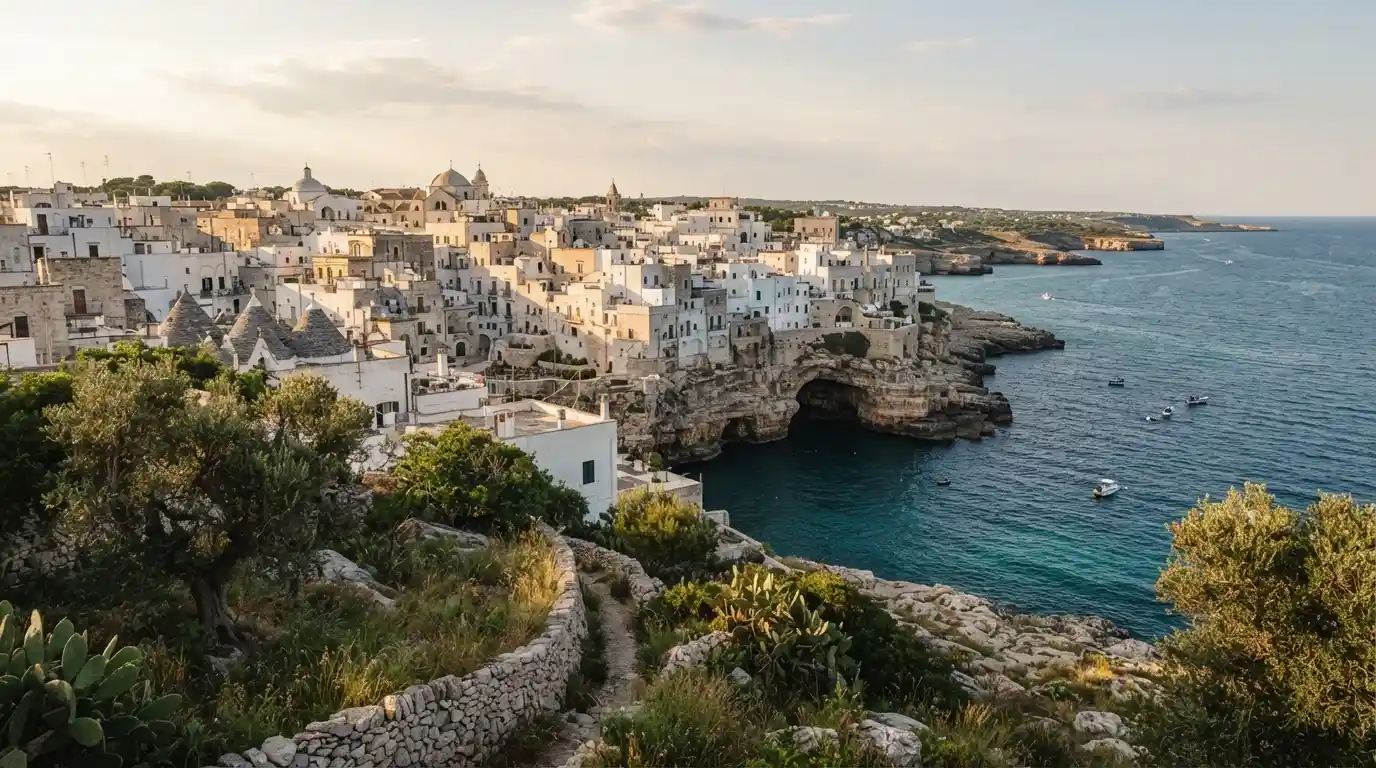
The heel of Italy is one of the country’s most rewarding regions for travelers who want a combination of beautiful beaches, historic towns, dramatic coastlines, traditional villages, excellent food, and authentic southern Italian culture. Much of the heel is formed by Puglia, a region that stretches from the Adriatic coast to the Ionian Sea and offers an impressive variety of places to explore.
From the whitewashed streets of Ostuni and the unique trulli of Alberobello to the Baroque architecture of Lecce and the turquoise waters of Salento, there are plenty of places to visit in the heel of Italy for different types of travelers. Whether you are planning a road trip, a relaxing beach vacation, a cultural getaway, or a food-focused journey, this part of southern Italy is worth exploring.
This guide highlights some of the best destinations to add to your itinerary, along with practical ideas for deciding where to go and how to experience the region.
Why Visit the Heel of Italy?
The heel of Italy stands out because it combines several different travel experiences within a relatively compact area. You can spend the morning exploring historic architecture, have lunch in a small countryside town, and finish the day beside the sea.
The region is particularly appealing to travelers who enjoy scenic road trips. Coastal roads, olive groves, historic villages, limestone buildings, vineyards, and seaside towns create a landscape that feels distinctly southern Italian.
Food is another major reason to visit. Puglia is associated with dishes such as orecchiette pasta, fresh seafood, local cheeses, olive oil, vegetables, and rustic breads. The combination of food, scenery, history, and relaxed coastal living makes the heel an excellent destination for a longer Italian vacation.
1. Alberobello
Alberobello is one of the most recognizable destinations in Puglia and one of the best places to begin exploring the heel of Italy. The town is famous for its traditional trulli, small stone buildings with distinctive conical roofs.
The historic areas of Rione Monti and Aia Piccola are ideal for walking. Narrow lanes pass between clusters of whitewashed buildings, creating a setting that feels very different from the large Italian cities.
Allow plenty of time to explore on foot, photograph the architecture, browse local shops, and stop for regional food. Alberobello can become busy during the middle of the day, so an early morning or later afternoon visit can provide a more relaxed experience.
2. Ostuni
Known for its brilliant white buildings, Ostuni is often called the White City. The historic center rises across a hill and offers attractive views over the surrounding countryside and olive groves.
Walking through Ostuni is part of the experience. Instead of rushing between individual attractions, explore the narrow lanes, small squares, stone stairways, churches, restaurants, and viewpoints.
Ostuni also works well as a base for exploring other destinations in the Valle d’Itria and along the Adriatic coast.
3. Lecce
Lecce is one of the cultural highlights of southern Puglia and is especially appealing to travelers interested in architecture and history. The city is famous for its elaborate Baroque buildings constructed from the region’s distinctive local stone.
Important sights include the Basilica of Santa Croce, Piazza del Duomo, Piazza Sant’Oronzo, and the Roman Amphitheatre. The historic center is compact enough to explore comfortably on foot.
Lecce is also a good destination for experiencing Salento’s food culture. Spend time in the old town during the evening when restaurants and public squares become particularly lively.
4. Polignano a Mare
Polignano a Mare is one of the most spectacular coastal towns in Puglia. Built dramatically above the Adriatic Sea, the town is known for its cliffs, sea views, whitewashed buildings, and beautiful historic center.
One of its most famous views is the small beach of Lama Monachile, surrounded by rocky cliffs and traditional buildings. The beach can become crowded in peak summer, but the surrounding viewpoints remain excellent places to appreciate the coastline.
Polignano a Mare is especially attractive for travelers who want a combination of coastal scenery, photography, swimming, and a lively historic town.
5. Monopoli
Just south of Polignano a Mare, Monopoli offers another excellent introduction to the Adriatic side of Puglia. Its historic center features whitewashed buildings, narrow streets, churches, small squares, and views toward the sea.
The waterfront is particularly pleasant for an evening walk. You can combine sightseeing with time at nearby coves and beaches, making Monopoli a versatile destination for both cultural and seaside travel.
Because of its location, Monopoli can also be included easily in a Puglia road trip that visits Alberobello, Ostuni, Polignano a Mare, and other towns in the area.
6. Bari
Bari is the capital of Puglia and an important starting point for exploring the heel of Italy. The city combines a historic old town with a lively waterfront, shopping streets, restaurants, and transport connections.
Bari Vecchia is the part of the city most travelers want to explore first. Its narrow streets, historic churches, small courtyards, and traditional atmosphere provide a glimpse into everyday life in southern Italy.
Bari is also useful as an arrival or departure point because it provides access to other parts of Puglia by road and rail.
7. Otranto
Otranto sits on the eastern coast of Salento and is one of the region’s most attractive seaside towns. Its historic center sits close to the water and includes a medieval castle, historic streets, and the impressive Cathedral of Otranto.
The town is a strong choice for travelers who want to combine history with beach time. The surrounding coastline also provides opportunities for swimming, scenic drives, and exploring smaller coastal areas.
Otranto is particularly enjoyable during a Salento road trip because it provides a different coastal atmosphere from the larger towns farther north.
8. Gallipoli
Gallipoli is located on the Ionian side of the Salento peninsula and offers a very different coastal experience. The historic center occupies an island connected to the mainland by a bridge.
Its old streets, churches, waterfront, fishing traditions, and nearby beaches make it one of the most interesting destinations in southern Puglia.
Gallipoli is a particularly popular summer destination, but travelers interested in history and local culture can enjoy the town outside the busiest beach season as well.
9. Santa Maria di Leuca
At the southern tip of Puglia, Santa Maria di Leuca is an excellent destination for travelers who want dramatic coastal scenery. The area is known for cliffs, sea views, historic villas, and the sanctuary overlooking the coast.
The meeting of the Adriatic and Ionian seas is one of the region’s most famous geographic highlights. Boat trips can also provide a different perspective of the caves and coastline around the tip of the peninsula.
Santa Maria di Leuca is best included in a broader Salento itinerary rather than treated as a quick stop.
10. Pescoluse
For travelers primarily interested in beaches, Pescoluse is one of the most appealing places to visit in Salento. The area is known for its sandy shoreline and clear blue water and is sometimes promoted as the “Maldives of Salento.”
It is a good choice for swimming, relaxing, and enjoying a slower beach-focused day. During the summer high season, arriving early can make it easier to find a comfortable spot along the coast.
Pescoluse can easily be combined with other destinations around the southern Salento peninsula.
11. Torre dell’Orso
Torre dell’Orso is another popular coastal destination in Salento. The area is known for its sandy beach, clear water, coastal cliffs, and distinctive rock formations.
The nearby Due Sorelle sea stacks are among the most recognizable natural features along this part of the coast. The combination of beach scenery and dramatic rock formations makes the area particularly attractive for photographers and summer travelers.
12. Locorotondo
Locorotondo is a charming hilltop town in the Valle d’Itria and is an excellent alternative to the busier coastal destinations. Its historic center is known for whitewashed houses, narrow lanes, flowers, and panoramic views over the surrounding countryside.
The town is particularly enjoyable for slow travel. Walk through the historic streets, enjoy local food, and take time to appreciate the surrounding olive groves and vineyards.
Locorotondo pairs naturally with nearby Alberobello, Martina Franca, and Ostuni when planning a road trip through the central part of Puglia.
13. Martina Franca
Martina Franca is another highlight of the Valle d’Itria. The town is known for elegant Baroque and Rococo architecture, historic palaces, churches, and atmospheric streets.
Compared with some of Puglia’s most famous tourist destinations, Martina Franca can feel more focused on everyday local life. Its historic center is ideal for an afternoon or evening walk.
Food lovers should also consider adding Martina Franca to their itinerary because the surrounding area is known for traditional Puglian cuisine and local products.
14. Gargano
The Gargano Peninsula occupies the northern part of Puglia and provides a different landscape from the flatter Salento region. Forested hills, limestone cliffs, sea caves, beaches, and coastal villages make this area ideal for travelers who enjoy nature and outdoor exploration.
The Gargano National Park protects a large area of forests and natural landscapes. Hiking, scenic driving, coastal exploration, and visits to historic towns can all be part of a Gargano itinerary.
Because Gargano is geographically separated from much of southern Salento, travelers with limited time may want to choose either northern or southern Puglia rather than trying to cover the entire region in a single short trip.
15. Vieste
Vieste is one of the best-known coastal towns on the Gargano Peninsula. The historic center sits above the sea and features narrow streets, stone buildings, viewpoints, and a distinctive coastal landscape.
The surrounding area is known for beaches, cliffs, sea caves, and boat excursions. Vieste is therefore a strong option for travelers who want to combine a traditional Italian seaside town with outdoor activities.
What About Matera?
Although Matera is not in Puglia, it is one of the most worthwhile destinations to consider when exploring southern Italy from the heel. The city is located in neighboring Basilicata and is famous for the ancient Sassi, cave dwellings and historic structures carved into the landscape.
Matera offers a completely different experience from the coastal towns of Puglia. Its stone streets, cave churches, viewpoints, and historic neighborhoods make it particularly valuable for travelers interested in architecture, history, and photography.
If your itinerary allows extra time, a Puglia trip combined with Matera can create a more varied southern Italy vacation.
Best Beaches in the Heel of Italy
The heel of Italy has beaches on both the Adriatic and Ionian sides, so travelers have plenty of choices. Salento is particularly famous for sandy beaches and clear water, while the Gargano coast offers a mixture of beaches, cliffs, caves, and forested landscapes.
Some coastal areas are more suitable for families and relaxed swimming, while others are better for boat trips, snorkeling, photography, or scenic walks. During July and August, the most famous beaches can become very busy, so travelers looking for a quieter experience may prefer late spring, early summer, or early autumn.
Best Time to Visit the Heel of Italy
The best time depends on the type of trip you want to take.
- April to June: Excellent for sightseeing, walking, road trips, and comfortable temperatures.
- July to August: Best suited to travelers focused on beaches and summer atmosphere, although popular areas can be busy.
- September to October: A strong option for combining warm coastal weather with sightseeing and fewer peak-season crowds.
- Winter: Quieter and often more suitable for travelers primarily interested in towns, food, architecture, and local culture rather than beach activities.
How Many Days Do You Need?
A short trip of four to five days can cover several highlights around central Puglia, especially if you focus on destinations such as Bari, Polignano a Mare, Monopoli, Alberobello, Ostuni, and Locorotondo.
With seven to ten days, you can explore more of the region and include Lecce, Otranto, Gallipoli, the southern Salento coast, or the Gargano area.
If you have two weeks, consider dividing your trip into different bases. This reduces driving time and allows you to experience both the historic towns and the coastline without rushing.
Tips for Exploring the Heel of Italy
- Consider renting a car: A car provides much more flexibility for reaching beaches, villages, viewpoints, and rural areas.
- Stay in more than one location: Splitting your accommodation between central Puglia and Salento can reduce long drives.
- Explore early: Popular towns are generally more enjoyable before the largest daytime crowds arrive.
- Leave room for small towns: Some of the most memorable experiences can come from places that are not the biggest attractions.
- Try regional food: Make time for orecchiette, fresh seafood, local cheeses, olive oil, breads, and seasonal produce.
- Plan around the coast: If swimming is a priority, allow enough time for beach days rather than filling every day with sightseeing.
More Travel Inspiration
If you enjoy destination guides, you can also explore other travel ideas on BizHorizone. For a different European road-trip experience, see places to visit in Madeira by car. Travelers looking for city experiences can explore free places to visit in London at night or the best places to visit in Tokyo for first-timers.
For nature-focused travel, consider places to visit in Kenya for vacation, places to visit in Okinawa Main Island, or places to visit in São Tomé and Príncipe.
If you prefer North American destinations, you can also read about the best places to visit in Marco Island, Florida, the best places to visit in Tennessee in summer, free places to visit in Quebec City, and places to visit in North Padre Island.
Other destination guides include La Trinidad Benguet, Milwaukee during winter, South West France, Stuttgart in one day, Palawan and Puerto Princesa, New York State during winter, and Siem Reap beyond the temples.
Final Thoughts
The heel of Italy is a destination where the journey is almost as rewarding as the individual attractions. From Alberobello’s trulli and Lecce’s Baroque architecture to the beaches of Salento and the rugged landscapes of Gargano, the region offers an unusually broad mix of experiences.
For a first trip, a route through Bari, Polignano a Mare, Monopoli, Alberobello, Ostuni, and Lecce provides a strong introduction. Travelers with more time can continue toward Otranto, Gallipoli, Santa Maria di Leuca, or the beaches of southern Salento.
Whether your priority is history, beaches, food, photography, road trips, or simply discovering beautiful Italian towns, the heel of Italy has enough variety to justify slowing down and exploring beyond the most famous stops.
Frequently Asked Questions
What is the heel of Italy known for?
The heel of Italy is best known for Puglia’s beautiful coastline, historic towns, whitewashed villages, trulli houses, Baroque architecture, olive groves, beaches, and traditional southern Italian food.
What are the best places to visit in the heel of Italy?
Popular choices include Alberobello, Ostuni, Lecce, Polignano a Mare, Monopoli, Bari, Otranto, Gallipoli, Santa Maria di Leuca, Locorotondo, Martina Franca, and the Gargano Peninsula.
Is the heel of Italy good for a road trip?
Yes. A road trip is one of the easiest ways to explore the region because many beaches, villages, countryside areas, and coastal viewpoints are spread across Puglia.
How long should I spend in the heel of Italy?
Five days can cover several major highlights, while seven to ten days allows you to explore central Puglia and Salento at a more comfortable pace. Longer trips can also include Gargano and nearby Matera.
What is the best time to visit the heel of Italy?
Late spring and early autumn are excellent for combining sightseeing, road trips, and coastal activities. July and August are best for travelers focused on the summer beach experience but are generally busier.



