
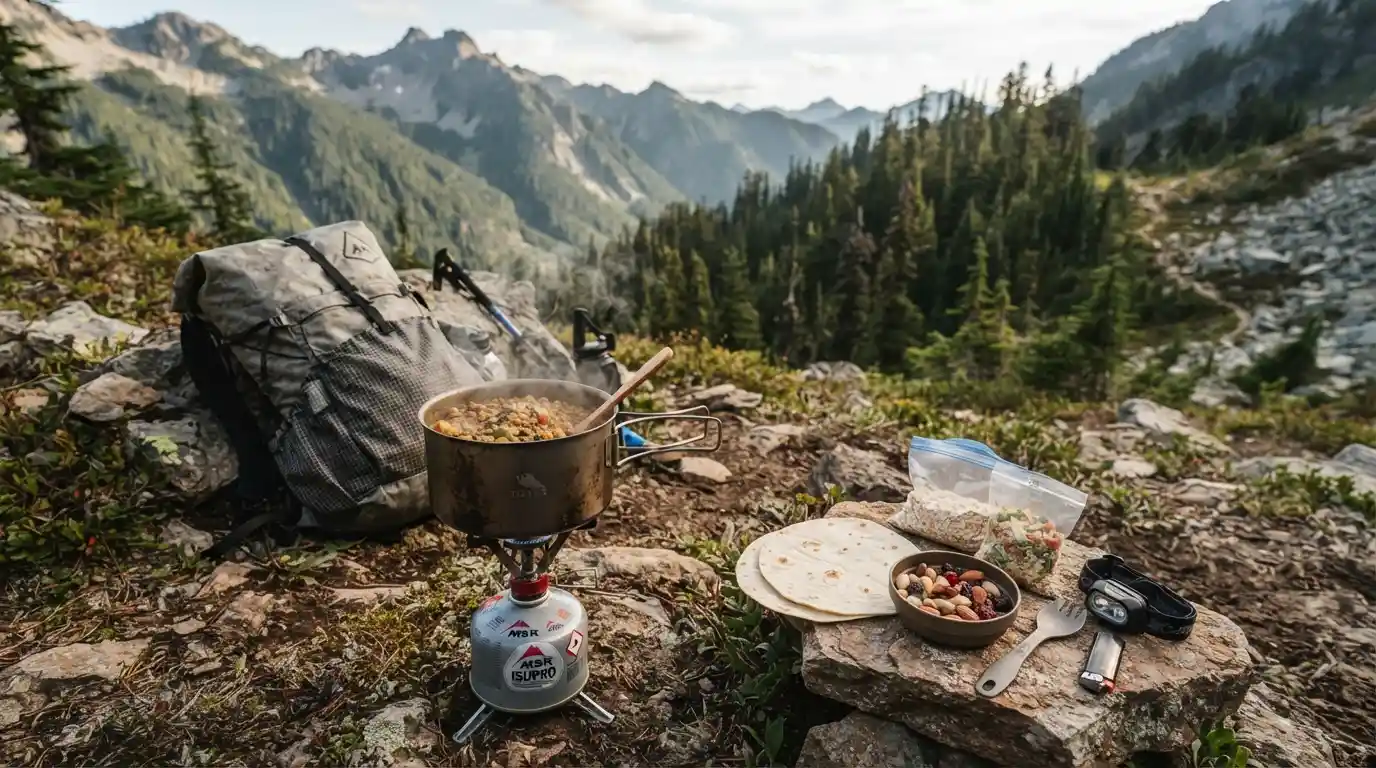
Good backpacking food should do more than satisfy hunger. It needs to be lightweight, easy to pack, simple to prepare, and substantial enough to support long days on the trail. The best backpacking food meals combine convenient ingredients with carbohydrates, protein, healthy fats, and enough variety to keep meals enjoyable throughout a trip.
This guide covers easy backpacking meals, no-cook options, one-pot recipes, dehydrated foods, snacks, breakfast ideas, and practical food-planning tips for hikers.
What Makes a Good Backpacking Meal?
A backpacking meal has different requirements from an everyday meal at home. Weight matters because every ingredient has to travel in your pack. Preparation time matters because most hikers would rather spend their evening relaxing at camp than washing several pots.
The most useful trail meals generally have several characteristics:
- Lightweight: Ingredients should provide useful nutrition without adding unnecessary pack weight.
- Portable: Food should be easy to portion, seal, organize, and carry.
- Simple to prepare: Meals that require one pot or only hot water are especially convenient.
- Energy-dense: Long hiking days require plenty of calories and satisfying foods.
- Stable: Shelf-stable ingredients are easier to manage during multi-day trips.
- Flexible: Recipes should be easy to adapt for vegetarian, vegan, or other dietary preferences.
Meal planning can also be part of the overall adventure. If you’re building an itinerary around different destinations, explore guides such as places to visit in the USA, West Coast destinations, and unique places in North America when considering where your next outdoor trip might take you.
Easy Backpacking Breakfast Ideas
Breakfast sets the tone for a long hiking day. A useful trail breakfast should be quick enough to prepare while still providing a combination of carbohydrates, protein, and fats.
1. Peanut Butter Oatmeal
Instant oats are one of the easiest backpacking breakfast staples. Combine them with powdered milk, peanut butter powder, cinnamon, dried fruit, and a little brown sugar. Add hot water, allow the oats to soften, and stir until creamy.
This option is particularly useful on cold mornings because it can be prepared quickly with minimal cookware.
2. Trail Granola Bowl
For a no-cook breakfast, combine granola with powdered milk, dried berries, seeds, and nuts. Add water when you’re ready to eat, or enjoy the mixture dry as a crunchy trail meal.
Because ingredients can be portioned into individual bags before leaving home, this breakfast requires virtually no preparation at camp.
3. Breakfast Tortilla
A tortilla can become a convenient breakfast wrap with nut butter, honey, oats, dried fruit, or other shelf-stable ingredients. Tortillas are also easier to pack than bread because they resist crushing.
Simple One-Pot Backpacking Meals
One-pot meals are among the most practical options for backpackers. You can cook several ingredients together, reduce cleanup, and avoid carrying extra cookware.
4. Lentil and Quinoa Trail Stew
For a filling vegetarian meal, combine quick-cooking lentils, quinoa, dehydrated vegetables, garlic powder, cumin, paprika, salt, and pepper. Add water and simmer until the ingredients are tender.
Finish with a small amount of olive oil for additional flavor and calories. The combination of grains, legumes, and vegetables creates a satisfying meal without requiring complicated preparation.
5. Backpacking Pasta Bowl
Small pasta shapes can be paired with dehydrated vegetables, powdered sauce ingredients, seasoning, and a protein source such as dried beans or shelf-stable meat. Choose pasta that cooks quickly to reduce fuel consumption.
If you enjoy exploring food while traveling, you can also find inspiration from destinations and restaurants featured in the site’s food coverage, including Cambodian cuisine in Palmdale and Flatonia restaurants.
6. Couscous and Vegetable Bowl
Couscous is particularly useful for backpacking because it can be prepared with hot water rather than requiring a long cooking time. Mix it with dehydrated vegetables, chickpeas, seasoning, and olive oil.
For additional flavor, experiment with curry powder, smoked paprika, garlic, or dried herbs.
Easy Backpacking Lunches and No-Cook Meals
Lunch does not always need to involve a stove. On a long hiking day, no-cook meals can save time and fuel while allowing you to eat during a scenic break.
7. Peanut Butter and Honey Tortilla
Spread peanut butter over a whole-wheat tortilla, add honey, and sprinkle on crushed nuts or dried fruit. Roll it tightly and wrap it for easy carrying.
8. Trail Hummus Wrap
Use a shelf-stable hummus powder or another suitable dry spread with a tortilla and dehydrated vegetables. Add seasonings such as garlic powder or smoked paprika for extra flavor.
9. Cheese, Crackers, and Trail Mix
Depending on the length and conditions of your trip, shelf-stable cheese alternatives, hard cheeses, crackers, nuts, seeds, and dried fruit can form a simple grazing-style lunch.
For hikers who prefer plant-based food, the site’s guide to vegan food in Minneapolis can also provide inspiration for building more varied plant-forward meals.
Dehydrated Backpacking Meals
Dehydration is one of the most useful techniques for creating lightweight meals. Removing moisture reduces weight and can make many ingredients easier to pack.
Common ingredients for homemade dehydrated meals include cooked vegetables, beans, sauces, cooked grains, fruits, and prepared meals that are suitable for dehydration.
10. Dehydrated Chili
Prepare chili at home using beans or cooked ground meat, tomatoes, vegetables, and spices. Once properly prepared and dehydrated, portion it into individual servings.
At camp, add hot water and allow the meal to rehydrate before eating. The result is a warming dinner that requires little work at the end of a demanding hiking day.
11. Dehydrated Vegetable Rice
Combine cooked rice with dehydrated vegetables, seasoning, and a suitable protein source. Package each serving separately so you only prepare what you need.
High-Energy Backpacking Snacks
Meals are only part of a trail food plan. Snacks help hikers eat regularly throughout the day without stopping for a full meal.
- Trail mix with nuts and dried fruit
- Nut butter packets
- Energy bars
- Dried fruit
- Crackers
- Roasted chickpeas
- Seeds and nuts
- Jerky or suitable shelf-stable alternatives
- Dark chocolate in cool conditions
For longer outdoor adventures, variety can make a significant difference. You may want to rotate sweet, salty, crunchy, and savory snacks rather than relying on one food throughout the entire trip.
How to Plan Backpacking Food for a Multi-Day Trip
Before packing food, determine how many days you will be away and how much cooking you actually want to do. A simple meal schedule can prevent both under-packing and carrying unnecessary weight.
Build a Daily Food Plan
Start with breakfast, lunch, dinner, and several snacks. Then assign specific foods to each meal. Portioning everything before the trip makes it easier to keep track of supplies.
Choose Lightweight Packaging
Remove unnecessary boxes and bulky packaging at home. Repackage dry ingredients into sealed bags or containers appropriate for the food and conditions.
Think About Cooking Fuel
Meals requiring extended boiling can consume more stove fuel than quick-cooking or rehydrated meals. If you’re carrying limited fuel, favor foods that need soaking or short cooking times.
Consider the Weather
Cold-weather trips may increase the appeal of warm soups, oatmeal, chili, and other hot meals. During warmer trips, lightweight snacks and quick no-cook lunches can be more convenient.
Seasonal travel planning can also influence what you pack. For example, guides covering Banff in summer, Tennessee in summer, and Albania in winter illustrate how dramatically outdoor conditions can change from one destination and season to another.
Backpacking Food for Different Dietary Preferences
One advantage of preparing your own trail meals is the ability to control the ingredients.
Vegetarian and Vegan Backpacking Food
Beans, lentils, quinoa, oats, nuts, seeds, dried vegetables, tortillas, and dehydrated plant-based meals can provide plenty of variety without relying on animal products.
High-Protein Options
Consider lentils, beans, nuts, seeds, powdered protein products, jerky, shelf-stable fish, or other foods that fit your dietary requirements. Combining different sources throughout the day can make meals more satisfying.
Gluten-Free Options
Rice, quinoa, certified gluten-free oats, potatoes, beans, nuts, and many dehydrated vegetables can form the foundation of gluten-free trail meals. Always check packaged ingredients when cross-contact is a concern.
Backpacking Food: What to Avoid
Not every convenient food is suitable for the trail. Fresh foods with high moisture content can add substantial weight and may require refrigeration. Foods that crumble easily can also create unnecessary mess inside a backpack.
It is also worth avoiding meals that require excessive cooking time, complicated preparation, or several pieces of cookware unless you’re intentionally planning a more elaborate camp kitchen.
When selecting food, think about the entire journey rather than one meal. A meal that sounds appealing at home may be less attractive after several hours of hiking if it takes too long to prepare.
How to Make Backpacking Meals More Enjoyable
Simple food does not have to be boring. Small additions such as hot sauce, dried herbs, spice blends, powdered cheese, olive oil, seasoning packets, or dehydrated vegetables can dramatically change a basic meal.
Another useful strategy is to rotate meal styles. Instead of eating oatmeal every morning and pasta every evening, alternate between oats, tortillas, couscous, rice, noodles, soups, and dehydrated meals.
Food can also become part of the destination experience. If your trip includes cities or towns before or after a hike, researching local food can help turn the journey into a broader culinary adventure. Guides such as places to visit around the world, some of the world’s notable destinations, and surreal places worth visiting can help inspire future travel plans.
Backpacking Food Packing Checklist
Before leaving, use a simple checklist to make sure your food system is organized:
- Breakfast portions
- Lunch portions
- Dinner portions
- Daily snacks
- Emergency food reserve
- Cooking ingredients and seasonings
- Cooking fuel
- Water-treatment supplies when required
- Reusable utensils
- Waste bags for food packaging
For trips that combine hiking with sightseeing, you can also research destinations in advance. Outdoor-oriented travel plans might include natural places in Ontario, Willamette Valley, destinations near Denver, or Salt Lake City, depending on your itinerary and interests.
Final Thoughts
The best backpacking food meals are practical, nutritious, lightweight, and enjoyable enough that you actually look forward to eating them after a long day on the trail. You don’t need complicated recipes or expensive packaged meals to build an effective food plan.
Start with a few dependable staples such as oatmeal, tortillas, lentils, quinoa, couscous, rice, dehydrated vegetables, nuts, dried fruit, and carefully selected protein sources. From there, create meals that fit your hiking style, dietary preferences, trip length, weather, and available cooking equipment.
With a little preparation at home, even simple ingredients can become satisfying trail meals that keep your pack manageable and your energy up throughout the adventure.



