
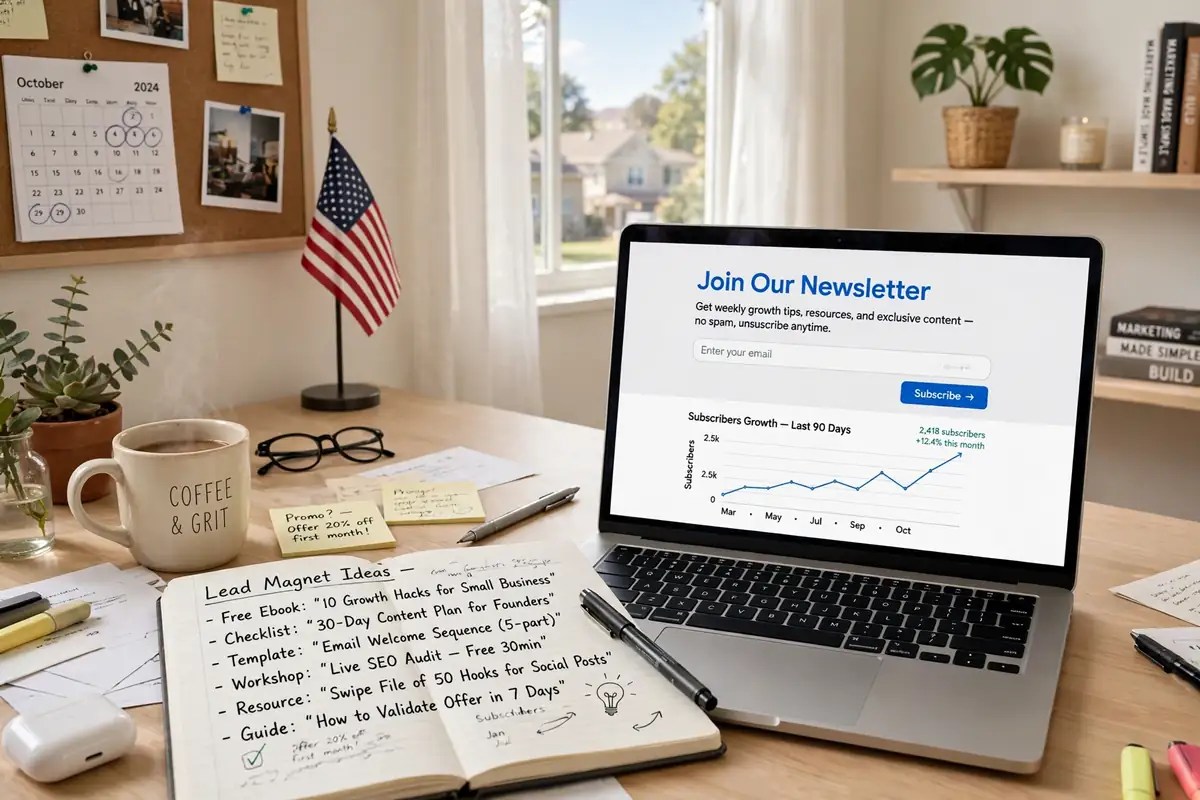
Social media reach comes and goes with every algorithm change, but an email list is yours. Subscribers gave you permission to reach them directly, in an inbox they check every day, with no gatekeeper in between. That is why learning how to build an email list from zero is one of the smartest first moves any business or creator can make. This guide shares ten proven methods, plus the simple habits that turn new subscribers into loyal buyers.
Why an Email List Matters More Than Followers
Followers are rented. A platform can change its rules, throttle your reach, or suspend your account, and years of audience building can vanish overnight. Email subscribers are different: your list lives in your own system, exports with you between tools, and reaches people at a fraction of the cost of ads.
Email also converts. People check email ready to act: to read, to book, to buy. That is why experienced marketers put list building at the center of their digital marketing strategy for small businesses, and why every method below is worth your time even before your website gets heavy traffic.
Before You Start: The Two Essentials
You need an email marketing platform and a reason to subscribe. The platform stores your list, sends your campaigns, and handles subscribe and unsubscribe mechanics legally and automatically. Plenty of reputable platforms offer free tiers for small lists, so cost is no barrier at the start.
The reason to subscribe is called a lead magnet: a free, genuinely useful resource offered in exchange for an email address. Checklists, templates, short guides, calculators, and discount offers all work. The lead magnet must solve one specific problem for one specific audience, and it must match the content that led the visitor to it. Set these two pieces up once, and every method below becomes simple distribution.
Method 1: A Dedicated Landing Page
Create one clean page whose only job is presenting your lead magnet and collecting emails. No menus, no distractions, just a headline, a few benefit lines, and the signup form. This page becomes the destination for your social bios, guest posts, and ads. It is the simplest expression of the focused thinking behind small business excellence through digital marketing.
Method 2: Signup Forms on Your Website
Place forms where interested readers already are: at the end of blog posts, in a sidebar, and on your about page. End-of-post forms convert especially well because the reader just experienced your value. Keep the form short, usually just an email field, and say plainly what subscribers will receive and how often.
Method 3: Content Upgrades
A content upgrade is a lead magnet created for one specific article. A post about meal planning might offer a printable grocery list; a post about bookkeeping might offer a spreadsheet template. Because the offer matches the article exactly, these forms often convert far better than generic site-wide offers. This is focused, reader-first work, much like the targeting inside data-driven digital marketing programs.
Method 4: A Welcome Discount or Offer
For shops and service businesses, a simple first-order discount remains the most reliable list builder in existence. Present it honestly: join the list, get the code, use it today. The discount costs you a little margin and buys you a direct line to a proven shopper, which is a trade most businesses happily make every day.
Method 5: Webinars and Live Sessions
Host a free online session teaching something your audience wants to learn, and require an email to register. Webinars attract high-intent subscribers because attending takes effort, and the live format builds trust faster than any static page. Record the session and offer the replay as an ongoing lead magnet afterward.
Method 6: Quizzes and Calculators
Interactive tools pull subscribers in because people love personalized answers. A “Which skincare routine fits you?” quiz or a “How much house can you afford?” calculator delivers results by email, and subscribers arrive already segmented by their answers. These tools take more effort to build, so add them once your basics are running, the way growing firms phase in the systems described in advanced digital marketing and business transformation.
Method 7: Social Media With a Clear Offer
Your social profiles should regularly point followers to your lead magnet, not just your latest post. Pin the offer, mention it in relevant content, and use platform features like link stickers and profile links. Consistency matters more than virality here; a steady weekly invitation outperforms a single launch burst, as creators working across borders learn in mastering digital marketing in the remote economy.
Method 8: Guest Content and Partnerships
Write for websites, appear on podcasts, and collaborate with creators whose audiences match yours. Every appearance should end with one clear invitation to your lead magnet. Borrowed audiences are how new lists grow fastest in the early months, because trust transfers from the host to you.
Method 9: In-Person and Offline Signups
Local businesses should collect emails where customers already are: at the register, on receipts, at events, and on appointment cards. A simple tablet form or a QR code linking to your landing page works well. Train staff to mention the benefit, not just the form, because “join for a welcome treat” beats “sign up for our newsletter” every time.
Method 10: Referral-Friendly Content
Make subscribing feel like joining something worth sharing. A useful weekly newsletter gets forwarded. A great lead magnet gets recommended in group chats and forums you will never see. Ask happy subscribers to share, and make it easy with a forward-friendly format. Referral growth is slow at first, then quietly becomes your cheapest channel, much like the compounding effect behind many side hustle ideas that make extra money once they gain momentum.
What to Send Your New Subscribers
List building fails if new subscribers hear nothing. Set up a short welcome sequence: a first email delivering the promised lead magnet, a second sharing your best content or story, and a third introducing how you can help, including a paid offer where relevant. After that, settle into a regular sending rhythm you can keep, even if it is only twice a month.
Automation makes this painless. Your platform can send the welcome sequence automatically while you focus on the business, the same principle that makes marketing automation effective for manufacturers and service firms. Write these emails once, review them twice a year, and let the system work.
Your First 30 Days: A Simple Plan
Do not try all ten methods at once. In week one, set up your platform and one strong lead magnet tied to your most popular content or offer. In week two, build the landing page and add forms to your highest-traffic pages. In week three, announce the list to your existing audience everywhere: social profiles, your email signature, and in person if you run a storefront. In week four, send your first regular newsletter and study who opens and clicks.
This staged approach works because each week builds on a finished foundation rather than a pile of half-started tactics. It is the same sequencing discipline recommended when starting a business in the USA: legal and operational basics first, growth tactics second. By day thirty, you will have a working system that grows a little every week, plus a welcome sequence quietly converting new subscribers while you sleep.
Keep a simple scorecard as you go: subscribers added, where they came from, and open rates on your sends. Knowing which method produced your subscribers tells you where to invest next month, whether that is more offline signage, another partnership, or a better lead magnet for your online store following an ecommerce launch plan. Small numbers, honestly tracked, beat big vague goals.
Rules and Good Manners
Only email people who opted in, always include your business identity and an easy unsubscribe, and never buy lists. US rules such as the CAN-SPAM Act set the floor; good manners set the standard. A smaller list of people who asked to hear from you will outsell a huge list of strangers every time, and it protects your sender reputation with inbox providers. Founders building for the long term, like those following a step-by-step path from idea to income, treat permission as an asset, not an obstacle.
Frequently Asked Questions
How fast can I build an email list from zero?
Your first hundred subscribers usually come from people who already know you, plus one or two good lead magnet placements. Growth speeds up as content and partnerships compound. Expect steady progress, not overnight numbers, and celebrate the first fifty; they are the hardest.
What is the best free lead magnet?
The one that solves your audience’s most common small problem in under ten minutes. Checklists and templates win often because they are quick to make and quick to use. Ask your customers what they wish existed, then build exactly that.
How often should I email my list?
As often as you can be genuinely useful, on a schedule you can sustain. For most small businesses, once a week to twice a month works well. Consistency beats frequency, and relevance beats both.
The Bottom Line
Building an email list from zero is a system, not a trick: a useful lead magnet, a focused landing page, forms where readers already are, and invitations everywhere your audience meets you. Start with methods one through four this week, add the rest over the next two months, and welcome every subscriber like the future customer they are. Your list will quietly become the most valuable marketing asset you own.