
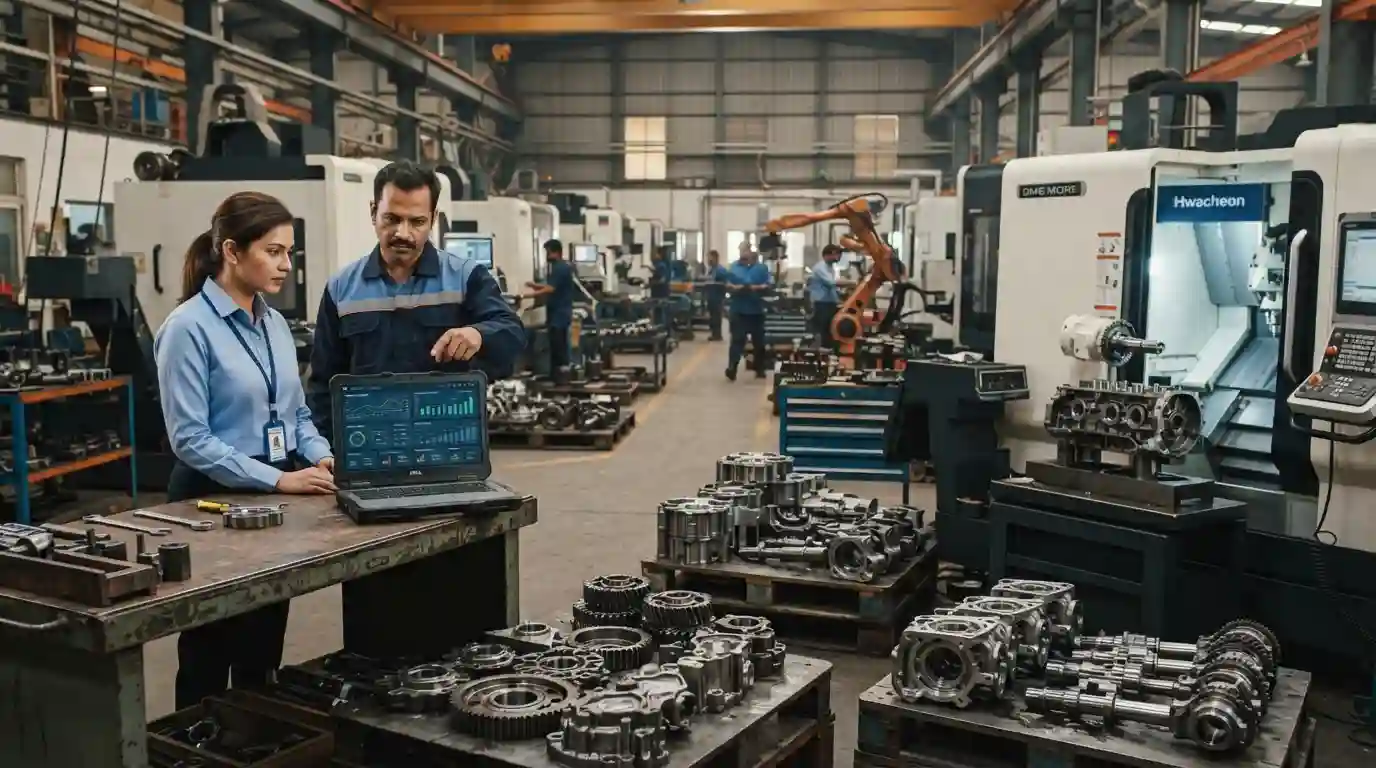
Rajkot has long been recognized for its strong engineering, manufacturing, and automotive ecosystem. From component manufacturers and machining businesses to vehicle-related service providers, the city has developed a diverse industrial base that depends on relationships, technical expertise, repeat buyers, and efficient production. As purchasing behavior increasingly moves online, however, the way automotive businesses attract customers and compete is changing.
This transformation connects naturally with broader discussions around automotive business trends, manufacturing, and the wider business environment.
Why Digital Transformation Matters to Rajkot’s Automotive Sector
Automotive businesses operate in a market where buyers often conduct substantial research before contacting a supplier or service provider. A procurement manager may search for a particular component manufacturer, compare technical capabilities, evaluate production processes, review certifications, and request quotations before starting a commercial conversation.
This creates an opportunity for companies that can provide useful information at the exact moment a potential customer is searching. A strong website, search visibility, technical content, professional business profiles, and targeted advertising can help transform an unknown supplier into a visible and credible option.
For Rajkot businesses, this is particularly important because the automotive ecosystem includes many specialized companies. Instead of competing only through physical proximity, personal contacts, or traditional trade networks, manufacturers can use digital channels to communicate their capabilities to buyers outside the immediate region.
The transition is also part of a wider technology transformation affecting how businesses communicate, manage information, and build customer relationships.
From Traditional Marketing to Search-Driven Customer Acquisition
Traditional automotive marketing has historically depended on dealer relationships, industry contacts, exhibitions, referrals, sales representatives, printed material, and direct business development. These channels remain valuable, particularly in B2B manufacturing, but they do not always capture customers who begin their buying journey online.
Search engines have changed this behavior. A buyer looking for precision machining, forged automotive components, engine parts, CNC manufacturing, or a specialized automotive supplier can begin the process with a simple search. Businesses that appear prominently for relevant commercial queries have an opportunity to enter the consideration stage before a competitor does.
This makes advanced digital marketing particularly relevant to industrial companies. Search engine optimization, technical content, landing pages, paid search campaigns, and conversion-focused websites can work together to create a digital acquisition system rather than a collection of disconnected promotional activities.
How SEO Can Expand the Reach of Automotive Manufacturers
Search engine optimization can help Rajkot automotive companies become discoverable for highly specific searches. Instead of relying exclusively on broad terms such as “auto parts,” a manufacturer can develop content around its actual capabilities, industries served, manufacturing processes, materials, component types, and geographic markets.
For example, a company specializing in CNC machining can create useful pages explaining its machining capabilities, tolerances, materials, quality-control processes, industries served, and quotation process. Such content can attract users with a much stronger commercial intent than generic promotional messaging.
SEO also creates an opportunity to build authority around specialized industrial topics. A manufacturer that consistently publishes useful technical information can demonstrate expertise before a sales conversation begins.
This approach connects with broader principles discussed in data-driven digital marketing, where marketing decisions are increasingly connected to measurable business outcomes.
The Economic Impact of Better Online Visibility
The economic impact of digital marketing should not be measured only by clicks, impressions, or social media followers. For an automotive business, the more meaningful question is whether digital activity contributes to qualified inquiries, quotation requests, new accounts, repeat purchases, or expansion into new markets.
Better online visibility can create several economic effects.
- More qualified inquiries: Buyers can discover companies that match their technical requirements.
- Lower customer-acquisition friction: Detailed online information can answer common questions before a salesperson becomes involved.
- Broader market access: Manufacturers can promote their capabilities beyond Rajkot and Gujarat.
- Improved sales efficiency: Sales teams can focus more attention on prospects who have already researched the company.
- Stronger brand credibility: A professional digital presence can reinforce perceptions of quality and reliability.
- Better marketing measurement: Companies can identify which campaigns and content contribute to inquiries and conversions.
These effects can become particularly important for smaller manufacturers that cannot match the advertising budgets of large automotive brands.
Digital Marketing and B2B Automotive Manufacturing
Rajkot’s automotive economy includes many businesses operating in B2B environments. Their customers may be OEMs, Tier suppliers, distributors, wholesalers, engineering companies, workshops, or industrial buyers. The decision-making process is therefore different from ordinary consumer marketing.
B2B buyers often want evidence before initiating contact. They may want to know whether a company can handle a particular production volume, work with specific materials, meet technical specifications, maintain quality standards, or deliver consistently.
A successful digital strategy should therefore focus on proof and information rather than promotional slogans. Product pages, technical documentation, manufacturing-process content, case studies, facility information, quality-control explanations, and clear quotation forms can make a website much more useful to procurement professionals.
The same principle applies to businesses involved in the broader transportation and automotive ecosystem.
Local Search Can Strengthen Automotive Service Businesses
Digital transformation is not limited to manufacturers. Automotive repair shops, electrical specialists, maintenance providers, tire businesses, and other service companies can also benefit from local digital marketing.
When vehicle owners need immediate assistance, they often search for services based on location and problem. A business with an optimized local presence can appear when customers search for relevant services nearby.
Clear service pages, accurate business information, customer reviews, photographs, useful maintenance content, and easy contact options can improve the customer journey. These activities can help service businesses compete for demand that might previously have been captured mainly through referrals or neighborhood recognition.
Readers interested in the service side of the industry can also explore automotive service and customer experience, vehicle maintenance and repair, and professional vehicle care.
Social Media Can Support Automotive Brand Development
Social media has a different role from search marketing. While search can capture existing demand, social platforms can help businesses create awareness and demonstrate expertise.
Automotive manufacturers can use visual content to show production facilities, machining operations, finished components, quality inspections, engineering teams, packaging processes, and industry applications. This can make a technical manufacturing business easier to understand for potential customers.
Service businesses can use social content to educate customers about maintenance, common vehicle problems, preventive care, seasonal checks, and new technologies.
The most effective strategy is usually not simply to publish promotional posts. Content should answer questions, demonstrate expertise, and provide evidence of what the business can deliver.
Data Makes Marketing Investment More Accountable
One of the strongest economic advantages of digital marketing is measurement. Traditional advertising can make it difficult to determine exactly which activity generated a customer. Digital campaigns can provide considerably more visibility into user behavior.
Automotive businesses can monitor metrics such as organic search traffic, qualified leads, quotation requests, landing-page conversions, advertising cost per lead, customer-acquisition cost, and repeat engagement.
The objective should not be to collect as many metrics as possible. Instead, companies should identify the measurements that connect marketing activity with commercial outcomes.
A useful framework is explained in digital marketing benchmarking for manufacturing businesses. Similar principles can be applied to automotive companies in Rajkot by establishing clear baselines and continuously improving campaign performance.
Why Content Marketing Is Important for Technical Businesses
Automotive manufacturing can be difficult to explain through short advertisements. Technical buyers need information that demonstrates competence. This makes content marketing particularly valuable.
A Rajkot manufacturer could publish guides about component selection, machining processes, material differences, quality checks, common manufacturing challenges, maintenance requirements, or industry applications. Such content can attract search traffic while also helping prospective customers understand the company’s capabilities.
Technical content can also support sales teams. Instead of answering the same basic questions repeatedly, sales representatives can direct prospects to useful resources that explain the relevant process or capability.
This creates an integrated relationship between advertising and marketing, SEO, sales, and customer education.
The Role of Paid Advertising
SEO can take time to build, while paid advertising can provide faster visibility for strategically selected searches. Automotive businesses can use paid campaigns to promote high-value services, specific components, quotation pages, product launches, or local automotive services.
However, advertising should not simply generate traffic. The landing page must provide a logical next step. A buyer searching for a specialized component should reach a page that clearly explains the product, capability, application, and inquiry process.
Campaign performance can then be evaluated based on qualified leads rather than clicks alone. This is where digital advertising becomes an economic tool rather than simply a visibility exercise.
Businesses can also learn from broader discussions about digital marketing ROI and apply the underlying measurement principles to their own market.
Digital Skills and the Automotive Workforce
Digital transformation also creates demand for new skills. Automotive companies do not necessarily need every employee to become a digital marketer, but they increasingly need teams that understand websites, analytics, content, search visibility, customer data, and online communication.
Sales teams can benefit from understanding digital lead sources. Management teams can use analytics to evaluate marketing performance. Technical employees can contribute expertise to educational content. Marketing specialists can translate that expertise into search-friendly and customer-focused communication.
This creates an opportunity for Rajkot to strengthen not only its manufacturing capabilities but also its digital business ecosystem.
Technology and Automotive Services Are Converging
The automotive industry itself is becoming more technology-driven. Connected vehicles, electronic systems, automation, advanced diagnostics, and intelligent mobility solutions are changing the products and services businesses provide.
Rajkot companies involved in automotive technology can use digital marketing to explain complex innovations to potential buyers. This is especially useful when the technology is unfamiliar or requires education before purchase.
The connection between automotive operations and technology can also be seen in topics such as automated parking and RFID technology.
As the industry becomes more digital, businesses that can communicate technical value clearly may have an advantage in attracting both customers and strategic partners.
How Digital Marketing Can Support Export Growth
Rajkot manufacturers do not have to limit their digital strategy to the domestic market. A well-structured website can present manufacturing capabilities to buyers in other Indian states and international markets.
Export-oriented digital marketing should emphasize professional communication, product specifications, manufacturing capabilities, quality systems, inquiry processes, and logistical information where appropriate.
Search optimization can also target commercial terms used by international buyers. This can help manufacturers move from passive visibility to proactive market development.
For companies already participating in export markets, digital marketing can complement traditional sales relationships rather than replacing them.
The Competitive Advantage of Early Adoption
Digital marketing becomes more economically valuable when it is treated as a long-term business capability rather than a short campaign. Companies that consistently build useful content, improve their websites, collect performance data, and refine their customer acquisition processes can develop an asset that becomes stronger over time.
Early adoption can also create a visibility advantage. When several businesses offer similar products, the company that communicates its capabilities most effectively online may receive attention before competitors are considered.
This does not mean digital marketing automatically guarantees sales. Product quality, pricing, delivery reliability, technical capability, and customer service remain fundamental. Digital marketing works best when it makes genuine business strengths easier for the market to discover.
A Practical Digital Transformation Roadmap for Rajkot Automotive Businesses
Automotive companies looking to begin or improve their digital transformation can approach the process in stages.
- Audit the existing digital presence: Review the website, search visibility, business listings, social profiles, and conversion paths.
- Define commercial priorities: Identify the products, services, customer groups, and markets that matter most.
- Build useful website pages: Create clear product, service, industry, capability, and inquiry pages.
- Develop an SEO strategy: Target commercially meaningful searches related to products, processes, industries, and locations.
- Create technical content: Publish useful information that answers buyer questions and demonstrates expertise.
- Improve local visibility: Automotive service businesses should optimize their local presence and customer information.
- Test paid campaigns: Use targeted advertising where immediate visibility or market testing is valuable.
- Measure commercial outcomes: Track leads, inquiries, acquisition costs, conversion rates, and revenue-related indicators.
- Continuously optimize: Use performance data to improve pages, campaigns, content, and customer journeys.
This staged approach reduces the risk of treating digital transformation as a single expensive project. Instead, it turns digital marketing into an ongoing process of testing, learning, and improving.
The Broader Economic Effect on Rajkot
The economic impact of digital marketing can extend beyond individual automotive companies. When manufacturers become more visible, they can potentially reach new buyers, increase inquiry volumes, expand production opportunities, and create demand for supporting services.
Digital growth can also strengthen the ecosystem around manufacturing. Website development, SEO, content creation, analytics, advertising, photography, video production, software, customer relationship management, and digital consulting can all become part of the wider business environment.
As more companies participate in digital commerce and online lead generation, Rajkot’s traditional industrial strengths can increasingly connect with modern customer-acquisition systems.
What the Future Could Look Like
The future of Rajkot’s automotive sector is unlikely to be defined by manufacturing alone. Competitive advantage will increasingly involve the ability to combine engineering capability with market intelligence, technology, communication, and customer experience.
Digital marketing can support this transition by connecting manufacturers and automotive businesses with customers at more stages of the buying journey. Search can create discovery, content can build trust, social media can create awareness, advertising can generate targeted demand, and analytics can help businesses understand which activities contribute to commercial performance.
Companies that successfully integrate these functions can become more responsive to changing market conditions. They can identify demand faster, communicate their capabilities more clearly, and make marketing investment decisions based on evidence rather than assumptions.
Conclusion
Digital marketing is becoming an increasingly important component of economic competitiveness in Rajkot’s automotive sector. Its value is not limited to generating website traffic or increasing brand awareness. When connected to clear commercial objectives, digital marketing can help manufacturers reach new buyers, support export development, improve lead generation, strengthen customer relationships, and make marketing expenditure more measurable.
The most important opportunity for Rajkot automotive businesses is therefore not simply to “go digital.” It is to build a digital system around genuine manufacturing and service strengths. Companies with strong engineering, reliable production, technical expertise, and quality-focused operations can use digital channels to make those advantages visible to a much wider market.
As automotive competition continues to evolve, the businesses that combine industrial capability with effective digital communication will be better positioned to capture emerging opportunities. Rajkot’s manufacturing heritage provides the foundation; digital transformation can help carry that foundation into the next stage of market growth.



