
Why Rajasthan Is Worth Visiting
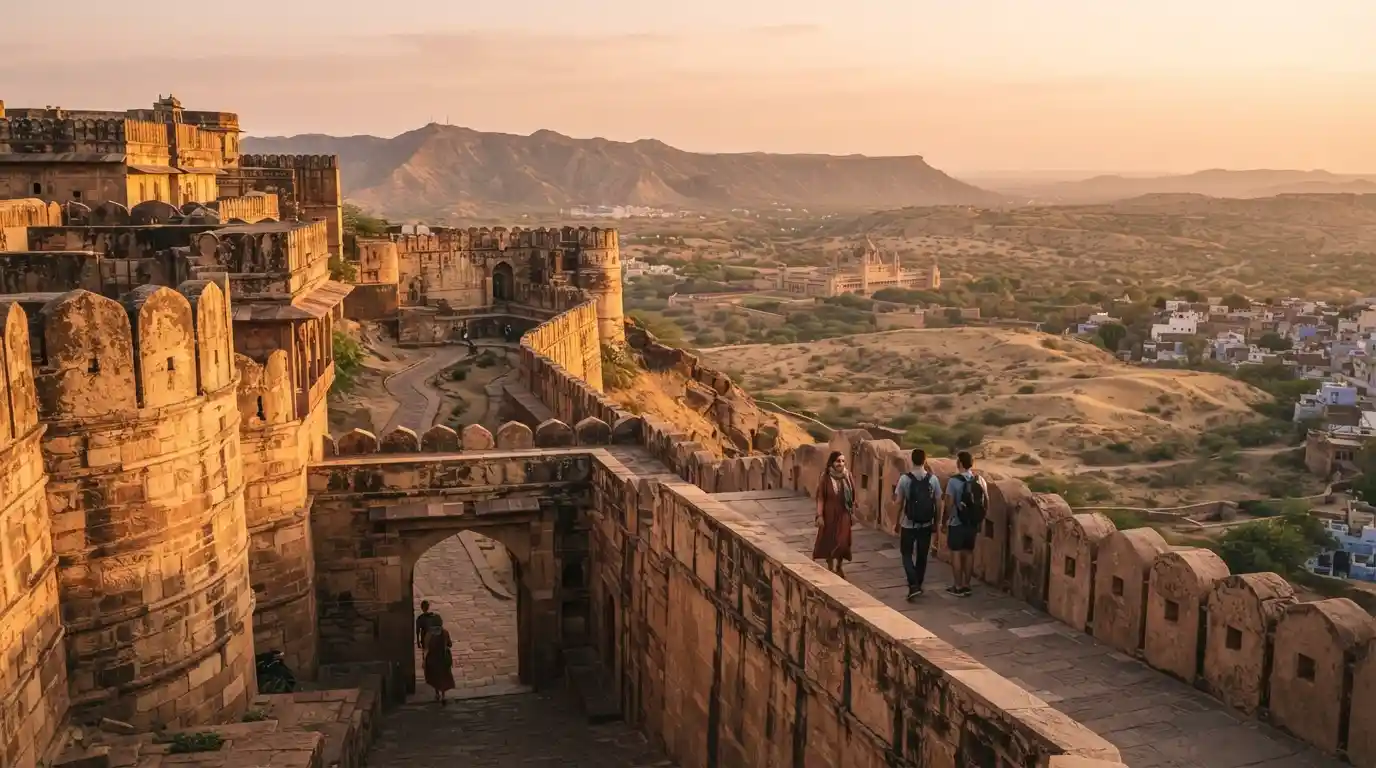
Rajasthan stands out because its destinations feel dramatically different from one another even though they belong to the same state. Royal architecture dominates some cities, while others are defined by desert scenery, lakes, temples or wildlife.
The state is also a strong choice for travelers who enjoy combining sightseeing with culture. You can explore historic forts in the morning, shop for traditional textiles in the afternoon and enjoy local Rajasthani food in the evening.
Travelers planning a wider India trip can also compare Rajasthan with destinations covered in our guides to places to visit in Delhi, Chennai with family and Mumbai during monsoon.
Best Places to Visit in Rajasthan
1. Jaipur — The Pink City
Jaipur is one of the best places to visit in Rajasthan for first-time travelers. Known as the Pink City, the capital combines royal architecture, historic monuments, busy bazaars and modern travel facilities.
Major attractions include Amber Fort, Hawa Mahal, City Palace and Jantar Mantar. The old city is especially enjoyable for travelers interested in architecture, photography, handicrafts, jewelry and traditional textiles.
Allow at least two full days for Jaipur if you want to explore the major attractions without rushing. Three days can be more comfortable for travelers who want to combine sightseeing with shopping and local experiences.
2. Udaipur — The City of Lakes
Udaipur offers a completely different atmosphere from Jaipur. Surrounded by the Aravalli Hills and built around several lakes, it is one of Rajasthan’s most scenic destinations.
Lake Pichola, City Palace, Jagdish Temple, Fateh Sagar Lake and Saheliyon Ki Bari are among the attractions worth adding to your itinerary. A boat ride around Lake Pichola is particularly appealing around sunset.
Udaipur is a good choice for couples, photographers and travelers who prefer a slower sightseeing pace. Two full days are usually enough for the main attractions, although three nights allow more time to enjoy the city’s restaurants, viewpoints and lakeside atmosphere.
3. Jodhpur — The Blue City
Jodhpur is famous for its blue-painted neighborhoods and the enormous Mehrangarh Fort overlooking the city. It is one of the strongest choices for travelers who want dramatic architecture and historic character.
Beyond Mehrangarh Fort, visitors can explore Jaswant Thada, Umaid Bhawan Palace, the Clock Tower area, Sardar Market and traditional streets in the old city.
One full day can cover the major attractions, but staying for two nights gives you more flexibility. Jodhpur also works well as a connecting point between Jaipur, Jaisalmer and Udaipur.
4. Jaisalmer — The Golden City
Jaisalmer is one of the most distinctive destinations in Rajasthan. Its golden sandstone buildings rise from the edge of the Thar Desert, creating scenery that feels very different from India’s major cities.
Jaisalmer Fort is the city’s defining landmark, while Patwon Ki Haveli and Gadisar Lake are other popular stops. Many travelers also head outside the city for a desert experience involving sand dunes, sunset views and an overnight camp.
Plan for at least two days if you want to combine city sightseeing with a desert excursion. A third day can make the experience more relaxed.
5. Pushkar — A Sacred and Cultural Escape
Pushkar is one of Rajasthan’s most distinctive small towns. Centered around Pushkar Lake, it is known for its temples, ghats, spiritual atmosphere and colorful markets.
The Brahma Temple is an important attraction, while walking around the lake provides a slower experience compared with the major cities of Rajasthan.
Pushkar can be visited as a day trip, but staying overnight is worthwhile if you want to experience the town after the busiest daytime hours. It can also be combined conveniently with Ajmer and Jaipur.
6. Ranthambore National Park — For Wildlife Lovers
Ranthambore is the destination to choose when you want to add wildlife to a Rajasthan heritage trip. The national park is particularly associated with Bengal tiger sightings, although wildlife encounters are never guaranteed.
Safaris provide opportunities to see a variety of animals and birds while exploring a landscape of dry forests, lakes and rocky terrain. Ranthambore Fort adds another historic dimension to the trip.
Two nights can be useful because multiple safari opportunities give visitors a better chance of experiencing the park in different conditions. Travelers should always check current park rules, safari availability and permitted zones before planning their visit.
7. Mount Abu — Rajasthan’s Hill Station
Mount Abu offers a refreshing change from the desert landscapes associated with much of Rajasthan. Located in the Aravalli Hills, it provides cooler weather, green surroundings, viewpoints, lakes and historic temples.
The Dilwara Jain Temples are among its most notable attractions, while Nakki Lake and surrounding viewpoints provide opportunities for relaxed sightseeing.
Mount Abu is especially attractive for travelers looking for a short escape from the heat or a destination with a different landscape. A two-day visit is generally enough for the major highlights.
8. Bikaner — Heritage Beyond the Main Tourist Circuit
Bikaner is a strong choice for travelers who want to explore Rajasthan beyond its most famous destinations. The city is known for Junagarh Fort, historic havelis, traditional food and its connections with camel culture.
Compared with Jaipur, Udaipur or Jaisalmer, Bikaner can feel less centered around the standard Rajasthan itinerary. That makes it appealing to travelers with additional time who want to explore another side of the state.
A full day can cover the major attractions, although an overnight stay makes the journey more comfortable.
9. Chittorgarh — A City of Forts and History
Chittorgarh is best known for the massive Chittorgarh Fort, one of Rajasthan’s most important historic sites. The fort complex contains towers, palaces, temples, gates and ruins spread across a large hilltop area.
Visitors interested in Rajput history and monumental architecture should consider adding Chittorgarh to their itinerary. Because the fort covers a substantial area, allow enough time rather than treating it as a rushed stop.
10. Bundi — An Offbeat Rajasthan Experience
Bundi is a good option for travelers who want a quieter historic destination. The town is known for its palace, stepwells, old streets and traditional architecture.
Its smaller scale makes it different from Rajasthan’s major tourist centers. Bundi can work particularly well for repeat visitors who have already explored Jaipur, Udaipur and Jodhpur.
11. Kumbhalgarh — A Dramatic Fort Destination
Kumbhalgarh is another worthwhile addition for history enthusiasts. The hilltop fort is surrounded by the Aravalli landscape and is especially impressive when viewed from a distance.
It is often considered as part of a route between Jodhpur and Udaipur, making it practical for travelers who want to add another major fort without creating an entirely separate journey.
12. Ajmer — A Spiritual Stop
Ajmer is an important pilgrimage destination and can easily be combined with Pushkar. The city is home to Ajmer Sharif Dargah, one of the most significant religious sites in the region.
Travelers visiting Ajmer should plan respectfully around religious customs and busy periods. Combining Ajmer with Pushkar creates an interesting contrast between two nearby destinations with very different cultural identities.
Best Places in Rajasthan by Travel Interest
There is no single destination that is best for everyone. Choosing destinations according to your interests can make a Rajasthan trip much more enjoyable.
- For first-time visitors: Jaipur, Jodhpur, Jaisalmer and Udaipur.
- For history: Jaipur, Chittorgarh, Jodhpur and Kumbhalgarh.
- For desert experiences: Jaisalmer and Bikaner.
- For lakes and scenery: Udaipur and Mount Abu.
- For spirituality: Pushkar and Ajmer.
- For wildlife: Ranthambore.
- For quieter experiences: Bundi and Kumbhalgarh.
- For shopping: Jaipur and Jodhpur.
- For couples: Udaipur and Jaisalmer.
- For families: Jaipur, Udaipur and Mount Abu.
How Many Days Do You Need in Rajasthan?
The ideal length depends on how many destinations you want to cover. Trying to see the entire state in a few days can result in long travel periods and rushed sightseeing.
3 to 4 Days
Choose one major destination and nearby attractions. Jaipur with a short Pushkar or Ajmer excursion is a practical option. Udaipur can also work well for a compact trip.
5 to 6 Days
With five or six days, you can combine two or three destinations. Jaipur and Jodhpur make a strong heritage-focused combination, while Jodhpur and Jaisalmer work well for travelers interested in desert landscapes.
7 to 8 Days
A week gives you enough time for a more balanced circuit. Jaipur, Jodhpur, Jaisalmer and Udaipur can form the core of the journey, although transportation time should be considered carefully.
9 to 12 Days
A longer trip allows you to add destinations such as Pushkar, Ranthambore, Bikaner, Chittorgarh or Kumbhalgarh. This is a better option for travelers who want to mix heritage, desert, wildlife and cultural experiences.
Suggested Rajasthan Itinerary
A practical first-time route can be structured around the state’s most recognizable destinations.
- Days 1–2: Explore Jaipur’s palaces, forts, markets and historic center.
- Day 3: Continue toward Pushkar and Ajmer if they fit your schedule.
- Days 4–5: Explore Jodhpur, including Mehrangarh Fort and the old city.
- Days 6–7: Travel to Jaisalmer for fort sightseeing and a desert experience.
- Days 8–9: Continue toward Udaipur and explore its lakes and palaces.
- Optional days: Add Ranthambore, Kumbhalgarh, Chittorgarh or Mount Abu depending on your interests.
Travelers extending their trip beyond India can also use our wider destination guides, including Japan for anime lovers, Thailand with family, Ipoh, Malaysia and Bali.
Best Time to Visit Rajasthan
The most comfortable period for extensive sightseeing is generally the cooler part of the year. October through March is popular because daytime conditions are more suitable for exploring forts, markets, historic neighborhoods and outdoor attractions.
Winter can also bring cooler mornings and evenings, particularly in desert areas, so travelers should pack layers even when daytime temperatures are comfortable.
Summer can be extremely hot in many parts of Rajasthan. Travelers visiting during warmer months should plan outdoor sightseeing around cooler parts of the day, stay hydrated and account for the heat when choosing activities.
Monsoon conditions can change the appearance of parts of the state. Udaipur can be particularly appealing when its lakes and surrounding landscapes are greener, although weather conditions should always be considered when planning transportation.
How to Travel Around Rajasthan
Rajasthan is large, so transportation planning is an important part of the trip. Trains are useful between several major cities, while private cars and drivers can provide greater flexibility for multi-stop itineraries.
Domestic flights can also save time when connecting distant destinations, while local taxis, auto-rickshaws and app-based transportation can be useful within larger cities depending on availability.
If your itinerary includes several destinations, avoid adding too many short stops. Spending enough time in each city is usually more rewarding than trying to collect a long list of destinations.
What to Eat in Rajasthan
Food is an important part of the Rajasthan experience. Travelers should look for traditional dishes such as dal baati churma, gatte ki sabzi, ker sangri, laal maas where appropriate, kachori and regional sweets.
Each destination also has its own local specialties and dining traditions. Jaipur is particularly well known for its variety of traditional food and markets, while Jodhpur and Bikaner are excellent places to explore regional snacks.
For travelers who enjoy exploring food while traveling, it can be useful to balance famous restaurants with smaller local establishments that offer traditional dishes.
Shopping in Rajasthan
Rajasthan is known for textiles, jewelry, handicrafts, leather goods, pottery, block prints and decorative items. Jaipur is particularly strong for jewelry, textiles and traditional crafts, while Jodhpur and other historic cities offer their own regional products.
When shopping in tourist markets, compare prices, check product quality and understand exactly what you are buying. For expensive items such as jewelry or valuable handicrafts, documentation and authenticity can be important.
Travel Tips for a Rajasthan Trip
- Plan your route before booking hotels in multiple cities.
- Allow realistic travel time between destinations.
- Carry comfortable footwear for forts, palaces and historic sites.
- Bring sun protection for desert and outdoor sightseeing.
- Carry layers during winter because mornings and evenings can be cool.
- Book popular hotels and experiences ahead during peak travel periods.
- Respect local customs at temples, mosques and other religious sites.
- Keep water available during long sightseeing days.
- Use reputable transportation and tour providers.
- Check current opening hours, entry rules and local conditions before visiting individual attractions.
How Rajasthan Compares With Other Popular Destinations
Rajasthan is particularly appealing for travelers who want history and culture, but it is not the only destination worth considering. If you are still building a larger travel plan, our guides to Andaman and Nicobar Islands, Srinagar and Kashmir, and New Zealand can help you compare very different travel experiences.
For travelers looking specifically for international destinations, guides covering Tokyo for first-time visitors, places near Tokyo in winter and Albania in winter offer additional planning ideas.
Frequently Asked Questions
What are the best places to visit in Rajasthan for first-time visitors?
Jaipur, Jodhpur, Jaisalmer and Udaipur are the strongest starting points for a first Rajasthan trip. Together, they provide a good mix of forts, palaces, markets, desert scenery and lakes.
Which place is most beautiful in Rajasthan?
Beauty is subjective, but Udaipur is particularly popular for its lakes, palace architecture and Aravalli surroundings, while Jaisalmer stands out for its golden desert landscape.
Is Rajasthan suitable for a family trip?
Yes. Jaipur, Udaipur and Mount Abu can work particularly well for families because they combine sightseeing with cultural, scenic and recreational experiences.
How many days are enough for Rajasthan?
Five to six days can cover a compact itinerary, while seven to twelve days provide more flexibility for combining major cities with destinations such as Pushkar, Ranthambore, Kumbhalgarh or Chittorgarh.
What is the best month to visit Rajasthan?
The cooler months from October through March are generally preferred for extensive sightseeing. Exact conditions vary between destinations, so travelers should check the expected weather for their specific route.
Is Jaisalmer worth visiting on a Rajasthan trip?
Yes. Jaisalmer offers an experience that is difficult to replicate elsewhere in the state, combining a historic sandstone fort, havelis and access to the Thar Desert.
Final Thoughts
Rajasthan is best experienced as a collection of different destinations rather than as a single type of holiday. Jaipur delivers royal architecture and colorful markets, Jodhpur brings dramatic fort views, Jaisalmer introduces the Thar Desert, Udaipur offers lakes and palace scenery, while Pushkar, Ranthambore, Mount Abu, Chittorgarh and Bundi add completely different experiences.
For a first trip, focus on a manageable route instead of trying to see everything. A carefully planned combination of Jaipur, Jodhpur, Jaisalmer and Udaipur can provide an excellent introduction to Rajasthan, while additional days can be used for wildlife, spirituality, quieter towns or historic forts.
Whether you are planning a short cultural break or a longer journey through India’s northwest, Rajasthan offers enough variety to build an itinerary around almost any travel style.