
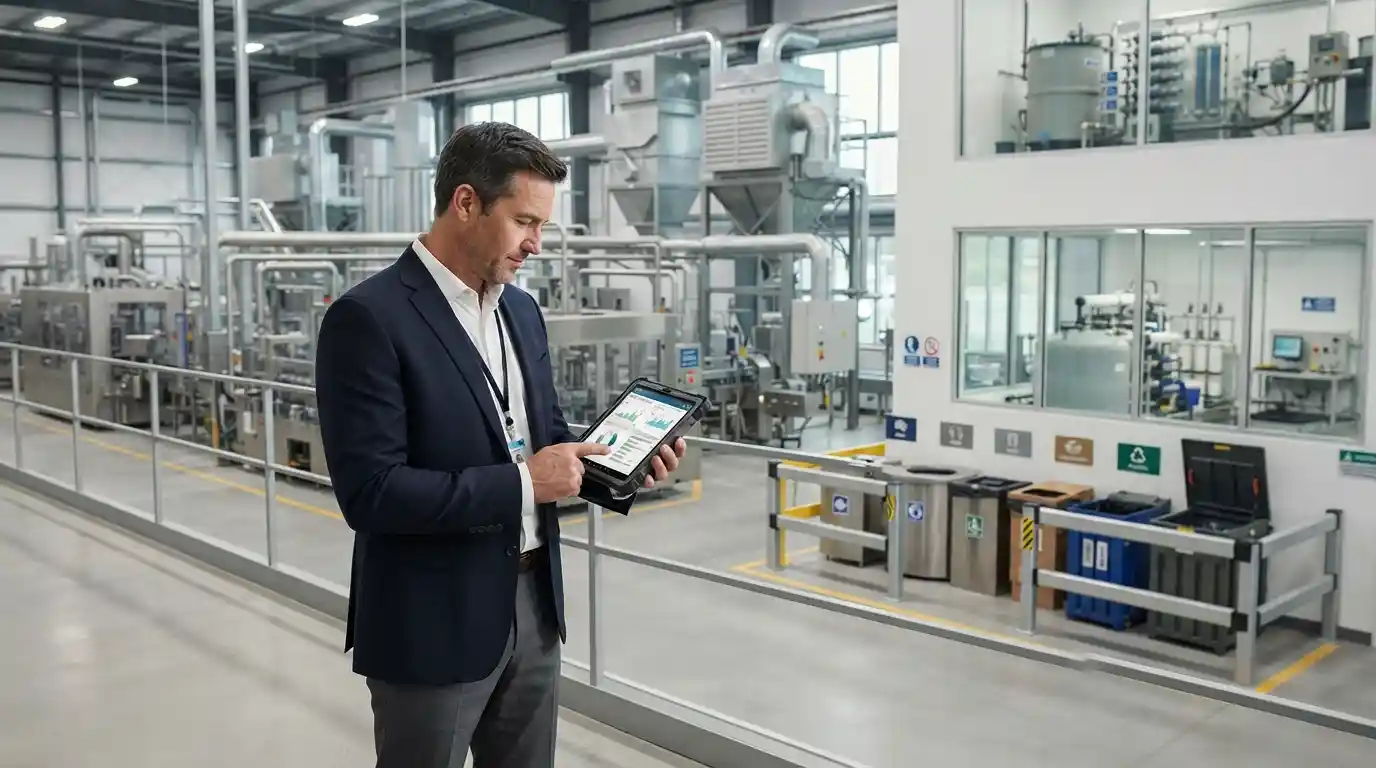
The phrase Environment Protection Act rules commonly refers to the legal framework created under environmental protection legislation and the rules, notifications, standards, permits, and compliance requirements that operate alongside it. In India, the Environment (Protection) Act, 1986 provides a broad framework for protecting and improving the environment and controlling activities that can cause environmental harm.
For business leaders, the practical question is not simply what the law says. It is how environmental obligations affect operations, investment decisions, facilities, supply chains, documentation, risk management, and long-term growth.
This guide explains the key concepts business owners and executives should understand before making decisions that may have environmental implications.
What Is the Environment Protection Act?
The Environment (Protection) Act, 1986 is a comprehensive environmental law in India that provides the central government with broad powers to protect and improve environmental quality and prevent, control, and reduce pollution.
The Act operates as an umbrella framework rather than a single checklist that applies identically to every business. Different industries and projects can face different requirements depending on their activities, location, scale, emissions, waste streams, resources used, and potential environmental impact.
That distinction is important for business owners. A company cannot determine its entire environmental responsibility merely by asking whether it is covered by the Act. It must also identify the specific rules, standards, permissions, notifications, and sector-specific requirements that apply to its operations.
Why Environment Protection Rules Matter to Businesses
Environmental compliance can influence much more than a company’s relationship with regulators. It can affect project timelines, operating costs, facility design, procurement decisions, insurance considerations, financing, reputation, and expansion plans.
A business that understands environmental requirements early can incorporate them into planning instead of treating compliance as an unexpected cost after a project has already been designed.
This approach becomes especially important when environmental considerations intersect with industrial efficiency and innovation, manufacturing systems, energy consumption, logistics, and technology investments.
Key Areas Covered by Environmental Compliance
Environmental obligations vary by business, but several areas repeatedly appear in compliance planning.
Air Pollution and Emissions
Businesses operating industrial equipment, combustion systems, production lines, generators, boilers, or other emission-producing processes may need to consider applicable air-quality requirements.
Operational controls can include emission monitoring, equipment maintenance, pollution-control systems, recordkeeping, and compliance with applicable emission standards.
Water Pollution and Wastewater
Businesses that consume water or generate wastewater need to understand how their activities affect water resources. Depending on the operation, this may involve treatment systems, discharge controls, monitoring, and documentation.
Water management can also become an operational efficiency issue. Reducing unnecessary water consumption, improving process efficiency, and maintaining treatment infrastructure can support both environmental performance and cost control.
Hazardous and Other Waste
Waste management is another important compliance area. Certain industrial, chemical, medical, electronic, or other specialized waste streams can be subject to dedicated rules governing storage, handling, transportation, treatment, recycling, and disposal.
A responsible business should know what types of waste its operations generate, where those materials are stored, who handles them, and how final disposal or recovery is documented.
Environmental Impact Assessment
Large projects and activities with potentially significant environmental impacts may require environmental assessment and prior approval under applicable regulations and notifications.
This can be particularly relevant when businesses are planning new facilities, major expansions, infrastructure projects, mining activities, industrial developments, or other projects that fall within regulated categories.
Environment Protection Rules and Industrial Businesses
Industrial businesses often face a broader compliance workload because manufacturing and processing activities can involve emissions, wastewater, chemicals, energy use, solid waste, hazardous materials, and transportation.
Environmental requirements should therefore be integrated into operational planning rather than assigned exclusively to one compliance employee.
For example, a manufacturing company evaluating a new production system should consider environmental controls alongside production capacity and return on investment. The same principle applies when evaluating manufacturing equipment costs or planning changes to a production facility.
Automation and digital systems can also support environmental management. Businesses exploring automation in manufacturing should consider whether improved monitoring, process control, maintenance, and resource efficiency can strengthen their overall operating model.
How Environmental Compliance Affects Business Investment
Environmental requirements can influence investment decisions at several stages.
Before Purchasing Property
Before acquiring land or facilities, businesses should investigate whether the proposed use is compatible with applicable zoning, environmental requirements, permits, infrastructure, and site conditions.
Environmental due diligence can help identify potential liabilities before a transaction is completed.
Businesses involved in property investment can also benefit from understanding how digital tools are changing real estate decision-making, including the use of real estate investment technology.
Before Building or Expanding
Environmental requirements should be evaluated before construction begins. Depending on the project, approvals, assessments, pollution-control measures, waste-management systems, and other permissions may need to be considered during the design stage.
Waiting until construction is substantially complete can create expensive redesigns and project delays.
Before Changing Production
A change in raw materials, production volume, machinery, fuel, chemicals, or manufacturing processes can alter a company’s environmental profile.
Business leaders should therefore assess whether operational changes trigger new environmental obligations rather than assuming an existing approval automatically covers every future activity.
Environmental Compliance and Supply Chains
Environmental responsibility does not stop at the factory gate. Supply chains can involve raw materials, transportation, packaging, storage, processing, and waste management across multiple locations.
Companies should understand the environmental risks associated with important suppliers and contractors, particularly where their activities can create regulatory or reputational exposure.
Strong supply-chain management can also improve operational resilience. Businesses examining logistics performance can learn from modern approaches to supply-chain efficiency and logistics.
Documentation Is a Core Part of Compliance
Environmental compliance is not simply about taking the correct action. Businesses often need to demonstrate what they did, when they did it, who performed it, and what the relevant monitoring or approval records show.
Depending on the applicable requirements, organizations may maintain:
- Environmental permits and approvals
- Monitoring reports
- Waste-management records
- Emission or discharge data
- Inspection records
- Equipment-maintenance documentation
- Training records
- Incident reports
- Compliance correspondence
- Corrective-action documentation
Good documentation gives management a clearer view of environmental performance while making regulatory responses more organized.
Technology Can Strengthen Environmental Management
Modern businesses increasingly use technology to monitor processes, automate workflows, analyze operational data, and identify inefficiencies.
Digital transformation can therefore support environmental management when systems are designed to capture relevant information and turn it into actionable decisions.
Businesses considering broader technology modernization can explore approaches to digital transformation in business services and the role of technology in improving operational efficiency.
Industrial technology can be particularly valuable where businesses need better process monitoring or equipment performance. Developments in business innovation and efficiency technologies illustrate how technology investment can be connected to operational improvement.
Environmental Compliance as a Risk-Management Strategy
Executives should view environmental compliance as part of enterprise risk management rather than as an isolated legal obligation.
Potential risks can include regulatory enforcement, project delays, remediation costs, operational disruption, contractual disputes, reputational damage, and difficulties obtaining future approvals.
Early identification is usually more practical than discovering environmental problems after an investment has been made.
This is why businesses should incorporate environmental considerations into due diligence, project planning, procurement, facility management, and strategic decision-making.
What Happens When Businesses Ignore Environmental Requirements?
Non-compliance can have consequences that extend beyond a single regulatory notice. Depending on the applicable law and circumstances, authorities may have powers involving directions, restrictions, penalties, prosecution, or other enforcement mechanisms.
The exact consequences depend on the nature of the violation, the applicable legal provisions, the responsible authority, and the facts of the case.
Business owners should therefore avoid relying on informal assumptions about environmental rules. When a project has significant environmental implications, qualified legal and environmental professionals should review the applicable requirements before major commitments are made.
How Business Owners Can Build a Practical Compliance System
A useful environmental compliance program does not have to begin with complicated paperwork. It can start with a structured assessment of the company’s activities.
1. Map the Business Activities
List the company’s facilities, production processes, equipment, materials, energy sources, water consumption, emissions, wastewater, and waste streams.
2. Identify Applicable Requirements
Determine which environmental laws, rules, standards, approvals, permissions, and reporting obligations apply to each activity.
3. Assign Responsibility
Environmental compliance should have clearly assigned ownership. Management, operations, facilities, procurement, finance, and legal teams may all have responsibilities depending on the organization.
4. Maintain a Compliance Calendar
Track permit renewals, monitoring activities, inspections, reports, testing schedules, training requirements, and other recurring obligations.
5. Monitor Operational Changes
Do not assume that an existing compliance position remains unchanged forever. New equipment, production capacity, materials, facilities, suppliers, or processes can create new environmental considerations.
6. Keep Records Organized
Maintain documentation in a structured system so that management can quickly determine what approvals exist and whether required monitoring or reporting has been completed.
Environmental Responsibility and Sustainable Business
Compliance establishes a baseline, but forward-looking businesses can go further by integrating sustainability into their operating strategy.
Resource efficiency, waste reduction, energy management, responsible procurement, and cleaner production can reduce environmental impact while potentially improving operational performance.
This is particularly relevant for businesses evaluating energy and natural-resource industries, where operational efficiency and resource management can be closely connected.
Companies can also examine broader business transformation strategies through topics such as business transformation and business performance and growth.
Why Environmental Rules Matter to Long-Term Business Growth
Environmental compliance should not be viewed solely as a restriction on business activity. For well-managed organizations, it can become part of a stronger approach to operational planning.
Companies that understand environmental risks early can make better decisions about locations, equipment, production systems, resource consumption, waste management, suppliers, and expansion.
Environmental awareness can also complement innovation. Businesses investing in improved technologies and more efficient processes may find opportunities to reduce waste, improve resource utilization, and strengthen resilience.
The same strategic thinking applies to businesses evaluating automotive and industrial markets, where technology, production efficiency, and changing market expectations can influence long-term competitiveness.
Environment Protection Act Rules: A Practical Checklist
Before launching a new environmentally relevant activity, business leaders should ask:
- What environmental impacts could this activity create?
- Which environmental laws and rules may apply?
- Are environmental approvals or permissions required?
- Could the project generate regulated emissions or waste?
- Will water use or wastewater require additional controls?
- Are monitoring and testing requirements applicable?
- Who is responsible for compliance?
- Are records and supporting documents being maintained?
- Could a proposed operational change alter existing obligations?
- Has professional environmental or legal advice been obtained where necessary?
Frequently Asked Questions
What is the Environment Protection Act?
The Environment (Protection) Act, 1986 is a broad Indian environmental law designed to provide a framework for protecting and improving environmental quality and controlling pollution.
Do all businesses have the same environmental obligations?
No. Requirements can differ according to the business activity, industry, facility, location, emissions, waste generation, water use, project size, and other factors.
Can environmental compliance affect business expansion?
Yes. Certain projects and expansions may require environmental assessment, approvals, pollution-control measures, or other regulatory steps before work can proceed.
Why is environmental documentation important?
Records help businesses demonstrate compliance, track monitoring activities, manage recurring obligations, and respond more effectively to inspections or regulatory inquiries.
Can technology help businesses manage environmental compliance?
Yes. Digital monitoring, data management, automation, maintenance systems, and operational analytics can help organizations collect information and manage environmental responsibilities more efficiently.
Should a business seek professional advice?
For projects with significant environmental, regulatory, financial, or operational implications, professional legal and environmental advice can help identify requirements before the business makes major commitments.
Final Thoughts
Understanding Environment Protection Act rules is ultimately about understanding how environmental responsibility fits into business operations. The strongest approach is proactive: identify environmental impacts, determine applicable requirements, obtain necessary approvals, monitor performance, maintain records, and review compliance whenever the business changes.
For ambitious business owners and executives, environmental compliance should be treated as part of responsible growth rather than an obstacle that appears after a project has already been designed. When environmental considerations are integrated into investment, technology, manufacturing, logistics, and operational decisions from the beginning, businesses are better positioned to manage risk and build sustainable long-term value.