
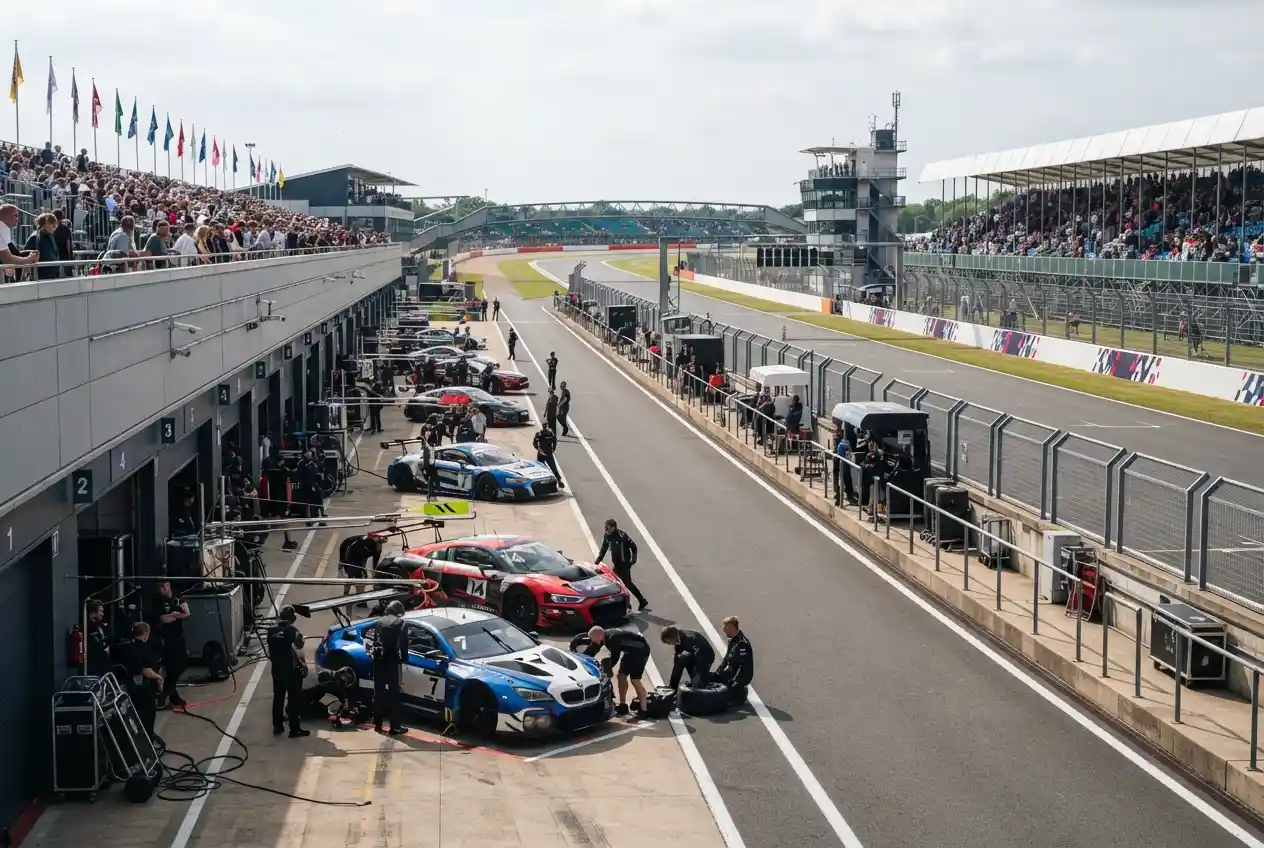
Motorsport events are built around speed, precision, engineering, and spectacle, but the racing itself is only one part of the experience. Before the first engine starts, an extensive network of infrastructure, logistics, safety systems, technical areas, spectator facilities, communications, and support services must be ready.
Effective motorsport event set ups turn a racetrack, street circuit, or temporary venue into a functioning event environment. Teams need secure working areas, officials need reliable communications, spectators need controlled access and comfortable viewing areas, and organizers need every operational zone to work together without disrupting the racing schedule.
From paddock configuration and pit-lane preparation to crowd management, temporary utilities, media facilities, technology, and transportation, every element contributes to the success of race day. A well-designed setup also makes it easier for organizers to respond to unexpected problems while keeping the event organized and professional.
What Are Motorsport Event Set Ups?
Motorsport event set ups refer to the planning, installation, coordination, and testing of the temporary or permanent infrastructure required to operate a racing event. The scope can vary considerably depending on the type of motorsport, venue, number of participants, spectator capacity, and event duration.
A small club racing weekend may require relatively straightforward paddock spaces, timing equipment, safety barriers, spectator areas, and basic hospitality facilities. A major international race can involve a much larger operational footprint with broadcast compounds, extensive grandstands, hospitality suites, team garages, media centers, temporary roads, communications networks, medical facilities, security checkpoints, and dedicated logistics areas.
The objective is not simply to place equipment around a track. Every component needs to fit into a coordinated operational plan so that teams, officials, staff, media, suppliers, and spectators can move through the venue efficiently.
Why Event Set Ups Matter in Motorsport
A motorsport venue operates under intense time pressure. Cars may need to move between garages and pit lanes within tightly controlled windows, teams require uninterrupted access to equipment, and spectators expect clear routes between entrances, viewing areas, food facilities, merchandise zones, and other attractions.
That makes event infrastructure a critical part of the overall experience. Poor planning can create congestion, delayed operations, difficult access routes, inefficient communication, and unnecessary safety risks.
Good planning has the opposite effect. It creates a logical flow between operational areas and gives every stakeholder a clear understanding of where they need to be and how they can get there.
The same principles can be seen in other highly organized industries. For example, modern logistics management depends on coordinating people, assets, schedules, and transportation so that complex operations remain efficient.
Key Areas of a Motorsport Event Setup
A successful race venue usually contains several interconnected zones. Each has a different purpose, but all must work together as part of one event plan.
1. Pit Lane and Team Garages
The pit lane is one of the most operationally sensitive parts of a racing venue. Teams need clearly defined working areas, appropriate access routes, equipment storage, temporary power, communications, lighting, and sufficient space for technical operations.
Garage layouts should support efficient movement without creating unnecessary interference between teams or service personnel. Equipment should be positioned with the event schedule and expected workflow in mind.
For temporary venues, organizers may need to construct modular garage structures or adapt existing facilities. Flooring, lighting, electrical distribution, fire protection, signage, and access control should all be considered before teams arrive.
2. Paddock and Team Support Areas
The paddock is more than a parking area for racing teams. It functions as a working environment where transporters, mechanics, engineers, technical staff, suppliers, and team representatives operate throughout the event.
Effective paddock planning should consider vehicle movement, pedestrian routes, loading areas, equipment storage, hospitality spaces, waste management, and emergency access.
Because modern motorsport increasingly depends on digital systems, technology infrastructure is also becoming an important part of paddock design. Broader operational technology concepts can be explored through resources such as the guide to seamless technology operations.
3. Trackside Safety Infrastructure
Safety infrastructure is one of the most important elements of any motorsport event. The exact requirements depend on the venue, racing discipline, track configuration, and applicable sporting regulations.
Typical planning may include protective barriers, catch fencing, controlled access points, marshal positions, emergency routes, medical response areas, fire-response equipment, and designated recovery zones.
The layout should make it possible for trained personnel to respond efficiently when an incident occurs. Safety equipment should never be treated as an afterthought or simply positioned wherever space remains after the rest of the venue has been planned.
This approach is particularly important when events combine large crowds with high-performance vehicles. Good public safety planning begins with understanding how people, vehicles, equipment, and emergency teams interact within the same environment.
Spectator Areas and Fan Zones
Modern motorsport events are increasingly designed as complete entertainment experiences rather than simple races. Spectators may spend several hours or an entire day at the venue, so the event setup needs to support more than track viewing.
Grandstands, temporary seating, viewing platforms, entrance gates, pedestrian routes, food areas, merchandise booths, entertainment spaces, restrooms, information points, and shaded areas can all contribute to the visitor experience.
Fan zones can also include interactive activities such as racing simulators, vehicle displays, driver appearances, gaming areas, and promotional experiences. Sports-focused venues such as the Inwood sports complex demonstrate how physical spaces can be organized around participant and spectator experiences.
When designing these areas, crowd flow should be considered carefully. Entry and exit routes should be easy to understand, while high-demand attractions should not block primary pedestrian corridors.
Temporary Power and Utilities
Large motorsport venues often require substantial temporary infrastructure. Electricity may be needed for team garages, hospitality facilities, media operations, lighting, timing systems, food vendors, communications equipment, security systems, and public facilities.
Temporary power planning should account for expected loads, distribution routes, backup requirements, equipment protection, and safe access for authorized technical personnel.
Water, drainage, waste collection, and sanitation also need to be incorporated into the event plan. At temporary or street-based venues, these services can be significantly more complicated than at permanent facilities.
Technology and infrastructure increasingly overlap at modern events. Even equipment outside the racing operation can require reliable connectivity and power, making digital infrastructure an important consideration during the initial planning stage.
Technology in Motorsport Event Set Ups
Technology has transformed the way racing events are managed. Timing, communications, broadcast production, ticketing, access control, digital signage, security systems, and event monitoring all depend on increasingly sophisticated technology.
Timing and Data Systems
Accurate timing is fundamental to motorsport. Event infrastructure must provide appropriate locations and support systems for timing equipment, officials, control rooms, and data operations.
The wider automotive industry is also becoming increasingly connected through digital systems. For an example of how digital strategy intersects with the automotive sector, see the automotive digital marketing impact discussion.
Communications
Reliable communications allow race officials, marshals, medical teams, security personnel, organizers, and other staff to coordinate their responsibilities. Communication infrastructure should be planned alongside the physical venue rather than added after construction is complete.
Media and Broadcast Facilities
Media operations can require dedicated working areas, connectivity, power, lighting, interview spaces, press facilities, production areas, and controlled access.
Because motorsport events can generate large amounts of real-time information, the media environment must support fast movement of people and data. The same principle applies to broader business technology environments, including enterprise IT and marketing integration.
Logistics: Moving Everything Into Position
One of the biggest challenges in motorsport event planning is transportation. Racing vehicles are only a small part of what needs to reach the venue.
Teams may bring transporters, tools, spare components, tires, hospitality equipment, technical systems, temporary structures, signage, merchandise, catering supplies, and other equipment.
Large events can also require coordinated deliveries for grandstands, barriers, lighting systems, broadcast equipment, generators, temporary buildings, and other infrastructure.
A detailed delivery schedule helps prevent multiple suppliers from arriving at the same access point at the same time. It also allows organizers to protect critical setup windows.
Transportation planning becomes even more important when an event takes place in a city center or another location where normal traffic cannot simply be interrupted for unlimited periods.
The broader relationship between transportation and modern vehicle services can also be seen in discussions such as automated parking systems using RFID technology.
Managing Event Operations Efficiently
Large-scale event setup is essentially a project management exercise. Organizers must coordinate different teams while keeping the overall timeline visible.
A practical event plan can divide the work into phases such as site preparation, infrastructure installation, technical setup, safety inspection, testing, final cleaning, operational checks, event opening, live-event support, and dismantling.
Each phase should have assigned responsibilities and clear completion requirements.
Operational technology can make this process easier by helping teams track tasks, resources, schedules, and communication. The broader importance of technology-driven business operations is discussed in digital business transformation.
Branding and Marketing Areas
Motorsport events are also powerful marketing environments. Sponsors may require branded structures, hospitality areas, advertising boards, vehicle displays, digital screens, product demonstrations, and promotional experiences.
Branding should be integrated into the venue design without interfering with safety systems, sightlines, emergency access, or spectator movement.
Digital promotion is equally important before, during, and after the event. Organizers can use content, social media, websites, email campaigns, and digital advertising to build awareness and extend the event experience beyond the physical venue.
A useful reference for this broader approach is the digital marketing strategy for global business, which highlights the importance of coordinated digital activity across different audiences and markets.
Sustainability in Motorsport Event Infrastructure
Sustainability is becoming an increasingly important consideration when designing temporary event infrastructure. Organizers can look for ways to reduce unnecessary waste, improve material reuse, manage energy consumption, and minimize disposable components.
Reusable modular structures can provide practical advantages when events are held repeatedly. Temporary lighting systems can also be selected with efficiency in mind, while better waste-sorting systems can help reduce the amount of material sent for disposal.
Sustainability should be incorporated into procurement and planning from the beginning rather than treated as a marketing message added after the event has been built.
Environmental considerations can also influence supplier selection, transportation planning, packaging, temporary construction methods, and post-event dismantling.
Security and Access Control
Motorsport venues contain valuable equipment, restricted operational zones, technical facilities, and large numbers of spectators. Access control therefore needs to be designed according to the different roles present at the event.
Teams, drivers, officials, media personnel, contractors, hospitality guests, general spectators, and suppliers may require different access permissions.
Clearly marked entrances, credential checks, controlled service gates, staff identification, and monitored restricted areas can help maintain an orderly venue.
Security planning should also be integrated with emergency response. A security measure that creates an unnecessary bottleneck at an emergency route can undermine the overall event plan.
Preparing for Weather and Unexpected Problems
Outdoor motorsport events are exposed to changing environmental conditions. Wind, rain, extreme temperatures, dust, and other weather-related factors can affect temporary structures, electrical systems, spectator comfort, and transportation.
Event planners should identify which infrastructure is most vulnerable and establish contingency procedures before the event begins.
Backup equipment, alternative access arrangements, protected technical areas, additional drainage capacity, and emergency communication procedures can all improve operational resilience.
Contingency planning is especially valuable when the event involves complex logistics. A delayed delivery, damaged structure, technical failure, or temporary access restriction should not bring the entire event plan to a standstill.
How to Build a Motorsport Event Setup Timeline
A practical timeline should be based on the size and complexity of the event rather than a single universal schedule.
Early Planning
Begin with the venue assessment, event objectives, expected attendance, racing schedule, infrastructure requirements, supplier requirements, safety planning, transportation needs, and budget.
Infrastructure Planning
Develop detailed site layouts showing garages, paddock areas, spectator facilities, media zones, hospitality spaces, access roads, security checkpoints, emergency routes, utilities, and temporary structures.
Supplier Coordination
Confirm suppliers, delivery windows, equipment specifications, installation responsibilities, and contingency arrangements. Logistics should be coordinated so that one contractor’s work does not prevent another team from completing its task.
Installation and Testing
After installation, every major system should be checked. This includes electrical infrastructure, communications, lighting, access control, signage, spectator routes, emergency systems, and other operational equipment.
Final Event Readiness Check
Before spectators enter, conduct a final walkthrough. The objective is to identify incomplete work, blocked routes, damaged equipment, missing signage, unsafe conditions, or operational gaps.
This type of structured approach is similar to the broader principles used in data-driven operational planning, where individual activities are connected to wider business objectives.
How Motorsport Events Can Improve Visitor Experience
A successful event setup should consider the experience from the spectator’s perspective. Visitors need to know where to park, where to enter, where to find their seats, where to purchase food, how to reach restrooms, and how to move between attractions.
Clear wayfinding is therefore essential. Signage should be positioned where visitors naturally make decisions, rather than hidden after a junction or crowded entrance.
Comfort also matters. Seating, shade, food and beverage facilities, rest areas, accessible routes, and clean public facilities can significantly influence how visitors perceive the event.
Sports venues such as Airtec Sports and other purpose-built athletic environments demonstrate the importance of designing physical spaces around the needs of active users and visitors.
Budgeting for Motorsport Event Set Ups
The cost of an event setup depends on numerous factors, including venue type, event duration, spectator capacity, temporary construction requirements, safety infrastructure, technology, hospitality, transportation, staffing, and entertainment.
Instead of treating the setup as one large expense, organizers should divide the budget into operational categories. Typical categories may include site infrastructure, temporary structures, safety, utilities, technology, security, logistics, spectator services, branding, staffing, and contingency reserves.
A contingency allowance is particularly useful because temporary events can encounter unexpected transportation costs, weather-related requirements, equipment replacements, or changes to the venue plan.
Financial decisions should also consider the commercial value generated by the event. Sponsorship, hospitality, ticketing, merchandise, food and beverage sales, and promotional partnerships can all contribute to the overall business model.
Digital performance measurement can further support event marketing decisions. Resources covering digital marketing for small business provide a broader perspective on how businesses can connect promotional activity with measurable objectives.
Common Mistakes to Avoid
Even experienced event teams can encounter problems when planning is fragmented. Several mistakes are particularly avoidable.
- Planning zones independently: Every operational area should be considered as part of the complete venue.
- Ignoring pedestrian flow: Spectator and staff movement should be mapped before structures are installed.
- Underestimating logistics: Large equipment requires carefully planned delivery and removal windows.
- Leaving technology until the end: Connectivity and power requirements should be incorporated into the initial site plan.
- Insufficient contingency planning: Backup procedures should exist before problems occur.
- Overlooking spectator comfort: The racing spectacle is important, but visitors also need practical facilities.
- Weak communication between suppliers: Contractors should understand how their schedules affect other teams.
- Failing to test infrastructure: Installation is not the same as operational readiness.
The Role of Business and Technology in Modern Motorsport Events
Motorsport is increasingly connected to wider business and technology trends. Event organizers are not only managing races; they are managing temporary commercial environments that combine sports, entertainment, hospitality, logistics, technology, media, and marketing.
That makes digital strategy increasingly valuable. The benchmarking of digital marketing success provides one example of how organizations can think about measurable digital performance across complex business environments.
Technology can also help organizers improve communication, monitor operations, understand visitor behavior, manage access, and evaluate the commercial performance of individual event areas.
The future of motorsport event planning will likely involve even closer integration between physical infrastructure and digital systems. Smart monitoring, automated access, connected equipment, real-time analytics, digital ticketing, and more efficient temporary infrastructure can all contribute to better event management.
Final Thoughts
Successful motorsport events do not happen simply because fast cars arrive at a racetrack. They depend on careful preparation behind the scenes.
From pit lanes and paddocks to safety infrastructure, spectator areas, utilities, communications, logistics, media facilities, technology, security, and hospitality, every component has a role to play.
The best motorsport event set ups combine safety, efficiency, visitor experience, operational flexibility, and commercial objectives into one coordinated environment. When these elements are planned together, organizers can create a venue that supports teams, protects spectators, enables staff, serves media operations, and ultimately allows the racing itself to take center stage.
As motorsport continues to evolve, event infrastructure will become increasingly sophisticated. The organizations that treat setup planning as a strategic part of the event—not simply a construction task—will be better positioned to deliver professional, memorable, and resilient race experiences.