
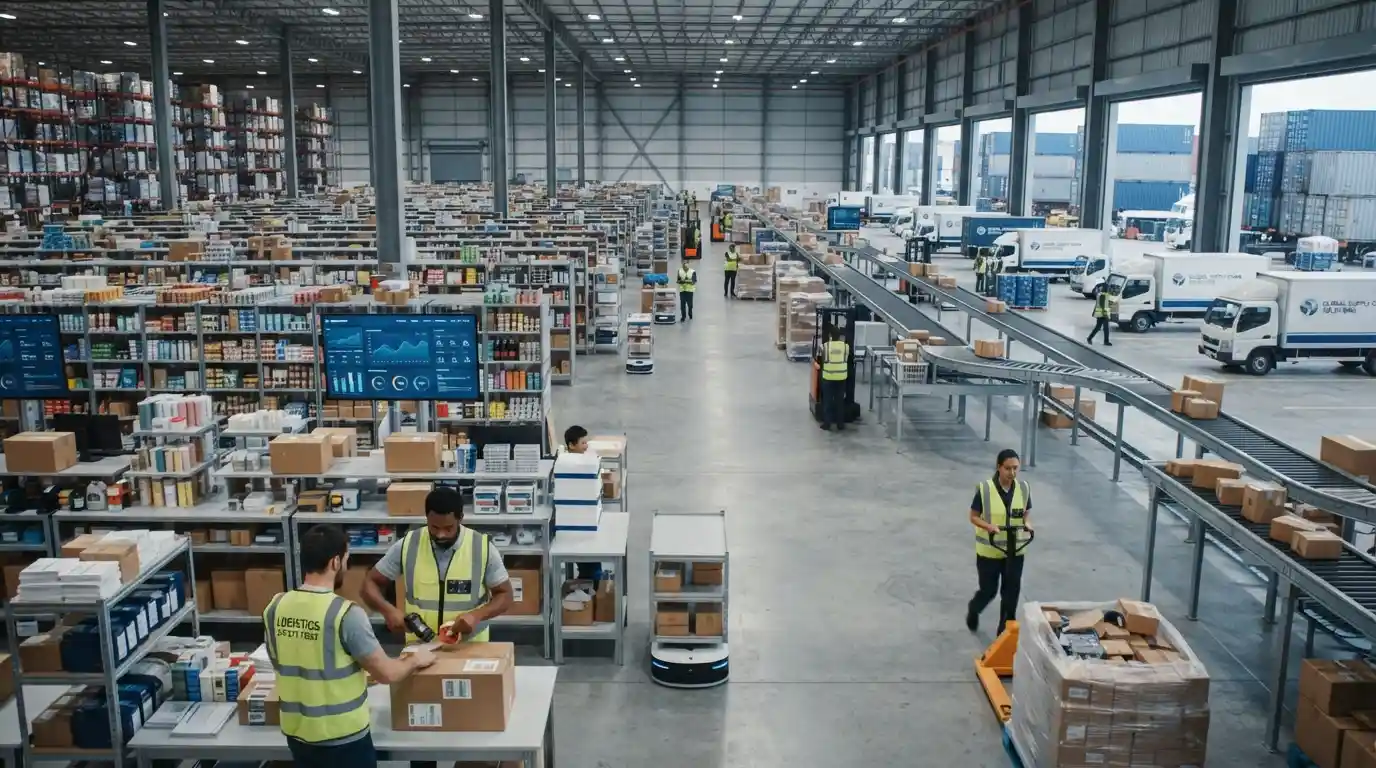
3OVO Logistics is an example of a logistics provider operating within this changing environment. Its focus on fulfillment, warehousing, distribution, technology, and supply chain support reflects a broader shift toward connected logistics systems that can support both B2B and B2C operations.
For businesses evaluating modern logistics solutions, understanding how a 3PL fits into the larger supply chain can help clarify where efficiency improvements, better visibility, and scalable fulfillment may be possible.
What Is 3OVO Logistics?
3OVO Logistics operates as a third-party logistics provider, meaning businesses can use an external logistics partner to manage important parts of their supply chain rather than handling every operational function internally.
A modern 3PL can support activities such as warehousing, inventory management, order processing, picking and packing, shipping coordination, retail distribution, and other fulfillment processes. This approach can be particularly useful for companies that are expanding into new sales channels or geographic markets.
The role of logistics is also closely connected with broader business transformation. Companies interested in this subject can explore digital transformation in business services to understand why technology is becoming increasingly important across operational functions.
Why Modern Supply Chain Management Matters
Supply chain management connects multiple stages of business activity. A product may move through suppliers, manufacturers, warehouses, transportation networks, distributors, retailers, marketplaces, and finally to the consumer.
When these stages operate independently, businesses can face limited visibility, inventory inconsistencies, slower communication, unnecessary transportation costs, or delays in fulfilling customer orders.
Modern logistics therefore emphasizes coordination rather than simply transportation. Businesses increasingly need systems that allow inventory, orders, fulfillment activities, and shipping information to work together.
This broader approach can be seen in modern supply chain logistics, where transportation and operational efficiency are treated as interconnected parts of the overall supply chain.
How 3PL Services Can Simplify Business Operations
One of the main reasons companies work with a 3PL provider is to reduce the operational burden associated with logistics. Instead of building every warehouse, fulfillment process, shipping workflow, and logistics technology system internally, a company can work with an established logistics partner.
This model can be particularly valuable for growing businesses. As order volume increases, logistics requirements can become significantly more complicated. A company may need additional warehouse capacity, better inventory controls, faster order processing, and more efficient transportation arrangements.
Businesses researching broader logistics operations can also look at logistics management and supply chain efficiency for additional context on how coordinated logistics processes support business performance.
Warehousing and Inventory Management
Warehousing is one of the most important components of a modern supply chain. Simply storing products is not enough. Businesses need to know what inventory is available, where it is located, when it arrived, and how quickly it needs to move.
Effective inventory management helps businesses maintain better control over stock while supporting faster order fulfillment. It can also help reduce situations where products are unavailable despite being listed for sale or where excess inventory occupies valuable warehouse space.
Technology can play an important role in this process by connecting warehouse activity with order and inventory information. Operational technology is also discussed in resources such as technology for seamless business operations.
For logistics organizations, efficient storage and inventory workflows can provide the foundation for faster fulfillment and more predictable distribution.
E-Commerce Has Changed Fulfillment Expectations
The growth of e-commerce has significantly changed how businesses think about logistics. Customers increasingly expect orders to be processed quickly, shipped efficiently, and delivered with reliable tracking information.
At the same time, businesses may sell through several channels simultaneously. A brand could have its own website, marketplace listings, retail relationships, wholesale customers, and social-commerce channels.
Managing these channels independently can create operational challenges. A connected fulfillment system can help businesses coordinate inventory and orders across different sales environments.
This is one reason enterprise technology integration has become increasingly relevant to business operations. Logistics systems need to communicate with the other technology platforms that businesses use to manage orders, customers, products, and financial information.
B2B and B2C Logistics Require Different Workflows
Modern logistics providers may support both business-to-business and business-to-consumer operations, but the requirements are not always identical.
B2C fulfillment often involves individual customer orders, parcel shipments, rapid processing, returns, and delivery expectations. B2B logistics can involve larger shipments, wholesale orders, retailer requirements, scheduled replenishment, documentation, and more complex delivery arrangements.
A logistics strategy must therefore account for the requirements of each channel instead of treating every shipment in exactly the same way.
Businesses exploring transportation operations can also review freight and trucking logistics to better understand the transportation side of the supply chain.
The Importance of Supply Chain Visibility
Visibility is one of the defining characteristics of modern supply chain management. Businesses need accurate information to make decisions about inventory, purchasing, fulfillment, transportation, and customer service.
Without reliable visibility, companies may struggle to identify where delays are occurring or why inventory levels are changing. Better operational data can make it easier to identify bottlenecks and respond to changing demand.
Data-driven decision-making is also relevant beyond logistics. The principles discussed in data-driven business optimization demonstrate how organizations can use information to improve strategic decisions across different functions.
Technology and Automation in Logistics
Technology has become an important part of modern logistics management. Warehouse management systems, order management platforms, enterprise resource planning systems, electronic data interchange, application programming interfaces, and automated workflows can help connect different stages of an operation.
Automation can reduce repetitive manual tasks and help standardize processes. For example, digital systems can assist with inventory updates, order routing, shipment information, reporting, and communication between business platforms.
Technology is particularly valuable when businesses grow because manual processes that work at a small scale may become difficult to maintain when order volumes and product ranges increase.
The wider business impact of technology can also be explored through business transformation through digital technology.
International Shipping and Global Distribution
International growth introduces another layer of supply chain complexity. Businesses shipping products across borders may need to coordinate transportation providers, customs requirements, documentation, delivery schedules, and multiple geographic distribution points.
International logistics also requires businesses to consider shipping costs, transit times, inventory positioning, and customer expectations in different markets.
Trade conditions can influence these decisions as well. Businesses interested in the relationship between changing trade conditions and operations can read what new trade deals can mean for small and local businesses.
Supply Chain Management and Manufacturing
Logistics does not operate separately from manufacturing. Production schedules depend on the availability of raw materials, packaging, components, and other inputs. Once products are manufactured, they must move efficiently into storage and distribution networks.
For manufacturers, delays at one stage can affect several downstream processes. A shortage of materials can slow production, while inefficient transportation can delay distribution even when manufacturing is operating normally.
Manufacturing businesses can benefit from viewing logistics as part of the entire operational system rather than as a separate transportation function. Discussions around manufacturing equipment and operational costs provide another example of how production decisions can connect with broader business planning.
Why Scalability Matters in Modern Logistics
One of the biggest challenges for growing brands is maintaining logistics performance as demand increases. A process that works for hundreds of orders may not work equally well when order volume reaches thousands or more.
Scalable logistics requires infrastructure, technology, warehouse capacity, trained teams, transportation options, and operational processes that can adapt to changing demand.
This is especially important during seasonal peaks, product launches, promotions, and sudden increases in customer demand. A flexible logistics structure allows businesses to expand without rebuilding their entire operational model every time order volume changes.
Companies examining growth strategies can also explore small-business growth and operational development as part of a broader approach to scaling.
Logistics Management as a Professional Discipline
Modern logistics requires more than warehouses and delivery vehicles. It involves planning, forecasting, inventory management, procurement, transportation, technology, analytics, compliance, customer service, and operational coordination.
This has created demand for professionals who understand how different parts of the supply chain work together. Those interested in the field can explore logistics management careers to learn more about the professional side of the industry.
Strong logistics management depends on the ability to identify bottlenecks, evaluate operational data, coordinate suppliers and carriers, and continuously improve processes.
Customer Experience Is Part of Logistics
Logistics performance has a direct relationship with customer experience. A customer may never see a warehouse or transportation planning system, but they experience the results through product availability, order processing, delivery timing, packaging, tracking, and returns.
For this reason, logistics should not be viewed only as a back-office business function. It can influence how customers perceive the reliability of a brand.
Efficient customer service also depends on communication. Businesses that maintain strong operational visibility can often respond more effectively when customers ask about orders, delays, inventory, or returns.
How Businesses Can Evaluate a Logistics Partner
Businesses considering a 3PL partner should evaluate more than warehouse space or shipping rates. The right questions should cover the entire operational relationship.
- What fulfillment services are available?
- How is inventory tracked?
- What technology integrations are supported?
- How are B2B and B2C orders handled?
- Can the operation scale during peak demand?
- What transportation and shipping options are available?
- How is operational data reported?
- How are exceptions, returns, and customer issues handled?
- Can the provider support domestic and international expansion?
- How flexible are the services as business requirements change?
These questions help businesses evaluate logistics as a complete operational partnership rather than choosing a provider based solely on price.
The Role of Digital Strategy in Supply Chain Growth
Logistics and digital business strategy are increasingly connected. Marketing can generate demand, e-commerce platforms can generate orders, inventory systems can record product availability, and fulfillment systems can process those orders.
When these systems operate together, businesses have a stronger foundation for scaling. When they operate independently, growth can expose weaknesses in inventory management, order processing, reporting, and customer service.
Businesses exploring the broader relationship between technology and commercial growth can also review digital marketing strategy for global business and digital strategy in the modern economy.
What Makes Modern Logistics Different?
Traditional logistics often focused primarily on transportation and storage. Modern supply chain management is broader. It connects inventory, technology, fulfillment, transportation, customer experience, data, and business strategy.
This evolution means logistics providers increasingly need to function as operational partners rather than simply warehouses or transportation intermediaries.
The broader logistics sector also continues to develop through technology, automation, integrated systems, and more sophisticated approaches to inventory and distribution. Businesses can therefore benefit from regularly reviewing their logistics structure as their products, customers, and sales channels evolve.
Final Thoughts on 3OVO Logistics
3OVO Logistics represents the broader evolution of third-party logistics toward integrated supply chain support. Modern businesses need more than a place to store products. They need coordinated fulfillment, inventory visibility, transportation management, technology integration, and the ability to respond to changing demand.
For growing brands, the value of a logistics partner ultimately depends on how well its infrastructure and processes fit the company’s operational requirements. A scalable and connected logistics model can help businesses manage increasing complexity while keeping fulfillment aligned with customer expectations.
As e-commerce, global distribution, and multi-channel retail continue to evolve, supply chain management will remain an important part of how modern businesses operate and grow.



