
“`html
Navy USS Mason Commander Fired: What Happened and Why
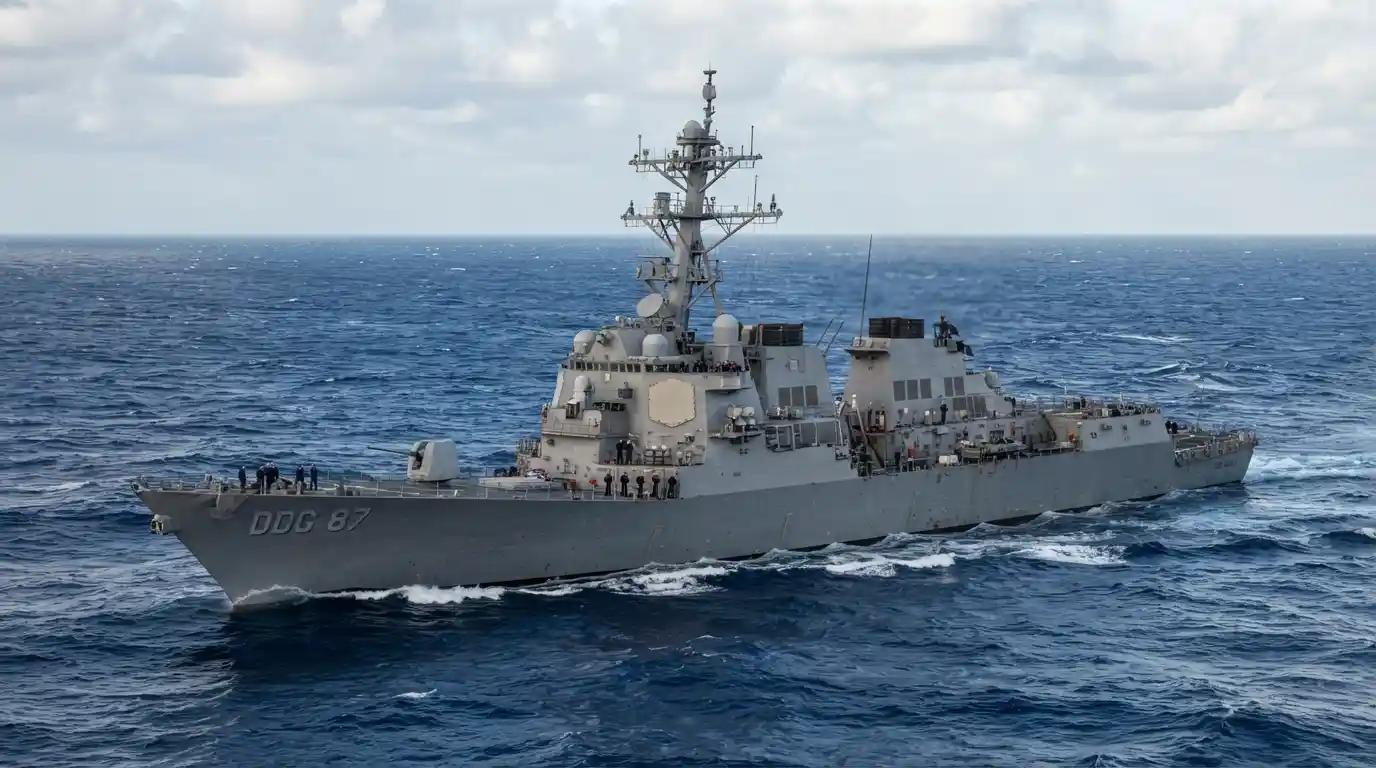
The U.S. Navy relieved Captain Chavius G. Lewis of command of the guided-missile destroyer USS Mason (DDG 87) on February 13, 2026. The decision was announced by Rear Admiral Alexis T. Walker, commander of Carrier Strike Group 10, who cited a “loss of confidence in Lewis’ ability to command.”
The announcement attracted attention because the Navy did not publicly identify the specific circumstances behind the leadership change. Although the removal was confirmed, the available official information does not establish that Lewis was dismissed for a particular operational failure, disciplinary violation, or criminal offense.
Understanding what happened requires separating the Navy’s confirmed announcement from assumptions about why a commanding officer might be relieved. It also helps explain how leadership accountability works aboard U.S. Navy warships and what the change meant for the USS Mason’s mission.
What Happened to the USS Mason Commander?
On February 13, 2026, Rear Admiral Alexis T. Walker relieved Captain Chavius G. Lewis of his responsibilities as commanding officer of USS Mason. The Navy described the decision as resulting from a loss of confidence in his ability to command.
Lewis had assumed command of the destroyer on November 14, 2024. Following his removal, he was temporarily reassigned to Commander, Naval Surface Group Southeast. Captain Kevin Hoffman was designated to serve as the ship’s commanding officer.
The announcement did not include a detailed explanation of the decision. Consequently, claims that Lewis was removed because of a specific incident should not be treated as established facts without additional verified information.
The development is an example of a significant personnel decision within a military organization. Readers interested in how organizations manage major operational changes can also explore broader developments in organizational and business transformation, although military command decisions operate under their own rules and responsibilities.
Why Was Captain Chavius G. Lewis Relieved?
The Navy’s stated reason was a loss of confidence in Lewis’ ability to command. However, the public announcement did not specify the underlying circumstances, and the exact reason should therefore be described as undisclosed.
In military leadership, confidence is closely connected to the ability to exercise sound judgment, maintain discipline, supervise personnel, and meet operational responsibilities. A commander is entrusted with the safety of the crew, the readiness of the vessel, and the execution of assigned missions.
Nevertheless, the phrase “loss of confidence” does not automatically establish that an officer committed misconduct. It can be used in leadership-relief announcements without a detailed public explanation. Without further official information, it would be inappropriate to attribute Lewis’ removal to a particular allegation or failure.
This distinction is essential when evaluating military news. Confirmed announcements, documented facts, and unverified interpretations should remain separate. The same careful approach is useful when examining public policy developments, including major policy changes and their implications or the effects of new trade agreements.
Who Replaced the USS Mason Commander?
Captain Kevin Hoffman was named to serve as USS Mason’s commanding officer following Lewis’ relief. The change placed a new leader in charge while the destroyer continued its assigned activities.
A commanding officer is responsible for coordinating the ship’s personnel, training, readiness, and daily operations. A leadership transition requires the incoming commander to understand the vessel’s current objectives and maintain continuity across the crew.
The Navy’s announcement did not indicate that the leadership change required the ship to abandon its scheduled activities. Instead, the service stated that the relief would not affect the Mason’s mission or schedule.
Leadership transitions also highlight the importance of clear procedures, technical competence, and effective communication. Related discussions of organizational capability can be found in technology-led organizational innovation and business technology and operational efficiency. These subjects provide broader context for understanding how complex organizations maintain continuity during change.
What Is USS Mason (DDG 87)?
USS Mason is an Arleigh Burke-class guided-missile destroyer operated by the United States Navy. Ships in this class are designed to perform multiple maritime missions, including air defense, surface warfare, and other assigned fleet operations.
Guided-missile destroyers combine sophisticated sensors, communications equipment, weapons systems, and command facilities. Their effectiveness depends on coordination between officers, enlisted sailors, technical specialists, and other units operating within a larger naval force.
Because of these responsibilities, the commanding officer occupies a central position in maintaining readiness and coordinating the ship’s activities. Leadership decisions can therefore attract attention even when the Navy does not disclose the detailed circumstances behind a personnel change.
Modern military platforms also illustrate the importance of advanced engineering and integrated technology. Readers interested in related technological developments can explore advanced aerospace planning, developments involving SpaceX and emerging technology, and industrial technology and engineering innovation.
What Was USS Mason Doing When the Commander Was Removed?
At the time of Lewis’ relief, USS Mason was assigned to the U.S. 2nd Fleet area of operations and participating in a Composite Training Unit Exercise, commonly known as COMPTUEX.
COMPTUEX is a major training event designed to prepare naval forces for deployment. Exercises of this kind assess coordination, mission execution, communications, and the ability of participating units to operate together under demanding conditions.
Training is particularly important for warships because operational readiness depends on more than the availability of equipment. Sailors must understand their duties, follow established procedures, communicate effectively, and respond to changing circumstances.
The Navy stated that Lewis’ relief did not affect the Mason’s mission or schedule. That statement indicates that the service did not announce a change to the ship’s planned activities as a result of the leadership decision.
For broader context on structured preparation and professional development, readers may also consider historical approaches to disciplined education and coordination in complex events. These are different fields, but both demonstrate why planning, defined responsibilities, and coordination matter when multiple people must work toward a shared objective.
How Does the Navy Maintain Leadership Accountability?
Commanding officers are responsible for leading their crews, enforcing standards, overseeing training, and ensuring that assigned missions are carried out appropriately. The Navy can remove an officer from command when senior leadership determines that the officer should no longer hold that position.
Relief from command is a significant personnel action, but it should not automatically be equated with a criminal conviction or a publicly established finding of wrongdoing. The consequences and circumstances depend on the specific case and any additional administrative or legal proceedings.
In the USS Mason case, the public announcement identified the loss of confidence as the reason for the decision. It did not disclose a specific underlying incident, announce criminal charges, or provide a detailed account of an investigation.
Responsible reporting therefore requires restraint. It is possible to explain the significance of a command change without inventing allegations or suggesting that undisclosed circumstances have been confirmed.
Readers interested in how rules and accountability are discussed in other settings can explore regulatory frameworks and compliance and access to legal support. These subjects are not equivalent to military command law, but they illustrate the broader importance of distinguishing established rules from assumptions.
Does the Commander’s Removal Affect USS Mason’s Operations?
According to the Navy’s announcement, the relief did not affect USS Mason’s mission or schedule. The ship was continuing its assigned training activities, with Captain Kevin Hoffman designated as its commanding officer.
A change in command does not necessarily mean that a vessel has become operationally unavailable. Ships have established procedures, experienced personnel, and organizational structures that support continuity when leadership changes.
However, the broader effects of any command transition depend on the circumstances. Without further information, it would be inappropriate to make unsupported claims about the crew’s morale, the ship’s readiness, or the reasons for the leadership decision.
Naval operations also depend on reliable communications, technical systems, and coordinated logistical support. Related coverage of integrated information systems, engineering and technology development, and logistics and supply-chain coordination offers additional perspectives on the systems that help complex operations function reliably.
What Is Known and What Remains Unclear?
The confirmed details of the USS Mason leadership change can be summarized without speculating about undisclosed circumstances.
- Date of relief: February 13, 2026.
- Officer relieved: Captain Chavius G. Lewis.
- Reason publicly stated: Loss of confidence in Lewis’ ability to command.
- Senior officer who made the decision: Rear Admiral Alexis T. Walker, commander of Carrier Strike Group 10.
- Replacement: Captain Kevin Hoffman was designated to serve as USS Mason’s commanding officer.
- Lewis’ reassignment: Temporarily reassigned to Commander, Naval Surface Group Southeast.
- Operational status at the time: USS Mason was participating in COMPTUEX under the U.S. 2nd Fleet area of operations.
- Mission impact: The Navy stated that the relief did not affect the ship’s mission or schedule.
- Unresolved question: The Navy did not publicly explain the specific circumstances that led to the loss of confidence.
These details provide a clear picture of the personnel change while preserving the distinction between what was announced and what remains unknown. Any later explanation should be evaluated on its own evidence rather than inferred from the original statement.
Frequently Asked Questions
Why was the USS Mason commander fired?
The Navy relieved Captain Chavius G. Lewis on February 13, 2026, citing a loss of confidence in his ability to command. The public announcement did not provide a specific underlying reason.
Who was the USS Mason commander?
Captain Chavius G. Lewis assumed command of USS Mason on November 14, 2024. He was relieved in February 2026.
Who replaced Captain Chavius G. Lewis?
Captain Kevin Hoffman was designated to serve as USS Mason’s commanding officer after Lewis was relieved.
Was the USS Mason removed from its mission?
No such change was announced. The Navy stated that the leadership relief did not affect the ship’s mission or schedule.
Was Captain Lewis accused of a crime?
The public announcement concerning his relief did not announce criminal charges or identify a specific criminal allegation. A loss-of-confidence statement alone does not establish criminal wrongdoing.
Where was USS Mason operating when the change occurred?
The ship was assigned to the U.S. 2nd Fleet area of operations and participating in a Composite Training Unit Exercise.
Conclusion
The removal of Captain Chavius G. Lewis from command of USS Mason was a confirmed U.S. Navy leadership decision announced on February 13, 2026. Rear Admiral Alexis T. Walker cited a loss of confidence in Lewis’ ability to command, and Captain Kevin Hoffman was designated to lead the destroyer.
The central unanswered question is why that confidence was lost. The Navy did not provide a detailed public explanation, so claims about a particular incident or alleged misconduct remain unsupported by the announcement itself.
What is clear is that the Navy reported no impact on USS Mason’s mission or schedule. Until additional verified information becomes available, the most accurate account is one that explains the leadership change, identifies the confirmed facts, and avoids speculation about the undisclosed reasons behind it.