
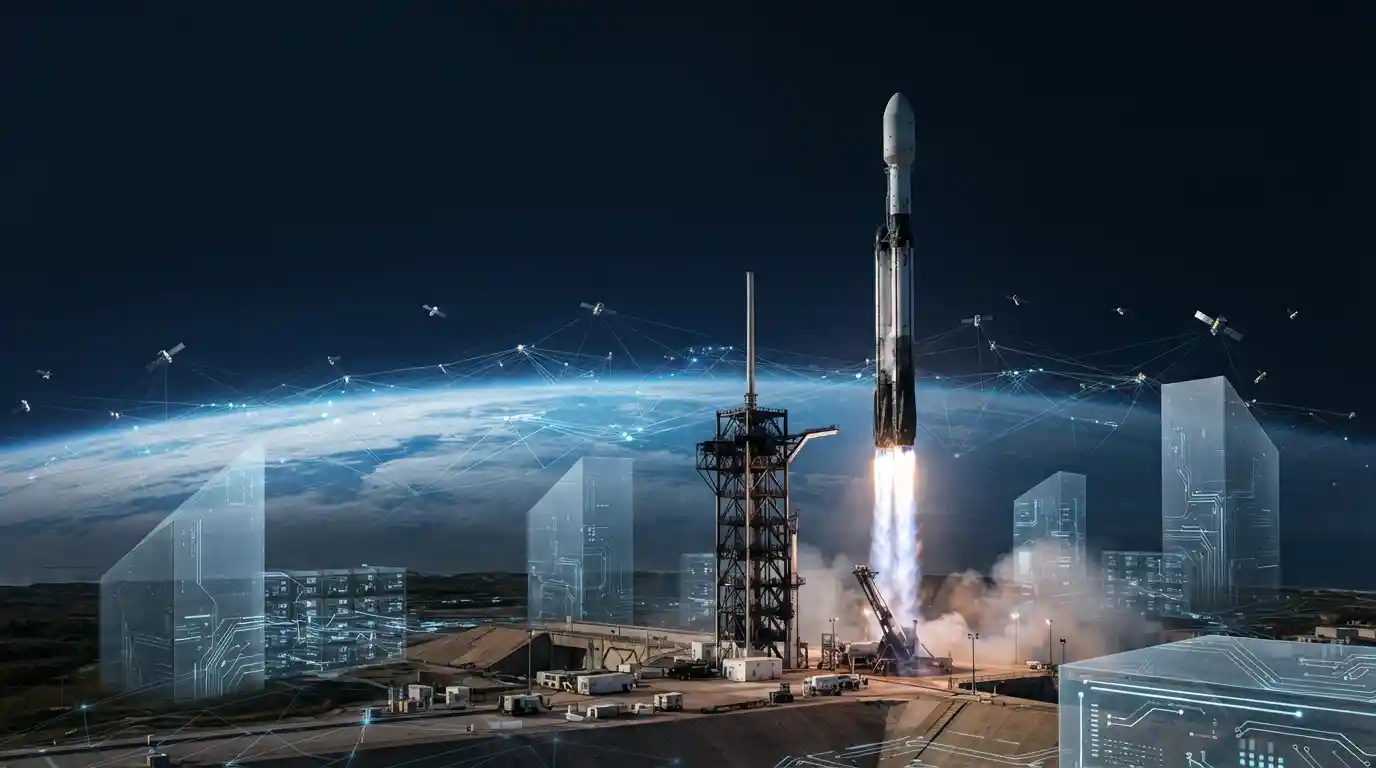
The deal brings one of the world’s most prominent space companies together with Elon Musk’s artificial intelligence business, creating a much larger technology ecosystem spanning launch systems, satellite connectivity, AI computing, software, and social media.
The combination is particularly significant because xAI’s growing demand for computing infrastructure intersects with SpaceX’s ambitions in space-based computing. Rather than treating the transaction as a conventional corporate merger, it is better understood as part of a broader technology strategy built around AI infrastructure, energy, communications, and space transportation.
What Happened Between SpaceX and xAI?
In early 2026, reports emerged that SpaceX was considering strategic combinations involving other Musk-controlled businesses, including xAI. At that stage, the structure and even the final outcome were not certain.
That situation changed quickly. On February 2, 2026, SpaceX announced that it had acquired xAI. The transaction effectively moved xAI into the SpaceX corporate structure while bringing together technologies and infrastructure that Musk has increasingly presented as complementary.
The development is important because SpaceX and xAI operate in very different markets. SpaceX is associated with orbital launch services, Starlink satellite communications, spacecraft, and the development of Starship. xAI is focused on artificial intelligence and products such as Grok.
Combining those capabilities creates the possibility of a technology stack that extends from physical infrastructure in space to AI applications running on large-scale computing systems.
Why Is the SpaceX and xAI Combination Significant?
The most important issue is computing infrastructure.
Modern AI systems require enormous amounts of computing power, electricity, cooling capacity, networking equipment, and data-center infrastructure. As AI models become larger and organizations deploy them across more products, the infrastructure supporting those systems becomes increasingly important.
SpaceX already operates large-scale infrastructure through its launch business and Starlink network. xAI, meanwhile, requires substantial computing resources to train and operate advanced AI systems.
This creates a strategic connection between the two businesses. SpaceX can potentially provide transportation, satellite connectivity, engineering capabilities, and eventually space-based infrastructure, while xAI contributes AI software and model-development capabilities.
The broader concept fits into the site’s wider coverage of digital transformation in business services, where technology infrastructure increasingly becomes part of how modern businesses operate and scale.
Space-Based AI Data Centers Are Central to the Vision
One of the most ambitious ideas associated with the SpaceX-xAI combination is the development of data centers in space.
The basic concept is straightforward: instead of placing all AI computing infrastructure on Earth, future systems could potentially use satellites or other space-based platforms to host computing equipment.
There are several theoretical advantages to this approach. Space offers continuous access to solar energy in suitable orbital configurations, while large orbital platforms could eventually provide an alternative location for energy-intensive computing.
However, space-based data centers are not simply terrestrial data centers moved into orbit. They would have to deal with radiation, thermal management, communications, maintenance, launch costs, hardware reliability, orbital debris, and the difficulty of physically servicing equipment in space.
The idea therefore represents a long-term engineering challenge rather than an immediate replacement for conventional data centers.
The concept also connects with the broader technology trend covered in AI applications and the changing role of personal assistants. As AI becomes more capable, the infrastructure underneath those applications becomes just as strategically important as the software users see.
How SpaceX Could Support xAI
SpaceX has capabilities that could theoretically support xAI beyond simply providing corporate ownership.
Launch Infrastructure
SpaceX operates a major launch business capable of deploying satellites and other payloads into orbit. If space-based computing becomes technically and economically viable, launch capacity could become an important part of the infrastructure equation.
Starlink Connectivity
Starlink provides a large satellite communications network that could complement future distributed computing infrastructure. High-speed connectivity is essential when computing resources, data centers, users, and applications are geographically separated.
Engineering Expertise
Space systems require specialized engineering across propulsion, communications, power management, thermal systems, software, and autonomous operations. Those capabilities could become relevant to the development of orbital computing platforms.
Reusable Launch Technology
The economics of space-based infrastructure depend heavily on launch costs. Reusable launch systems could potentially reduce the cost of putting large quantities of equipment into orbit over time.
These concepts also reflect the broader importance of technological efficiency discussed in technology-driven business innovation and efficiency.
What xAI Brings to SpaceX
The strategic relationship works in the other direction as well.
xAI brings artificial intelligence capabilities that could potentially be applied to a wide range of systems connected to SpaceX’s operations.
AI can support areas such as data analysis, automation, predictive maintenance, network optimization, software development, robotics, satellite operations, and decision-support systems.
The value of AI in a space company is therefore not limited to creating a chatbot. Machine learning can become an infrastructure layer that supports complex engineering and operational processes.
This broader business impact is similar to the technology transformation discussed in advanced digital transformation and business transformation, where software increasingly becomes integrated into core business operations rather than remaining a separate department.
Grok and the AI Ecosystem
xAI is best known for developing Grok, its artificial intelligence chatbot and model ecosystem.
Grok places xAI directly within a highly competitive AI market that includes major technology companies, research organizations, and rapidly growing AI startups.
The competition is not limited to model quality. AI companies also compete over computing capacity, data, talent, chips, networking, energy, distribution, and capital.
That is one reason infrastructure has become such an important part of the AI industry.
The same infrastructure theme appears in decentralized computing. BizHorizone’s article on Golem and decentralized computing explores another approach to distributing computational resources instead of relying exclusively on traditional centralized infrastructure.
Why Computing Infrastructure Matters So Much
Training and operating advanced AI models requires enormous computational resources. The challenge extends beyond purchasing processors.
Large-scale AI infrastructure requires:
- High-performance computing hardware
- Large amounts of electricity
- Advanced cooling systems
- High-speed networking
- Data storage
- Reliable physical facilities
- Specialized software infrastructure
- Large-scale capital investment
This makes AI infrastructure a strategic business issue rather than simply an IT expense.
Businesses studying these developments can also explore enterprise IT and technology integration strategies to understand how technology infrastructure increasingly connects different parts of an organization.
Could Space Really Become the Next Data Center Location?
Space-based computing remains an emerging concept, and it is important to separate long-term possibilities from established technology.
Traditional data centers benefit from relatively easy physical access. Engineers can replace components, expand facilities, maintain cooling equipment, upgrade networks, and respond to failures on the ground.
A data center in orbit would face a very different operating environment.
Hardware would have to withstand radiation and extreme temperature conditions. Cooling would require different engineering approaches. Physical maintenance could be difficult or impossible for many systems. Launching replacement equipment would also add cost and complexity.
For these reasons, space-based AI infrastructure should be viewed as a developing technological direction rather than an immediate alternative to terrestrial data centers.
The potential is nevertheless significant enough to attract attention because AI’s energy requirements continue to influence infrastructure planning.
The Energy Question Behind AI Growth
AI growth has created a new conversation around electricity consumption.
Traditional data centers already require substantial energy for computing, networking, and cooling. AI workloads can increase those requirements because advanced models rely on high-performance hardware operating at significant scale.
Space-based computing proposals attempt to approach this problem from another direction by using solar energy in orbit.
Whether that approach becomes commercially practical will depend on the cost of launch, the efficiency of orbital hardware, power transmission, cooling technology, manufacturing, and system reliability.
Technology companies are simultaneously exploring more efficient approaches on Earth. The wider innovation landscape includes developments in smart hardware, automation, and connected systems, such as those discussed in smart technology and connected devices.
AI, Automation and the Future of Technology
The SpaceX-xAI combination also illustrates a broader shift in technology strategy.
Companies are increasingly combining software, hardware, communications, automation, and artificial intelligence into integrated ecosystems.
AI can analyze information, automate repetitive tasks, optimize systems, and generate software. Connected hardware can collect data. Communications networks can move that data. Cloud and edge infrastructure can process it.
The result is a technology environment in which individual products become components of much larger systems.
This trend can also be seen in automated parking and RFID technology, where sensors, software, communications, and physical infrastructure work together.
How Digital Business Strategy Fits Into the Picture
The SpaceX-xAI story is not only about rockets and artificial intelligence. It is also an example of how technology companies increasingly build strategies around interconnected digital capabilities.
Companies that successfully combine infrastructure, software, data, and distribution can create advantages that are difficult for individual competitors to reproduce.
That is why businesses of all sizes continue to invest in digital strategies. BizHorizone’s coverage of digital marketing strategy for global business provides a broader look at how technology influences modern commercial operations.
Similarly, organizations examining performance and growth can explore data-driven digital marketing and revenue optimization as an example of how data and technology can influence business decisions.
The Financial Side of the SpaceX-xAI Strategy
Large-scale AI infrastructure is expensive, while space infrastructure also requires significant capital.
Combining businesses can therefore change how capital, assets, technology, and future investment opportunities are viewed.
SpaceX has established revenue-generating operations, particularly through launch services and satellite connectivity. xAI, by contrast, has required substantial investment to develop AI models and computing infrastructure.
A combined organization can potentially allocate resources across these different technology businesses, although it also creates a more complex corporate structure.
The broader financial impact of technology investments can be considered alongside strategic analysis of digital technology returns and technology-related business valuation.
Could AI and Space Technology Reinforce Each Other?
There are several areas where AI and space technology naturally overlap.
Satellite Operations
Large satellite networks generate enormous amounts of operational data. AI can potentially help analyze that information and automate parts of network management.
Predictive Maintenance
Machine learning systems can identify patterns in equipment data and potentially help predict failures before they become serious problems.
Autonomous Systems
Spacecraft and satellites operate in environments where human intervention can be delayed or limited. AI-based systems can support autonomous decision-making and system management.
Earth Observation
Satellites collect large volumes of imagery and sensor data. AI can process that information for applications ranging from mapping to environmental analysis.
Network Optimization
Large communications networks can use algorithms to manage traffic, capacity, routing, and service quality.
These applications demonstrate why AI can be valuable to space companies even without the development of orbital data centers.
What Other Technologies Could Benefit?
The underlying technologies involved in this strategy extend far beyond AI.
Robotics, advanced manufacturing, energy storage, communications, autonomous systems, high-performance computing, and specialized software could all play supporting roles.
Industrial technology is already moving toward more connected and automated systems. For example, industrial technology and process innovation show how specialized engineering can contribute to broader efficiency goals.
Similarly, technology-driven business innovation demonstrates how organizations increasingly rely on integrated technological systems to support growth.
What the SpaceX-xAI Deal Does Not Automatically Mean
The acquisition should not be interpreted as proof that space-based AI data centers are already commercially established.
It also does not mean that every SpaceX operation will immediately become AI-driven or that all AI computing will move into orbit.
The most significant developments will depend on engineering progress, infrastructure costs, regulatory requirements, available capital, hardware development, and the ability to operate complex systems reliably at scale.
There is also a distinction between strategic ambition and commercially deployed infrastructure. A company can pursue an ambitious long-term technology roadmap while continuing to rely heavily on conventional infrastructure in the present.
How the Deal Fits Into the Broader Technology Landscape
The SpaceX-xAI combination reflects a larger trend in which technology companies are competing not only to build applications but also to control the infrastructure those applications depend on.
AI companies need computing. Computing needs energy. Energy needs infrastructure. Infrastructure needs connectivity, manufacturing, capital, and increasingly sophisticated software.
That creates opportunities for companies working across multiple layers of the technology stack.
Developments in cryptocurrency and decentralized infrastructure provide another perspective. For example, digital markets and cryptocurrency strategies demonstrate how technology can create new models for financial and computational ecosystems.
Likewise, cryptocurrency technology and digital visibility show how emerging technology businesses increasingly depend on digital ecosystems for growth and distribution.
What to Watch Next
The next phase of the SpaceX-xAI story will depend on how the combined organization turns its technology ambitions into practical projects.
Several developments will be particularly important to watch:
- Progress toward space-based computing infrastructure
- Expansion of xAI’s AI model and computing capabilities
- Development of Starship and other launch infrastructure
- Growth and evolution of Starlink
- Integration of AI into satellite and space operations
- Capital requirements for large-scale infrastructure projects
- Regulatory developments affecting AI, communications, and space systems
- Commercial viability of orbital data-center concepts
The evolution of technology infrastructure will also continue to influence conventional businesses. Companies interested in the broader technology environment can explore digital technology strategies for small businesses and technology strategies for high-growth businesses.
Final Thoughts
The SpaceX-xAI story has moved beyond the stage of a possible strategic merger. SpaceX completed its acquisition of xAI in February 2026, bringing together a major space and satellite infrastructure company with an ambitious artificial intelligence business.
The significance of the transaction extends beyond corporate ownership. It represents a larger vision in which space transportation, satellite communications, artificial intelligence, computing infrastructure, and energy can potentially operate as interconnected parts of one technology ecosystem.
The most ambitious element is the possibility of space-based AI computing. Whether that vision becomes economically practical remains an open engineering and business question. The technical challenges are substantial, and terrestrial data centers will continue to play the central role in AI infrastructure for the foreseeable future.
Nevertheless, the SpaceX-xAI combination highlights an important direction in technology: the competition for AI capabilities is increasingly a competition for infrastructure, energy, computing capacity, connectivity, and the systems that make all of those resources work together.
As those technologies continue to develop, the relationship between artificial intelligence and space infrastructure will remain an important area to watch.



