
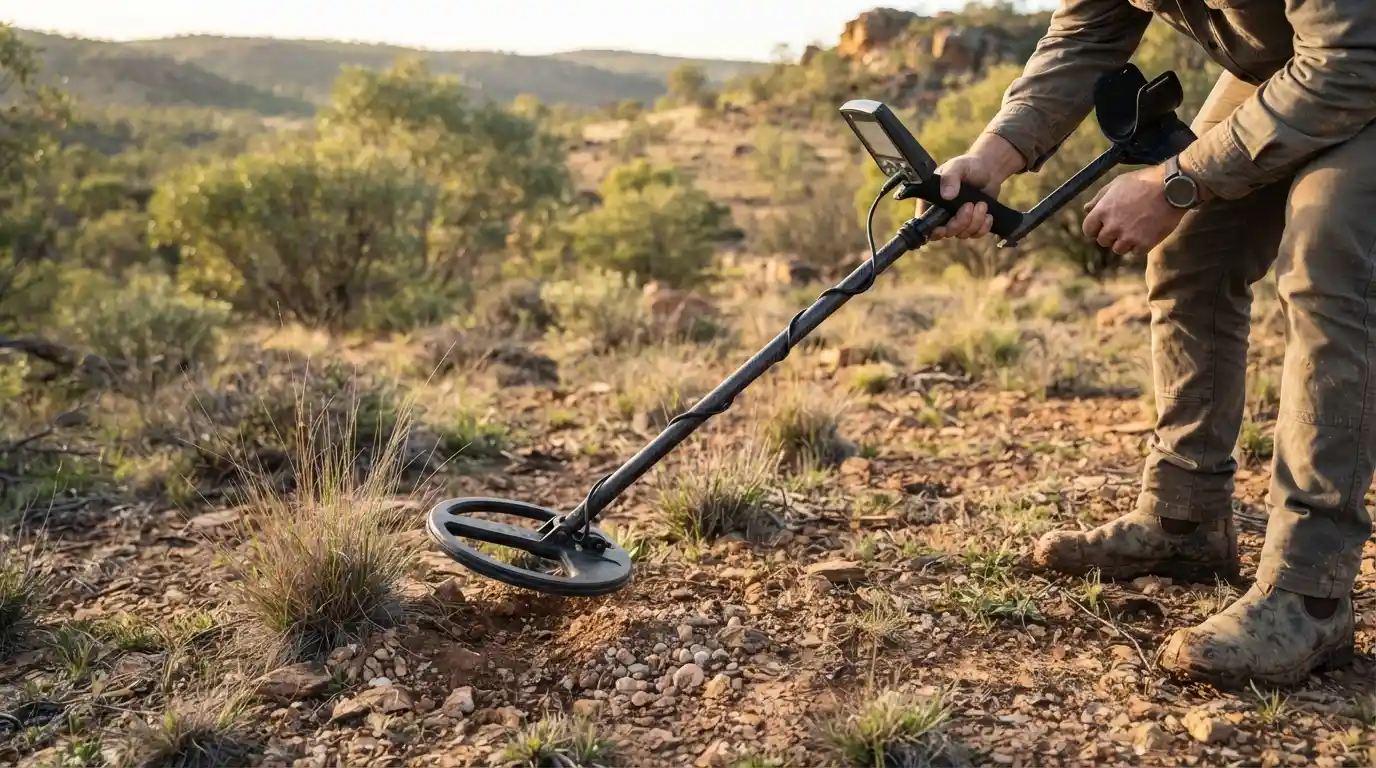
Whether the objective is recreational treasure hunting, gold prospecting, relic recovery, field exploration, or locating buried metallic objects, understanding the technology behind modern detectors is essential. A detector’s performance depends not only on the machine itself but also on the target, soil conditions, search coil, operating settings, and the experience of the person using it.
The broader development of electronic equipment is also changing how exploration tools are designed. Similar advances can be seen across smart devices and modern electronics, where sensors and software increasingly work together to turn physical signals into useful information.
Understanding Modern Metal Detection
At its foundation, metal detection relies on electromagnetic interaction. A detector generates an electromagnetic field through its search coil. When that field encounters a conductive metallic object, the object changes the electromagnetic response around the coil. The detector’s electronics then process that change and communicate it through audio signals, visual indicators, target identification numbers, or other feedback.
This basic principle sounds straightforward, but modern detectors use increasingly sophisticated electronics to interpret weak and sometimes complicated signals. That is why two detectors can behave differently over the same ground even when they appear similar from the outside.
The development of smart electronic technology demonstrates a similar trend. As electronic systems become more capable, equipment can process information more efficiently while providing users with increasingly useful feedback.
Why Gold Detection Requires Specialized Technology
Finding gold is not exactly the same as finding every type of metal. Natural gold can occur in small pieces, irregular shapes, or challenging ground conditions. Its electromagnetic response can also overlap with signals produced by other non-ferrous materials.
For this reason, gold prospecting equipment is often designed with sensitivity and ground handling in mind. A machine intended for small gold targets may prioritize sensitivity to faint responses, while equipment designed for larger or deeper objects may emphasize different characteristics.
The QZ-80 gold detector fits into this broader discussion of specialized detection equipment. Examining a particular detector can be useful, but understanding the technology behind the category is even more valuable because it helps users evaluate equipment according to their actual exploration needs.
VLF and Pulse-Based Detection Approaches
Modern metal detectors can use different approaches to process electromagnetic responses. Two important categories commonly discussed in detection technology are Very Low Frequency systems and Pulse Induction systems.
Very Low Frequency Detection
VLF systems continuously transmit electromagnetic signals and analyze the response produced when those signals interact with metallic targets. They can provide useful target identification and discrimination capabilities, making them popular for coins, jewelry, relics, and many forms of general-purpose detecting.
However, soil mineralization can interfere with detection. Ground containing significant amounts of naturally occurring minerals may produce responses that make it harder to isolate a small target. Ground balancing and appropriate detector settings therefore become important parts of successful field work.
Pulse Induction Detection
Pulse Induction systems operate differently. Instead of relying on a continuously transmitted frequency in the same way as traditional VLF systems, they send short electrical pulses and analyze the resulting decay response.
This approach can be particularly useful in challenging mineralized environments. The trade-off is that target identification and discrimination may work differently from what users experience with conventional VLF equipment.
Understanding the distinction between these technologies is similar to understanding the difference between other specialized electronic systems. For example, the development of industrial technology and efficiency systems shows why the underlying engineering approach matters when evaluating equipment.
The Importance of Ground Conditions
A detector that performs well in one location may behave differently somewhere else. Soil composition, mineralization, moisture, salt content, surface interference, vegetation, and the presence of buried metal can all influence detection results.
This is one reason advertised depth figures should not be treated as universal guarantees. Detection depth depends on multiple variables, including the physical size and shape of the target, its composition, orientation, the search coil, operating settings, and the characteristics of the surrounding ground.
Experienced users therefore learn to interpret the detector’s behavior rather than relying on a single number. Stable operation and a repeatable target response can often be more useful than simply selecting the machine with the largest claimed depth.
Search Coils and Detection Performance
The search coil is one of the most important physical components of a metal detector. It is responsible for transmitting and receiving the electromagnetic response used for detection.
Different coil designs and sizes can influence sensitivity, coverage, separation between nearby targets, and practical handling. A larger coil may cover more ground, while a smaller coil can make it easier to work around obstacles or investigate areas containing multiple closely spaced targets.
This principle is not unique to detectors. Across modern equipment, hardware design directly affects how effectively a system can perform its intended task. The development of advanced technology and operational efficiency illustrates the same relationship between hardware design and practical performance.
Digital Signal Processing Changes the Experience
Modern detectors are not simply electronic devices that produce a beep whenever metal is nearby. Digital processing can help analyze signals, reduce unwanted responses, provide target identification information, and give users greater control over how the detector behaves.
This shift toward software-assisted hardware is visible throughout the technology sector. From AI-powered applications to sophisticated industrial equipment, modern systems increasingly rely on software to interpret information generated by physical hardware.
For metal detection, signal processing can help transform a complicated electromagnetic response into information that is easier for an operator to understand. It does not eliminate uncertainty, however. A target identification reading should still be treated as an indication rather than an absolute guarantee of what is buried underground.
Target Identification and Discrimination
Target identification is one of the features that makes modern detecting more approachable. Depending on the detector, the user may receive numerical readings, audio tones, visual indicators, or combinations of these signals.
Discrimination settings can help users reduce attention given to certain categories of unwanted metal. This can be particularly useful in areas containing large quantities of common metallic debris.
Nevertheless, discrimination should be used carefully. A valuable target may sometimes produce a less predictable signal because of its size, shape, depth, orientation, or surrounding material. Overly aggressive discrimination can therefore cause users to overlook potentially interesting targets.
Technology Is Making Exploration More Efficient
The modern exploration landscape reflects a wider technological shift toward connected, sensor-driven equipment. Sensors collect information, processors analyze it, and interfaces help users make decisions based on the resulting data.
Similar developments can be seen in RFID and automated detection systems, where electronic sensing is used to identify and track objects without relying entirely on direct visual observation.
The same broad philosophy applies to modern metal detection. Instead of simply producing a sound, advanced equipment attempts to provide more context about the signal. This helps users spend less time guessing and more time evaluating what the detector is communicating.
How Exploration Technology Connects With Other Industries
Metal detection may appear to be a specialized field, but it shares many technological principles with other industries. Electronics, sensors, software, signal processing, battery technology, materials engineering, and user-interface design all contribute to modern exploration equipment.
The development of technology-driven business innovation is another example of how electronic systems continue to become more integrated and capable.
In industrial environments, equipment increasingly combines physical components with digital monitoring and control. The same trend can be observed in exploration tools, where hardware and software work together rather than functioning as completely separate systems.
Exploration, Engineering, and the Future
The future of gold and metal detection will likely involve continued improvements in sensors, processing power, energy efficiency, ergonomics, and software. These developments could make detectors easier to operate while providing more detailed information about detected targets.
Broader advances in engineering also provide useful context. Developments in technical systems and operational technology demonstrate how specialized equipment can become more efficient when hardware, software, and user controls are designed as one system.
Space exploration provides another interesting example of technology being developed for challenging environments. Modern missions depend on sophisticated sensors, communications, electronics, and autonomous systems, much like specialized terrestrial equipment must operate reliably under changing field conditions. The technological direction can be explored further through modern space exploration technology.
Commercial space technology also highlights the importance of advanced engineering and complex electronic systems. Developments discussed in SpaceX and emerging technology demonstrate how rapidly hardware and software capabilities continue to evolve.
Choosing Detection Equipment for the Right Purpose
The best detector is not necessarily the most expensive or the one with the longest advertised detection depth. The right choice depends on the intended application.
Before selecting equipment, users should consider the type of targets they expect to search for, the ground conditions they will encounter, the amount of time they will spend detecting, the importance of target discrimination, the preferred search coil, battery requirements, ergonomics, and the availability of suitable settings.
Users interested in technology more generally may also find value in understanding how modern equipment is evaluated through broader digital transformation and technology systems. The same principle applies: equipment should be evaluated according to the problem it needs to solve.
Practical Factors That Matter in the Field
Technology alone does not guarantee successful exploration. Operator technique remains important. Maintaining a consistent sweep, keeping the coil at a suitable height, learning the detector’s audio responses, adjusting settings to changing ground conditions, and carefully investigating repeatable signals can all improve the field experience.
Battery management and equipment maintenance are also important. A technically advanced detector is of limited value if its battery is poorly maintained or its components are not kept in good working condition.
For people interested in the relationship between technology and practical equipment, modern smart equipment provides another example of how increasingly capable electronics can become part of everyday workflows.
Why Responsible Exploration Matters
Responsible metal detecting involves more than finding an interesting signal. Users should understand and follow the laws, land-access requirements, private-property rules, and cultural heritage protections that apply to the area where they intend to search.
Historical or archaeological locations can carry special restrictions, and valuable discoveries may require reporting or other action depending on local regulations. Responsible exploration protects both the environment and cultural resources while allowing the hobby and profession to develop sustainably.
The Growing Role of Technology in Exploration
Modern gold and metal detection sits at the intersection of electronics, engineering, software, and field exploration. The fundamental concept remains relatively simple, but improvements in signal processing, sensing technology, controls, and equipment design continue to expand what modern detectors can do.
The wider technology landscape reinforces this trend. From advanced automotive systems to precision consumer electronics, technology is increasingly focused on collecting signals, processing information, and delivering useful results through increasingly sophisticated hardware.
For exploration enthusiasts, the practical lesson is straightforward: understanding the technology behind a detector can be just as important as choosing the machine itself. When users understand how detection systems respond to targets, soil, settings, and operating conditions, they can make better decisions in the field.
Final Thoughts
Modern gold and metal detection combines proven electromagnetic principles with increasingly advanced electronics and digital processing. The result is a more capable exploration tool that can help users investigate buried metallic targets across a wide range of environments.
Whether someone is evaluating a specialized gold detector such as the QZ-80, comparing detection technologies, or simply learning how modern exploration equipment works, the most useful approach is to look beyond marketing claims. Technology, ground conditions, target characteristics, equipment settings, and operator experience all work together to determine real-world performance.