
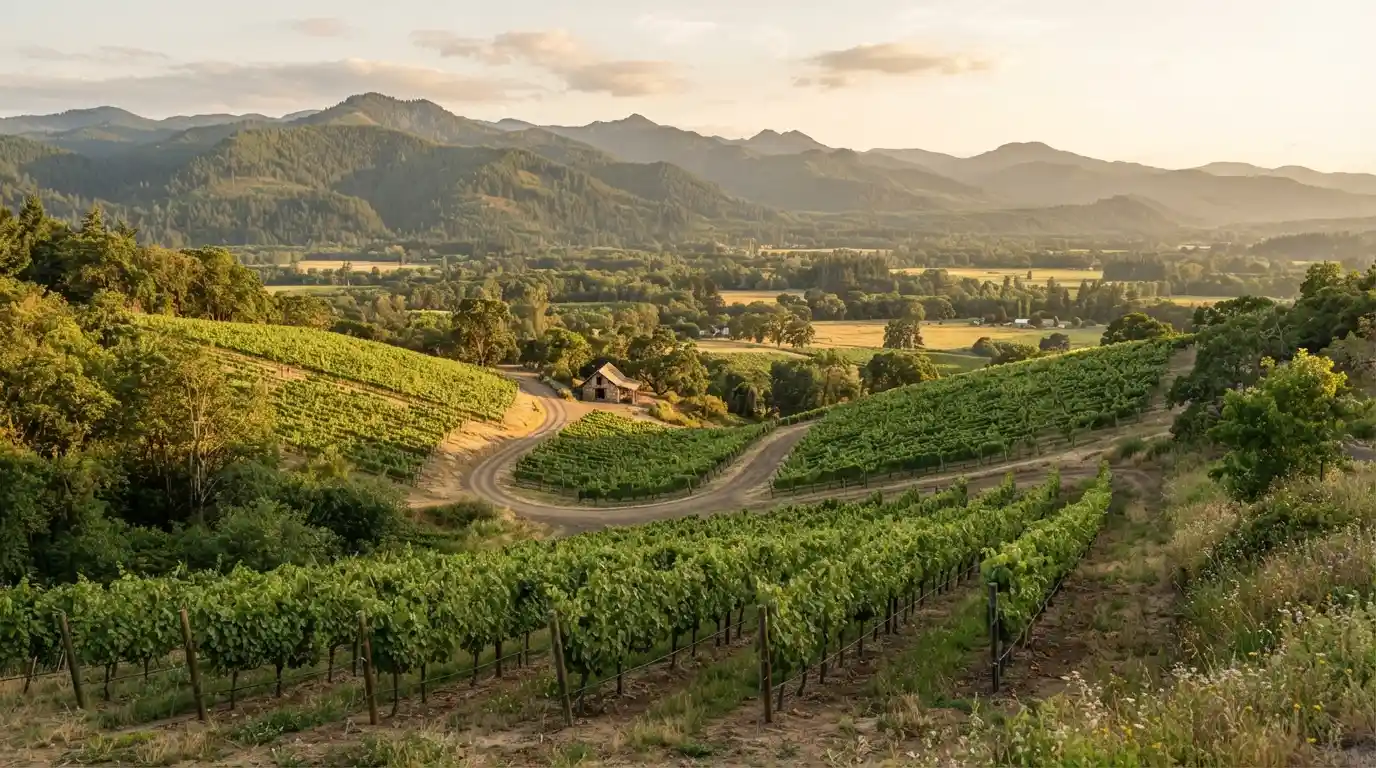
Wine is an important part of the region’s identity, but it is far from the only reason to visit. The valley is home to scenic hiking routes, charming downtowns, agricultural communities, craft breweries, farmers markets, cycling routes, and easy connections to other West Coast destinations.
According to the official Travel Oregon guide to the Willamette Valley, the region combines farms, vineyards, forests, waterfalls, covered bridges, food, and communities that make it possible to build very different types of trips. The Oregon Wine Board also identifies the valley as Oregon’s oldest wine region and notes that it contains more than 700 wineries.
Why Visit Willamette Valley, Oregon?
Willamette Valley is particularly appealing to travelers who want more than a conventional city vacation. You can spend the morning walking through a historic downtown, the afternoon exploring vineyards, and the next day hiking through a forest to a waterfall.
The valley is also a strong base for exploring Oregon and the broader Pacific Northwest. Travelers interested in combining this trip with other destinations can compare it with places to visit in Eugene, Oregon, or use it as part of a wider North America travel itinerary.
1. Dundee Hills
Dundee Hills is one of the most recognizable wine destinations in the northern Willamette Valley. Its rolling terrain, vineyards, tasting rooms, and panoramic countryside views make it an excellent choice for travelers interested in Oregon wine country.
The area is especially associated with Pinot Noir, while several other grape varieties are also produced throughout the valley. The Oregon Wine Board lists Dundee Hills among the region’s nested American Viticultural Areas.
For first-time visitors, Dundee Hills works well as part of a relaxed wine-country day trip. Rather than trying to visit too many tasting rooms, choose a few stops and leave enough time for meals, scenery, and exploring nearby communities.
2. McMinnville
McMinnville is one of the best places to stay when exploring the northern Willamette Valley. Its historic downtown, independent restaurants, wine tasting rooms, and walkable atmosphere make it a convenient base for exploring nearby vineyards.
McMinnville is also useful for travelers who want a balance between wine-country experiences and small-town attractions. You can spend part of the day visiting wineries and return to downtown for dinner without needing to plan a long evening drive.
Travelers building a broader Pacific Northwest itinerary may also want to compare McMinnville with other top places to visit around the world before deciding how much time to dedicate to Oregon.
3. Silver Falls State Park
If you want to experience the natural side of Willamette Valley, Silver Falls State Park should be near the top of your list. The park is famous for its waterfalls and the Trail of Ten Falls, a hiking route that passes several impressive cascades.
Travel Oregon describes the Trail of Ten Falls as a 7.2-mile route featuring multiple waterfalls, including viewpoints where visitors can walk behind some of the falling water. The park’s combination of forest, trails, and waterfalls makes it one of the valley’s strongest choices for outdoor travelers.
Wear appropriate footwear, check trail conditions before leaving, and allow enough time for the hike rather than treating the park as a quick roadside stop.
4. Salem
Salem, Oregon’s capital city, offers a different perspective on the Willamette Valley. It combines government and history with gardens, museums, restaurants, parks, and access to nearby agricultural and wine-growing areas.
Salem is a practical stop for travelers moving between northern and central sections of the valley. It can also work well for visitors who want a city base while keeping outdoor attractions within easy reach.
If you enjoy seasonal travel, Salem and the surrounding countryside can be particularly appealing during autumn when vineyards, farms, and forests take on warmer colors. For more seasonal inspiration, explore these top places to visit in the fall.
5. Eugene
At the southern end of the Willamette Valley, Eugene provides a lively combination of university culture, outdoor recreation, food, arts, and local businesses. It is one of the valley’s most useful bases for travelers who want access to both urban amenities and surrounding nature.
Eugene is also a good choice for travelers extending their Oregon road trip southward. The city’s location makes it possible to explore nearby forests, wineries, farms, and outdoor attractions while still having plenty of restaurants and accommodation options.
For a more detailed city itinerary, see our guide to top places to visit in Eugene, Oregon.
6. Corvallis
Corvallis is a relaxed college town surrounded by agricultural landscapes and outdoor opportunities. It is an appealing stop for visitors who prefer a quieter atmosphere than larger Oregon cities.
The city is also well positioned for exploring central Willamette Valley wine country. Travelers can combine a visit to Corvallis with vineyard stops, cycling routes, local food experiences, and scenic drives through the surrounding countryside.
7. Eola-Amity Hills
The Eola-Amity Hills area is another important wine destination in the Willamette Valley. Its location and maritime influence contribute to the distinctive character of wines produced in the area.
The Oregon Wine Board lists Eola-Amity Hills as one of the valley’s nested AVAs. Wine enthusiasts can use the area as a focused tasting destination rather than attempting to cover the entire valley in a single day.
For a more complete wine-country experience, consider pairing Eola-Amity Hills with nearby Salem and other central valley communities.
8. Newberg
Newberg is another strong northern Willamette Valley destination, particularly for visitors interested in wine, food, and scenic countryside. Its location provides convenient access to several vineyard areas and makes it a useful base for exploring the northern valley.
Newberg is also a good option for travelers coming from Portland. Travel Oregon notes that visitors can reach Willamette Valley wineries from Portland or Eugene at varying distances depending on the specific vineyard and subregion.
9. Yamhill and the Surrounding Wine Country
The small communities around Yamhill County provide a slower-paced alternative to larger tourist destinations. Vineyards, farms, country roads, tasting rooms, and locally owned businesses create an experience that feels distinctly different from urban Oregon.
This part of the valley is best explored without rushing. Give yourself time to stop at viewpoints, visit local producers, enjoy a long lunch, and discover smaller roads and communities along the way.
10. Farm-to-Table Food Experiences
Willamette Valley is not only about wine. Agriculture is central to the region’s identity, and visitors can find fresh produce, berries, hazelnuts, artisan products, cheeses, craft beverages, farmers markets, and restaurants that emphasize local ingredients.
Travel Oregon highlights the valley’s farm-to-fork food culture as one of its defining attractions. This makes the region particularly attractive for travelers who want to combine scenic exploration with memorable meals.
11. Cycling Through the Valley
The valley’s combination of quiet rural roads, vineyards, farms, and rolling terrain creates excellent opportunities for cycling. Routes can range from relaxed rides around wine-country communities to more demanding rides through the surrounding hills.
Cyclists should plan routes according to fitness level, weather, road conditions, and available services. If you are planning a longer road trip, the valley can also serve as one section of a broader regional travel itinerary, although the eastern United States requires a separate trip rather than a direct extension from Oregon.
12. Forests, Hiking, and Waterfalls
Outdoor adventure is one of the biggest reasons to visit Willamette Valley beyond wine tasting. The surrounding forests and foothills provide hiking opportunities, while waterfalls offer some of the region’s most memorable scenery.
Travelers who enjoy mountain scenery can also use the valley as inspiration for exploring other mountain destinations across the United States and beyond.
13. Scenic Drives Through Oregon Wine Country
A road trip is one of the easiest ways to experience the diversity of Willamette Valley. Instead of staying in one town, travelers can create a route connecting wineries, historic downtowns, parks, restaurants, and viewpoints.
Plan your driving route before the trip, especially if winery visits are involved. If you plan to taste wine, designate a sober driver or use a professional transportation service rather than driving after drinking.
Travel Oregon also outlines options for visiting Willamette Valley wine country without a personal car, including buses, bicycles, and transportation services around McMinnville.
14. Best Time to Visit Willamette Valley
The best time to visit depends on what you want to do. Late spring through early fall is attractive for outdoor activities, scenic drives, vineyard visits, and comfortable conditions. Summer generally provides longer daylight hours for exploring.
September and October can be especially appealing to wine travelers because harvest season brings additional activity to the region. However, popular tasting rooms and attractions can become busy, so reservations and advance planning are worthwhile.
Winter offers a quieter experience. Travel Oregon notes that cellar season can provide a more intimate side of Willamette Valley wine country, with tasting rooms and winemakers offering a different atmosphere after harvest.
15. How Many Days Do You Need in Willamette Valley?
A three-day Willamette Valley itinerary is a good starting point for first-time visitors.
- Day 1: Explore Newberg, Dundee Hills, and nearby wineries.
- Day 2: Visit McMinnville, enjoy local food, and explore surrounding vineyards.
- Day 3: Visit Silver Falls State Park or continue south toward Salem, Corvallis, and Eugene.
With four or five days, you can slow down and add more outdoor activities, tasting rooms, farm experiences, and smaller communities.
How to Plan a Willamette Valley Road Trip
Start by deciding what type of trip you want. Wine-focused travelers should prioritize Dundee Hills, Eola-Amity Hills, McMinnville, Newberg, and other vineyard communities. Outdoor travelers should allocate more time to Silver Falls and the surrounding forests. Food-focused travelers can build their itinerary around farmers markets, restaurants, farms, wineries, and craft beverage producers.
It is also worth avoiding an itinerary that tries to cover every part of the valley in one day. The region stretches a considerable distance, and some of the best experiences come from slowing down rather than constantly driving.
If Willamette Valley is part of a larger vacation, you can compare it with other USA travel destinations, Colorado destinations, or other scenic regions before finalizing your route.
Travel Tips for First-Time Visitors
- Book popular winery appointments in advance, especially during harvest season.
- Do not attempt to drive after drinking; arrange a designated driver or transportation service.
- Wear comfortable footwear when visiting Silver Falls and other hiking areas.
- Allow extra time between destinations because rural roads and scenic stops can slow your itinerary.
- Check individual attraction, park, and tasting-room hours before traveling.
- Pack layers because Oregon weather can change during the day.
- Consider staying in more than one town if you have several days available.
- Leave room in your schedule for farmers markets, local restaurants, and unexpected roadside discoveries.
Frequently Asked Questions
What is the Willamette Valley best known for?
Willamette Valley is best known for its wine industry, especially Pinot Noir, as well as its vineyards, farms, waterfalls, forests, food culture, and charming communities.
What are the best places to visit in Willamette Valley?
Popular destinations include Dundee Hills, McMinnville, Newberg, Eola-Amity Hills, Salem, Corvallis, Eugene, and Silver Falls State Park.
Is Willamette Valley worth visiting if I don’t drink wine?
Absolutely. Hiking, waterfalls, cycling, farm-to-table restaurants, farmers markets, historic towns, outdoor recreation, and scenic drives give non-wine travelers plenty to do.
How long should I stay in Willamette Valley?
Three days is a useful starting point, while four or five days allow travelers to explore the valley at a slower pace and include more outdoor and culinary experiences.
Can you visit Willamette Valley without a car?
Yes. Some parts of the valley can be explored using buses, bicycles, tours, and transportation services, although a car or organized tour can make it easier to reach rural vineyards and attractions.
What wine is Willamette Valley famous for?
Pinot Noir is the region’s flagship grape, although Pinot Gris, Chardonnay, Riesling, and other varieties are also produced throughout the valley.
Final Thoughts
The best places to visit in Willamette Valley, Oregon, offer far more than vineyard views. From the waterfalls of Silver Falls State Park and the historic character of McMinnville to Eugene’s culture, Salem’s attractions, Corvallis’s relaxed atmosphere, and the vineyards of Dundee Hills and Eola-Amity Hills, the region rewards travelers who take their time.
Whether you are planning a wine-country weekend, a family road trip, an outdoor escape, or a longer Oregon adventure, Willamette Valley provides a flexible starting point for exploring the Pacific Northwest. Plan around your interests, leave room for spontaneous discoveries, and treat the journey itself as part of the experience.
For additional travel inspiration, explore our guides to fall destinations, mountain getaways, and unique places in North America.