
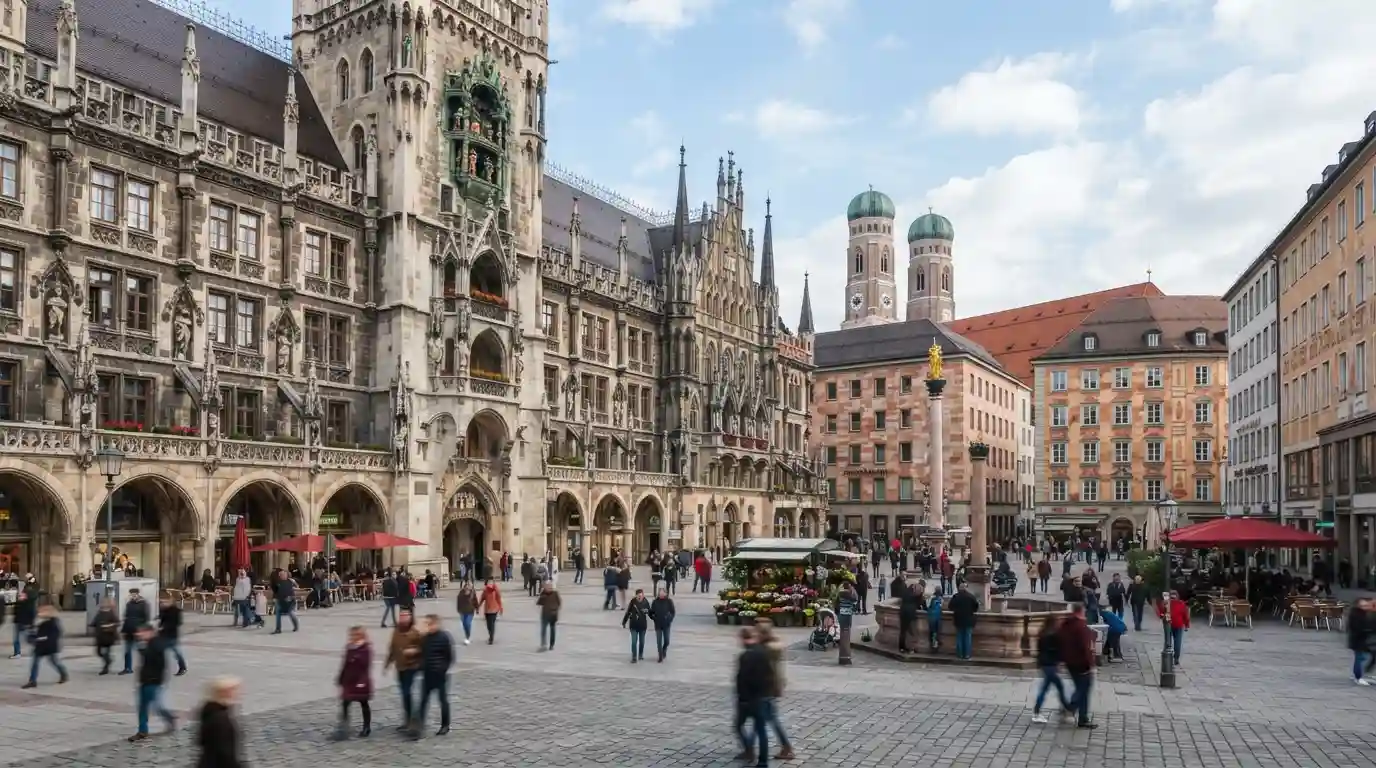
Whether you are planning a short city break or a longer Bavaria itinerary, knowing the top places to visit in Munich Germany can help you make the most of your time. This guide covers Munich’s essential landmarks, museums, parks, historic districts, and nearby attractions worth adding to your plans.
For travelers building a broader European itinerary, you can also explore our guides to places to visit in Stuttgart in one day, Munich travel ideas, and other top places to visit around the world.
Why Munich Is Worth Visiting
Munich combines the atmosphere of a historic European capital with the convenience of a modern city. Bavaria’s capital is known for grand squares, royal residences, museums, parks, traditional food, beer gardens, shopping streets, and cultural attractions.
Germany’s national tourism organization highlights Marienplatz, the English Garden, the German Museum, Pinakothek museums, the Church of Our Lady, Viktualienmarkt, and Allianz Arena among Munich’s major attractions.
The city is also an excellent base for exploring Bavaria. If you have additional time, destinations such as Neuschwanstein Castle and the Bavarian Alps can turn a Munich vacation into a wider southern Germany experience.
1. Marienplatz
Marienplatz is the natural starting point for exploring central Munich. Located in the heart of the Old Town, the square is surrounded by historic architecture and is home to Munich’s New Town Hall and its famous Glockenspiel.
The square is particularly attractive in the morning when the city begins to come alive. Visitors can admire the architecture, explore nearby streets, shop, take photographs, and continue walking toward other Old Town landmarks.
Germany Travel identifies Marienplatz as one of Munich’s defining landmarks and a central point for exploring the city.
2. New Town Hall and the Glockenspiel
The New Town Hall, or Neues Rathaus, is one of Munich’s most recognizable buildings. Its ornate Gothic Revival architecture makes it a major attraction for visitors exploring Marienplatz.
The Rathaus-Glockenspiel is especially popular because its moving figures recreate historical scenes. If you enjoy city photography, architecture, and historic landmarks, this is one stop you should not skip.
3. English Garden
The English Garden, or Englischer Garten, is one of Munich’s best places to slow down after sightseeing. The enormous urban park provides walking paths, open green spaces, water features, beer gardens, and recreational areas.
One of its most famous sights is the Eisbach wave, where experienced river surfers can often be seen riding the current. The park is also home to the Chinese Tower and attractive places to relax.
Germany Travel describes the English Garden as one of the world’s largest urban parks and notes its combination of green space, beer gardens, playgrounds, and the famous Eisbach surfing area.
4. Munich Residenz
The Munich Residenz offers a closer look at Bavaria’s royal history. Once the residence of Bavarian rulers, the complex includes grand rooms, decorative interiors, collections, and historic architectural details.
It is particularly worthwhile for travelers interested in European royal history, Baroque and Renaissance influences, decorative arts, and historic interiors.
5. Nymphenburg Palace
Nymphenburg Palace is another impressive royal attraction. The palace complex and surrounding gardens provide a more relaxed sightseeing experience away from the busiest parts of central Munich.
Visitors can combine the palace with a walk through the grounds, making it a strong choice for travelers who enjoy architecture and landscaped gardens.
6. Deutsches Museum
The Deutsches Museum is a must-see for anyone interested in science, engineering, transportation, technology, and innovation. It is one of Munich’s major cultural institutions and is particularly appealing to families and curious travelers.
Germany Travel describes the Deutsches Museum as the world’s largest science and technology museum, making it one of the city’s standout indoor attractions.
If weather affects your plans, a major museum such as this can also provide a useful alternative to outdoor sightseeing.
7. Alte Pinakothek
Art lovers should include the Alte Pinakothek in their Munich itinerary. The museum is known for its European painting collection and is part of the city’s important group of art institutions.
Its location also makes it convenient to combine with other cultural attractions during a museum-focused day.
8. Pinakothek der Moderne
The Pinakothek der Moderne offers a different artistic perspective, focusing on modern art, design, architecture, and related collections. It is an excellent choice for visitors who prefer modern and contemporary cultural experiences.
Munich’s concentration of major museums means travelers can easily create an entire itinerary around art, design, science, and history.
9. Viktualienmarkt
Viktualienmarkt is one of the best places to experience Munich’s food culture. The market features stalls selling regional specialties, fresh products, snacks, drinks, and international foods.
It is located close to Marienplatz, making it easy to visit as part of an Old Town walking route. Consider stopping here around lunchtime when you want to sample local flavors without committing to a long restaurant meal.
10. Frauenkirche
The Church of Our Lady, known as the Frauenkirche, is another defining Munich landmark. Its distinctive twin towers are part of the city’s skyline and make the church easy to recognize from different viewpoints around the Old Town.
For visitors interested in historic architecture, the church provides another opportunity to experience Munich’s religious and cultural heritage.
11. Odeonsplatz and Hofgarten
Odeonsplatz is a beautiful historic square surrounded by important architectural landmarks. Nearby attractions include the Theatinerkirche, Feldherrnhalle, Munich Residenz, and Hofgarten.
Germany Travel recommends Odeonsplatz as an excellent starting point for exploring Munich’s history and architecture.
The nearby Hofgarten provides a pleasant green space where visitors can take a break between major attractions.
12. BMW Museum
Car enthusiasts should make time for the BMW Museum. Munich has a strong connection with BMW, and the museum explores the company’s automotive heritage through vehicles, design, technology, and historical displays.
It is especially suitable for travelers who want to add something different to a traditional European sightseeing itinerary.
13. Allianz Arena
Football fans have another major attraction to consider: Allianz Arena. The stadium is closely associated with Bayern Munich and is one of the most recognizable sporting venues in Germany.
Germany Travel highlights the stadium as an important part of Munich’s identity and recommends experiencing the atmosphere of a match when tickets are available.
14. Isar River
The Isar River provides a more relaxed side of Munich. Walking along the riverbanks can be a welcome change after several hours of museums, churches, and historic buildings.
Several riverside areas are popular with locals, particularly during pleasant weather. The combination of water, greenery, and city surroundings makes the Isar a useful addition to a flexible Munich itinerary.
15. Schwabing
Schwabing is worth visiting if you want to experience Munich beyond the main tourist landmarks. The district is known for cafés, restaurants, shops, nightlife, and a lively local atmosphere.
It can be particularly enjoyable in the evening when you want to explore a neighborhood rather than continue visiting formal attractions.
16. Königsplatz
Königsplatz is another impressive architectural area in Munich. Its monumental buildings and open spaces create a distinctly different atmosphere from the narrow streets around the Old Town.
The surrounding area is also convenient for travelers interested in Munich’s museums and cultural institutions.
17. Neuschwanstein Castle Day Trip
If your Munich trip lasts several days, consider taking a day trip to Neuschwanstein Castle. Although it is outside Munich, the famous Bavarian castle is one of the region’s most recognizable attractions.
The castle was commissioned by King Ludwig II, with construction beginning in 1869. Its romantic architecture and dramatic mountain setting have made it an internationally recognized symbol of Bavaria.
Germany’s national tourism organization also notes that Neuschwanstein, along with several other castles associated with King Ludwig II, was added to the UNESCO World Heritage family in July 2025.
For travelers interested in Bavaria beyond Munich, our guide to the best places to visit in the mountains can help expand your itinerary.
18. Explore Bavaria Beyond Munich
Munich works particularly well as a gateway to the wider Bavarian region. Travelers with extra time can explore alpine landscapes, historic towns, castles, lakes, and other cultural destinations.
Bavaria is known for its mountains, lakes, medieval towns, castles, palaces, churches, museums, and outdoor experiences.
If you are comparing different European destinations, you may also find our guides to Munich, the Algarve in Portugal, Europe in winter, and Munich travel attractions useful when planning a larger trip.
Best Time to Visit Munich
The best time to visit Munich depends on the type of experience you want. Spring and early summer can be attractive for outdoor sightseeing, while summer offers long days for parks, walking tours, and nearby excursions.
Autumn brings cooler weather and the famous Oktoberfest season, while winter gives the city a festive atmosphere and Christmas markets. Your ideal travel period should therefore depend on whether your priority is outdoor exploration, cultural attractions, festivals, or seasonal atmosphere.
How Many Days Do You Need in Munich?
Two to three days can provide a good introduction to Munich. A two-day itinerary can cover the Old Town, Marienplatz, the Residenz, English Garden, Viktualienmarkt, and one or two museums.
With three or four days, you can slow the pace, explore neighborhoods such as Schwabing, visit additional museums, spend more time along the Isar, and consider a day trip to Neuschwanstein Castle.
If you are planning a wider European vacation, compare your Munich schedule with other destination guides such as the best places to visit in Montreal, Stuttgart in one day, and top places around the world.
Tips for Exploring Munich
- Start your sightseeing in the Old Town to cover several landmarks within walking distance.
- Visit Marienplatz earlier in the day if you prefer a calmer sightseeing experience.
- Allow several hours for the English Garden rather than treating it as a quick photo stop.
- Reserve enough time for Munich’s museums if you enjoy history, science, art, or technology.
- Wear comfortable shoes because many central attractions are easiest to explore on foot.
- Consider public transportation for attractions outside the central Old Town.
- Check official attraction websites for current opening hours, admission rules, and special events before traveling.
- If you have extra days, consider expanding your trip into Bavaria rather than staying entirely within Munich.
Where Should You Go After Munich?
Munich can be the starting point for a much larger European adventure. Travelers looking for more destination inspiration can explore our guides covering interesting places to visit in London, unique places to visit in Japan, the best places to visit in Bali, and places to visit in Greece.
Final Thoughts
Munich is a destination where historic architecture, world-class museums, expansive parks, local food culture, football, and Bavarian traditions come together. The best places to visit in Munich Germany range from famous landmarks such as Marienplatz and the Frauenkirche to quieter experiences along the Isar and inside the English Garden.
For first-time visitors, begin with the Old Town, add the English Garden and one or two museums, and then use any extra days for neighborhoods or a Bavarian day trip. With thoughtful planning, Munich can be both an easy city break and an excellent base for discovering southern Germany.