
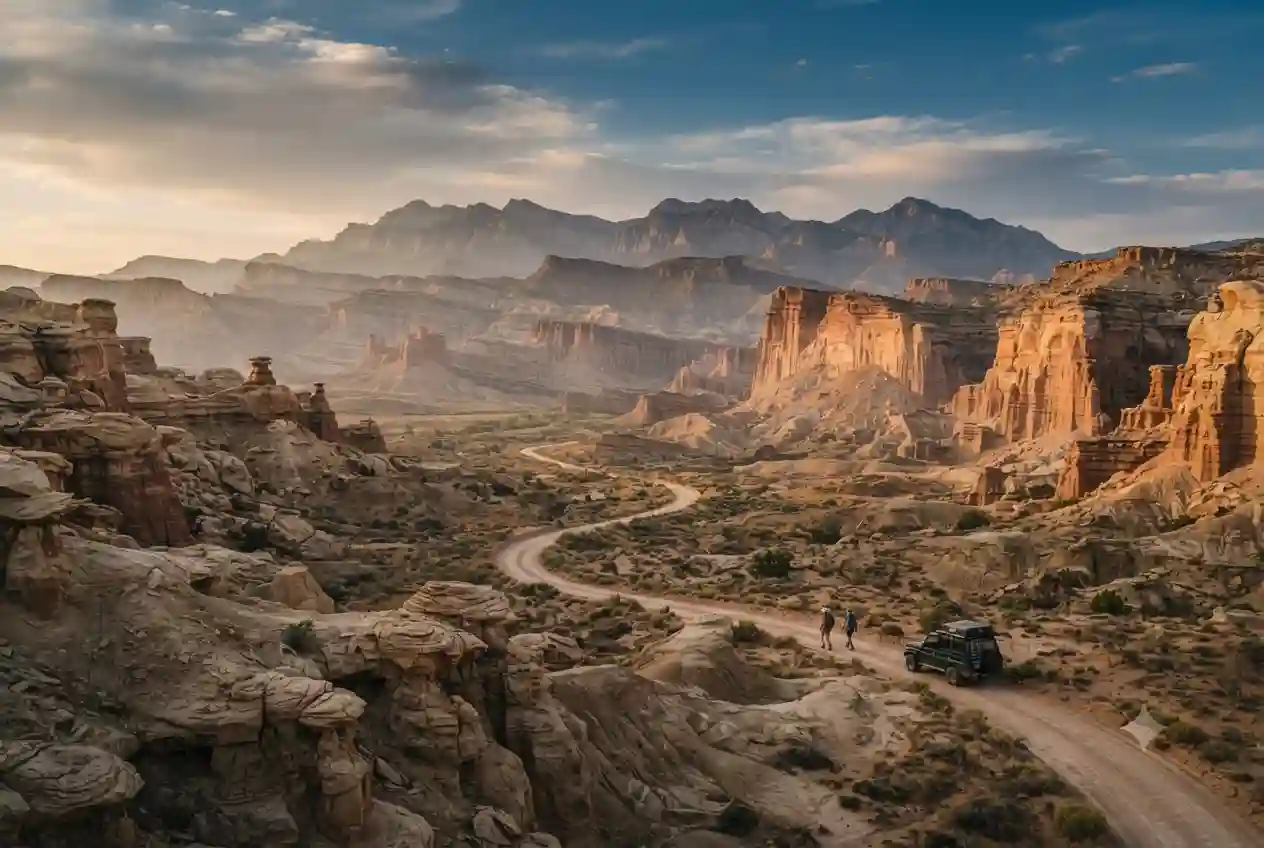
From the otherworldly white dunes of New Mexico and the remote islands of California to Canada’s enormous tides and Mexico’s surreal landscapes, the continent offers far more than its most famous cities and national parks. Some destinations are surprisingly accessible, while others reward travelers willing to take a longer road trip, ferry, or flight.
This guide highlights 20 distinctive destinations across the United States, Canada, and Mexico. The goal is not simply to find places that are obscure, but places with a genuine sense of character, unusual scenery, cultural depth, or a travel experience that is difficult to duplicate elsewhere.
What Makes a Place Truly Unique?
A unique destination does not necessarily have to be completely unknown. Some of the world’s most memorable places are popular precisely because their landscapes or cultural experiences are genuinely unusual.
For this guide, a destination qualifies because it offers at least one strong point of difference: extraordinary geology, unusual wildlife, distinctive local culture, remote access, an unexpected landscape, remarkable history, or an experience that feels substantially different from conventional sightseeing.
Organizations such as the National Park Service maintain extensive collections of lesser-visited natural and geological sites, while travel publications continue to highlight destinations that provide alternatives to heavily visited tourist hotspots. ([nps.gov](https://www.nps.gov/articles/000/top-10-hidden-gems-of-the-national-park-service.htm?utm_source=chatgpt.com))
Unique Places to Visit in North America
1. White Sands National Park, New Mexico
Best for: Surreal landscapes, photography, sunsets, hiking, and road trips
White Sands National Park looks almost like another planet. Instead of the familiar golden appearance of most deserts, the landscape is covered by brilliant white gypsum sand.
The National Park Service identifies White Sands as the world’s largest gypsum dunefield, covering roughly 275 square miles in the Tularosa Basin. Its unusual geology developed through a long process involving ancient seas, gypsum deposits, evaporation, wind, and erosion. ([nps.gov](https://home.nps.gov/whsa/geology.htm?utm_source=chatgpt.com))
Visitors can hike across the dunes, photograph the changing patterns, watch sunset, and experience an environment that feels remarkably different from the surrounding Chihuahuan Desert.
Why it is unique: The combination of brilliant white gypsum dunes and surrounding desert mountains is exceptionally rare.
2. Channel Islands National Park, California
Best for: Wildlife, kayaking, hiking, marine life, and solitude
Off the Southern California coast, Channel Islands National Park offers a dramatically different experience from the region’s famous beaches and cities. The park encompasses five islands and surrounding ocean waters, creating an isolated environment shaped by ocean currents and thousands of years of ecological separation.
The National Park Service notes that the islands contain species and subspecies that evolved in isolation and that the park supports a remarkable variety of marine and terrestrial life. ([nps.gov](https://www.nps.gov/chis/learn/nature/naturalfeaturesandecosystems.htm?utm_source=chatgpt.com))
Travelers can explore by hiking, kayaking, snorkeling, wildlife watching, or simply enjoying the feeling of being far removed from mainland Southern California.
Why it is unique: It combines island isolation, marine ecosystems, endemic wildlife, and a surprisingly wild setting close to one of America’s most populated coastal regions.
3. Ocracoke Island, North Carolina
Best for: Quiet beaches, maritime history, small-town atmosphere, and slow travel
Ocracoke Island in North Carolina’s Outer Banks offers a coastal experience that feels deliberately removed from conventional resort development. The island is known for its village atmosphere, beaches, maritime heritage, lighthouse, and distinctive local culture.
Its relatively limited commercial development is part of its appeal. Travelers who prefer independent businesses, uncrowded beaches, and historic coastal communities can find a very different experience here from the larger beach destinations farther south.
The island’s history is also connected with the notorious pirate Blackbeard, adding another layer to its unusual character.
Why it is unique: Its combination of remote-island access, maritime history, preserved community character, and beaches makes it unlike a conventional American beach resort.
4. Marfa, Texas
Best for: Contemporary art, desert landscapes, architecture, and creative travelers
Marfa is one of the most unexpected cultural destinations in the American Southwest. The small West Texas community became internationally associated with contemporary art while retaining the stark desert environment that surrounds it.
The result is a fascinating contrast: minimalist architecture and contemporary installations appear against enormous desert horizons and open skies.
Marfa is especially appealing to travelers who want a destination where art, design, landscape, and small-town culture intersect.
Why it is unique: Few small desert communities have developed such a strong international identity around contemporary art and design.
5. Great Sand Dunes National Park and Preserve, Colorado
Best for: Sandboarding, hiking, photography, mountains, and unusual geology
Colorado may be famous for snow-covered peaks, but Great Sand Dunes National Park presents a completely different mountain landscape. Huge sand dunes rise against the Sangre de Cristo Mountains, creating an unusual combination of desert-like terrain and alpine scenery.
The destination is ideal for travelers who want to hike dunes, photograph dramatic landscapes, or experience a geological environment that does not resemble the stereotypical Colorado mountain scene.
Lonely Planet includes Great Sand Dunes among North America’s off-the-beaten-path destinations, highlighting the dramatic contrast between the dunes and surrounding mountain landscape. ([lonelyplanet.com](https://www.lonelyplanet.com/articles/amazing-places-off-tourist-trail-north-america?utm_source=chatgpt.com))
Why it is unique: Massive dunes directly beneath high mountain peaks create an unusual visual combination.
6. Apostle Islands, Wisconsin
Best for: Sea caves, kayaking, hiking, islands, and winter scenery
The Apostle Islands on Lake Superior offer an experience that feels more like an ocean archipelago than an inland lake destination. The islands feature rugged shorelines, forests, lighthouses, beaches, and dramatic sandstone formations.
In suitable conditions, kayaking allows travelers to explore the shoreline from the water. Winter can create another spectacular experience when ice formations transform parts of the coast.
Why it is unique: It combines freshwater island scenery with sea-cave-like geological formations and a distinctly northern landscape.
7. Big Bend National Park, Texas
Best for: Desert landscapes, mountains, stargazing, hiking, and solitude
Big Bend is one of the best destinations in the United States for travelers who want genuine remoteness. Located along the Rio Grande in southwest Texas, the park combines desert, mountains, river canyons, and broad open landscapes.
The park’s geological diversity also makes it particularly interesting for travelers who want to understand how dramatically landscapes can change within a single region.
Its distance from major metropolitan areas contributes to its feeling of isolation and makes it particularly rewarding for road-trip travelers.
Why it is unique: Few U.S. destinations combine desert wilderness, mountains, river canyons, and enormous open skies at this scale.
8. Great Basin National Park, Nevada
Best for: Bristlecone pines, caves, mountains, stargazing, and quiet trails
Great Basin National Park is one of the country’s most rewarding choices for travelers who prefer less crowded natural destinations. The park contains high mountain landscapes, ancient bristlecone pines, alpine lakes, and Lehman Caves.
The combination of underground geology and high-elevation scenery makes the park particularly distinctive.
Travelers also benefit from the relative quiet compared with some of the more heavily visited Western national parks.
Why it is unique: Few destinations combine ancient trees, limestone caves, alpine environments, and desert surroundings in one compact region.
9. Fogo Island, Newfoundland and Labrador
Best for: Rugged coastlines, remote communities, art, and slow travel
Fogo Island sits off the northeastern coast of Newfoundland and offers a distinctly remote Atlantic experience. Dramatic rocky shorelines, small fishing communities, hiking routes, and expansive ocean views define the landscape.
The island is also known for its contemporary cultural and architectural identity, which creates an intriguing contrast with traditional Newfoundland communities.
For travelers who enjoy destinations where landscape and local culture are equally important, Fogo Island is a standout choice.
Why it is unique: Its remote Atlantic setting and distinctive blend of traditional community life, contemporary architecture, and dramatic coastline create a rare travel experience.
10. Bay of Fundy, New Brunswick and Nova Scotia
Best for: Tides, coastal geology, hiking, wildlife, and nature
The Bay of Fundy is one of the most fascinating coastal environments in North America. Its tidal range is extraordinary, and the shoreline changes dramatically as the water rises and falls.
Parks Canada notes that the tidal difference at Fundy National Park can reach approximately 12 meters, while the head of the bay can experience even greater tidal variation. Visitors can explore tidal flats and observe how dramatically the coastline changes throughout the day. ([parks.canada.ca](https://www.parks.canada.ca/pn-np/nb/fundy/nature/environment/marees-tides?utm_source=chatgpt.com))
Because tide times matter, visitors should check current tidal predictions before planning activities on exposed intertidal areas.
Why it is unique: The landscape can appear to transform dramatically between high and low tide.
11. Drumheller, Alberta
Best for: Dinosaur fossils, badlands, geology, and family travel
Drumheller offers one of Canada’s most unusual landscapes. Instead of the forested mountains many travelers associate with Alberta, the region features dry badlands, hoodoos, exposed rock, and fossil-rich terrain.
The Royal Tyrrell Museum nearby adds substantial scientific and educational value, making the region especially attractive to families and travelers interested in paleontology.
Why it is unique: The combination of dinosaur history, badland geology, and Alberta’s unexpected semi-arid landscape feels dramatically different from the Canadian Rockies.
12. Nahanni National Park Reserve, Northwest Territories
Best for: Wilderness, river adventures, mountains, canyons, and experienced travelers
Nahanni National Park Reserve is a destination for travelers seeking true northern wilderness. The park protects dramatic river valleys, mountains, canyons, waterfalls, and remote landscapes in Canada’s Northwest Territories.
This is not a conventional sightseeing destination. Reaching and exploring the region requires considerably more preparation than visiting a major Canadian city or easily accessible national park.
That remoteness is precisely what makes it special.
Why it is unique: It offers a level of wilderness and remoteness that is increasingly difficult to find in modern tourism.
13. Quebec City, Quebec
Best for: History, architecture, European atmosphere, food, and culture
Quebec City provides an unusual experience within North America because its historic core has a strong French architectural and cultural identity. Old Québec’s fortified streets, stone buildings, plazas, and narrow lanes create an atmosphere that feels distinctly different from most North American cities.
The city is particularly appealing to travelers who want European-style historic character without leaving the continent.
For travelers planning a budget-friendly itinerary, BizHorizone also covers free places to visit in Quebec City.
Why it is unique: It combines North American geography with a deeply rooted French cultural and architectural identity.
14. Okanagan Valley, British Columbia
Best for: Lakes, vineyards, food, scenic drives, and relaxed vacations
The Okanagan Valley is another Canadian landscape that surprises first-time visitors. Dry interior valleys, vineyards, orchards, lakes, and surrounding mountains create an environment that feels quite different from the wet coastal landscapes of British Columbia.
Kelowna provides a convenient base for exploring the region, while smaller communities offer wineries, farms, restaurants, and scenic lake views.
BizHorizone also has a dedicated guide covering places to visit in Kelowna, British Columbia.
Why it is unique: The combination of dry valleys, lakes, vineyards, orchards, and mountains creates a landscape that does not fit the stereotypical image of coastal British Columbia.
15. Hierve el Agua, Oaxaca, Mexico
Best for: Geological formations, mountain scenery, photography, and cultural travel
Hierve el Agua is famous for formations that resemble enormous waterfalls frozen in stone. The mineral-rich springs have created terraces and rock structures overlooking the surrounding Oaxacan landscape.
The site is especially striking because the formations appear to flow down the mountain like waterfalls even though they are made of mineral deposits.
Travelers can combine the destination with Oaxaca’s historic city, regional food, archaeological sites, and traditional communities.
Why it is unique: Few landscapes create such a convincing visual illusion of waterfalls carved permanently into rock.
16. Copper Canyon, Chihuahua, Mexico
Best for: Scenic rail travel, canyons, mountains, Indigenous culture, and adventure
Copper Canyon, or Barrancas del Cobre, is a vast network of canyons in northern Mexico. Its scale and rugged terrain make it one of the country’s most impressive adventure destinations.
The region is associated with the Rarámuri people and is also famous for the scenic railway journey through the canyon landscape.
Rather than rushing through the region, travelers should allow enough time to appreciate the landscape, communities, viewpoints, and mountain environment.
Why it is unique: The enormous canyon system combines dramatic geology, railway travel, mountain scenery, and living Indigenous culture.
17. Las Pozas, San Luis Potosí, Mexico
Best for: Surreal architecture, gardens, photography, and art
Las Pozas is one of the most unusual art environments in North America. Hidden within the lush landscape of Xilitla, the site contains fantastical concrete structures, stairways, towers, arches, and pools associated with British artist Edward James.
The structures appear to merge with the surrounding jungle, creating an environment that feels halfway between architecture, sculpture, and dreamlike ruins.
Why it is unique: It is difficult to find another destination where surrealist architecture is so completely integrated into a tropical landscape.
18. Isla Holbox, Quintana Roo, Mexico
Best for: Slow travel, beaches, wildlife, cycling, and relaxed island life
Isla Holbox offers a slower alternative to some of the heavily developed resort areas of the Yucatán Peninsula. The island is known for sandy streets, shallow coastal waters, colorful local life, and a more relaxed atmosphere.
Its natural setting also makes it attractive to travelers interested in marine wildlife and outdoor experiences.
Holbox works best for travelers who want to slow down rather than fill every hour with organized sightseeing.
Why it is unique: Its combination of low-key island atmosphere, natural surroundings, and access to marine experiences creates a distinctly different Caribbean-side vacation.
19. Ometepe Island, Nicaragua
Best for: Volcanoes, lakes, hiking, cycling, and rural landscapes
Ometepe Island sits within Lake Nicaragua and is formed by two volcanoes connected by a narrow strip of land. The result is one of Central America’s most distinctive island landscapes.
Travelers can explore volcanic slopes, rural roads, beaches, forests, farms, and small communities while experiencing a slower side of Nicaragua.
The island is especially rewarding for independent travelers who enjoy combining outdoor activities with local culture.
Why it is unique: Two volcanoes rising from one enormous freshwater lake create an unmistakable geographic identity.
20. Saba, Caribbean Netherlands
Best for: Diving, hiking, dramatic scenery, and peaceful island travel
Saba is a tiny Caribbean island that offers a dramatically different experience from large resort destinations. Steep terrain, volcanic landscapes, hiking trails, clear waters, and a small-community atmosphere make it particularly appealing to adventurous travelers.
The island is known for its marine environment as well as its hiking opportunities. Its compact scale means the experience is more about nature, community, and exploration than large resort complexes.
Why it is unique: A small volcanic island with steep terrain, rich marine life, and a low-key atmosphere offers a very different Caribbean experience.
Best Unique Places in North America by Travel Style
- For unusual landscapes: White Sands, Great Sand Dunes, Hierve el Agua, and Drumheller.
- For remote adventures: Nahanni, Channel Islands, Fogo Island, and Saba.
- For art and architecture: Marfa, Las Pozas, and Quebec City.
- For wildlife: Channel Islands, Ocracoke, Fogo Island, and Saba.
- For road trips: Big Bend, Marfa, Great Sand Dunes, Okanagan Valley, and Copper Canyon.
- For families: Drumheller, White Sands, Great Sand Dunes, and Ocracoke.
- For couples: Fogo Island, Okanagan Valley, Saba, and Ometepe.
- For photographers: White Sands, Hierve el Agua, Las Pozas, Great Sand Dunes, and Big Bend.
- For cultural experiences: Quebec City, Copper Canyon, Marfa, and Ometepe.
- For travelers seeking solitude: Nahanni, Great Basin, Channel Islands, and parts of Fogo Island.
How to Plan an Off-the-Beaten-Path North America Trip
Choose One Region Instead of Crossing the Continent
North America is enormous. Trying to combine destinations in Texas, Canada, Mexico, and the Caribbean into one vacation is rarely practical.
Instead, choose a region and build a route around it. For example, you could create a Southwestern U.S. itinerary around Marfa, Big Bend, and White Sands, or a Canadian trip around Quebec City, the Bay of Fundy, and Atlantic Canada.
Research Transportation Before Booking Accommodation
Some unusual destinations are remote precisely because they are not connected by simple transportation networks. Islands may require ferries or boats, while northern wilderness areas may require specialized flights or guided trips.
Channel Islands National Park, for example, advises visitors to plan ahead because the park consists of five islands and surrounding ocean waters, making transportation and activity planning more involved than at many mainland parks. ([nps.gov](https://www.nps.gov/chis/planyourvisit/index.htm?utm_source=chatgpt.com))
Check Seasonal Conditions
A destination can look completely different depending on the season. Winter can create ice formations in northern destinations, summer may provide the easiest access to mountain regions, and shoulder seasons can bring different weather or limited services.
Respect Local Communities and Protected Areas
Unique destinations often remain special because their environments and communities have been protected. Follow local regulations, remain on designated trails, respect wildlife, avoid damaging natural formations, and follow cultural guidelines.
Do Not Confuse Remote With Better
An off-the-beaten-path destination is not automatically the right destination for every traveler. Some require more driving, fewer services, limited accommodation, or greater preparation.
The best choice is the destination whose level of remoteness matches your travel experience and expectations.
Best Time to Visit Unique Destinations in North America
Spring
Spring can be excellent for desert destinations, lower-elevation hiking, waterfalls, and areas where summer heat becomes uncomfortable.
Summer
Summer is generally useful for northern destinations, mountain areas, island trips, and locations where winter conditions restrict access.
Fall
Fall is especially attractive for northeastern and northern destinations, while desert landscapes can become more comfortable as extreme summer temperatures decline.
For more seasonal U.S. travel inspiration, see our guides to Upstate New York in fall and the best places to visit in the mountains.
Winter
Winter can create some of the most unusual experiences in North America, from snow-covered mountain towns to frozen northern coastlines. However, remote destinations may have reduced services or seasonal closures, so advance research is essential.
Tips for Finding More Hidden Gems
- Look beyond the most visited national parks: The National Park Service specifically highlights lesser-visited sites as alternatives to America’s most crowded parks. ([nps.gov](https://www.nps.gov/articles/000/top-10-hidden-gems-of-the-national-park-service.htm?utm_source=chatgpt.com))
- Search for unusual geology: Caves, dunes, badlands, volcanic formations, and unusual rock landscapes often create memorable trips.
- Explore smaller communities: Small towns can provide stronger cultural experiences than heavily commercialized resort areas.
- Consider islands: Islands naturally create different ecosystems and travel experiences.
- Travel outside peak periods: Shoulder seasons can make popular destinations feel substantially quieter.
- Ask what makes the destination different: A strong reason to visit is more valuable than simply finding a place with low visitor numbers.
- Use reputable travel sources: Atlas Obscura maintains a large database of unusual and overlooked places, while Lonely Planet regularly highlights destinations away from conventional tourist routes. ([atlasobscura.com](https://www.atlasobscura.com/things-to-do/united-states/?utm_source=chatgpt.com))
Are Unique Places in North America Worth Visiting?
Absolutely. In many cases, the most memorable part of a trip is not seeing the same landmark everyone else has photographed, but experiencing a place that challenges your expectations.
White Sands does not look like a conventional desert. Drumheller does not resemble the Canadian Rockies. Quebec City can feel surprisingly European. Las Pozas looks like an architectural dream hidden in the jungle. Ometepe combines volcanoes and freshwater island life in a way that is difficult to replicate.
These differences are what make unique travel worthwhile. They give you stories to tell, landscapes to remember, and experiences that feel more personal than simply following a standard tourist checklist.
Final Thoughts
The unique places to visit in North America are spread across an enormous and remarkably diverse continent. Travelers can discover surreal white dunes in New Mexico, isolated islands off California, giant tides in Atlantic Canada, dinosaur-rich badlands in Alberta, artistic desert communities in Texas, and extraordinary landscapes across Mexico and Central America.
The best destination depends on what kind of unusual experience you want. Choose White Sands or Great Sand Dunes for extraordinary geology, Channel Islands or Saba for island adventures, Quebec City for culture and architecture, Copper Canyon for dramatic landscapes and Indigenous heritage, or Las Pozas for surreal art.
Most importantly, plan with curiosity rather than simply chasing popularity. Research access, seasonal conditions, local regulations, and transportation before you go. The more carefully you approach these destinations, the more likely you are to discover what makes them genuinely special.
North America has no shortage of famous attractions, but its lesser-known landscapes and communities can provide something even more valuable: the feeling that you have discovered somewhere truly different.