
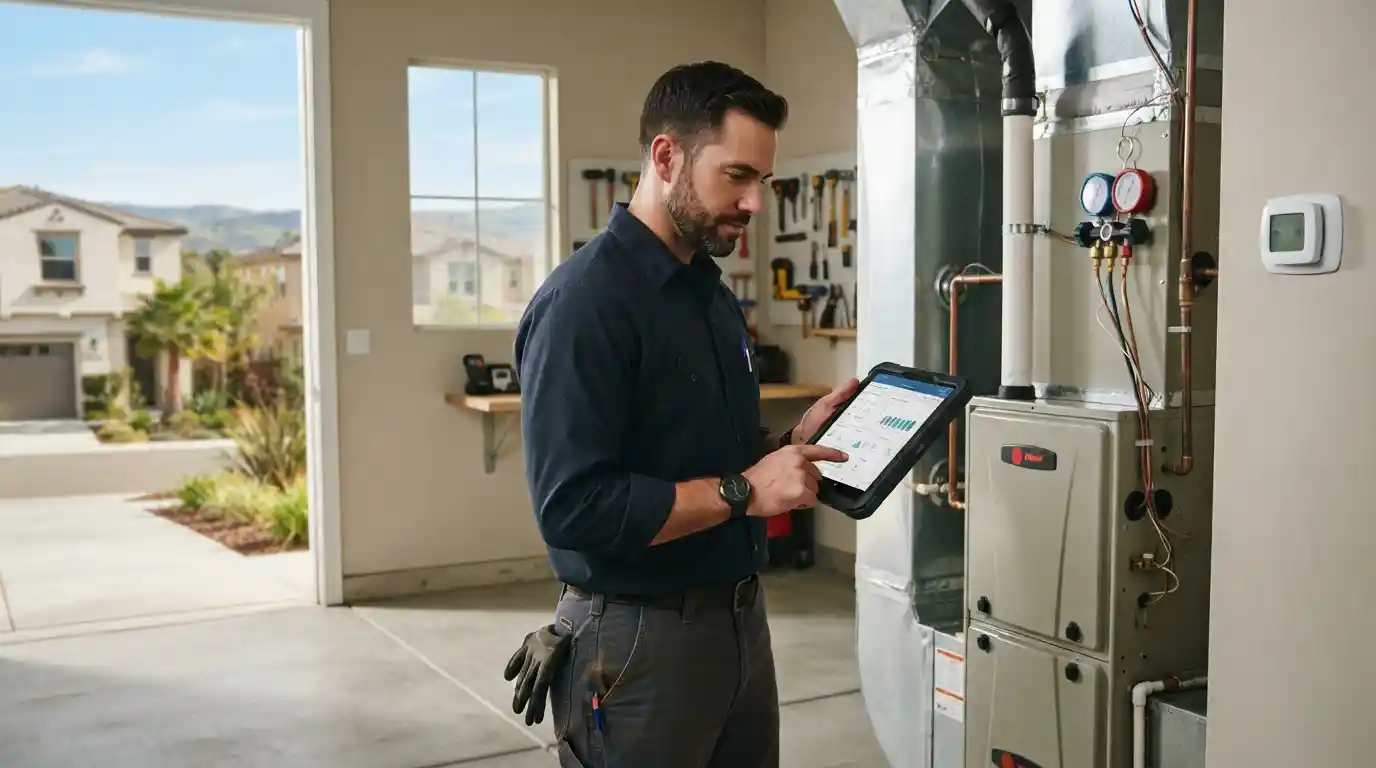
The economic impact of digital marketing on San Jose’s HVAC landscape can therefore be understood through several connected areas: customer acquisition, local visibility, lead generation, revenue opportunities, operational efficiency, competition, and long-term business growth.
For companies evaluating these opportunities, broader strategies such as digital marketing strategy for global business and advanced digital marketing and business transformation provide useful context for understanding how online channels can become part of a wider business strategy.
How Digital Marketing Is Changing San Jose’s HVAC Market
Traditional HVAC marketing has historically relied on referrals, local advertising, direct mail, vehicle branding, and repeat customers. Those methods can still play a role, but customers now have additional ways to compare service providers before making contact.
Search engines, business websites, online reviews, local listings, social platforms, and digital advertising allow prospective customers to investigate HVAC companies from their phones or computers. A company that is easy to discover online has more opportunities to enter the customer’s consideration set.
This creates an economic connection between visibility and demand. Better online visibility can bring more qualified visitors to a company’s website, while a well-designed conversion process can turn some of those visitors into calls, quote requests, maintenance appointments, or installation inquiries.
Local Search Can Create More HVAC Opportunities
HVAC is particularly suited to local digital marketing because many services are location-dependent. Someone searching for air conditioning repair, heating maintenance, furnace installation, or HVAC replacement generally needs a provider capable of serving the area.
Local SEO allows HVAC companies to build visibility around service-related searches and geographic intent. Instead of relying exclusively on broad advertising, businesses can create pages and content that answer specific customer needs.
This approach is closely connected to the principles discussed in digital marketing for small business excellence, where targeted digital activity can help smaller businesses compete for attention without needing the same resources as large organizations.
Digital Marketing Can Lower Customer Acquisition Friction
One economic benefit of digital marketing is that it can reduce friction between a customer recognizing a problem and contacting a service provider.
Consider a homeowner experiencing an air conditioning problem. A useful HVAC website can provide service information, explain common problems, describe available solutions, answer frequently asked questions, and make it easy to request an appointment. Each element removes uncertainty from the buying process.
The same principle applies to commercial customers. Property managers and business owners may want information about preventive maintenance, equipment replacement, emergency service, or energy-related considerations before contacting an HVAC provider.
Content marketing can therefore support the customer journey rather than simply advertising a company name.
Lead Generation Becomes a Measurable Business Activity
Traditional advertising can sometimes make it difficult to determine exactly which activity produced a customer. Digital marketing offers businesses more opportunities to track interactions throughout the customer journey.
HVAC companies can monitor website visits, landing-page activity, form submissions, phone-call conversions, advertising interactions, and other measurable actions. These signals can help businesses understand which marketing activities are producing opportunities.
This makes digital marketing closely related to the broader concept of the ROI of digital marketing for business. Instead of treating marketing purely as an expense, companies can analyze it as an investment that should be connected to measurable business outcomes.
How Digital Marketing Can Influence HVAC Revenue
Digital marketing does not automatically create revenue. Revenue depends on factors such as service quality, pricing, availability, reputation, sales processes, customer demand, and operational capacity.
However, marketing can influence the number and type of opportunities entering the sales pipeline.
For an HVAC company, digital campaigns can promote several revenue-generating services, including:
- Air conditioning repair
- Heating system repair
- HVAC installation
- System replacement
- Preventive maintenance
- Indoor comfort services
- Commercial HVAC services
- Seasonal inspections
- Emergency HVAC assistance
A diversified digital strategy can help a business communicate these services to customers at different stages of the buying cycle.
HVAC Businesses Can Benefit From Service-Based Content
Useful content can become an important component of an HVAC company’s digital presence. Instead of publishing only promotional material, businesses can answer questions customers commonly ask before booking service.
Articles about maintenance, repair decisions, equipment selection, energy considerations, indoor comfort, and troubleshooting can attract people researching potential solutions.
This content-first approach connects with broader practices described in data-driven digital marketing for optimizing business revenue streams. When content performance is measured, companies can identify subjects that attract attention and refine their marketing around customer demand.
Digital Reputation Can Affect HVAC Competition
Trust is particularly important when customers invite service professionals into their homes or businesses. A strong online presence can help an HVAC company communicate professionalism before the first appointment.
A clear website, consistent business information, useful service pages, customer reviews, professional imagery, and straightforward contact options can all contribute to the customer’s initial impression.
This does not mean digital presentation can substitute for actual service quality. Instead, digital marketing gives businesses a way to communicate their capabilities and make existing strengths easier for potential customers to discover.
The Wider Home-Service Economy Is Becoming More Digital
HVAC is part of a larger home-services ecosystem that is increasingly represented online. Consumers can research cleaning, security, repairs, maintenance, remodeling, and other household services before choosing a provider.
For example, the broader home-service landscape includes businesses and topics such as home cleaning services and home security services. These related markets demonstrate how service businesses can use digital channels to explain offerings and connect with local customers.
For HVAC companies, this creates both an opportunity and a competitive requirement: customers increasingly expect businesses to provide useful information and convenient digital contact options.
Technology Is Expanding the HVAC Marketing Opportunity
The relationship between technology and home comfort is also becoming more visible. Smart-home products, connected devices, and digitally managed systems can change the questions customers ask about heating and cooling.
Content about innovative smart home devices and smart ceiling fan technology illustrates the broader consumer interest in technology-enabled home environments.
HVAC companies can respond by educating customers about connected thermostats, system controls, maintenance technologies, indoor comfort solutions, and other developments relevant to their services.
Digital Marketing Can Support Smaller HVAC Companies
Local HVAC businesses do not necessarily need to compete with larger companies across every marketing channel. A focused digital strategy can concentrate resources on the locations, services, and customer groups that matter most to the business.
For example, a company may prioritize specific service areas, emergency repair searches, residential replacement services, commercial maintenance, or seasonal campaigns. This creates a more focused marketing structure than attempting to reach everyone with the same message.
Businesses can also study broader digital marketing strategies for high-growth advertising firms and adapt relevant concepts to the scale of a local HVAC operation.
Measuring Marketing Performance Matters
The economic value of digital marketing becomes easier to understand when companies establish measurable objectives.
Useful performance indicators may include:
- Organic search traffic
- Local search visibility
- Qualified website leads
- Phone-call conversions
- Appointment requests
- Cost per lead
- Advertising conversion rates
- Customer acquisition cost
- Revenue associated with marketing-generated leads
- Repeat customer activity
Businesses interested in performance measurement can also explore concepts such as strategic analysis of digital marketing ROI and strategic valuation of digital advertising assets.
San Jose HVAC Marketing Can Influence Competitive Positioning
Digital marketing also changes how HVAC companies differentiate themselves. Instead of competing only on price, businesses can communicate expertise, responsiveness, service range, experience, maintenance programs, technology capabilities, and customer support.
For a competitive local market, this positioning can be important because customers may compare several companies before contacting one.
Examples from other service-oriented industries show how digital marketing can support competitive positioning. Related examples in the sitemap include automotive service marketing, vehicle care services, and reliable local service businesses.
Digital Transformation Goes Beyond Advertising
The strongest economic impact of digital marketing can occur when marketing becomes connected to the broader business operation.
An HVAC company can connect its website with lead management, appointment scheduling, customer communication, analytics, advertising, email marketing, and service follow-up. This creates a more integrated digital customer journey.
The broader idea of digital transformation in business services demonstrates why digital tools can influence operational processes as well as marketing communication.
Businesses can also learn from digital marketing strategies for the remote economy when considering how customer behavior and communication channels continue to evolve.
What the Economic Impact Means for San Jose’s HVAC Landscape
The economic impact of digital marketing on San Jose’s HVAC landscape is best viewed as a combination of increased visibility, improved customer access, measurable lead generation, stronger competitive positioning, and opportunities for more efficient marketing decisions.
Digital marketing cannot replace skilled technicians, reliable service, appropriate pricing, or strong customer relationships. Instead, it provides HVAC companies with additional infrastructure for reaching customers and communicating their value.
As customers continue using digital channels to research local services, HVAC businesses that build useful online experiences can create more opportunities to participate in the buying process. The resulting economic effect extends beyond individual advertising campaigns: it can influence how companies generate demand, compete locally, measure marketing performance, and build long-term customer relationships.
For San Jose HVAC businesses, the practical focus should therefore be on creating a digital strategy that connects local visibility with genuine customer needs, measurable business objectives, and dependable service delivery.



