
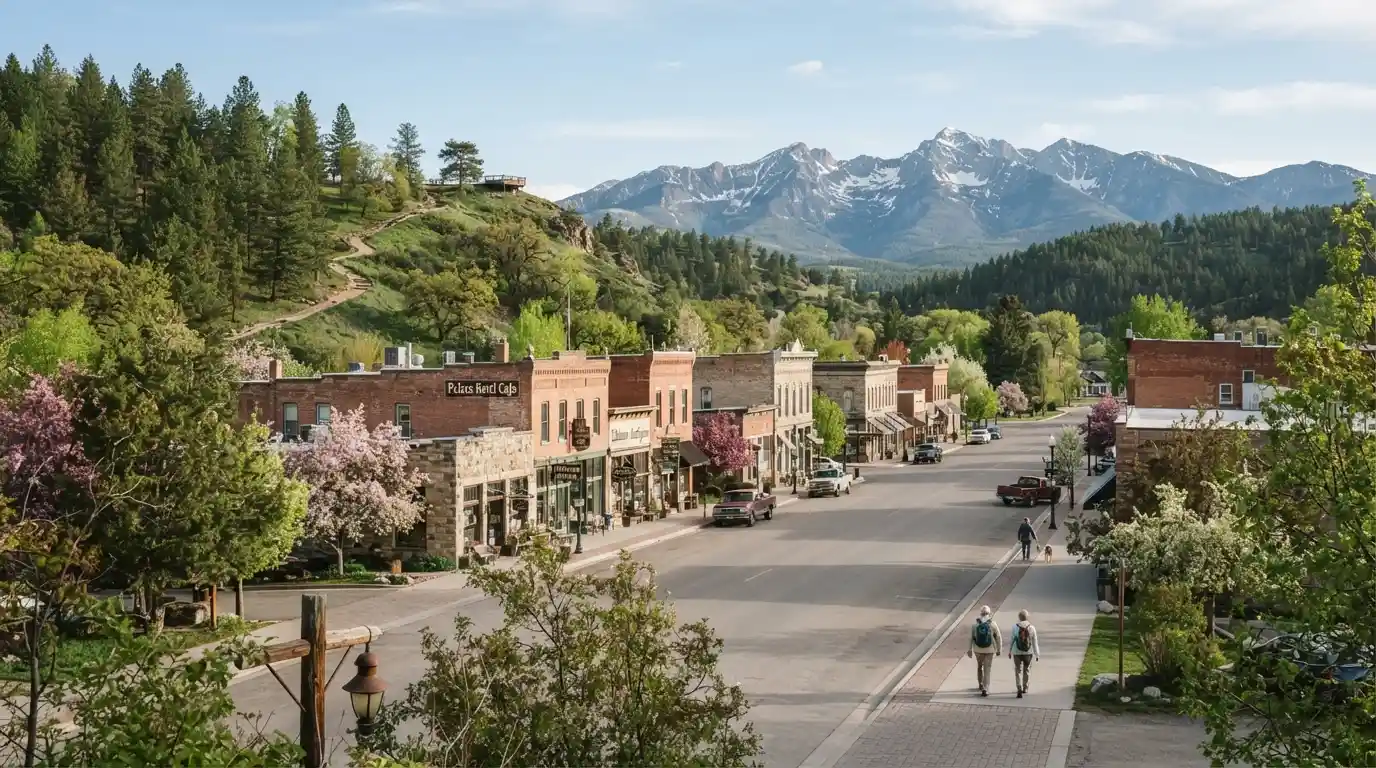
The best quiet spring break destinations combine natural beauty with enough things to do without requiring an exhausting itinerary. You might spend one day hiking through mountains, another exploring a historic small town, and another simply enjoying a scenic drive or quiet waterfront.
From mountain communities and coastal escapes to desert landscapes and small towns, these are some of the least crowded places to visit during spring break for travelers who want nature, fresh air, and a calmer vacation experience.
What Makes a Good Quiet Spring Break Destination?
A destination does not have to be completely unknown to feel peaceful. The key is choosing places where visitors can spread out, explore at their own pace, and avoid the concentrated party atmosphere found in some traditional spring break hotspots.
Look for destinations with several of these characteristics:
- Access to hiking trails, forests, mountains, rivers, or beaches
- A small-town or relaxed local atmosphere
- Outdoor activities that do not depend on large crowds
- Scenic drives and viewpoints
- Independent restaurants, cafes, shops, and local attractions
- Multiple nearby attractions so visitors can spread out
- A location that is less associated with traditional spring break parties
For a broader look at destinations across the region, travelers can also explore these best places to visit in the Eastern U.S. when comparing different spring travel options.
1. Asheville, North Carolina
Asheville is an excellent choice for travelers who want mountain scenery, independent restaurants, arts, and outdoor activities without building their trip around a major spring break beach scene.
The surrounding Blue Ridge Mountains provide countless opportunities for scenic drives, hiking, photography, waterfalls, and quiet overlooks. Instead of spending an entire day at one crowded attraction, visitors can create a flexible itinerary that moves between small communities and natural areas.
Downtown Asheville also makes the destination appealing for travelers who want a balance between nature and culture. Galleries, local shops, restaurants, breweries, and historic architecture provide plenty to do after a morning outdoors.
If you are planning an overnight stay, our guide to the best places to stay when visiting Asheville, NC can help you think about the destination from a lodging perspective.
2. Big Bend Country, Texas
For travelers who want dramatic scenery and plenty of open space, the Big Bend region of Texas is one of the strongest alternatives to traditional spring break destinations.
The landscape feels completely different from the typical beach vacation. Desert plains, rugged mountains, river canyons, dark skies, and expansive horizons create a setting where solitude becomes part of the experience.
Spring can be particularly attractive for outdoor travelers because temperatures can be more comfortable than during the hottest parts of the year. Hiking, scenic drives, wildlife watching, camping, and stargazing can all become part of a slower itinerary.
The important thing to remember is that remote destinations require planning. Distances are substantial, services can be limited, and visitors should prepare carefully for changing weather and outdoor conditions.
3. North Padre Island, Texas
If you want a coastal spring break without committing to one of the country’s most heavily visited party beaches, North Padre Island can provide a more relaxed alternative.
The island offers long stretches of shoreline, coastal scenery, wildlife opportunities, and plenty of room for travelers who prefer walking, photography, fishing, or simply listening to the waves.
It can be especially appealing for couples and families who want beach time without making nightlife the center of the vacation.
Travelers interested in exploring more of the Texas coast can use our guide to places to visit in North Padre Island as another planning resource.
4. The Oregon Coast Around Eugene and Beyond
Oregon is a strong choice for travelers who prefer forests, waterfalls, mountains, rivers, and coastal scenery over traditional spring break entertainment.
The area around Eugene provides an easy base for exploring natural landscapes while still having access to restaurants, cultural attractions, and city conveniences. The wider region can also connect travelers with quieter communities and scenic drives.
Spring brings changing weather, fresh greenery, and flowing waterways, making the Pacific Northwest particularly attractive to photographers and outdoor enthusiasts.
For more local travel inspiration, see these top places to visit in Eugene, Oregon.
5. The Tennessee Mountains and Smaller Towns
Tennessee can be a smart spring break choice when you move away from its busiest tourist corridors and focus on mountains, small towns, scenic roads, and outdoor recreation.
The state has an appealing mix of forests, rivers, waterfalls, rolling hills, and mountain communities. Travelers can enjoy hiking in the morning, explore a small downtown in the afternoon, and finish the day at a quiet restaurant or cabin.
Spring also provides an opportunity to experience Tennessee before the peak summer travel season arrives. Weather can vary considerably, so flexible planning is useful.
For seasonal trip ideas, compare our guides to places to visit in Tennessee in summer and the best places to visit in Tennessee in fall.
6. The Ozarks and Quiet Missouri Towns
The Ozarks are a strong option for travelers searching for natural scenery without the intensity of a major spring break destination.
Forested hills, clear streams, caves, waterfalls, and small communities give the region a distinctly outdoorsy character. Visitors can spend their days hiking, fishing, kayaking, photographing landscapes, or exploring local roads.
The advantage of choosing a rural or small-town base is that your vacation does not need to revolve around a single crowded attraction. You can simply build each day around a different section of the landscape.
7. The Eastern Shore and Smaller Coastal Communities
Not every coastal spring break has to happen in a famous resort city. Smaller communities along the Eastern Seaboard can offer beaches, marshes, historic districts, seafood, and peaceful waterfront scenery.
The broader Eastern U.S. has an especially wide range of spring travel possibilities, from coastal communities to mountain towns and historic destinations.
Before choosing one location, compare several regions using this guide to the best places to visit in the Eastern U.S..
8. Wisconsin’s Smaller Towns and Natural Areas
Wisconsin may not be the first destination that comes to mind when planning spring break, which is exactly why it can work well for travelers who want something different.
The state combines forests, lakes, small towns, scenic roads, local food, and outdoor recreation. Depending on the timing of your trip, spring conditions can range from early-season chill to warmer days suitable for longer outdoor excursions.
Travelers who enjoy slower trips can choose a small-town base and spend several days exploring nearby parks, waterfronts, trails, and local communities.
For additional planning inspiration, explore the best places to visit in Wisconsin.
9. The Appalachian Mountain Region
The Appalachian region is ideal for travelers who want scenery without the pressure of a packed vacation schedule.
Mountain roads, wooded trails, waterfalls, overlooks, cabins, rivers, and small towns create an environment where the journey can be just as enjoyable as the destination.
Spring is particularly appealing because the landscape begins transitioning from winter into a greener season. Depending on elevation and location, visitors may encounter early blooms, flowing waterfalls, cool mountain air, and changing foliage.
If mountain scenery is your main priority, explore this broader guide to the best places to visit in the mountains.
10. Little Rock and Central Arkansas
Little Rock can work well for travelers who want access to city amenities while remaining close to Arkansas’s natural scenery.
The city provides museums, restaurants, cultural attractions, and historic sites, while the surrounding region offers opportunities for hiking, scenic drives, and outdoor exploration.
This combination makes Central Arkansas useful for travelers who do not want a completely remote vacation but still want to spend significant time outdoors.
See our guide to Little Rock, Arkansas attractions and places to visit when building a flexible itinerary.
11. Colorado Mountain Towns Away From the Biggest Resorts
Colorado is famous for skiing, hiking, and mountain scenery, but travelers looking for a quieter spring trip should consider smaller communities rather than focusing exclusively on the state’s most famous resort destinations.
Mountain towns can provide access to trails, scenic overlooks, rivers, forests, and changing seasonal landscapes. Spring conditions can be unpredictable at higher elevations, so checking local conditions before setting out is important.
For travelers coming through the Denver area, it is also useful to consider surrounding destinations rather than staying entirely within the city.
Our guide to top places to visit near Denver, Colorado can help expand your options.
12. Northern New England
Northern New England can feel remarkably peaceful during the transition between winter and summer. Small towns, mountain landscapes, covered bridges, forests, lakes, and local communities provide plenty of opportunities for a slower trip.
Spring conditions vary significantly across the region. Some areas may still feel wintry while lower elevations begin showing signs of the new season. That variability can be an advantage for travelers who enjoy scenic drives and changing landscapes rather than a predictable beach vacation.
If you are considering a colder spring escape, our guide to New England’s best places to visit offers additional regional ideas.
13. Massachusetts Small Towns
Massachusetts offers more than Boston. Smaller communities throughout the state can provide historic architecture, coastal scenery, walking trails, local restaurants, and a slower pace.
Travelers who choose smaller destinations instead of major attractions can often build a spring itinerary around local experiences. A morning walk, a historic district, a quiet lunch, and an afternoon drive can create a more relaxed vacation than attempting to visit a long list of crowded attractions.
Seasonal travelers can also compare the state’s fall destinations using our guide to the best places to visit in Massachusetts in fall.
14. Upstate New York
Upstate New York is another strong choice for travelers who want nature, small towns, lakes, forests, and scenic roads.
Instead of focusing on New York City, visitors can head toward quieter communities and natural areas where the pace is considerably slower.
Spring can be a transitional season in the region, which means travelers should prepare for variable temperatures and changing trail conditions. The reward is the opportunity to experience waterfalls, forests, small communities, and scenic landscapes before the busiest summer period.
For seasonal comparison, see our guide to Upstate New York places to visit in fall and our guide to places to visit in New York State during winter.
15. Michigan’s Smaller Lakeside Communities
Michigan offers thousands of miles of shoreline and a large collection of small communities that can make interesting spring road-trip destinations.
The Great Lakes provide a dramatic backdrop, while inland forests, trails, rivers, and historic towns create opportunities for outdoor exploration.
If you want to explore Michigan beyond its major cities, consider destinations in the northern and western portions of the state. The Thumb of Michigan is one example of a region where coastal scenery and small communities can shape a slower itinerary.
16. Oregon’s Willamette Valley
The Willamette Valley is a good fit for travelers who want scenic countryside, small communities, food, wine-country landscapes, and a relaxed road-trip experience.
Spring brings fresh greenery and changing landscapes, making the region attractive for scenic drives and outdoor exploration. Travelers can combine quiet countryside stops with restaurants, local businesses, and nearby natural areas.
Explore these places to visit in Willamette Valley, Oregon when building your route.
17. Marco Island and Southwest Florida
Travelers who want warm weather but do not necessarily want a major party destination can consider quieter parts of Southwest Florida.
Marco Island offers beaches, waterfront scenery, wildlife, boating opportunities, and a more relaxed vacation style. It can be a useful option for travelers who want sunshine and coastal scenery while keeping the itinerary focused on nature and relaxation.
Before booking, remember that spring break demand can still affect prices and availability in popular Florida destinations. Choosing less central lodging areas or traveling outside the busiest school-break dates can help create a calmer experience.
For more ideas, see our guide to places to visit in Marco Island, Florida.
18. Sacramento and Northern California
Northern California provides another opportunity to combine city conveniences with access to nature.
Sacramento can serve as a practical base for exploring surrounding landscapes, historic communities, rivers, agricultural areas, and regional outdoor attractions. Travelers who prefer road trips can use the city as a starting point rather than spending the entire vacation in a dense urban environment.
If you are planning a California trip during a cooler season, our guide to places to visit near Sacramento in winter provides additional regional inspiration.
19. Oklahoma’s Scenic Areas and Small Towns
Oklahoma is another under-the-radar choice for travelers who want open landscapes and a less conventional spring break.
The state includes lakes, rolling hills, forests, prairie landscapes, small communities, and outdoor recreation areas. Travelers can combine nature stops with local restaurants, museums, historic sites, and scenic drives.
For a broader overview of the state’s travel possibilities, explore these top places to visit in Oklahoma.
20. The Pacific Northwest’s Smaller Coastal Towns
If your definition of spring break includes dramatic coastlines, cool weather, quiet beaches, and scenic walks, smaller Pacific Northwest coastal communities deserve consideration.
The region’s coastline offers rocky viewpoints, sandy beaches, forests, tide pools, and distinctive small towns. Spring weather can be cloudy or rainy, but that does not necessarily reduce the appeal for travelers who prefer atmospheric landscapes to guaranteed sunshine.
Those who want to broaden their western itinerary can also compare these options with the best places to visit on the West Coast of the USA.
How to Avoid Crowds During Spring Break
Choosing the right destination is only part of the equation. Even a relatively quiet town can become busy during the exact week when schools and universities are on break.
Travel Outside the Peak Week When Possible
Spring break schedules vary by school district, college, and region. If your schedule is flexible, traveling before or after the busiest local break periods can make a significant difference.
Choose Weekdays Over Weekends
A quiet destination can become noticeably busier on Friday and Saturday. Adding weekday nights to your itinerary can make restaurants, trails, scenic viewpoints, and local attractions easier to enjoy.
Stay Outside the Main Tourist Center
You do not always need to stay directly in the most famous town or resort area. A nearby smaller community can provide better access to nature while still keeping major attractions within driving distance.
Start Outdoor Activities Early
Early mornings are often one of the easiest ways to experience popular natural attractions with fewer people. They also provide softer light for photography and cooler conditions for hiking.
Build a Flexible Itinerary
A quiet spring break should not feel like a race. Choose a few major activities and leave room for unexpected stops, local restaurants, scenic roads, and short hikes.
How to Choose the Right Quiet Spring Break Destination
The best destination depends on the kind of scenery and weather you prefer.
- For mountains: Choose Asheville, the Appalachian region, Colorado mountain towns, or northern New England.
- For beaches: Consider North Padre Island, Marco Island, or smaller coastal communities.
- For desert landscapes: Big Bend Country provides wide-open scenery and outdoor adventure.
- For forests and waterfalls: Look toward the Ozarks, Tennessee, Oregon, and the Pacific Northwest.
- For small-town charm: Explore Wisconsin, Upstate New York, Michigan, Massachusetts, and Oklahoma.
- For road trips: Oregon, Northern California, Appalachia, and the Great Lakes region offer plenty of route-building opportunities.
What to Pack for a Quiet Spring Break
Spring weather can change quickly, particularly in mountain and northern destinations. A versatile packing list is therefore more useful than packing exclusively for warm weather.
- Lightweight layers
- Comfortable walking or hiking shoes
- A lightweight rain jacket
- Daypack for outdoor excursions
- Reusable water bottle
- Sun protection
- Portable phone charger
- Basic first-aid supplies
- Warm layer for cool mornings and evenings
If your trip includes remote hiking or desert areas, research local conditions and prepare appropriately rather than relying on the same packing list you would use for a city vacation.
Final Thoughts
The best spring break does not necessarily happen at the most famous destination. For many travelers, a better vacation means having room to breathe, scenic places to explore, comfortable local restaurants, quiet mornings, and enough flexibility to enjoy the trip without constantly checking the clock.
Destinations such as Asheville, Big Bend, North Padre Island, the Ozarks, Tennessee’s mountain communities, Oregon, Upstate New York, Wisconsin, Michigan, and smaller New England towns demonstrate how varied a peaceful American spring break can be.
When choosing your destination, focus less on the traditional spring break checklist and more on what you actually want from the trip. If that means hiking instead of partying, scenic drives instead of crowded attractions, and small-town charm instead of packed resorts, these quieter destinations can provide a much more rewarding spring escape.



