
For travelers who see a vacation as an opportunity for exceptional privacy, rare experiences, and world-class service, the question “what’s the most expensive place to visit?” has no single simple answer. Travel costs can vary dramatically depending on accommodation, transportation, dining, season, and the level of exclusivity involved.
This guide explores the world’s most expensive destinations, explains why luxury travel costs so much, and shows how travelers can distinguish between a destination that is expensive overall and one that offers exceptionally expensive luxury experiences.
What Is the Most Expensive Place to Visit in 2026?
If “most expensive” means the highest overall average travel cost, Greenland currently stands out as the leading destination in Squaremouth’s 2026 expense index, with an average reported daily trip cost of about $1,171. Antarctica has an even higher reported daily trip cost in the same analysis, but Greenland ranks first overall because the index combines several different cost categories.
That distinction matters. A destination can have extremely expensive hotels without being the most expensive destination overall. French Polynesia, for example, has very high accommodation costs, while Antarctica becomes expensive largely because of flights, expedition logistics, and specialized transportation.
For travelers comparing global destinations, our guides to the top 25 places in the world to visit and top places to visit around the world provide broader destination inspiration beyond the luxury category.
The 10 Most Expensive Places to Visit
The following destinations are among the strongest candidates when measuring overall travel expenses, premium accommodation, remoteness, and luxury experiences.
1. Greenland
Greenland is currently one of the clearest answers to the question of what’s the most expensive place to visit. Its remote geography creates significant transportation and supply costs, while travelers often need specialized flights, local transfers, guides, and carefully planned excursions.
Squaremouth’s 2026 data places Greenland at the top of its expense index, with an average daily trip cost of approximately $1,171 and average flight costs of about $1,357. Car rental costs are also high compared with many conventional destinations.
The appeal is not traditional resort luxury alone. Greenland offers dramatic fjords, glaciers, Arctic landscapes, and experiences that are difficult to reproduce anywhere else.
2. British Virgin Islands
The British Virgin Islands combine tropical scenery with high-end villas, private yachts, luxury resorts, and premium island transportation. According to Squaremouth’s 2026 data, the destination has an average daily trip cost of roughly $925, while the average weeknight hotel cost is particularly high.
Luxury travelers can increase costs substantially by choosing private villas, yacht charters, premium dining, and exclusive island experiences.
3. French Polynesia
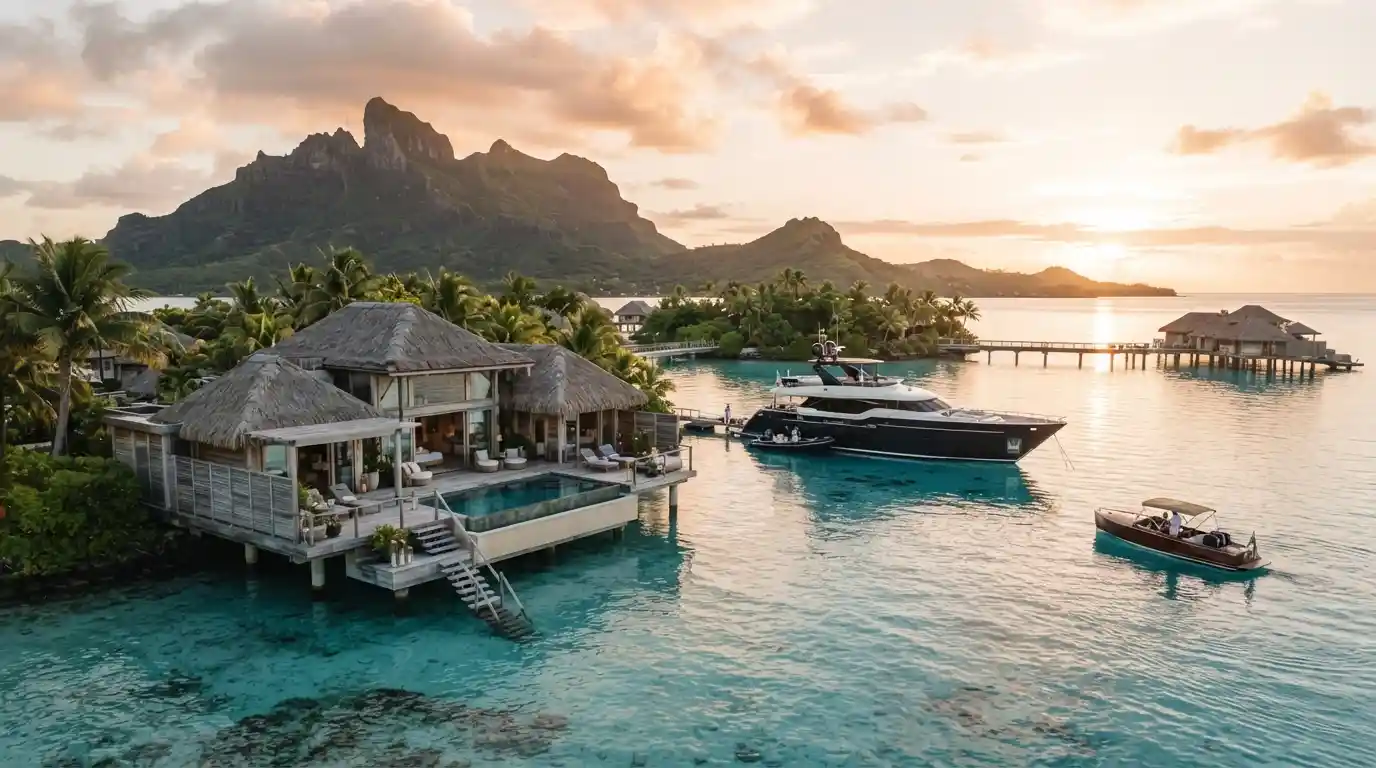
French Polynesia is home to some of the world’s most recognizable luxury-island experiences, including Bora Bora and Tahiti. Overwater villas, private transfers, lagoon excursions, fine dining, and premium resorts make the destination particularly expensive.
Squaremouth’s 2026 figures place French Polynesia third overall, with an average daily trip cost of about $756 and average weeknight hotel costs exceeding $1,300.
Travelers researching tropical luxury can also compare this style of vacation with the best places to visit in Bali and family-friendly luxury options in Puerto Rico.
4. Antarctica
Antarctica demonstrates why the most expensive destination is not necessarily the one with the most expensive hotel room. Getting there requires specialized expedition travel, usually through South America, while luxury cruises can include high-end suites, expedition guides, helicopters, and other premium experiences.
Squaremouth reports an average daily trip cost of approximately $1,511 for Antarctica, making it the highest daily figure in its 2026 dataset. Its overall index ranking is lower than Greenland because the methodology considers multiple cost categories.
For travelers interested in winter and extreme landscapes, it is also useful to compare Antarctica with destinations covered in our guides to the best places to visit in Europe in winter and New England in winter.
5. Maldives
The Maldives remains one of the world’s best-known luxury destinations. Private overwater villas, secluded islands, seaplane transfers, premium dining, private excursions, and resort-based experiences can push costs far beyond those of a conventional beach vacation.
Squaremouth places the Maldives fifth in its 2026 expense index, with an average daily trip cost of around $1,072 and average weeknight hotel costs of approximately $1,249.
The Maldives is particularly expensive because the resort itself is often the destination. Travelers pay not only for accommodation but also for transportation, dining, activities, and the infrastructure required to operate isolated island properties.
6. Switzerland
Switzerland is one of the few European destinations appearing near the top of the 2026 expensive-destination rankings. High accommodation prices, dining costs, transportation, and premium alpine experiences all contribute to the country’s overall expense.
Luxury travelers can take the cost much higher with private chalets, ski instructors, helicopter transfers, Michelin-starred dining, and premium wellness experiences.
Travelers planning a broader European itinerary may also explore coastal Spain, the Algarve in Portugal, and Greece travel destinations for different luxury price points.
7. Zimbabwe
Zimbabwe represents another category of expensive travel: luxury safari tourism. Premium safari camps, private guides, wildlife experiences, internal transfers, and remote lodge logistics can make an African safari significantly more expensive than a conventional city break.
The cost is often linked to exclusivity rather than simply the price of a hotel room. Smaller camps, private vehicles, expert guides, and remote locations create an experience that is difficult to scale like ordinary tourism.
8. Turks and Caicos Islands
Turks and Caicos is known for pristine beaches, upscale resorts, private villas, yacht experiences, and premium Caribbean travel. Hotel prices can be particularly high during peak periods.
The destination illustrates an important luxury-travel principle: a relatively small island market can become expensive when demand for premium accommodation exceeds the available supply.
9. Botswana
Botswana is another major luxury-safari destination. High-end camps in areas such as the Okavango Delta often emphasize low-density tourism, personalized guiding, conservation, and intimate wildlife encounters.
These experiences can carry substantial prices because operating a luxury camp in a remote wilderness area involves transportation, staff, food supplies, energy systems, conservation programs, and specialized logistics.
10. Anguilla and Saint Lucia
Anguilla and Saint Lucia also appear among the expensive destinations identified in current 2026 travel-cost research. Both benefit from premium Caribbean accommodation, resort experiences, scenic environments, and demand from travelers seeking upscale island vacations.
For travelers comparing Caribbean options, our guide to safe places to visit in Mexico can also help when considering a wider range of warm-weather destinations.
Why Are the World’s Most Expensive Destinations So Expensive?
Extreme travel prices are rarely caused by a single factor. Instead, several cost drivers combine to create exceptionally expensive vacations.
Remote Geography
Remote destinations require more expensive transportation. Flights may be limited, supplies may need to travel long distances, and local infrastructure can be expensive to maintain.
This is particularly clear in Greenland and Antarctica, where geographical isolation has a direct effect on travel logistics.
Limited Accommodation
Small islands and remote wilderness areas often have limited hotel capacity. When demand is strong and supply is restricted, premium properties can command extremely high rates.
Luxury Service Ratios
Ultra-luxury resorts may offer private butlers, personal chefs, dedicated concierge teams, private transfers, and highly customized experiences. The cost of maintaining these service levels becomes part of the room rate.
Exclusive Transportation
Private jets, helicopters, yachts, seaplanes, charter boats, and specialized expedition vessels can transform an expensive vacation into an extraordinary one.
Seasonal Demand
Prices can rise dramatically during major holiday periods, ski seasons, summer peaks, or special events. A destination that is expensive during one month may be considerably more accessible during another.
Is Bora Bora Still One of the Most Expensive Places to Visit?
Yes, Bora Bora remains one of the world’s most recognizable luxury destinations, especially when measured by high-end resort experiences rather than average destination-wide travel costs.
Private overwater villas, premium resorts, lagoon excursions, yacht charters, private transfers, and fine dining can create extremely high total costs. However, the distinction between Bora Bora’s luxury pricing and the broader cost of visiting French Polynesia is important.
For travelers seeking other scenic island experiences, our guides to Palawan, Northland, New Zealand, and Srinagar and Kashmir offer alternatives at different price levels.
What Is the Most Expensive City for Luxury Travel?
The answer changes depending on what is being measured. A destination ranking can focus on vacation costs, while a luxury-spending index may examine the price of hotels, restaurants, transportation, luxury goods, and other high-end purchases.
New York, London, Singapore, Zurich, Monaco, and other global luxury hubs can therefore appear expensive under different methodologies.
For travelers interested in major urban destinations, BizHorizone also covers the best places in New York, interesting places to visit in London, and Salt Lake City.
How to Plan an Expensive Luxury Vacation
Luxury travel requires more planning than simply choosing a five-star hotel. The most expensive destinations often have limited availability, complex transfers, seasonal price changes, and strict booking requirements.
1. Define Your Luxury Priorities
Decide whether your priority is privacy, accommodation, food, adventure, transportation, wellness, or access to rare experiences. This prevents you from spending heavily on features you do not actually value.
2. Compare the Total Trip Cost
Do not compare destinations using hotel prices alone. Add flights, transfers, meals, activities, insurance, taxes, and transportation. A destination with a $1,000 hotel room may ultimately cost less than a remote destination with a $600 room and expensive transfers.
3. Consider Shoulder Seasons
Traveling immediately before or after peak season can sometimes provide better availability and lower prices without sacrificing the core experience.
4. Book Specialized Experiences Early
Luxury cruises, private island stays, safari camps, and expedition trips may have limited capacity. Early planning is particularly important for travelers with fixed dates.
5. Protect High-Value Trips
When a vacation involves significant prepaid and non-refundable expenses, travel insurance deserves careful consideration. Squaremouth’s 2026 research notes that higher trip costs mean travelers have more money at risk when cancellations or interruptions occur.
Expensive Does Not Always Mean Better
The world’s most expensive destinations can deliver extraordinary experiences, but price alone does not determine travel quality. Some travelers value privacy and exclusivity, while others prefer culture, food, scenery, or authentic local experiences.
For example, travelers looking for beautiful destinations without automatically choosing the world’s most expensive resorts can explore unique places in North America, natural destinations in Ontario, or top places to visit in Oklahoma.
Frequently Asked Questions
What is the most expensive place to visit in 2026?
Based on Squaremouth’s 2026 expense index, Greenland ranks as the most expensive destination overall. Antarctica has a higher average reported daily trip cost, demonstrating why different methodologies can produce different answers.
Is Antarctica more expensive than the Maldives?
It can be. Antarctica has very high transportation and expedition costs, while the Maldives is especially expensive because of luxury resorts, island transfers, and premium accommodation.
Why is Greenland so expensive to visit?
Greenland’s remoteness, limited transportation infrastructure, high supply costs, and specialized travel requirements all contribute to its high overall travel cost.
What is the most expensive luxury vacation?
There is no universal answer. Private-island buyouts, superyacht charters, private-jet itineraries, luxury polar expeditions, and bespoke safari journeys can all reach exceptionally high prices depending on the duration and level of customization.
Can regular travelers visit expensive destinations?
Yes. A destination can be expensive overall while still offering different accommodation categories. Travelers can often reduce costs by choosing simpler lodging, traveling outside peak periods, limiting private transfers, and planning activities selectively.
Final Thoughts
So, what’s the most expensive place to visit? In 2026, Greenland currently leads Squaremouth’s overall destination expense index, while Antarctica records an even higher average daily trip cost. French Polynesia, the Maldives, the British Virgin Islands, Switzerland, and luxury safari destinations also rank among the world’s costliest travel experiences.
The bigger lesson is that expensive travel is usually driven by a combination of isolation, limited supply, specialized transportation, premium accommodation, and personalized service. Whether you choose an Arctic expedition, a private island, an overwater villa, or an exclusive African safari, understanding the complete cost structure is the key to planning a luxury trip intelligently.
Luxury is ultimately about more than a price tag. For many travelers, the real value lies in experiences that are rare, difficult to access, and impossible to replicate elsewhere.