
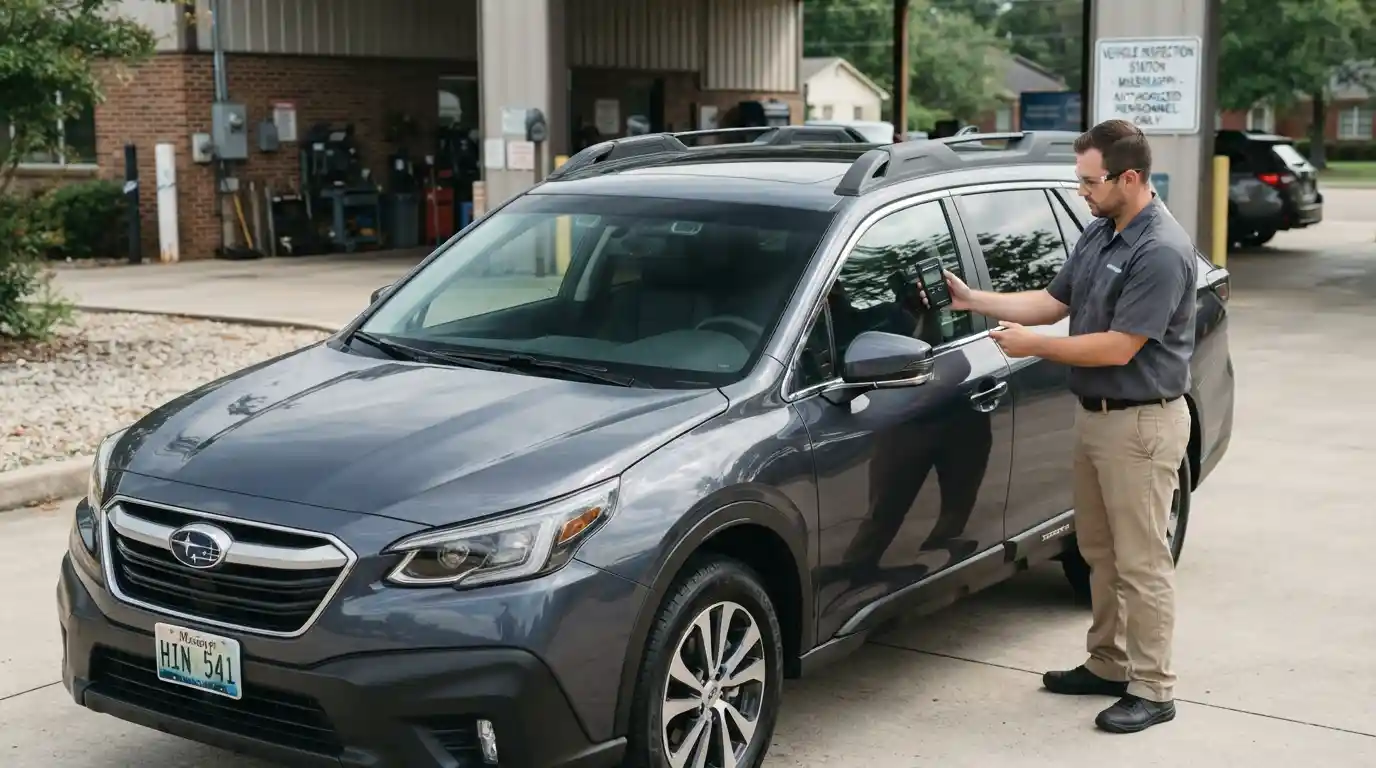
Mississippi law also provides exceptions for certain factory-installed glazing, particular vehicle types, and drivers or passengers who qualify for a medical exemption. Because tint darkness is measured by visible light transmittance (VLT), choosing film based only on how dark it looks can lead to compliance problems.
This guide explains the Mississippi window tint rules, the 28% light-transmittance requirement, windshield restrictions, exemptions, inspection labels, medical waivers, and practical considerations for choosing tint without creating unnecessary legal or inspection issues.
What Is the Legal Window Tint in Mississippi?
Under Mississippi Code Section 63-7-59, a vehicle generally cannot be driven on Mississippi public roads with tinted or darkened windows unless the windshield carries the required certification label showing that the vehicle’s windows have a light transmittance of 28% or more, or the vehicle qualifies under a medical exemption.
In practical terms, 28% VLT means at least 28% of visible light must pass through the applicable window. A higher VLT percentage means a lighter tint, while a lower percentage means a darker tint.
This distinction matters because tint percentages can be confusing. A film advertised as 20% VLT is darker than a 35% VLT film. Therefore, consumers should not assume that a smaller percentage means a more permissive legal limit.
Before choosing a film, it is useful to understand the difference between aftermarket tint and factory-installed glass. Mississippi law contains specific provisions addressing both.
Mississippi Window Tint Law at a Glance
| Requirement | Mississippi Rule |
|---|---|
| General light transmittance requirement | 28% or more |
| Windshield aftermarket tint | Generally prohibited except for the permitted uppermost sun-shield area |
| Aftermarket tinted windows | Must comply with applicable light-transmittance requirements |
| Compliance label | Required for vehicles with qualifying aftermarket tint |
| Medical exemption | Available for qualifying medical conditions |
| Tint inspection test fee | $5 when the required test is actually performed |
The controlling statute is Mississippi Code Section 63-7-59. The Mississippi Department of Public Safety also operates a Tint Compliance Program and provides information about authorized tint inspection stations.
How Does VLT Work?
VLT stands for visible light transmittance. It describes the percentage of visible light that passes through the glass and tint combination.
- 70% VLT: relatively light
- 50% VLT: moderately shaded
- 35% VLT: noticeably darker
- 28% VLT: near the general Mississippi minimum for applicable windows
- 20% VLT: darker than the general 28% requirement
- 5% VLT: extremely dark “limo-style” tint
The actual result can also depend on the original glass. When tint film is installed over factory glass, the final VLT is determined by the combination of the glass and film rather than the film’s advertised percentage alone.
That is one reason professional measurement is preferable to relying solely on the number printed on a tint-film package.
Is 20% Tint Legal in Mississippi?
For windows subject to Mississippi’s general 28% requirement, a final light transmittance of 20% would be below the required threshold. Therefore, drivers should not assume that commonly sold 20% film is automatically legal in Mississippi.
The important measurement is the light transmittance of the completed window, not simply the advertised VLT of the film. Factory glass can already reduce the amount of light entering the vehicle, so combining it with aftermarket film can produce a darker final result than expected.
If you are considering a darker film for appearance or privacy, have the completed window measured by an authorized tint inspection station before assuming that it complies.
What About the Windshield?
Mississippi treats the windshield differently from ordinary side and rear windows. The law generally prohibits tinted film, glazing material, or darkening material on the windshield, with an exception for material designed to provide or replace a sun shield in the uppermost area permitted under federal law.
This means installing a dark tint across the full windshield is not the same as adding a permitted upper windshield sun strip.
Drivers looking for additional heat or glare protection should therefore discuss windshield-safe options with a qualified installer rather than applying a conventional dark film across the entire windshield.
Are SUVs and Pickup Trucks Treated Differently?
Yes. Mississippi law contains an important exception involving windows behind the front two side windows of certain vehicles.
For qualifying pickup trucks, vans, motor homes, recreational vehicles, sport utility vehicles, and multipurpose vehicles, the law provides an exception for windows behind the front two side windows, including the rear window, when the tint or darkening meets the applicable federal requirements for that vehicle and window.
This is one reason why applying a simple “28% on every window” rule to every vehicle can be misleading. Vehicle type, window position, and whether the glass was installed before or after factory delivery can affect how the law applies.
If you own an SUV or pickup and want very dark rear privacy glass, confirm the specific vehicle and glass configuration with an authorized Mississippi tint inspection station before installation.
Factory Tint vs. Aftermarket Window Film
Mississippi’s law distinguishes between certain glazing installed before factory delivery and aftermarket tint installed later.
The statute provides an exception for qualifying vehicle windows tinted or darkened before factory delivery when the installation is permitted by applicable federal law or regulations. This can be particularly relevant when buying a newer SUV, truck, van, or crossover that already has privacy glass.
Aftermarket film is different because it is added after the vehicle leaves the factory. The resulting window must comply with the applicable Mississippi requirements, and qualifying aftermarket tint must go through the required inspection and labeling process.
Understanding this distinction can prevent a common mistake: assuming that because a new vehicle was sold with dark rear glass, any additional film placed over that glass will automatically remain legal.
Mississippi Tint Inspection and Compliance Labels
Mississippi has a formal tint compliance system. The Department of Public Safety authorizes official tint inspection stations to test vehicle windows and issue the required compliance labels.
For qualifying aftermarket tint, the inspection station measures light transmittance using an approved testing method. When the vehicle complies, a label is affixed to the lower-left corner of the windshield. The label is designed to be visible from outside the vehicle and indicates compliance with Mississippi’s requirements.
The statute specifies a $5 fee for the light-transmittance test when the test is actually performed. The law states that part of this amount is retained by the inspection station and the remainder is remitted to the Department of Public Safety.
The Mississippi Department of Public Safety maintains a dedicated Tint Compliance Division that provides information about the program and authorized inspection stations.
Why the Compliance Label Matters
The compliance label is more than a decorative sticker. Under Mississippi law, the label indicates that the tint inspection station has certified that the applicable vehicle windows meet the required light-transmittance restrictions.
For that reason, vehicle owners should avoid removing, altering, reproducing, or improperly using official labels. Mississippi law specifically addresses unauthorized alteration or reproduction of labels and medical exemption certificates.
When buying a used vehicle with aftermarket tint, check whether the vehicle has the required compliance label rather than assuming that the previous owner had the tint legally inspected.
Can You Get a Medical Tint Exemption in Mississippi?
Mississippi provides a medical exemption for qualifying individuals who have a physical condition or disease that is seriously aggravated by minimum exposure to sunlight.
The exemption is not simply a permission slip from a tint shop. The law requires documentation involving a physician licensed to practice medicine in Mississippi. The applicant must provide an affidavit describing the qualifying condition, signed and attested by a physician, along with the required proof concerning the vehicle.
The Mississippi Department of Public Safety describes the process as a tint waiver. The waiver certificate is issued without charge through the county tax collector’s office when the applicant meets the applicable requirements, and the certificate must be prominently displayed on the vehicle dashboard.
Because medical exemptions involve specific documentation, anyone considering one should use the current forms and instructions provided by Mississippi authorities rather than relying on an older online template.
What Vehicles Are Exempt?
Mississippi law identifies several categories of vehicles that are not subject to the general prohibition in the same way as ordinary passenger vehicles. These include certain school buses, public transportation buses, qualifying nonprofit vehicles, funeral home service vehicles, limousines, and government-owned law-enforcement or fire-department vehicles.
The statute also contains specific provisions for qualifying windows behind the front two side windows of certain larger vehicles and for certain factory-installed glazing.
Because exemptions depend on the precise vehicle category and circumstances, it is better to verify eligibility under the statute than to assume that a vehicle qualifies simply because it is used commercially.
What Are the Penalties for Illegal Window Tint in Mississippi?
Mississippi law makes violations of Section 63-7-59 punishable under the state’s applicable motor-vehicle equipment penalty provisions. The statute also establishes specific criminal penalties for certain conduct involving the installation of noncompliant tint and the alteration, reproduction, or unauthorized use of compliance labels or medical exemption certificates.
For violations covered by subsections (7), (8), or (9), the statute provides for a fine of up to $1,000, imprisonment in the county jail for up to three months, or both.
Because penalties can depend on the particular subsection violated, vehicle owners should not rely on a generic online claim that every tint violation carries the same fine. The safest approach is to bring the vehicle into compliance and obtain the appropriate inspection documentation.
How to Choose Legal Window Tint in Mississippi
Choosing tint is about more than selecting the darkest film available. A good installation should balance legal compliance, heat reduction, glare control, privacy, appearance, and long-term durability.
1. Start With the Vehicle’s Existing Glass
Ask the installer to measure the existing glass before selecting the film. Factory privacy glass may already have a relatively low VLT, particularly on the rear windows of SUVs and crossovers.
2. Choose the Final VLT, Not Just the Film Number
The film’s advertised VLT does not necessarily equal the final VLT of the finished window. The original glass and film work together, so professional measurement is the safer approach.
3. Ask Whether the Installer Handles Mississippi Compliance
A professional installer should understand Mississippi’s inspection and labeling requirements. If aftermarket tint is being installed, ask how the vehicle will be tested and documented after the work is complete.
4. Be Careful With the Windshield
Do not assume that a windshield film used legally in another state is automatically permitted across the full windshield in Mississippi. The state’s windshield restriction is specific, so discuss any sun strip or windshield treatment with a qualified professional.
5. Keep Documentation
Keep receipts, inspection information, and medical exemption documentation when applicable. Good records can make future ownership, inspection, or compliance questions easier to resolve.
Benefits of Properly Selected Window Tint
Legal tint can provide practical benefits beyond appearance. Depending on the film and vehicle, quality window film may help reduce glare, improve cabin comfort, increase privacy, and reduce the amount of solar heat entering the vehicle.
These benefits can complement broader vehicle-maintenance decisions. For example, drivers researching modern transportation technologies may also be interested in how EVs are shaping urban commutes and how vehicle technology is changing everyday driving.
Likewise, regular vehicle maintenance remains important regardless of whether a vehicle has conventional glass, factory privacy glass, or aftermarket tint. Related automotive resources on BizHorizone include European auto service, vehicle electrical services, and professional auto service.
Window Tint and Overall Vehicle Care
Tint should be considered part of a vehicle’s broader care routine rather than an isolated cosmetic modification. Keeping the glass clean, maintaining seals, and addressing electrical or mechanical issues promptly can all contribute to a better ownership experience.
For additional vehicle-care reading, see vehicle care and auto service and reliable car care. Drivers interested in technology-related vehicle systems can also explore the site’s coverage of automated parking systems.
Common Mississippi Window Tint Mistakes
Assuming 35% Film Is Always the Final 35%
The film’s advertised VLT is not necessarily the same as the VLT of the finished glass. Always consider the existing glass.
Using the Darkest Film Available
Darkness is not the same thing as quality. A high-quality film at a compliant VLT can provide useful heat and glare benefits without creating unnecessary compliance concerns.
Ignoring the Windshield Rules
The windshield has separate restrictions. Treating it like a rear passenger window is a common mistake.
Skipping the Inspection
If aftermarket tint is installed, do not assume that visual appearance is enough to establish compliance. Use an authorized inspection station and obtain the appropriate label.
Assuming Another State’s Tint Rules Apply
Tint regulations vary significantly between states. A tint installation that was acceptable where you previously lived may not meet Mississippi’s requirements.
Frequently Asked Questions
What is the darkest legal tint in Mississippi?
For windows subject to the general Mississippi requirement, the law requires light transmittance of 28% or more. Certain vehicle and factory-glass exceptions exist, so the rule is not identical for every window on every vehicle.
Is 5% tint legal in Mississippi?
A 5% VLT result is far below the general 28% light-transmittance requirement. It should not be treated as legal for windows subject to that requirement unless a specific statutory exception applies.
Is 20% tint legal in Mississippi?
20% VLT is below the general 28% requirement. Vehicle owners should verify the applicable exception, if any, rather than assuming that 20% film is legal.
Is 30% tint legal in Mississippi?
A final measured VLT of 30% is above the general 28% threshold. However, the applicable window must still satisfy all other requirements, including the appropriate inspection and compliance-label requirements for qualifying aftermarket tint.
Can I tint my entire windshield?
Generally, no. Mississippi restricts tinted or darkened material on the windshield, with an exception for the permitted uppermost sun-shield area.
Do I need a tint sticker in Mississippi?
Qualifying aftermarket tint requires a compliance label issued through the state’s tint inspection process. The label is affixed to the lower-left corner of the windshield.
How much does a Mississippi tint inspection cost?
The statute specifies a $5 fee for the required light-transmittance test when the test is actually performed. Installation costs are separate and vary by vehicle and film.
Can a medical condition qualify me for darker tint?
Yes, Mississippi provides a medical exemption for qualifying physical conditions or diseases that are seriously aggravated by minimum exposure to sunlight. The process requires physician-attested documentation and a certificate issued through the prescribed process.
Final Takeaway
The safest way to approach legal window tint in Mississippi is to focus on the final measured light transmittance, the location of each window, the vehicle type, and whether the glass is factory-installed or has aftermarket film.
For ordinary windows subject to the general rule, Mississippi requires at least 28% light transmittance. The windshield has stricter restrictions, while certain SUVs, pickups, vans, recreational vehicles, factory-installed glazing, and qualifying vehicles may fall under specific statutory exceptions.
If you are installing aftermarket tint, use an authorized inspection station, have the windows tested, and obtain the required compliance label. If you believe you qualify for a medical exemption, follow the current Mississippi Department of Public Safety process rather than relying on informal advice.
Laws and administrative procedures can change, so this article should be treated as an informational guide rather than legal advice. For the most current compliance information, consult the Mississippi Department of Public Safety Tint Compliance Division and the current text of Mississippi Code Section 63-7-59.



