
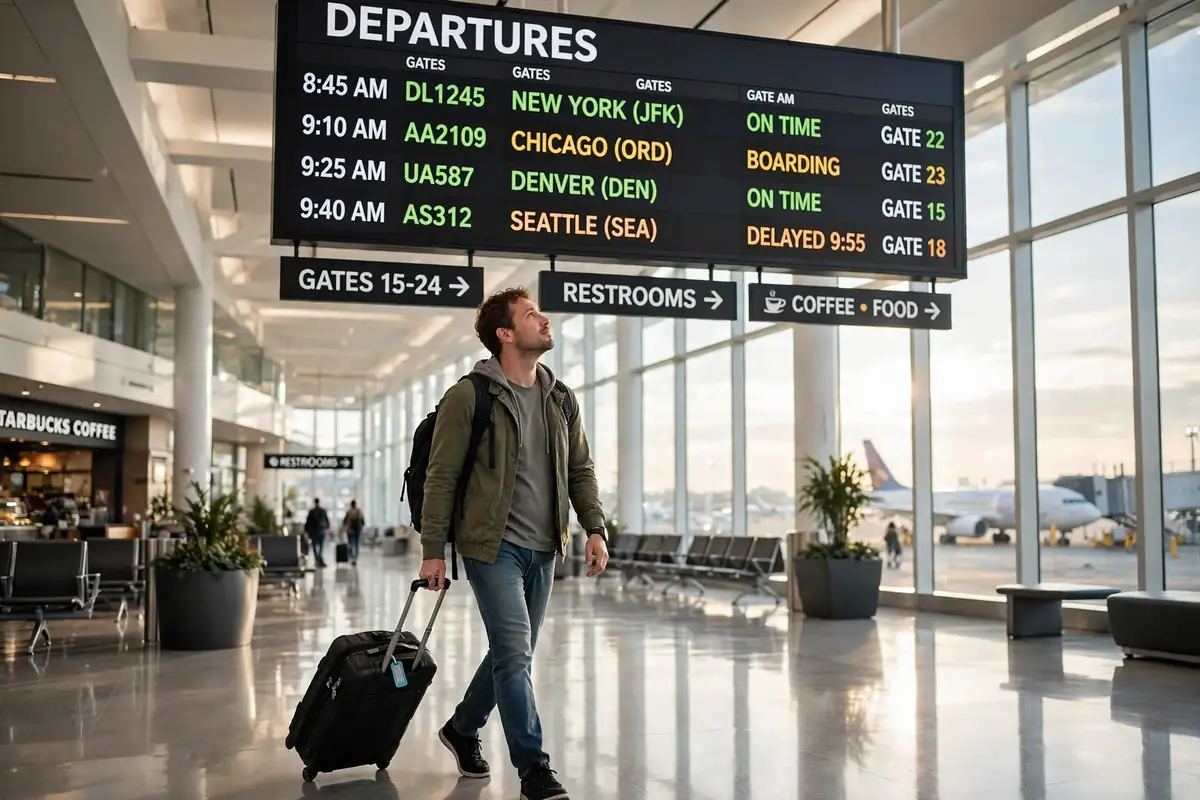
Few travel questions cause more low-level anxiety than how early to arrive at the airport. Arrive too late and you are sprinting to the gate; arrive too early and you are paying for overpriced coffee at 4 a.m. The honest answer is that the right buffer depends on your flight, your bags, your airport, and the season. This guide breaks the timing down so you can stop guessing and start timing your arrival like a frequent flyer.
The Standard Rules of Thumb
Airlines and the TSA repeat two numbers so often they have become folklore: arrive 2 hours before a domestic flight and 3 hours before an international flight. These are safe defaults, not magic. They assume you are checking a bag, traveling at a normal time, and departing from a reasonably busy airport. If all three are true, the standard advice will get you to the gate with time to spare on all but the worst days.
What matters just as much is the deadlines behind the advice. Most airlines close checked baggage acceptance 45 to 60 minutes before departure, check-in often closes around the same window, and boarding doors can close 15 minutes or more before the published departure time. Your real deadline is not the flight; it is the earliest of those cutoffs.
When You Can Arrive Later
- You have TSA PreCheck or CLEAR. Shorter, calmer security lines can safely shave 30 minutes or more off your buffer.
- You are not checking a bag. Skipping the bag drop removes the longest and least predictable queue at many airports.
- You checked in online and have a mobile boarding pass. You walk straight to security.
- Your airport is small or mid-sized. Regional airports often need just 60 to 90 minutes even with a checked bag.
- Your flight is midday or evening on a weekday. The early-morning bank of departures is when security is at its most crowded.
Experienced travelers flying carry-on only with PreCheck through a familiar airport routinely arrive 60 to 75 minutes before a domestic flight. The saving is real, but this strategy has no room for traffic surprises, so it suits people with flexible plans and status to rebook easily.
When You Should Arrive Earlier
- Holiday and peak seasons. Thanksgiving week, Christmas, spring break, and the summer peak can double normal security and bag-drop times. Add at least 30 to 60 minutes.
- Huge hub airports. Atlanta, Chicago O’Hare, Dallas/Fort Worth, Denver, and Los Angeles can involve long walks, trains, and big crowds. Our guide to the best places to visit near O’Hare Airport exists precisely because Chicago travelers build real buffers into their days.
- International departures. Passport checks, document verification, and fuller planes justify the full 3 hours, especially on your first international trip.
- Checking unusual items. Sports equipment, instruments, and pets all slow the bag drop.
- Traveling with kids or needing assistance. Everything takes 20 percent longer. Plan for it kindly.
- Parking at the airport. Full lots and shuttle waits are a classic hidden delay; add 30 minutes or reserve parking ahead.
A Simple Formula for Your Flight
Start with 90 minutes for a standard domestic flight with no checked bag. Add 30 minutes if you are checking a bag. Add 30 minutes for a major hub or a peak travel period. Add 30 minutes if your ground journey to the airport is long or traffic-prone. Subtract 30 minutes if you have PreCheck and know the airport well. For international flights, start from 3 hours and adjust the same way. This formula lands most travelers within 15 minutes of the ideal arrival.
Remember to work backward from the flight, not forward from your alarm. Decide what time you must be at the airport, subtract your realistic door-to-door travel time at that hour of day, then subtract one “life happens” buffer of 20 minutes. That is your leave-home time.
What Actually Eats Your Time at the Airport
Knowing where delays happen helps you judge advice. Bag drop lines move in bursts and can stall for 30 minutes behind a single complicated check-in. Standard security is the wild card: 10 minutes on a quiet afternoon, 45 or more on a Monday morning. TSA PreCheck is consistently faster but not immune at the biggest hubs. Walking time is the silent factor; some terminals require a train ride and a 15-minute walk to the farthest gates. Finally, boarding begins 30 to 45 minutes before departure on many flights, and the gate is where your buffer should be spent relaxing, not arriving breathless.
Tips That Make Any Arrival Time Work Better
- Check in online exactly 24 hours before departure and screenshot your boarding pass.
- Weigh your bag at home and keep liquids and laptops easy to reach for security.
- Check your airport’s live security wait times on the morning of travel.
- Choose the security checkpoint closest to your gate, which is not always the main one.
- Keep passport, ID, and payment card in one consistent pocket or pouch through the whole journey.
Arriving early is not wasted time if you plan for it. Airport hours are perfect for the trip research you never did: browse our guides to the most popular places to visit in Los Angeles, the must-visit places in San Diego, California, or the top ten places to visit in DC while you wait, and your first day plans itself.
Special Cases Worth Knowing
First flight of the day: Security checkpoints open early but lines start building before the first departure bank; the 2-hour rule genuinely applies. Basic economy tickets: Some fares assign seats at the gate and restrict changes, making a missed flight more painful, so protect the buffer. Connecting flights: Your arrival buffer matters less than your layover length; under an hour at a big hub is risky in any season, a lesson connected travelers learn once. International arrivals back into the US: Immigration and customs can take an hour or more at peak times, which matters when booking onward connections or ground transport.
Families connecting a flight with a big day out can also use our guides to places to visit in Universal Studios Orlando and places to visit in Las Vegas with family to judge realistic same-day plans after landing, while drivers starting a road trip can move straight to the best places to visit in the Eastern US once the rental car is rolling.
Turning a Long Layover Into a Mini Trip
If a delay or a long connection hands you five or more hours, a nearby city can turn dead time into a highlight. The trick is choosing airports where the sights are genuinely close and transit is simple. Minneapolis is the classic example: the light rail runs straight from the airport to the Mall of America area covered in our guide to the best places to visit near Mall of America. Chicago travelers lean on our guide to places to visit near O’Hare Airport for exactly this, and small-hub flyers passing through Oklahoma can even sample the top ten places to visit in Oklahoma on a generous connection. Internationally, few airports beat Singapore’s for a layover adventure, as our guide to the best places to visit near Changi Airport Singapore shows. The rules are simple: only leave with a comfortable margin, travel light or store your bags, know exactly how you are getting back, and be at your gate by boarding time, not departure time. Done right, the layover becomes the story of the trip; done carelessly, it becomes the cautionary tale. When in doubt, stay airside and let the buffer protect the journey that actually matters.
When friends ask “how early to arrive at airport?”, frequent flyers give a surprisingly consistent answer: it depends on your worst link, not your average one. Your personal worst link might be the bag drop at your home airport, the security line on Monday mornings, or the unpredictable drive across town. Identify that one factor, pad for it honestly, and the rest of the journey takes care of itself. It also helps to decide your airport routine in advance and repeat it every trip: same parking choice, same checkpoint, same gate-area coffee. Routine removes decisions, decisions remove minutes, and minutes are the entire game. Travelers who fly monthly stop thinking about arrival time altogether because their system handles it. Build your system on your next trip, test it, adjust it once, and you will never stand in an airport wondering whether you timed it right again.
That small system beats every rule of thumb ever printed.
The Bottom Line
For most US domestic flights, arriving 2 hours early with a checked bag or 90 minutes early without one will serve you well. International flights deserve the full 3 hours. Adjust for PreCheck, airport size, and season, and always respect the bag check cutoff, because that is the deadline that actually ends trips. A calm traveler at the gate with a coffee is not wasting time; they are the one who timed it right.