
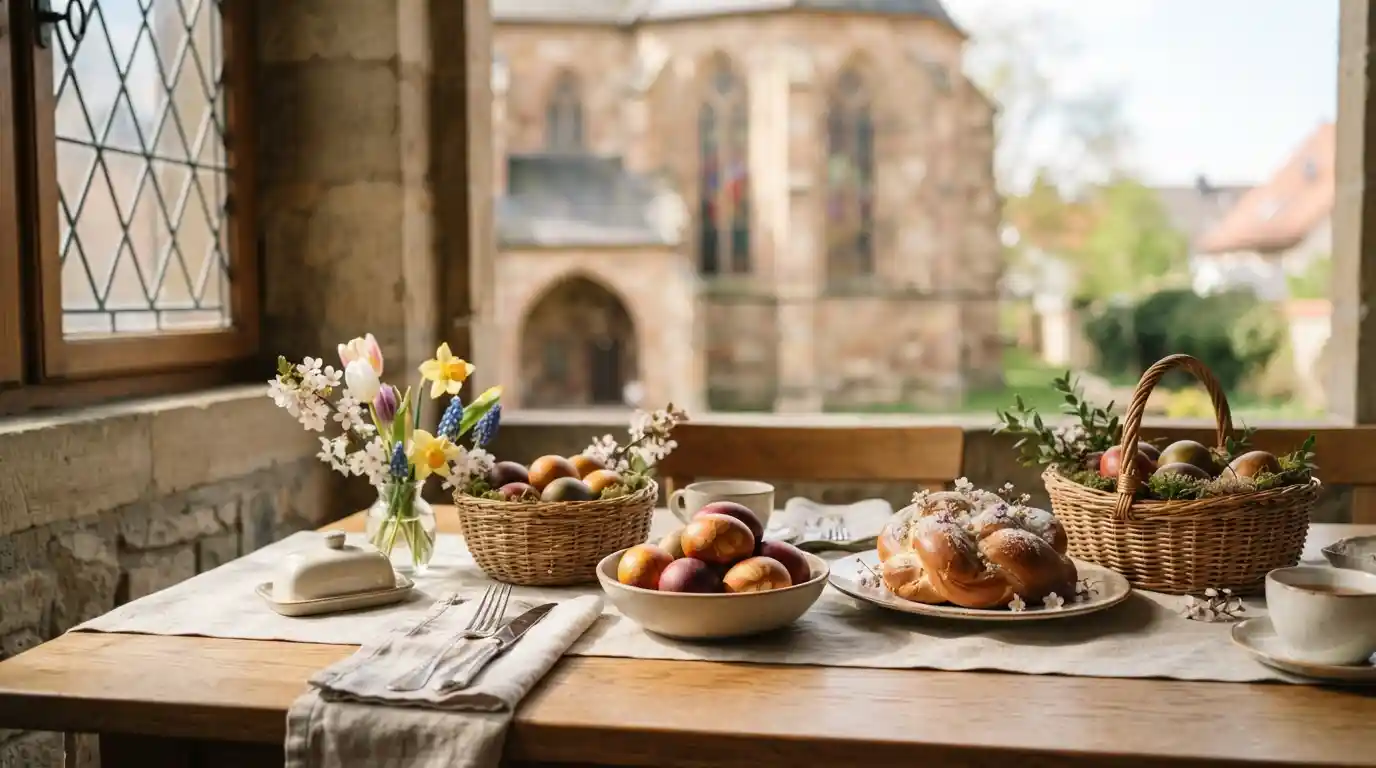
Although the central meaning of Easter remains connected to Christianity, the way the holiday is observed varies significantly from country to country. Some communities focus primarily on church services and solemn religious ceremonies, while others combine religious observances with colorful festivals, processions, traditional meals, egg hunts, and family activities.
This guide to Easter 2026 explains when Easter falls, why its date changes each year, where the celebration comes from, and how different cultures around the world observe the holiday.
Easter 2026 at a glance:
- Easter Sunday: April 5, 2026
- Good Friday: April 3, 2026
- Holy Saturday: April 4, 2026
- Easter Monday: April 6, 2026
When Is Easter 2026?
Easter Sunday in 2026 is April 5. Unlike holidays that occur on the same calendar date every year, Easter moves because its date is determined according to a traditional calculation connected to the spring equinox and the lunar cycle.
For many people, Easter is not limited to one day. The surrounding period includes Holy Week, beginning with Palm Sunday and continuing through Maundy Thursday, Good Friday, Holy Saturday, and Easter Sunday. In many communities, Easter Monday also forms part of the holiday period.
The changing date can influence school breaks, family travel, religious services, community events, and seasonal tourism. Travelers planning an Easter getaway can explore destinations alongside other places to visit around the world.
Why Does the Date of Easter Change Every Year?
The date of Easter is based on a traditional ecclesiastical calculation rather than a fixed day on the Gregorian calendar. Easter Sunday is generally observed on the first Sunday after the first full moon occurring on or after the traditional spring equinox.
Because the lunar cycle does not align perfectly with the solar calendar, Easter can occur on different dates from one year to the next. This is why Easter may fall anywhere within a broad period during the spring months.
In 2026, the calculation places Easter Sunday on April 5.
The Meaning and History of Easter
Easter is rooted in the Christian belief in the resurrection of Jesus Christ following his crucifixion. According to Christian tradition, Jesus was crucified and died on Good Friday and rose from the dead on the third day, celebrated as Easter Sunday.
The resurrection is central to Christian faith and represents themes of hope, renewal, redemption, and new life. Easter therefore holds both a deeply religious meaning and a wider cultural significance in many societies.
The history of Easter celebrations developed over centuries as Christian communities established their own calendars, worship practices, ceremonies, music, foods, and local customs.
Some Easter customs have also become connected with broader springtime traditions. Eggs, flowers, new clothing, and other symbols of renewal are commonly associated with the season in different parts of the world.
Holy Week and the Easter Period
The days leading up to Easter are particularly important in many Christian traditions. Holy Week provides a structured period for remembering the final events of Jesus’ earthly life.
Palm Sunday
Palm Sunday commemorates Jesus’ entry into Jerusalem. Churches may distribute or display palm branches during services, with local customs varying by region.
Maundy Thursday
Maundy Thursday remembers the Last Supper and other events associated with the final days before the crucifixion. Some Christian communities hold special evening services or ceremonies.
Good Friday
Good Friday is a solemn day commemorating the crucifixion of Jesus. Religious observances may include prayer services, scripture readings, processions, or periods of reflection.
Holy Saturday
Holy Saturday falls between Good Friday and Easter Sunday. In many traditions, it is a quiet day of preparation before Easter celebrations begin.
Easter Sunday
Easter Sunday is the central celebration of the Christian Easter season. Churches around the world hold special services, while families and communities may gather for meals and other traditions.
Easter Monday
Easter Monday follows Easter Sunday and is recognized as a holiday or day of observance in many countries. Its importance and public-holiday status vary by location.
How Easter Is Celebrated Around the World
One of the most interesting aspects of Easter is the variety of traditions found across different cultures. Religious ceremonies remain central in many communities, but local customs can transform Easter into a distinctive cultural experience.
Easter in Europe
European Easter traditions range from quiet church observances to elaborate public processions and seasonal celebrations. Historic cities and villages often provide particularly distinctive settings for Easter ceremonies.
Travelers interested in combining history, culture, and seasonal experiences can also explore places to visit in southern Italy or discover the cultural landscapes of South West France.
Italy is particularly associated with major Holy Week and Easter observances, while France has its own regional customs involving churches, food, markets, and family gatherings.
Easter in Italy
In Italy, Easter is strongly connected with religious ceremonies, historic churches, processions, and traditional foods. Different cities and regions maintain their own customs, making Easter an especially varied experience for visitors.
For travelers who enjoy combining cultural experiences with sightseeing, destinations such as the Italian regions featured in this guide to the heel of Italy can offer a useful starting point.
Easter in Spain
Spain is known for elaborate Holy Week processions, particularly in cities where religious brotherhoods organize large public ceremonies. Processions can feature religious statues, traditional clothing, music, candles, and carefully organized routes through historic streets.
The atmosphere varies significantly from one region to another, reflecting Spain’s strong local identities and longstanding religious traditions.
Easter in France
French Easter customs combine religious observances with family meals, chocolate traditions, seasonal decorations, and local celebrations. In some communities, churches and historic town centers become focal points for Easter activities.
Visitors interested in French landscapes and cultural experiences can also consider destinations covered in South West France.
Easter in the United States
In the United States, Easter is observed through church services, family gatherings, Easter egg hunts, community events, decorated eggs, candy, and seasonal meals.
For many families, Easter Sunday combines religious observance with a social gathering. Children may participate in egg hunts, while communities may organize public events during the surrounding weekend.
Travelers staying within the country can find plenty of seasonal destinations by exploring popular places to visit in the USA, West Coast destinations, or unique places across North America.
Easter in Latin America
Many Latin American countries observe Easter and Holy Week through deeply rooted religious traditions. Public processions, church services, religious artwork, music, and community gatherings are common in many locations.
Holy Week can be one of the most significant periods of the year for local communities, with traditions often combining faith, history, art, and regional identity.
Easter in the Philippines
The Philippines has a strong Christian cultural tradition, and Holy Week is an important period across the country. Religious services, processions, family gatherings, and community traditions are particularly visible during the days leading to Easter.
Travelers interested in Asian destinations can also explore Palawan and Puerto Princesa, Okinawa, or the Asian side of Istanbul.
Easter in Australia
Australia observes Easter with a combination of Christian religious services, family gatherings, public holidays, community events, and seasonal food traditions. Because Easter occurs during autumn in Australia, the seasonal atmosphere differs from Easter celebrations in the Northern Hemisphere.
The holiday period is also associated with domestic travel, outdoor activities, and family breaks.
Popular Easter Traditions
Over time, several Easter traditions have become widely recognized, even among people who observe the holiday primarily as a cultural or family occasion.
Easter Eggs
Eggs have long been associated with ideas of new life and renewal. In modern Easter celebrations, decorated eggs and chocolate eggs are especially popular.
Families may decorate eggs at home, organize egg hunts, or give chocolate eggs as gifts.
Easter Egg Hunts
Easter egg hunts are particularly popular with children. Adults hide decorated eggs, plastic eggs, or treats for children to discover.
The activity can take place inside a home, in a garden, at a school, or as part of a larger community event.
The Easter Bunny
The Easter Bunny is a popular cultural symbol associated with Easter in several countries, especially in North America and parts of Europe. Stories and traditions involving the bunny are often used to create family-friendly activities for children.
Easter Baskets
Easter baskets are commonly filled with chocolate, candy, decorated eggs, small toys, and seasonal treats. Families may prepare baskets for children or exchange them as gifts.
Special Easter Foods
Food traditions vary widely around the world. Easter meals may include roasted meats, breads, pastries, eggs, sweets, and regional dishes passed through generations.
Some communities prepare special foods only during Holy Week or Easter, making food an important part of local cultural identity.
Easter Clothing and Seasonal Celebrations
In some communities, Easter is also associated with dressing in special clothing for church services, family gatherings, or social events. Spring colors, floral patterns, and formal outfits may feature prominently in some Western Easter traditions.
Fashion and seasonal style can become part of the broader spring celebration, particularly when Easter Sunday includes family photographs, brunches, or community gatherings.
Readers interested in broader seasonal style can also explore latest fashion and style ideas for additional inspiration.
Easter Travel: Where Can You Go in 2026?
Easter can be an appealing period for travelers because it coincides with spring in much of the Northern Hemisphere. Depending on the destination, visitors may encounter mild weather, blooming landscapes, cultural events, or school-holiday crowds.
Travel plans should be based on the destination rather than Easter alone. Some places become significantly busier during Holy Week, while others may offer a quieter experience.
Historic European Destinations
Historic European cities can be especially interesting during Easter because churches, public squares, and old town districts may host traditional ceremonies.
Travelers who enjoy combining cultural history with sightseeing can also consider destinations such as southern Italy and South West France.
Family-Friendly U.S. Destinations
Families looking for an Easter trip in the United States can choose from cities, theme parks, national landscapes, and family attractions.
Options include destinations featured in guides to Vermont for families, Asheville, and Universal Studios Orlando.
Nature-Focused Easter Getaways
Not every Easter trip needs to revolve around city sightseeing. Some travelers may prefer mountains, lakes, forests, beaches, or scenic landscapes.
Nature-focused options include Banff and its surrounding landscapes, mountain destinations, and other outdoor-focused locations.
Planning an Easter 2026 Trip
If you are traveling around Easter 2026, planning ahead can make the experience easier, especially if your trip falls during a school holiday or a popular travel period.
- Check your destination’s Easter and public-holiday schedule.
- Book accommodation early if visiting a popular destination.
- Review transportation schedules around Good Friday and Easter Monday.
- Check whether attractions have special Easter opening hours.
- Allow additional time for religious processions or local events.
- Consider local food and cultural customs before visiting.
- Leave flexibility in your itinerary for seasonal events.
Travelers looking for destination inspiration can also explore Egypt, Delhi, the Andaman and Nicobar Islands, or Palawan.
Easter and Family Time
For many people, the most meaningful part of Easter is spending time with family and friends. Religious services may be followed by shared meals, visits with relatives, outdoor activities, or community events.
Families with children may organize egg hunts, decorate eggs, prepare Easter baskets, or create seasonal crafts. Adults may focus more on traditional meals, religious observances, or maintaining family customs.
Because traditions differ so widely, there is no single way to celebrate Easter. Families often combine religious practices with local customs and personal traditions.
Easter as a Celebration of Renewal
One reason Easter remains culturally significant is its connection with renewal and new beginnings. For Christians, the resurrection is the central theological meaning of the holiday. More broadly, Easter occurs during a season when much of the Northern Hemisphere is experiencing the arrival of spring.
Flowers, fresh foods, decorated eggs, new clothing, outdoor gatherings, and family celebrations all contribute to the seasonal feeling associated with Easter.
This connection between faith, family, culture, and the changing season helps explain why Easter traditions can look different while still sharing common themes.
Frequently Asked Questions About Easter 2026
What day is Easter 2026?
Easter Sunday is April 5, 2026.
When is Good Friday in 2026?
Good Friday falls on April 3, 2026.
When is Easter Monday in 2026?
Easter Monday falls on April 6, 2026.
Why does Easter have a different date every year?
Easter follows a traditional calculation connected with the spring equinox and lunar cycle rather than a fixed calendar date. As a result, Easter Sunday moves from year to year.
What is the religious meaning of Easter?
For Christians, Easter celebrates the resurrection of Jesus Christ following his crucifixion. It is one of the most important celebrations in the Christian calendar.
What are common Easter traditions?
Common traditions include attending church services, family meals, decorating eggs, Easter egg hunts, chocolate eggs, Easter baskets, seasonal gatherings, and community celebrations.
Is Easter celebrated the same way everywhere?
No. Easter traditions vary considerably by country, region, denomination, and family. Some celebrations emphasize religious ceremonies, while others include large cultural events and family-oriented activities.
Final Thoughts on Easter 2026
Easter 2026 will be celebrated on Sunday, April 5. While the holiday’s central Christian meaning remains focused on the resurrection of Jesus Christ, Easter has developed into a diverse global celebration shaped by religion, history, family traditions, local culture, food, travel, and seasonal customs.
From solemn Holy Week processions in Europe and Latin America to Easter egg hunts and family gatherings in the United States, the holiday takes many forms around the world. Understanding these differences makes Easter more than a date on the calendar—it becomes an opportunity to explore how communities preserve faith and culture while creating traditions of their own.
Whether you plan to attend a religious service, gather with family, organize an Easter egg hunt, enjoy a seasonal meal, or travel somewhere new, Easter 2026 offers many ways to experience a celebration centered on hope, renewal, and togetherness.