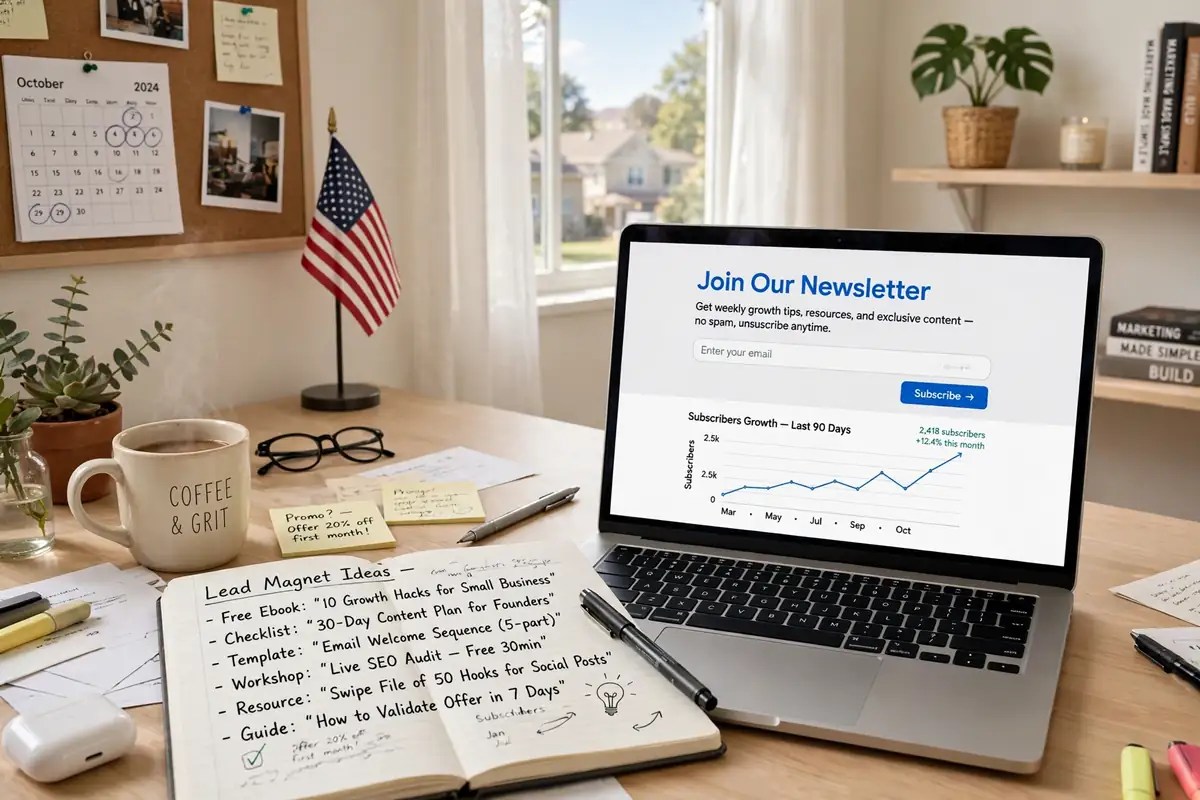

Social media algorithms change constantly, ad costs keep climbing, and platforms you do not control decide who sees your posts. Your email list is different: it is yours. That is why email marketing for beginners remains one of the smartest first skills a business owner can learn. A modest list of people who asked to hear from you will outsell a much larger social following, and this guide shows you how to start your first list, welcome new subscribers properly, and send emails people actually open.
Why Email Still Beats Almost Everything Else
Email reaches people in a place they check every day, without paying for each impression. You can segment subscribers by interest, personalize messages, automate follow-ups, and measure everything from opens to revenue. Unlike a follower count, your list moves with you if you change tools or platforms disappear.
Email also supports every other channel. It turns one-time buyers into repeat customers, fills slow weeks with targeted offers, and gives launches a ready audience. Placed inside a broader digital marketing strategy for small business, it is usually the channel owners most regret not starting sooner.
Choosing Your First Email Platform
Beginner-friendly platforms include tools such as Mailchimp, Brevo, Constant Contact, and ConvertKit, among others. Compare them on the features you will actually use in year one: easy signup forms, a drag-and-drop editor, basic automation, and clear reporting. Free tiers exist on several platforms and are fine while your list is small.
Think about fit, not hype. An online store needs abandoned-cart and order integrations, the same stack decisions discussed in our guide to starting an ecommerce business in the USA. A service business mainly needs forms, a welcome sequence, and simple campaigns. You can migrate later; every major platform exports your list, which is another reason the list is an asset you own.
Building Your List the Right Way
Only email people who agreed to hear from you. Buying lists is a fast route to spam complaints, damaged sender reputation, and legal trouble under anti-spam rules. Instead, earn signups with a clear reason to join: a helpful guide, a checklist, a discount on a first order, early access, or genuinely useful local updates.
Place signup opportunities everywhere customers already meet you: your website header and checkout, your social profiles, your Google Business Profile website link, in-store signage with a QR code, and events. Keep the form short. An email address and first name are enough to start, and every extra field lowers signups. Side projects and small shops use exactly this playbook to grow from zero, as many of the ventures in our roundup of side hustle ideas demonstrate.
The Welcome Sequence: Your Most Important Emails
When someone subscribes, they are never more interested than in that moment. A welcome sequence of two to four emails, sent over the first week, introduces your story, delivers whatever you promised, shares your most helpful content, and makes a gentle first offer. Write it once, automate it, and improve it over time.
Automation is not just for big companies. The same principle that makes marketing automation work for manufacturers applies at small scale: a system that follows up reliably beats good intentions every time. Your welcome flow, an abandoned-cart reminder if you sell online, and a re-engagement email for quiet subscribers cover most of what a beginner needs.
What to Send After the Welcome
Consistency beats intensity. A useful email every week or two keeps you remembered without burning out your list or yourself. Rotate through a simple mix: teach something your customers ask about, share a customer story or behind-the-scenes look, highlight a product or service with a clear reason to act now, and occasionally ask a question that invites replies.
Write like a person, not a corporation. One clear idea per email, a subject line that earns curiosity honestly, short paragraphs, and a single main call to action outperform busy newsletters that try to say everything. The businesses profiled in digital marketing and small business excellence treat every send as a service to the reader first and a sales tool second, and their unsubscribe rates show it.
Design and Deliverability Basics
Most email is read on phones, so use a single-column layout, large readable text, and buttons big enough to tap. Keep images light, always add alt text, and test every campaign by sending it to yourself first. If an email looks broken on your phone, it looks broken to everyone.
Deliverability, actually landing in the inbox, depends on reputation. Authenticate your domain with the SPF, DKIM, and DMARC records your platform provides, send from your own domain rather than a free email address, remove hard bounces, and honor unsubscribes promptly. These unglamorous steps, like the data discipline behind optimizing business revenue streams with data-driven marketing, are what separate professionals from spammers in the eyes of inbox providers.
Measuring What Matters
Start with four numbers: open rate, click rate, unsubscribe rate, and revenue or bookings attributed to email. Opens tell you about subject lines and sender trust, clicks tell you whether content and offers land, and unsubscribes are feedback, not failure, as long as they stay low. Compare each send against your own past performance rather than industry folklore.
Review results monthly alongside your other numbers. The habit pairs naturally with routine small business bookkeeping, because both are about knowing what is actually happening instead of guessing. When a campaign performs unusually well, study why and repeat the pattern; when one flops, adjust one variable at a time so you learn something real.
Email Marketing for Beginners: Growing Into a Confident Sender
As your list grows, add segmentation: separate buyers from browsers, locals from distant subscribers, and interests from each other, then send each group what fits. Clean your list a few times a year by removing people who never open, which improves deliverability and often lowers your platform bill. Teams spread across locations manage all of this remotely using the workflows in our guide to mastering digital marketing in the remote economy.
Most importantly, keep the long view. Email rewards owners who show up consistently with useful messages, which is the same compounding logic behind healthy small business cash flow and the channel comparisons in our ROI of digital marketing guide. If you are comparing growth tactics at a larger scale, the segmentation and automation habits you build now are the foundation of the digital marketing strategies for high-growth firms. Start the list this week, send the welcome sequence this month, and a year from now you will own an audience no algorithm can take away.
Writing Emails People Actually Open
The best beginner skill is not design; it is writing. Start every email with the reader’s world, not your announcement. A sentence about the problem they woke up with earns more attention than a paragraph about your company. Use the same words customers use in reviews and conversations, keep sentences short, and read drafts out loud; anything that sounds like a brochure gets rewritten until it sounds like a person.
Subject lines deserve the same care. Write five options for every send and pick the clearest, not the cleverest. Preview text, the short line after the subject in most inboxes, is free extra space; use it to extend the thought instead of repeating it. Over months, these small habits compound into open rates that make the whole channel feel easy, which is exactly why email stays the backbone channel for businesses of every size.
Staying Legal and Respectful
In the United States, commercial email must follow the CAN-SPAM Act: honest subject lines and sender information, a real physical address, and a working unsubscribe in every message. Permission is the deeper principle behind the law. People who asked to hear from you buy from you; people who did not will mark you as spam, and enough spam complaints will quietly destroy your ability to reach even your fans. Respect the inbox and the inbox will keep working for you.
Frequently Asked Questions
How often should a beginner send emails?
Once every one to two weeks is a sustainable starting rhythm for most small businesses. Consistency matters more than frequency; a reliable biweekly email beats a daily burst followed by silence.
What is a good subject line?
One that is honest, specific, and curiosity-driven: a clear benefit, a real question your customers ask, or a short personal note style line. Avoid all caps, excessive punctuation, and claims the email does not deliver.
Can I email customers who bought from me but never subscribed?
Transactional messages about their purchase are fine, but adding buyers to a marketing list without consent is risky and often against platform rules. Invite them to subscribe at checkout and in follow-up emails instead.
How big does my list need to be before email marketing works?
It works from the first dozen subscribers if they are genuinely interested. A small, engaged list of local customers will outperform a large purchased list every time, in opens, clicks, and sales.