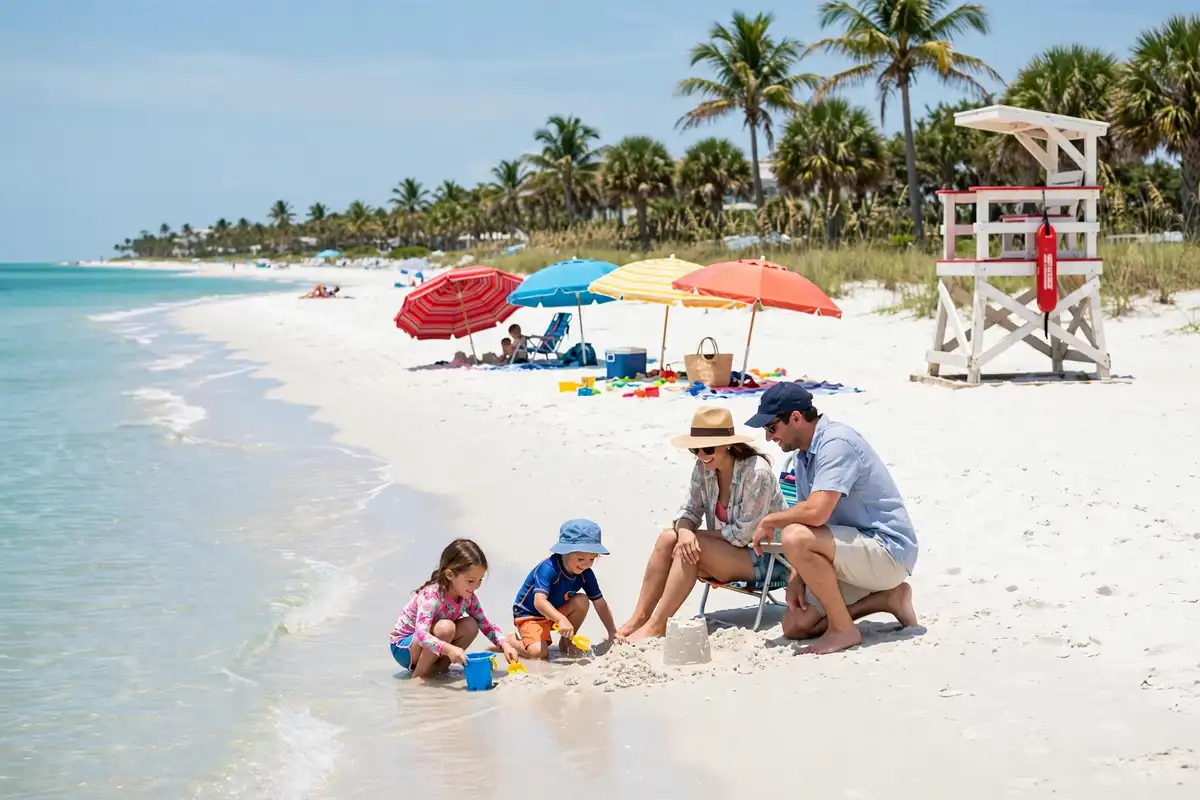
Florida has more coastline than any other state in the continental US, but not every stretch of sand suits a toddler, a stroller, and a cooler full of sandwiches. The best family beaches in Florida share a few traits: gentle surf, lifeguards on duty, clean restrooms, and shade within reach. This guide narrows the huge list down to the shores parents return to year after year.
We have organized the picks by coast, because the Gulf and Atlantic sides of Florida feel like two different vacations. Gulf beaches tend to be calmer and warmer, which suits younger kids. Atlantic beaches bring bigger waves and more action, which older kids and teens usually love.
The Gulf Coast: Calm Water and Powdery Sand
Clearwater Beach
Clearwater Beach is the classic first answer for families, and it earns the title. The sand is soft and white, the water is shallow far from shore, and lifeguards patrol the main stretch. The nightly sunset celebration at Pier 60, with street performers and craft stalls, gives kids a free show after dinner. Arrive before 10 a.m. on weekends, because parking fills fast.
Siesta Key
Siesta Beach is famous for its quartz sand, which stays cool underfoot even at midday, a small miracle for barefoot toddlers. The water is calm, the beach is wide, and the free trolley saves tired legs the walk back to the car. Families building a bigger Gulf itinerary can add the island ideas in our guide to places to visit in Marco Island, Florida, about two hours south.
Marco Island and Naples
Marco Island offers wide, shell-strewn beaches and a quieter pace than Clearwater. Tigertail Beach has a lagoon that little kids adore, plus rentals for kayaks and paddleboards for older siblings. Nearby Naples adds a famous pier, calm surf, and shaded picnic areas. It is one of the easiest combinations on the Gulf for a mixed-age group.
The Atlantic Coast: Waves, Boardwalks and Space Launches
Cocoa Beach and the Space Coast
Cocoa Beach pairs gentle-to-moderate surf with a bonus no other beach town can match: rocket launches. Time your visit with a launch from Cape Canaveral and the kids will talk about it for years. The pier area has lifeguards, rentals, and plenty of casual food. Surf lessons for beginners run daily in summer.
St. Augustine Beach
America’s oldest city also has one of its most family-friendly beaches. St. Augustine Beach is wide, drive-on in marked areas (handy for unloading gear), and backed by a splash park and fishing pier. When afternoon storms roll in, retreat into the historic district for forts, museums, and ice cream. The city fits naturally into the wider itineraries in our guide to the best places to visit in the Eastern US.
Fort Lauderdale and Hollywood Beach
Fort Lauderdale’s main beach is calm, lifeguarded, and lined with a palm-shaded promenade made for strollers and scooters. Just south, Hollywood Beach adds a broad boardwalk with bike rentals and free concerts at the bandshell. Both work well for families flying into Fort Lauderdale airport who want the beach within twenty minutes of landing.
The Panhandle: Sugar Sand Without the Scene
Destin and Fort Walton Beach deliver the same emerald Gulf water as the party towns, with a calmer, family-first rhythm. The sand is famously white, dolphin cruises leave from the harbor daily, and many condo rentals include beach chairs and umbrellas in the rate. For a Texas-side comparison, our guide to places to visit in North Padre Island covers another underrated Gulf option.
Navarre Beach, between Pensacola and Destin, is the quiet pick. It has a long fishing pier, a sea turtle conservation center, and a fraction of Destin’s crowds. Families who prioritize calm over nightlife consistently rate it a favorite, much like the low-key spots in our list of least crowded places to visit during spring break.
Best Family Beaches in Florida for Theme-Park Trips
Many families pair Orlando with a beach day, and the math is simple: Cocoa Beach is about an hour east, Clearwater about ninety minutes west. If your park days center on Universal, our guide to places to visit in Universal Studios Orlando helps you plan the park side, then recover on the sand. Build in one true rest day; theme parks plus travel days exhaust kids faster than parents expect.
What Makes a Beach Truly Family-Friendly?
- Lifeguards: Choose guarded stretches, especially on the Atlantic side where rip currents are common.
- Gentle entry: A gradual slope lets toddlers play at the edge without sudden drop-offs.
- Facilities: Real restrooms, outdoor showers, and a rinse station save everyone’s mood.
- Shade plan: Florida sun is strong year-round; bring a canopy or rent an umbrella, and reapply sunscreen after every swim.
- Food nearby: A café or grocery within a short walk beats hauling a full cooler every day.
Budget matters too. Beach towns vary wildly in price, and our breakdown of whether Costa Rica is an expensive place to visit shows the same cost-checking approach we recommend for Florida: price the lodging, food, and parking before you fall in love with a destination. Florida’s shoulder seasons, late April to May and September to October, deliver warm water with lower rates.
When to Visit Florida’s Family Beaches
March through May is the sweet spot: warm water, low humidity, and manageable crowds outside spring-break weeks. Summer brings the warmest water and afternoon thunderstorms that usually pass within the hour. Holiday weekends spike prices, so compare dates against our guides to the best places in the US to visit on Memorial Day weekend and the best places to visit in the USA for Labor Day weekend before booking the obvious weekends.
Winter is mild in South Florida and pleasant for beach walks in the north, though Gulf water can feel chilly in January. Red tide and algae blooms occasionally affect the Gulf coast; check local beach condition reports the week before you travel, and keep a backup beach on the opposite coast in mind.
Do Not Skip the Florida Keys
The Keys are a different Florida: slower, saltier, and strung along one spectacular overseas highway. Families should not attempt the whole chain in a day, but Islamorada and Marathon make excellent bases. The beaches here are smaller and sometimes man-made, yet the water is warm, clear, and calm, and the extras are superb: feeding tarpon at Robbie’s Marina, the sea turtle hospital in Marathon, and Sombrero Beach, a genuinely family-friendly public beach with picnic pavilions and a playground.
Key Largo, the first island, is the easy add-on from Miami, with John Pennekamp Coral Reef State Park offering glass-bottom boat tours and beginner snorkeling over shallow reefs. If your kids are strong swimmers, a half-day snorkel trip is often the highlight of the entire Florida vacation. Stay overnight rather than day-tripping from the mainland; the drive is beautiful but long, and sunrise over the Atlantic side is worth waking for.
Wildlife Encounters Kids Remember
Florida’s beaches double as wildlife habitat, and a little planning turns sightings into trip highlights. From roughly May through October, loggerhead sea turtles nest on Atlantic beaches; join a permitted, ranger-led turtle walk rather than approaching nests yourself, keep lights off the sand at night, and fill in any holes your kids dig during the day. Dolphins hunt just beyond the surf line on both coasts, most reliably at dawn. Manatees gather in warm springs and power-plant outflows in winter, when viewing centers offer close, respectful looks.
Teach the simple rules early: never feed wild animals, give nesting birds their roped-off space, and leave live shells in the water, since something is probably home. The beaches reward the courtesy; Florida’s shorebirds, rays, and crabs go about their business remarkably close to well-behaved observers.
Beach Safety: The Five-Minute Briefing Every Parent Needs
Florida’s beaches use a flag system: green means calm conditions, yellow asks caution, red warns of dangerous water, double red closes the water, and a purple flag signals marine pests such as jellyfish. Teach kids the flags on day one and make the lifeguard stand your family’s meeting point. Rip currents cause the most rescues; the escape is to swim parallel to shore until free of the pull, then angle back in, and to float and signal if tired. Lightning is the other hard rule: Florida leads the nation in strikes, and when thunder roars, everyone leaves the water and the sand for a solid building, waiting thirty minutes after the last thunder. Finally, shuffle your feet in murky shallows to warn stingrays, and treat sunscreen as hourly equipment, reapplied after every swim, because the Florida sun reflects off white sand and water at double strength. None of this should scare anyone; it simply turns the state’s well-understood risks into routine.
Planning Your Florida Beach Week
Pick one coast and base yourself there; crisscrossing the state eats whole days. Rent a condo with a kitchen for breakfasts and snack storage, schedule one paid activity (a dolphin cruise or kayak tour) rather than five, and leave mornings unscheduled for the beach itself. Families extending the trip beyond Florida often look south, and our guide to the best place to visit in Puerto Rico with family is the natural next step, while dreamers can browse some of the best places to visit in the world for future trips.
Whichever beach you choose from this list of the best family beaches in Florida, the formula stays the same: calm water, a shade plan, snacks within reach, and no schedule before noon. Get those right and Florida does the rest.