
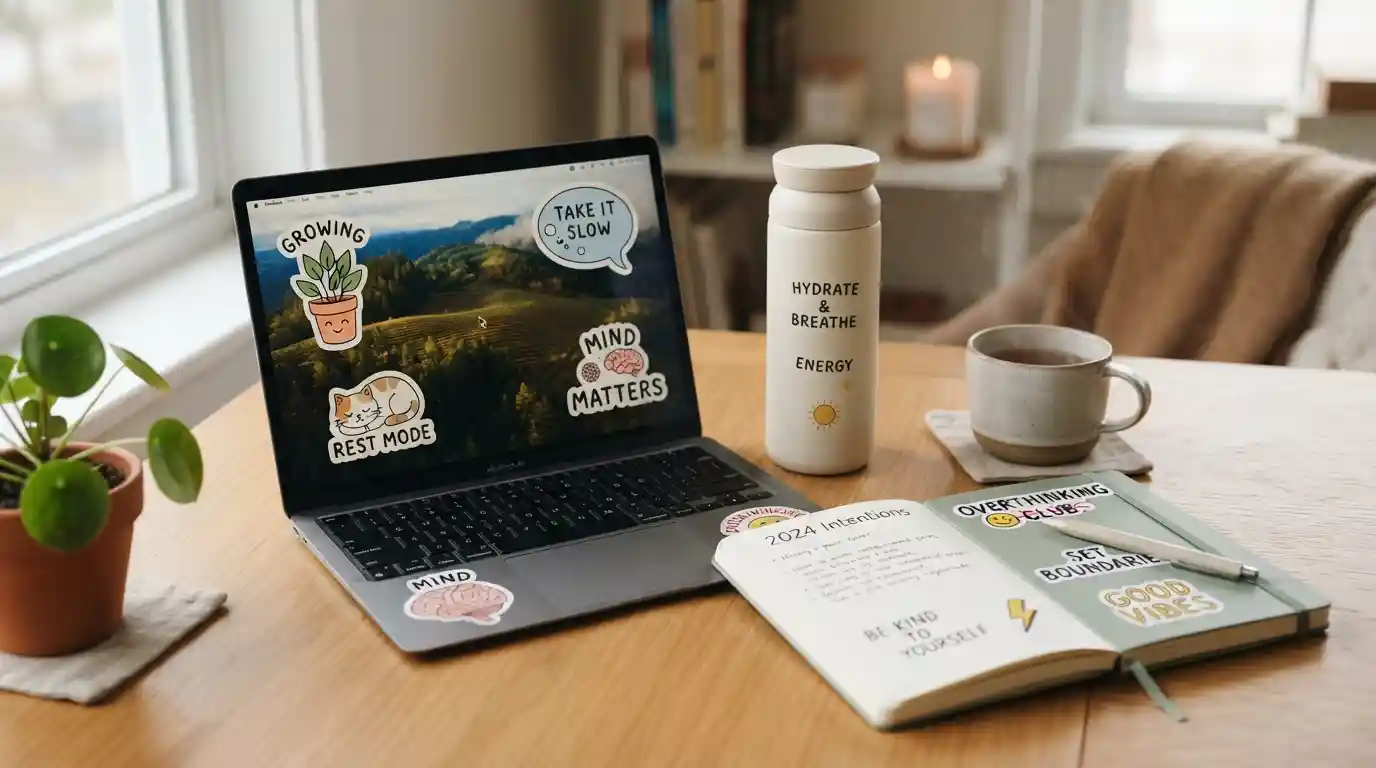
But the appeal of mental health humor is about more than decoration. Humor can help people create emotional distance from stressful experiences, express feelings more comfortably, and make conversations around well-being feel less intimidating. That does not mean a funny sticker can replace professional support, but it can become a small part of a broader approach to emotional wellness.
In this guide, we explore why funny mental health stickers resonate with so many people, how humor can influence emotional experiences, what makes a sticker genuinely useful, and how to choose designs that are positive without minimizing serious mental health concerns.
What Are Funny Mental Health Stickers?
Funny mental health stickers are visual designs that use humor, relatable language, illustrations, or playful concepts to address emotions and mental well-being. They may reference stress, overthinking, self-care, boundaries, burnout, social anxiety, motivation, rest, or the everyday ups and downs of life.
The best designs usually make people feel understood rather than judged. A humorous phrase can provide a quick moment of recognition: someone sees it, relates to it, and realizes that another person may understand a similar experience.
These stickers can appear on personal belongings or become part of a broader wellness environment. For example, someone interested in creating a calming space may combine humorous stickers with ideas from home decor ideas to make their surroundings feel more personal and comfortable.
Why Does Mental Health Humor Connect With People?
Humor is a common way people respond to uncomfortable, stressful, or complicated experiences. When used thoughtfully, it can make an emotionally difficult subject feel easier to approach.
Psychological research has generally explored humor as one potential coping mechanism among many. Positive humor may help people shift perspective, reduce tension, and temporarily interrupt repetitive negative thinking. Its effect varies from person to person, however, and humor is not automatically beneficial in every situation.
Humor Can Create Emotional Distance
When someone jokes about an everyday frustration, the experience can feel slightly less overwhelming. The problem itself has not disappeared, but changing the way it is framed may make it easier to process.
A sticker with a playful message about overthinking, for example, can acknowledge an experience without turning it into a dramatic statement. That small shift can make the emotion feel more manageable.
Humor Can Encourage Recognition
Relatable humor often works because people recognize themselves in it. A person who sees a sticker about needing a quiet day, setting boundaries, or constantly thinking about every possible outcome may feel a sense of connection.
This kind of recognition can be especially useful when mental health topics feel difficult to discuss directly.
Humor Can Make Conversations Less Intimidating
Starting a serious conversation about emotional well-being can sometimes feel uncomfortable. A playful visual can act as a conversation starter.
For example, a sticker that humorously references self-care may lead someone to ask what inspired it. From there, a casual conversation can develop into a more meaningful discussion about stress, rest, boundaries, or personal experiences.
Are Funny Mental Health Stickers Actually Good for Mental Health?
They can be a positive form of self-expression, but their impact depends heavily on context.
A sticker cannot diagnose a mental health condition, provide treatment, or replace professional care. What it can do is contribute to an environment where emotional well-being is acknowledged rather than completely ignored.
Think of a mental health sticker as a communication or self-expression tool. Its value may come from helping someone identify with a message, communicate a mood, personalize their surroundings, or simply enjoy a moment of harmless humor.
This distinction matters because serious mental health concerns deserve appropriate support. Resources and professional care should remain the priority when someone is experiencing persistent or severe emotional difficulties.
Popular Themes for Funny Mental Health Stickers
The most engaging designs often focus on experiences that many people recognize. Common themes include:
- Overthinking and racing thoughts
- Need for personal space
- Work-related stress
- Burnout and exhaustion
- Rest and self-care
- Setting healthy boundaries
- Introversion and social energy
- Sleep and relaxation
- Motivation struggles
- Everyday emotional ups and downs
These themes can also overlap with broader wellness topics. For example, discussions about healthy routines can complement content about a healthy lifestyle, while emotional wellness can naturally connect with broader conversations about mental health and daily habits.
Funny Stickers About Overthinking
Overthinking is one of the easiest mental health themes to translate into humor because the experience is often highly relatable.
Designs might playfully describe analyzing a simple text message for hours, imagining multiple outcomes, or replaying an ordinary conversation. The humor comes from exaggerating a familiar thought pattern.
The important distinction is that the sticker should not suggest that serious anxiety or persistent distress is something a person should simply laugh away. Good humor acknowledges the experience while avoiding messages that discourage someone from seeking help.
Funny Stickers About Self-Care
Self-care is another popular theme because it can be communicated visually without becoming overly serious.
Designs may celebrate taking breaks, protecting personal time, enjoying quiet moments, sleeping, reading, walking, or simply saying no to unnecessary demands.
A humorous self-care sticker can serve as a small reminder that rest is a normal part of maintaining balance rather than something that needs to be earned through exhaustion.
This idea can also complement lifestyle content such as creating functional living spaces where comfort and personal expression are part of the environment.
Funny Boundary Stickers
Personal boundaries have become a particularly popular theme in wellness culture. Funny boundary stickers can communicate messages about needing privacy, declining unnecessary requests, or protecting personal time.
The humor gives the message a softer presentation. Instead of delivering a blunt statement, a playful design can make the same idea feel more conversational.
Still, boundaries should not be used as an excuse to disregard other people’s needs. Healthy boundaries are generally about communicating limits respectfully while recognizing that relationships involve mutual consideration.
Where Can You Use Mental Health Stickers?
One reason stickers are so popular is their flexibility. They can be used in many personal spaces and on everyday objects.
Laptops
Laptops provide a visible but personal canvas for self-expression. A small humorous design can add personality without changing the device itself.
Water Bottles
Reusable bottles are another common location because stickers can turn an ordinary object into something personalized.
Notebooks and Journals
For people who journal or plan their days, a mental health sticker can become part of a broader system of personal reminders.
Phone Cases
A playful design on a phone case can provide a small visual reminder throughout the day.
Bedroom and Home Spaces
Some people incorporate stickers into personal rooms, desks, mirrors, or creative spaces. Those looking for broader ways to make their environment feel more engaging may also explore entertainment space ideas or general lifestyle design inspiration.
How to Choose a Good Mental Health Sticker
Not every funny mental health sticker communicates its message equally well. Before choosing one, consider the following factors.
Look for Relatable Humor
The strongest designs usually reflect recognizable experiences without becoming unnecessarily harsh. A message should feel amusing or validating rather than cruel.
Avoid Harmful Stereotypes
Mental health conditions should not be reduced to insulting stereotypes. Humor can be used without mocking people who live with mental health challenges.
Consider the Setting
A design appropriate for a personal notebook may not be appropriate for a workplace, classroom, or shared public environment.
Prioritize Clear Design
Good stickers generally work best when their message can be understood quickly. Strong typography, simple illustrations, and an uncluttered composition can make a design more effective.
Think About Longevity
Internet trends change quickly. If you want a sticker to remain appealing for years, choose humor that reflects a timeless experience rather than a short-lived meme.
When Mental Health Humor Goes Too Far
There is an important line between relatable humor and messages that trivialize genuine suffering.
A joke can become harmful when it encourages stigma, makes serious symptoms seem insignificant, glorifies destructive behavior, or suggests that people should avoid professional help.
For example, a playful statement about needing a quiet weekend is very different from a message that encourages someone to ignore severe psychological distress.
The goal should be to create humor that feels supportive, relatable, and human without making light of situations that may require genuine care.
Funny Stickers and Mental Health Awareness
Awareness does not always have to take the form of formal campaigns or lengthy educational materials. Everyday objects can also help normalize conversations around emotional well-being.
A sticker may prompt curiosity. Someone might ask about its meaning, share a personal experience, or start talking about stress and self-care. In that sense, small visual messages can contribute to a culture where mental health is easier to discuss.
That broader awareness can connect with other health and wellness resources, including home health services and discussions about accessible support.
Designing Your Own Funny Mental Health Sticker
Creating a custom sticker can be more meaningful than purchasing a generic design because you can build it around a specific feeling, phrase, or personal experience.
Start by identifying one simple idea. Instead of trying to address every aspect of mental health, focus on a single relatable concept such as rest, boundaries, overthinking, productivity, or emotional balance.
Keep the Message Short
Stickers are small, so long messages can become difficult to read. A short phrase with a strong visual concept is usually more effective.
Use Humor Carefully
Ask whether the joke is laughing with the experience or laughing at people who experience mental health challenges. The first approach is generally more constructive.
Match the Visual Style to the Message
Typography, illustration, spacing, and imagery should reinforce the idea rather than compete with it.
Make It Personal
The most memorable stickers often contain an element of personality. A phrase that genuinely reflects your sense of humor can feel much more authentic than a generic trend.
Can Mental Health Stickers Help With Stress?
A sticker by itself is unlikely to produce a major or lasting change in stress levels. However, small environmental cues can sometimes support habits and routines that contribute to well-being.
For example, a humorous reminder to take a break may encourage someone to pause during an intense work session. A sticker about boundaries may reinforce the intention to protect personal time.
The effect is therefore better understood as a supportive reminder rather than a treatment.
For people interested in broader mental wellness resources, related topics such as teen mental health and mental health resources and digital spaces offer additional perspectives.
Using Humor as Part of a Healthy Environment
Emotional well-being is influenced by many factors, including relationships, routines, physical surroundings, sleep, activity, stress management, and access to appropriate support.
That is why funny mental health stickers work best when they are treated as one small element of a broader lifestyle rather than a solution on their own.
A personalized workspace, for example, might combine a humorous sticker with comfortable organization, calming elements, and practical productivity tools. Someone interested in creating a more enjoyable home environment may also find inspiration from smart home devices.
Funny Mental Health Stickers for Different Audiences
Students
Students may connect with humor about deadlines, studying, procrastination, exams, social pressure, and needing a break.
However, designs should avoid presenting extreme academic stress as something that students simply have to tolerate.
Remote Workers
People working from home may enjoy humor about video calls, blurred work-life boundaries, productivity, and the temptation to stay online all day.
This theme can naturally connect with broader discussions around the changing nature of work and side hustles.
Creative Professionals
Artists, writers, designers, and other creative workers may appreciate stickers about creative blocks, deadlines, inspiration, and perfectionism.
Wellness Enthusiasts
People who enjoy wellness-focused lifestyles may prefer designs centered around rest, mindfulness, healthy boundaries, and maintaining balance.
How to Make Mental Health Humor More Positive
If you are creating or selecting mental health-themed stickers, a few principles can make the humor more constructive.
- Focus on shared experiences rather than personal attacks.
- Use humor to create connection rather than stigma.
- Avoid glorifying harmful behavior.
- Do not discourage professional support.
- Keep messages understandable and authentic.
- Use positive or neutral language when discussing sensitive experiences.
- Remember that different people respond to humor differently.
These principles can also be useful when thinking about broader lifestyle content, including lifestyle trends and personal expression.
Are Mental Health Stickers Appropriate for the Workplace?
It depends on the workplace, audience, and message.
A subtle sticker about taking breaks or maintaining work-life balance may be relatively easy to use in a professional environment. A design containing explicit language or references to sensitive mental health conditions may be less appropriate.
When in doubt, choose a design that communicates positivity, humor, resilience, or healthy boundaries without requiring coworkers to interpret deeply personal information.
Why Simple Visual Messages Can Be Powerful
People encounter hundreds of visual messages every day. A sticker is small, but its simplicity can make it memorable.
A short phrase can communicate an idea faster than a long paragraph. When the message is funny and recognizable, it may also be easier to remember.
That makes stickers particularly effective as personal expressions of identity and mood. They can say, “This is relatable to me,” without requiring a detailed explanation.
Funny Mental Health Stickers vs. Serious Mental Health Support
It is important not to confuse self-expression with treatment.
Funny stickers can encourage awareness, provide a moment of humor, and help people communicate everyday feelings. They cannot replace assessment or professional treatment for mental health conditions.
If someone is dealing with persistent anxiety, depression, severe distress, thoughts of self-harm, or another serious concern, appropriate professional and emergency support should take priority over humorous coping tools.
For general awareness, resources discussing mental health care can provide useful context about the importance of appropriate support.
Building a More Positive Mental Health Culture
The growing popularity of mental health humor reflects a broader cultural shift toward discussing emotional well-being more openly.
That shift can be valuable when it encourages empathy and reduces unnecessary stigma. Humor may give people a less intimidating entry point into conversations that once felt uncomfortable.
But awareness should be paired with responsibility. Serious symptoms deserve seriousness, while everyday emotional experiences can sometimes benefit from lightness, connection, and perspective.
Final Thoughts on Funny Mental Health Stickers
Funny mental health stickers combine design, humor, self-expression, and wellness awareness in a remarkably simple format. Their real value is not that they can solve mental health problems, but that they can make emotional conversations feel more visible and approachable.
A thoughtful sticker can provide a moment of recognition, encourage a healthy reminder, personalize a workspace, or simply make someone smile during a difficult day.
The best approach is to keep the humor relatable without minimizing genuine struggles. When used alongside healthy routines, supportive relationships, and appropriate professional care when needed, small reminders of emotional well-being can become part of a more positive everyday environment.