
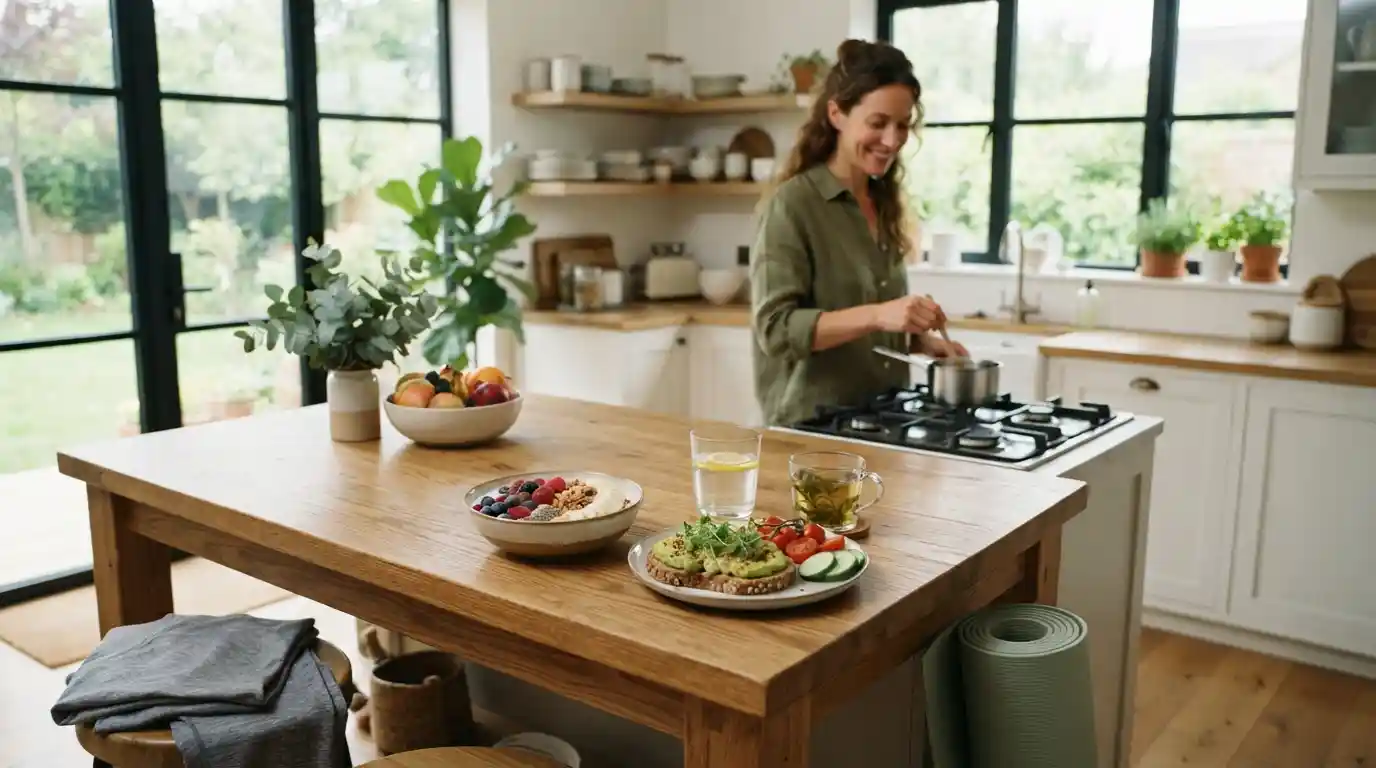
Holistic wellness means looking at the different parts of your life as connected rather than treating health as a single goal. What you eat can affect your energy. Your activity level can influence your mood. Your home environment can affect how easily you relax. Your sleep routine can influence how you approach work, exercise, and relationships the next day.
This guide explores practical ways to build a healthier lifestyle through balanced nutrition, regular movement, mental wellness, restorative sleep, a supportive home environment, and sustainable daily routines.
What Does a Healthy Lifestyle Really Mean?
A healthy lifestyle is a pattern of behaviors that supports long-term physical and emotional well-being. It does not require perfection. Instead, the goal is to develop habits that are realistic enough to maintain over time.
For some people, that may mean preparing more meals at home. For others, it could mean becoming more active, improving their sleep schedule, reducing unnecessary stress, or spending more time outdoors. A sustainable approach leaves room for normal life, including celebrations, busy days, travel, and occasional indulgences.
The Greenheal philosophy can therefore be viewed as a balanced approach that considers the whole person. Nutrition, physical activity, mental wellness, personal surroundings, and lifestyle choices all have a place in the bigger picture.
1. Build a Balanced Approach to Nutrition
Food is one of the foundations of a healthy lifestyle. Rather than focusing exclusively on calories or eliminating large groups of foods, a balanced approach emphasizes variety, moderation, and nutrient-rich choices.
Vegetables, fruits, whole grains, legumes, nuts, seeds, and appropriate sources of protein can form the foundation of many balanced eating patterns. Choosing minimally processed foods more often can also make it easier to build meals around recognizable ingredients.
Plant-based options can be part of this approach as well. The growing interest in plant-based burgers shows how familiar foods can be adapted for people looking to include more plant-based choices in their diets.
You do not necessarily need to change everything at once. Start with practical improvements such as adding vegetables to one additional meal each day, keeping nutritious snacks available, drinking water regularly, or preparing simple meals ahead of busy days.
2. Make Healthy Eating Easier at Home
A healthy eating routine becomes easier when your surroundings support it. Keeping useful ingredients available and having a basic meal plan can reduce the temptation to rely on convenience foods whenever your schedule becomes busy.
Cooking does not have to mean preparing complicated recipes every evening. Simple combinations such as vegetables, grains, beans, eggs, lean proteins, soups, salads, and fruit can provide plenty of variety.
If you enjoy experimenting with food, exploring cooking techniques and ingredients used by professional chefs can also make nutritious meals more enjoyable. Enjoyment matters because a routine that feels satisfying is generally easier to maintain than one based entirely on restriction.
For people interested in vegetarian or vegan eating, the experience of vegan food and plant-focused meals can provide additional inspiration for building meals around vegetables, grains, legumes, and other plant foods.
3. Prioritize Regular Physical Activity
Movement is another important part of holistic wellness. Physical activity does not have to mean spending hours in a gym. Walking, cycling, swimming, dancing, recreational sports, strength exercises, and other enjoyable activities can all contribute to a more active lifestyle.
The most useful activity is often the one you can perform consistently. Someone who enjoys walking may benefit more from a regular walking routine than from forcing themselves into an exercise program they dislike.
Community activities can make movement more enjoyable. Sports facilities such as the Inwood Sports Complex in Joliet illustrate how recreational spaces can provide opportunities for active lifestyles and social engagement.
If you are starting from a low activity level, gradual progress is usually more practical than attempting a dramatic transformation overnight. Increase activity progressively and choose forms of movement that fit your abilities, interests, and schedule.
4. Give Mental Wellness the Same Attention as Physical Health
Holistic wellness is incomplete without mental and emotional well-being. Stress, loneliness, poor sleep, work pressure, and constant digital stimulation can affect how a person feels and functions throughout the day.
Healthy lifestyle habits can include taking breaks, maintaining social connections, spending time outdoors, practicing relaxation techniques, pursuing hobbies, and creating boundaries around work and personal time.
Understanding mental wellness can also begin with recognizing that emotional health deserves attention rather than being treated as an afterthought. Resources discussing the relationship between everyday habits and mental well-being highlight why physical routines and emotional health should not always be considered separate subjects.
Mental health concerns that are persistent, severe, or disruptive to everyday life deserve appropriate professional attention. Lifestyle habits can support overall well-being, but they should not be treated as a replacement for qualified healthcare.
5. Create a Healthier Sleep Routine
Sleep is one of the easiest parts of wellness to underestimate. A busy schedule can encourage people to sacrifice sleep for work, entertainment, social activities, or screen time. Over time, however, consistently poor sleep can make healthy routines more difficult to maintain.
A practical sleep routine can include keeping relatively consistent sleep and wake times, creating a relaxing pre-bed routine, reducing unnecessary distractions in the bedroom, and giving yourself enough time to rest.
Your bedroom environment can also influence how comfortable your nighttime routine feels. Simple changes to lighting, temperature, noise, and clutter may make the space more suitable for relaxation.
6. Design Your Home Around Well-Being
Your surroundings can have a meaningful influence on everyday habits. A home that is organized, comfortable, and functional can make healthy routines easier to maintain.
For example, a clean kitchen can make home cooking more appealing. A comfortable area for reading or relaxing can encourage downtime. A clear space for exercise equipment can remove some of the friction involved in staying active.
Ideas from functional home décor and living-space design can help homeowners think about how their environment supports everyday routines rather than focusing only on appearance.
Technology can also play a role. Modern smart home devices may help automate lighting, temperature, security, and other household functions. Used thoughtfully, technology can reduce everyday friction without becoming another source of digital distraction.
7. Keep Your Living Environment Clean and Comfortable
Clean surroundings can make a home feel more comfortable and manageable. Regular cleaning, decluttering, ventilation, and organization can all contribute to a more pleasant living environment.
You do not need to spend an entire weekend cleaning every time. Breaking household tasks into smaller routines can make maintenance more manageable. A few minutes spent regularly on high-use areas may prevent larger cleaning jobs from becoming overwhelming.
For households that need additional support, professional home cleaning services can be another option for maintaining a clean and organized environment.
8. Make Time for Nature and Outdoor Experiences
Wellness does not have to happen entirely indoors. Spending time outside can provide an opportunity to move, disconnect from routine distractions, and enjoy natural surroundings.
Outdoor activities can range from a short neighborhood walk to a weekend trip involving hiking, cycling, sightseeing, or other recreational activities. The important point is to find ways to incorporate outdoor time into your lifestyle that feel realistic.
For people who enjoy nature-focused travel, exploring natural destinations and outdoor environments can provide inspiration for combining travel with active recreation.
Even if long trips are not practical, local parks and green spaces can provide opportunities to step away from screens and spend time outdoors.
9. Develop Sustainable Wellness Habits
The biggest challenge with many wellness plans is sustainability. A routine may appear impressive for a week but become impossible to maintain once work, family responsibilities, travel, or unexpected events interfere.
Instead of creating an enormous list of lifestyle changes, focus on a small number of habits that fit your current circumstances. For example, you might start with a daily walk, a consistent bedtime, more vegetables at lunch, and a few minutes of quiet time.
Once those behaviors become familiar, additional habits can be introduced gradually. This approach reduces the pressure to become a completely different person overnight.
10. Pay Attention to Personal Care and Skin Health
Personal care can also form part of a broader wellness routine. Basic skin care, sun protection, hygiene, hydration, and appropriate grooming can support comfort and confidence.
People interested in skin health may also explore information about anti-aging skincare practices. The key is to approach personal care realistically and choose routines that are appropriate for your individual needs.
Wellness should not be defined solely by appearance. Physical comfort, confidence, emotional health, and functional well-being are equally important parts of a balanced lifestyle.
11. Protect Your Home as Part of Your Wellness Routine
Feeling comfortable in your home involves more than cleanliness and décor. Basic safety and security can contribute to peace of mind.
Practical measures such as secure doors and windows, appropriate lighting, smoke detection, and sensible household security practices can help create a safer environment.
Homeowners exploring modern options can learn more about home security services and protection solutions. The broader lesson is that a wellness-focused home should support both physical comfort and a reasonable sense of security.
12. Build Healthy Routines Around Your Real Life
A healthy lifestyle should work with your life rather than constantly compete against it. If you work long hours, have children, travel frequently, or manage demanding responsibilities, your routine may need to look different from someone else’s.
Start by identifying the areas that have the greatest effect on your everyday well-being. Perhaps your meals need more structure. Perhaps you need more movement. Maybe your evenings are dominated by screens, or your home becomes difficult to manage during busy weeks.
Once you identify the main obstacle, choose one practical change. This makes wellness more actionable than trying to improve everything simultaneously.
13. Avoid the All-or-Nothing Approach
One missed workout or one restaurant meal does not erase weeks of healthy choices. Treating wellness as an all-or-nothing challenge can make minor setbacks feel much bigger than they actually are.
A flexible approach allows you to return to your routine after an interruption. If you miss a walk, continue the next day. If your meals are less balanced during a trip, return to your normal eating pattern when you get home.
This mindset makes healthy living more sustainable because it recognizes that real life is unpredictable.
14. Combine Wellness With Everyday Enjoyment
Health does not have to mean removing enjoyment from your life. Food can be satisfying, exercise can be fun, your home can be beautiful, and relaxation can be part of a productive lifestyle.
Even entertainment and hobbies can contribute to balance when they are combined with other healthy routines. Creating a comfortable home entertainment environment, for example, can give you a dedicated place to relax and spend time with family or friends.
The objective is not to make every moment productive. Rest and enjoyment are legitimate parts of a balanced lifestyle.
15. Treat Wellness as a Long-Term Practice
Holistic wellness is best understood as an ongoing process rather than a destination. Your priorities can change as your schedule, age, responsibilities, interests, and circumstances change.
What works during one stage of life may need to be adjusted later. A flexible wellness routine allows those changes without abandoning the larger goal of taking care of yourself.
Think about wellness as a collection of supportive systems: nourishing food, regular movement, adequate rest, emotional support, comfortable surroundings, meaningful activities, and appropriate professional care when necessary.
Simple Healthy Lifestyle Checklist
If you want to begin improving your lifestyle today, keep the first steps simple:
- Choose more nutrient-dense foods and maintain variety in your meals.
- Include regular physical activity that you genuinely enjoy.
- Protect a consistent sleep routine.
- Make time for relaxation and meaningful social connections.
- Spend some time outdoors when possible.
- Keep your home clean, organized, comfortable, and safe.
- Limit habits that consistently interfere with sleep, movement, or emotional well-being.
- Make changes gradually instead of attempting an extreme lifestyle overhaul.
- Use professional healthcare support when a health concern requires it.
- Allow flexibility so your wellness routine can survive busy and unexpected days.
Final Thoughts on the Greenheal Approach to Wellness
A healthy lifestyle is ultimately about creating a pattern of choices that supports the person you want to be over the long term. Nutrition, exercise, sleep, mental wellness, personal care, home environment, outdoor activities, and everyday enjoyment can all contribute to that bigger picture.
The Greenheal approach to holistic wellness does not need to involve complicated routines or unrealistic standards. Start with manageable improvements, make your environment support those choices, and give yourself room to adapt when life changes.
Consistency matters more than perfection. When healthy choices become ordinary parts of your everyday routine, wellness becomes less of a temporary project and more of a sustainable way of living.



