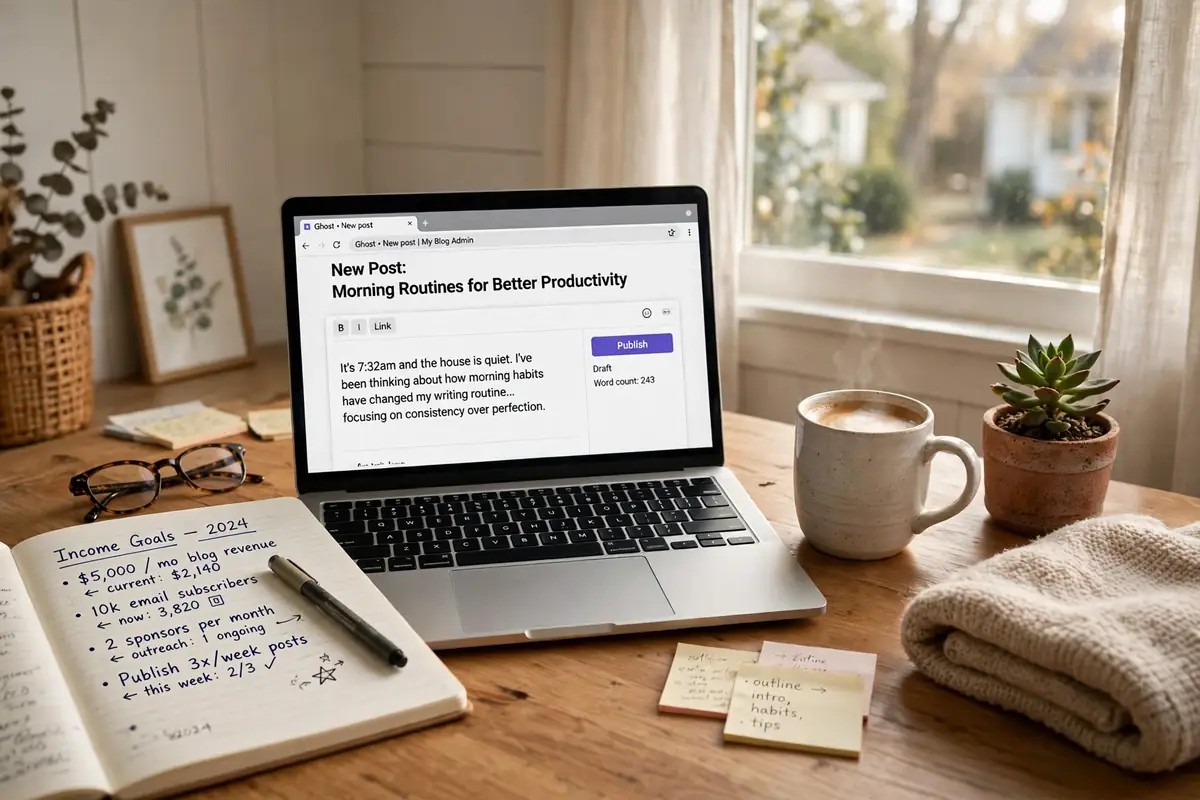
Starting a blog is easy. Starting a blog that actually earns money takes a plan. Millions of blogs launch every year, and most fade within months because the owner never decided how the blog would make money, who it served, or how readers would find it. If you want to learn how to start a blog make money in the real world, this guide gives you the honest, step-by-step version used by bloggers who turned a side project into real income.
Step 1: Choose a Profitable Niche
A niche is the specific audience and topic your blog serves. Profitable niches usually sit where reader problems meet spending: personal finance, home improvement, health and fitness, food, parenting, pets, technology help, and career growth are classic examples. The narrower your angle, the faster you stand out. “Budget travel for families” beats “travel.” “Home workouts for busy parents” beats “fitness.”
Test your niche with three questions. Do people search for help on this topic? Do businesses sell products or services in it? Can you write about it for two years without running dry? Blogging works best as one of several side hustle ideas that make extra money, because it rewards steady effort rather than a single burst.
Step 2: Pick a Name and Set Up Your Blog
Choose a short, memorable name that hints at your topic and is easy to spell. Then set up your blog properly from the start: your own domain name, reliable hosting, and a clean, fast theme. Self-hosting costs a little money, but it gives you full control over ads, products, and design, which free platforms often restrict.
Treat this like the foundation it is. The setup decisions mirror the early steps in any complete guide to starting a business in the USA: register your name, set up your tools, and keep records of what you spend. Add the essential pages early: About, Contact, a privacy policy, and a simple disclosure page if you plan to use affiliate links.
Step 3: Decide How the Blog Will Make Money
Decide your income streams before you write, because they shape your content. The main options are:
- Advertising: Ad networks pay you for displaying ads; simple, but needs serious traffic to pay well.
- Affiliate marketing: Recommend products and earn commissions on sales through your links.
- Your own products: Ebooks, printables, templates, and courses carry the best margins.
- Services: Coaching, consulting, freelancing, or done-for-you work often earns fastest.
- Sponsored content: Brands pay for posts once you have an engaged audience.
Most successful bloggers combine two or three of these over time. Services and affiliate income usually arrive first, while ad revenue grows later. This progression matches the journey described in guides to becoming an entrepreneur from idea to income: earn early with skills, then build assets that scale.
Step 4: Learn What Your Readers Search For
Traffic comes from answering real questions. Use keyword research to find the phrases your audience types into Google, then write the most helpful answer on the internet for each one. Start with long, specific phrases where a new blog can realistically rank, and build clusters of related posts that link to each other.
Write every post with one clear search topic. Add personal experience, original photos or examples, and concrete steps that generic content lacks. This reader-first approach is the core of every modern digital marketing strategy for small businesses and blogs alike.
Step 5: Publish Consistently and Build an Email List
Consistency beats intensity. One strong post per week, every week, outperforms ten posts in a frantic month followed by silence. Create a simple editorial calendar and protect your writing time the way you would protect a shift at a job.
From your very first post, invite readers to join your email list with a helpful freebie related to your niche. Email subscribers are readers you can reach without asking an algorithm for permission, and they are usually your first buyers. Bloggers who grow lists early build the same durable advantage described in mastering digital marketing in the remote economy: an audience you actually own.
Step 6: Promote Every Post
Publishing is only half the work. Share each post where your audience already spends time: one or two social platforms chosen deliberately, relevant online communities where you genuinely participate, and your email list. Repurpose each post into shorter formats, such as a quick video, a carousel, or a discussion question, to multiply its reach without multiplying your workload.
As your blog grows, promotion also includes updating older posts. Refreshing a popular article with better examples and current information often lifts its traffic faster than writing something new, a tactic at the heart of the playbook for high-growth advertising and content firms.
Step 7: Track Money Like a Business
The moment your blog earns its first dollar, it is a business. Track income and expenses in a simple spreadsheet or accounting tool: hosting, domain, tools, and any help you hire. Set aside a portion of income for taxes, because blogging income is self-employment income in the USA.
Good habits now prevent painful surprises later. The basics in any guide to small business bookkeeping apply perfectly to bloggers: separate accounts, monthly reviews, and records you can actually find. When income becomes steady, formalizing the blog as a business can protect you and unlock better tools, so it helps to understand your startup costs and structure options early.
Turn Readers Into Buyers With Simple Offers
Traffic alone does not pay the hosting bill. Once readers arrive, guide them gently toward the next step. A blogger who writes about home organization might offer a low-priced printable planner, then a full course. A finance blogger might earn affiliate commissions on budgeting tools they genuinely use, then add one-on-one coaching. The pattern is the same: free helpful content builds trust, a small product proves value, and a premium offer serves the readers who want more help.
Place these offers naturally. Mention your product inside the posts where it solves the exact problem being discussed, add a simple resources page listing the tools you recommend, and invite email subscribers to a short launch sequence when something new is ready. Avoid plastering every paragraph with sales pitches; readers can smell desperation, and it cheapens the trust your content worked to build. Bloggers who balance value and selling follow the same long-game logic as any business deep in digital transformation of its services: systems and trust first, revenue as the result.
Finally, price with confidence. Beginners routinely undercharge because they imagine their own wallets instead of their readers’ problems. If your guide saves someone ten hours or a costly mistake, a fair price is a favor, not a burden. Test, listen to feedback, and adjust like any other part of the business.
How Long Does It Take to Make Money Blogging?
Honestly, longer than most people hope. Many blogs see their first small earnings within three to six months of consistent, search-focused publishing, and meaningful income often takes a year or more. The blogs that succeed are rarely the most talented; they are the ones still publishing when others quit.
Treat the early months as building an asset. Every good post is a small worker that can bring visitors for years. That mindset keeps bloggers going, and it is the same patience recommended to anyone starting an ecommerce business step by step or any other online venture.
Common Blogging Mistakes That Kill Income
- Writing about everything. A scattered blog gives readers and Google no reason to remember it.
- Copying bigger blogs. Your experience and voice are your only unfair advantage.
- Ignoring search intent. Beautiful posts nobody searches for earn nothing.
- Monetizing too late or too aggressively. Plan income early, but keep trust first.
- Quitting during the quiet months. Growth in blogging is back-loaded.
Frequently Asked Questions
How much does it cost to start a money-making blog?
A domain and hosting typically cost less than a single nice dinner out per year at the starter level. You can begin with free tools for email and design, then upgrade as income arrives.
Can I start a blog with no experience?
Yes. Most successful bloggers started as beginners in both writing and their topic’s business side. Document what you learn as you go; beginner audiences often prefer learning from someone one step ahead of them.
Which is the fastest way for a blog to earn?
Services usually earn first, because one client can pay more than months of early ad revenue. Affiliate income follows as traffic grows, and digital products scale best once you know exactly what your audience wants to buy. Many bloggers formalize at this stage, sometimes while writing a business plan that gets funded for their next venture.
The Bottom Line
A blog that makes money is a small media business: a clear niche, content matched to real searches, planned income streams, consistent promotion, and honest bookkeeping. None of it is glamorous, and all of it works. Pick your niche this week, publish your first genuinely helpful post, and commit to a schedule you can keep for a year. In the landscape of small business excellence through digital marketing, the steady blogger quietly wins. Your future income is sitting in the posts you have not written yet, so start writing them.