
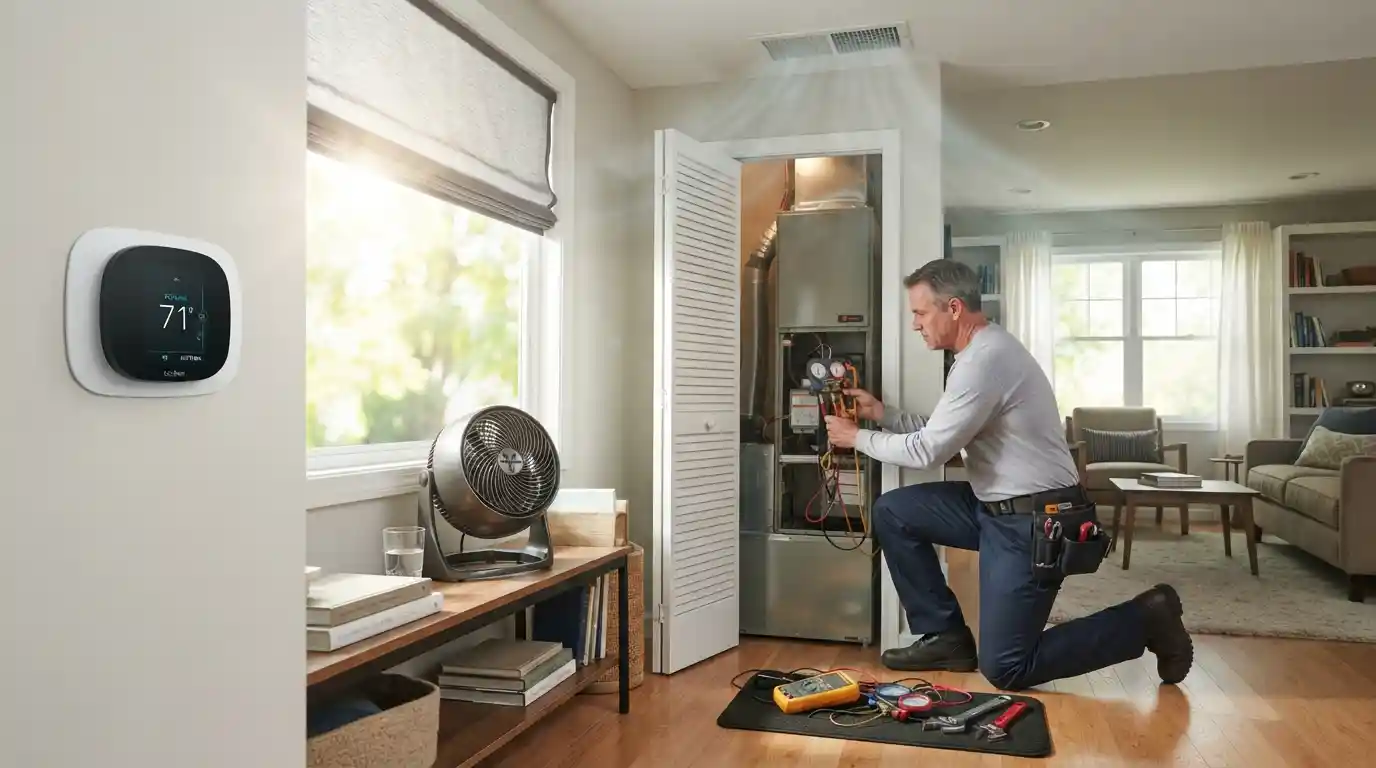
The good news is that staying comfortable does not always require an emergency repair. A combination of sensible maintenance, better cooling habits, early troubleshooting, and professional service can help you keep your home comfortable while avoiding unnecessary stress.
This guide to air conditioning repair services Somerset focuses on practical ways to recognize problems early, protect your equipment, and know when a DIY fix should end and professional help should begin.
1. Learn the Warning Signs Before Your AC Stops Working
An air conditioner rarely goes from perfect to completely broken without showing some clues first. Paying attention to small changes can help you deal with a developing problem before it becomes an expensive emergency.
Common warning signs include:
- Warm or inconsistent air coming from the vents
- Weak airflow from normally strong registers
- Unusual buzzing, rattling, grinding, or clicking sounds
- Water collecting around the indoor unit
- Unusual odors coming from vents
- Rapid cycling between on and off
- A noticeable increase in cooling costs
- Rooms that remain uncomfortable even when the thermostat is set correctly
Some problems are relatively simple, while others involve electrical components, refrigerant, compressors, motors, or ductwork. Recognizing the difference is important because attempting a complicated repair without the appropriate equipment can make the original problem worse.
For comparison, homeowners can also learn about broader air conditioning repair services and system reliability when evaluating what professional HVAC maintenance typically involves.
2. Start With the Simple Things You Can Safely Check
Before calling for service, there are several basic checks that most homeowners can perform without opening the refrigeration system or touching dangerous electrical components.
Check the thermostat
Make sure the thermostat is set to cooling mode and that the temperature setting is actually below the current indoor temperature. If the thermostat uses batteries, replacing weak batteries can also eliminate a surprisingly simple source of trouble.
Inspect the air filter
A heavily loaded filter restricts airflow and can make an otherwise functional system struggle to cool the house. Check the filter according to the maintenance guidance for your particular system and replace or clean it when appropriate.
Keep supply vents clear
Furniture, curtains, boxes, and other household items should not block important supply or return vents. Good airflow is one of the easiest ways to help your cooling system perform as intended.
If you are interested in making your home more convenient through technology, you can also explore these smart home devices, some of which can complement a more modern approach to home comfort.
3. Do Not Turn Every AC Problem Into a DIY Project
There is a major difference between replacing a filter and repairing a refrigeration circuit.
Simple maintenance is reasonable when you know exactly what you are doing. Refrigerant handling, electrical diagnostics, compressor work, capacitor replacement, and other technical repairs are different matters. These jobs can involve significant electrical or mechanical hazards and should be handled by a qualified professional.
The same principle applies when comparing residential and vehicle cooling systems. Automotive systems require their own specialized equipment and procedures, which is why professional auto service is appropriate for vehicle-related problems rather than treating them like household HVAC repairs.
A good rule is simple: if the repair requires opening the refrigerant circuit, working with high-voltage components, or diagnosing a component you cannot safely identify, stop experimenting and call a qualified technician.
4. Give Your Air Conditioner Room to Breathe
Your outdoor condenser needs adequate airflow. Leaves, grass clippings, dirt, and other debris can accumulate around the outdoor equipment and interfere with normal operation.
Keep the area around the outdoor unit reasonably clear and avoid using the space as a storage area. Do not place furniture, boxes, garden equipment, or other objects directly against the equipment.
Indoor airflow matters too. A clean and organized living space can make it easier to keep vents accessible and identify changes in cooling performance. For broader ideas about creating a more functional home environment, see these home decor ideas.
5. Use Fans Strategically Instead of Fighting Your AC
Ceiling and portable fans do not replace an air conditioner, but they can improve how comfortable a room feels by moving air across occupants.
That means you may be able to maintain a comfortable environment without constantly pushing the thermostat lower. Use fans where people actually spend time and make sure their direction and speed are appropriate for the season.
Technology can make this approach even more convenient. For example, modern smart ceiling fan technology can provide additional control over airflow and scheduling.
The goal is not to make your AC work harder. The goal is to make the cooled air more useful.
6. Schedule Maintenance Before the Hottest Days Arrive
One of the most frustrating AC experiences is discovering a problem during the hottest part of summer, when repair companies are already dealing with heavy demand.
Instead of waiting for the first major heat wave, consider having the system inspected before you depend on it every day. Preventive maintenance can provide an opportunity to identify airflow problems, worn components, drainage issues, unusual operating conditions, and other concerns before they become urgent.
This approach fits into the larger concept of maintaining the systems that protect your home. Homeowners interested in broader service planning can also review information about home service plans and how ongoing maintenance can be organized.
7. Know When You Need Professional Air Conditioning Repair Services Somerset
Some symptoms should move you from troubleshooting mode to professional-service mode quickly.
Call a qualified HVAC professional when:
- The system repeatedly stops working
- The AC produces burning or electrical odors
- You hear grinding, loud buzzing, or severe mechanical noises
- The system cannot maintain the desired temperature
- Water repeatedly accumulates around the equipment
- A breaker repeatedly trips when the system runs
- The equipment needs refrigerant-related work
- A repair requires electrical or refrigeration-system diagnostics
Professional service is particularly important when the same fault keeps returning. Repeatedly resetting a system may temporarily restore operation without addressing the underlying cause.
You can also compare the general approach used by other home service providers when thinking about what qualities matter in a service company, including communication, reliability, and responsiveness.
How to Choose an AC Repair Company in Somerset
When your home is hot and uncomfortable, it is tempting to hire the first company that answers the phone. A few quick checks can help you make a more informed decision.
Look for clear communication
A professional company should be able to explain what it believes is wrong, what work is recommended, and what the expected cost structure is before unnecessary work begins.
Ask what the technician will inspect
A proper diagnosis should be based on the symptoms and condition of the equipment rather than simply replacing parts until something works.
Check experience with your type of system
Central AC, heat pumps, ductless mini-splits, and other systems can have different service requirements. Make sure the company is familiar with the equipment installed in your home.
Ask about maintenance
If the immediate problem is repaired, ask what maintenance steps can reduce the chance of another breakdown. Preventive care is usually more useful than repeatedly waiting for the next failure.
Small Home Habits That Can Improve Summer Comfort
Air conditioning is only one part of maintaining a comfortable indoor environment. Your windows, insulation, shades, airflow, appliances, and daily habits can all influence how hard your cooling system has to work.
During the hottest part of the day, keeping direct sunlight out of rooms can help reduce unwanted heat. Closing blinds or curtains on sunny windows is a simple step that costs nothing.
It can also help to avoid generating unnecessary indoor heat during peak afternoon temperatures. If possible, use heat-producing appliances at cooler times of the day.
For households interested in improving the overall living environment, a broader look at modern lifestyle and home living trends can provide additional ideas.
Keep Other Home Systems Working Together
Home comfort is interconnected. Cooling, airflow, security, cleaning, lighting, and technology all contribute to how functional a house feels.
For example, smart-home technology can help homeowners manage connected devices, while a well-maintained home is easier to keep comfortable. You can explore home security services for another part of the home-maintenance picture and home cleaning services for ideas on keeping the living environment organized.
Even entertainment spaces benefit from thoughtful temperature and airflow management. If you are redesigning a lower-level living area, these basement entertainment center ideas can help inspire a more usable home environment.
What About Energy Efficiency?
If your air conditioner is running for long periods but your home still feels uncomfortable, the problem may not always be the AC itself. Poor airflow, inadequate insulation, duct issues, excessive solar heat, or an aging system can all contribute to inefficient cooling.
Before spending money on major upgrades, have the actual problem diagnosed. Replacing an otherwise functional component without understanding why the system is struggling can waste money.
Energy and environmental considerations are also becoming increasingly important for homeowners. Understanding broader environmental protection principles can provide useful context for responsible equipment use and maintenance.
Don’t Confuse a Quick Fix With a Permanent Solution
One of the most important lessons in AC maintenance is recognizing the difference between temporarily restoring cooling and solving the actual problem.
If an air conditioner repeatedly loses cooling performance, constantly resetting it is not a repair strategy. Likewise, repeatedly adding temporary fixes without determining why the system is struggling can allow a small problem to become a larger one.
A professional diagnosis should identify the likely cause and explain what needs to be done. If the repair is minor, fixing it promptly may prevent a larger breakdown. If the equipment is reaching the end of its useful life, the technician can explain the available options.
When Repair May Make More Sense Than Replacement
Not every malfunction means you need a completely new air conditioner. A relatively minor component failure on an otherwise serviceable system may be worth repairing.
On the other hand, repeated breakdowns, poor performance, escalating operating costs, or an aging system may justify discussing replacement options.
The decision should be based on the condition of the equipment, repair history, expected future costs, efficiency, and the comfort requirements of the household rather than on age alone.
A Simple Somerset AC Emergency Checklist
If your AC stops cooling on a hot day, take a breath and work through this checklist:
- Check whether the thermostat is operating correctly.
- Inspect the air filter.
- Make sure important vents are open and unobstructed.
- Check whether the outdoor unit has obvious debris around it.
- Look for unusual water accumulation.
- Listen for unusual mechanical or electrical sounds.
- Do not open the refrigeration system yourself.
- Do not attempt electrical repairs unless you are appropriately qualified.
- Contact a reputable HVAC professional if the problem persists.
Final Thoughts
Staying cool in Somerset does not have to mean waiting for an AC breakdown and then scrambling for help. The smarter approach is to watch for early warning signs, perform safe basic maintenance, protect airflow, use fans strategically, and arrange professional inspections before a small issue becomes an emergency.
The biggest life hack is knowing your limits. Changing a filter or clearing an obstruction is one thing; opening electrical equipment or working with refrigerant is something entirely different.
When you need air conditioning repair services Somerset, focus on proper diagnosis, clear communication, appropriate experience, and long-term reliability rather than simply choosing the cheapest immediate fix. A little preventive attention can make your home more comfortable and help you avoid the kind of summer surprise that nobody wants.



