
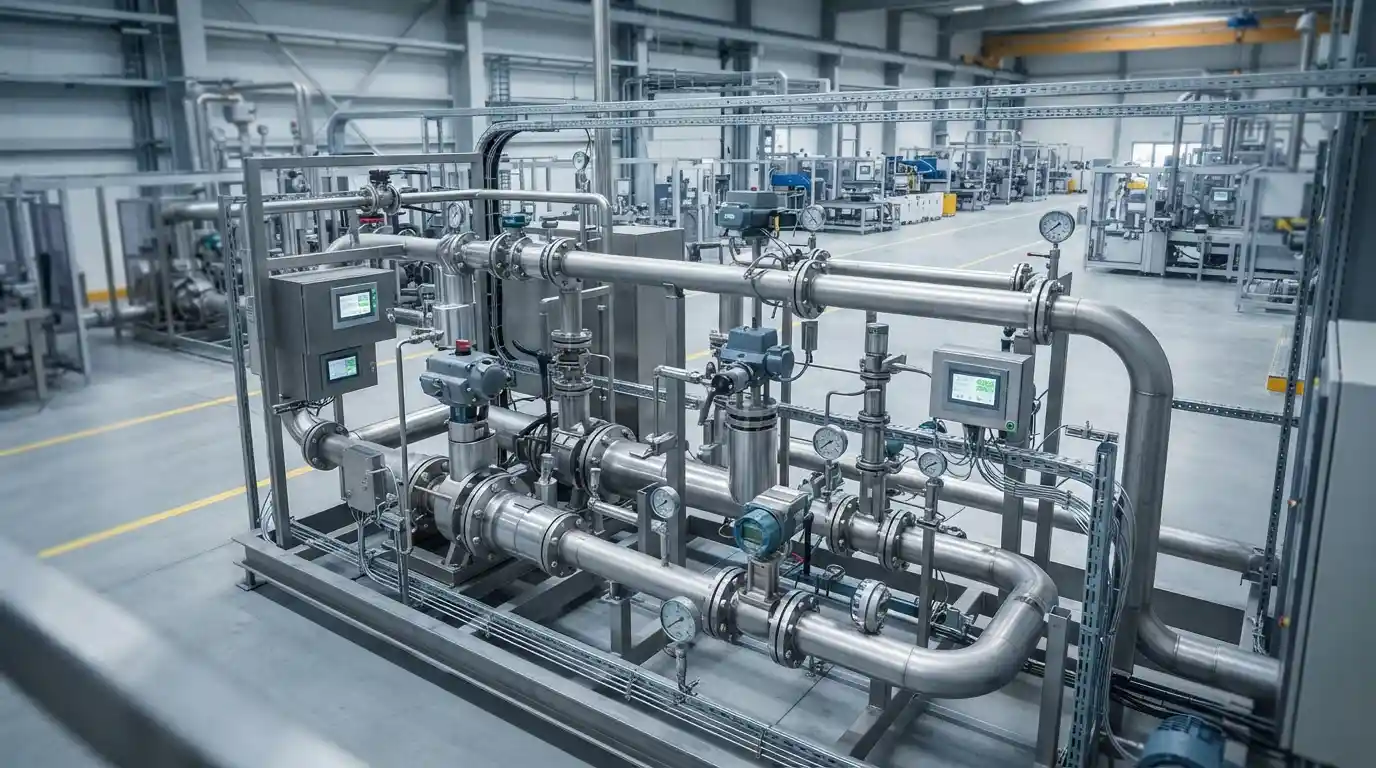
Azex Flow Technologies represents a topic closely connected with this broader industrial transformation. Flow-focused technologies can help manufacturers and industrial operators improve control, reliability, energy performance, and operational consistency. As industries increasingly adopt automation, connected equipment, and data-driven decision-making, the role of efficient flow management continues to expand.
This article explores how modern flow technology contributes to industrial performance, the role of automation and intelligent controls, and the factors businesses should consider when evaluating industrial flow solutions.
What Is Industrial Flow Technology?
Industrial flow technology covers the equipment, controls, measurement systems, and engineering practices used to manage the movement of liquids, gases, and other materials through industrial processes. Depending on the application, a flow system may involve pumps, valves, pipes, sensors, actuators, controllers, meters, and automated monitoring systems.
The objective is not simply to move material from one location to another. A well-designed system needs to deliver the required flow rate and pressure while maintaining reliability, safety, efficiency, and process stability.
This becomes especially important in facilities where even small inefficiencies can accumulate across thousands of operating hours. Improving one component may help, but optimizing the complete system can provide a broader operational benefit.
Why Flow Efficiency Matters in Modern Industry
Industrial facilities often operate complex networks of equipment simultaneously. Pumps may supply production lines, valves may regulate pressure, sensors may monitor operating conditions, and automated controllers may continuously adjust equipment based on process requirements.
If these components are not properly coordinated, energy can be wasted and equipment can experience unnecessary stress. Efficient flow management therefore becomes part of a larger strategy for improving industrial productivity.
Modern manufacturers are also paying greater attention to digital transformation in business services, automation, connected equipment, and data-driven operations. These developments are changing how industrial systems are monitored and maintained.
The Role of Pumps in Industrial Flow Systems
Pumps are fundamental components in many industrial flow applications. They provide the pressure and movement necessary to transport liquids through pipes, processing equipment, storage systems, and production lines.
However, selecting a pump simply according to maximum capacity is not always sufficient. A pump that is oversized for its normal operating conditions may consume unnecessary energy, while an undersized system may struggle to meet production requirements.
Variable-speed drives, improved controls, and better system design can help pumps operate closer to the conditions required by the process. These concepts also connect with broader industrial efficiency strategies involving motors, automation, and equipment optimization.
Businesses examining industrial technology can also explore Azex Flow Technologies as part of their research into flow-related industrial solutions and innovation.
Automation Is Changing Flow Management
Traditional industrial systems often depended heavily on manual adjustments. Modern facilities increasingly use automated valves, sensors, programmable controllers, and centralized monitoring platforms to manage operating conditions.
Automation can allow a system to respond more quickly when pressure, temperature, flow rate, or production requirements change. It can also reduce the need for constant manual intervention and provide operators with more visibility into equipment performance.
The broader movement toward automation is visible across many industries. Developments in business technology and industrial innovation demonstrate how technology is increasingly being used to improve operational processes.
Smart Controls and Real-Time Monitoring
One of the most important developments in industrial flow management is the growing use of real-time monitoring. Sensors can collect information about flow rates, pressure, temperature, vibration, energy consumption, and equipment status.
When this information is connected to control systems, operators can identify unusual operating conditions more quickly. Historical data can also help engineering teams understand recurring problems and determine whether equipment is operating efficiently.
This approach fits within the larger shift toward connected industrial environments. Technologies associated with industrial technology innovation can support organizations as they modernize equipment and integrate more intelligent systems.
Energy Efficiency and Flow Optimization
Energy efficiency is one of the strongest reasons companies evaluate flow systems. Pumps, compressors, motors, and other equipment can consume substantial amounts of energy during continuous industrial operation.
Flow restrictions, excessive pressure, inefficient equipment selection, and unnecessary recirculation can all affect system performance. A properly engineered system attempts to deliver the required process conditions without creating avoidable losses.
Industrial efficiency should therefore be viewed as a system-level objective rather than an isolated equipment upgrade. This principle is also relevant when examining industrial machinery costs and efficiency, where equipment performance can influence long-term operating expenses.
Reliability and Preventive Maintenance
Industrial flow systems must remain reliable because a failure in one component can affect an entire production process. Valve problems, pump failures, leaks, blockages, and sensor faults can create downtime and maintenance costs.
Preventive maintenance can reduce some of these risks by identifying wear and abnormal operating conditions before they develop into major failures. Digital monitoring can make this process more systematic by providing maintenance teams with information about equipment behavior.
The same principle applies to broader industrial operations, where companies increasingly focus on reliable supply chains and equipment availability. Related considerations can be seen in modern logistics reliability and operational efficiency.
Industrial Flow Technology and Manufacturing
Manufacturing facilities rely on controlled flows in numerous applications. Water, chemicals, compressed air, fuels, cooling fluids, steam, and other process materials may need to move through different parts of a facility.
Each application has different operating requirements. A system designed for clean water may have very different material, pressure, temperature, and control requirements from a chemical-processing application.
Manufacturers therefore need to evaluate the complete operating environment before selecting flow equipment. Equipment compatibility, maintenance requirements, process conditions, safety considerations, and future capacity should all be considered.
The connection between technology and manufacturing is also explored through modern manufacturing strategy and digital transformation, where operational technology increasingly works alongside digital business systems.
How Data Can Improve Industrial Decision-Making
Industrial organizations generate large quantities of operational data. Flow meters, pressure sensors, energy meters, programmable controllers, and other devices can provide valuable information about how a production system performs.
The challenge is turning that information into useful decisions. Data becomes more valuable when it helps teams identify bottlenecks, compare performance, detect abnormal conditions, and prioritize maintenance or efficiency projects.
This is one reason enterprise technology integration is becoming increasingly important. Industrial systems can no longer be viewed entirely separately from the broader digital infrastructure supporting a business.
Industrial Innovation Beyond Flow Control
Flow technology is only one part of the larger industrial innovation landscape. Companies are also investing in smarter machinery, connected production systems, advanced analytics, automation, and more efficient energy management.
These developments can work together. For example, a flow-control system may provide operating data that feeds into a larger monitoring platform, while production software can use that information to identify inefficiencies.
Organizations interested in broader technological modernization can also examine developments such as advanced technology systems and product innovation to understand how specialized technologies continue to evolve across different markets.
Choosing an Industrial Flow Solution
Businesses evaluating flow technology should begin with the actual requirements of the process rather than selecting equipment based only on headline specifications.
Important considerations can include:
- Required flow rate and operating pressure
- Fluid or material characteristics
- Operating temperature
- Equipment compatibility
- Energy consumption
- Automation requirements
- Monitoring and control capabilities
- Maintenance accessibility
- Expected operating life
- Total lifecycle cost
- Future production requirements
Lifecycle cost is particularly important. A lower initial purchase price does not necessarily represent the lowest long-term cost if equipment requires frequent maintenance or consumes significantly more energy during operation.
The Connection Between Flow Technology and Business Efficiency
Industrial engineering decisions ultimately influence business performance. Equipment that consumes less energy, operates reliably, and requires fewer unplanned interventions can contribute to more predictable operating costs.
This relationship is particularly important for organizations pursuing broader business transformation and operational modernization. Digital strategy and physical operations increasingly overlap as companies connect production data with business decision-making.
Businesses can also learn from the broader principles behind data-driven optimization, where measurable performance indicators are used to identify opportunities for improvement.
Industrial Technology and Supply Chain Performance
Efficient production does not exist in isolation. Manufacturing performance can affect inventory, transportation, scheduling, customer fulfillment, and overall supply chain reliability.
When equipment operates consistently, organizations can plan production more effectively. Conversely, unexpected equipment downtime can create delays that extend beyond the factory floor.
This makes industrial efficiency relevant to the broader supply chain. Companies exploring this connection can also review supply chain efficiency and logistics management as part of a wider operational strategy.
The Future of Industrial Flow Technology
The future of industrial flow management is likely to involve greater automation, improved sensing, connected equipment, predictive maintenance, and more sophisticated control systems.
Industrial operators are increasingly interested in knowing not only whether equipment is working, but also how efficiently it is working and when its performance begins to change.
Artificial intelligence, machine learning, digital twins, and Industrial Internet of Things technologies may further expand the ability of facilities to analyze operating conditions and optimize equipment performance.
This broader technological direction can be seen in discussions surrounding technology-driven operational efficiency and connected supply-chain systems.
Why Industrial Efficiency Requires a System-Level Approach
Improving one component can provide benefits, but the greatest opportunities often come from examining how the entire system works together. Pumps, valves, motors, sensors, controllers, pipelines, and production equipment all influence overall performance.
A system-level review can help organizations identify whether equipment is correctly sized, whether control strategies are appropriate, whether energy is being unnecessarily consumed, and whether maintenance practices support reliable operation.
This approach also aligns with the principles of digital transformation, where connected technologies are used to improve visibility and decision-making across an organization.
Final Thoughts
Azex Flow Technologies fits into a broader industrial landscape where efficient flow management, automation, equipment reliability, and technological innovation are becoming increasingly interconnected.
For industrial organizations, the goal should not simply be to install newer equipment. The more important objective is to create systems that deliver the required performance efficiently, reliably, and consistently.
As industrial facilities become more connected and data-driven, flow technology can play an important role in improving process control and operational visibility. Companies that evaluate equipment according to energy performance, lifecycle costs, automation potential, maintenance requirements, and actual production needs will be better positioned to make informed technology decisions.
The continuing evolution of industrial automation and connected technologies suggests that flow management will remain an important part of modern manufacturing and process optimization.



