
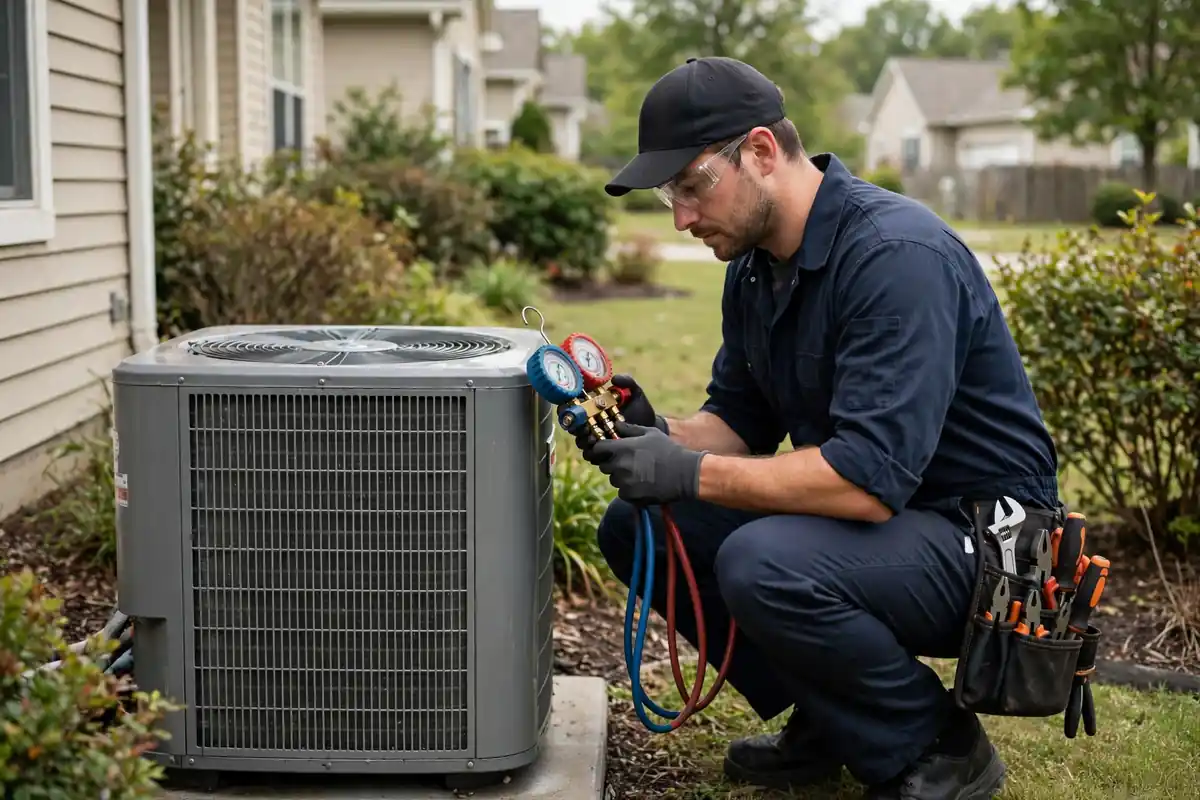
Your air conditioner works hardest exactly when you can least afford for it to quit. That is why homeowners ask one question every spring: how often service air conditioner units really need to stay reliable? The short answer is once a year, but the useful answer includes what that visit covers, which tasks you should do yourself between visits, and the warning signs that mean “do not wait for the annual tune-up.” Here is the full picture.
How Often to Service Your Air Conditioner: The Yearly Rule
Nearly every manufacturer and HVAC professional recommends a professional tune-up once a year. Scheduling it in spring, before the first heat wave, means small problems are fixed while technicians are still available and parts are in stock. Many manufacturers also tie warranty coverage to documented annual maintenance, so skipping service can cost more than the visit itself.
Heat pumps are the exception: because they heat in winter and cool in summer, they work year-round and typically benefit from service twice a year, once before each main season. If your home relies on a heat pump, plan both visits. The scheduling mindset matches other seasonal home care, like the routine visits described by the air conditioning repair team in Shelby, whose customers book ahead to beat the summer rush.
What a Professional Tune-Up Includes
A real tune-up is a checklist, not a glance. A thorough technician typically:
- Cleans the outdoor condenser coil and checks the indoor evaporator coil.
- Tests refrigerant levels and inspects for leaks.
- Checks electrical connections, capacitors, and contactors for wear.
- Lubricates moving parts and inspects belts where fitted.
- Tests the thermostat and confirms accurate temperature control.
- Clears the condensate drain line to prevent water damage and shutdowns.
- Measures airflow and temperature difference across the system.
- Inspects ductwork connections for obvious leaks.
This is the same standard of care praised in reviews of regional providers like the Somerset air conditioning service, where customers value technicians who measure rather than guess. If a “tune-up” offer seems too cheap to include this list, it probably does not include it.
What a Tune-Up Costs
As a planning range, many homeowners report paying roughly $75 to $200 for a standard annual tune-up, with maintenance plans from local companies sometimes lowering the per-visit cost while adding perks like priority scheduling and repair discounts. Given that an emergency mid-summer repair call, plus a failed compressor or motor, can run into the hundreds or thousands, the annual visit is inexpensive insurance. Budgeting for it fits neatly into the seasonal planning approach in our beginner budgeting guide, and some households fold HVAC care into broader coverage such as the Constellation home service plans.
DIY Tasks Between Professional Visits
Professionals handle the technical work, but two homeowner habits make the biggest difference of all.
Change or Clean the Filter
A clogged filter strangles airflow, forcing the system to run longer, cool less, and wear faster. Check yours monthly during cooling season and replace or wash it as directed, commonly every one to three months depending on filter type, pets, and dust. This single habit prevents a large share of service calls.
Keep the Outdoor Unit Clear
Trim plants at least two feet away from the condenser, clear leaves and debris from the top grille, and keep the unit level. Gentle rinsing of the outdoor coil with a garden hose, power off, keeps heat transfer efficient. Pairing these habits with seasonal deep cleaning, as in our Happy Home Cleaning Services feature, keeps indoor air and equipment cleaner together.
A smart thermostat can also help by running the fan sensibly and alerting you to unusual patterns, one of the practical gadgets in our roundup of smart home devices you didn’t know you needed.
Signs Your AC Needs Service Now, Not in Spring
- Warm air or weak airflow from vents despite the system running.
- Short cycling: the unit turns on and off every few minutes.
- Unusual noises: grinding, squealing, or banging are never normal.
- Ice on the refrigerant lines or the indoor coil.
- Spiking energy bills without a change in weather or habits.
- Musty odors or water around the indoor unit, suggesting drain problems.
Any of these deserves a call promptly. Running a struggling system usually converts a small repair into a big one, and a reserve fund, built using our emergency fund guide, turns that call from a crisis into a chore. Households that manage health conditions at home, like those supported by Epic Home Health Services, should treat reliable cooling as a genuine health priority during heat waves rather than a comfort upgrade.
What Happens If You Skip Service for Years?
Neglect compounds quietly. Dirty coils can raise energy use noticeably, worn electrical parts strain the compressor, and a clogged drain can cause water damage to ceilings and floors. The most expensive component in the system, the compressor, depends on everything around it being clean and correctly charged. Most premature system failures trace back to years of skipped maintenance rather than a single dramatic breakdown.
There is also a paper trail issue: when a system fails under warranty, manufacturers may ask for maintenance records. Keeping invoices from reputable providers, vetted the way our Triumph Home Services reviews suggest vetting any home pro, protects you twice over.
Special Cases: New Systems, Old Systems, and Second Homes
New systems still need annual service; the visits are simpler but keep the warranty airtight and catch installation issues early. Older systems, past ten years or so, benefit most from tune-ups, since a technician can flag when repair money would be better saved toward replacement. For second homes and rentals, service before the season plus a Wi-Fi thermostat for remote monitoring prevents the unpleasant surprise of arriving to a hot, humid house, an issue the HVAC-focused analysis in our San Jose HVAC industry piece touches on from the business side.
How to Choose the Right Company for Maintenance
The best tune-up is only as good as the technician performing it, so choose the company with the same care you would give any major home hire. Look for licensed, insured firms with strong local reviews that mention thoroughness, not just friendliness. Ask directly what their tune-up includes and compare the answer against the checklist earlier in this guide; vague answers predict a rushed visit. Transparent pricing, written findings after each visit, and honest advice about repairs versus replacement are the marks of a company that plans to keep you as a customer for a decade.
Be cautious with door-to-door tune-up specials priced far below the local norm. The visit itself may be real, but the business model sometimes depends on finding expensive “problems” once the technician is inside. That does not mean every high recommendation is a scam; aging systems genuinely develop issues. It does mean you should feel free to get a second opinion on any large repair quote before approving it, especially mid-season when urgency is doing the persuading.
Once you find a good company, stay with them. A provider who services the same system year after year builds a history of readings and repairs that makes diagnosis faster and advice better calibrated: they know your unit’s age, its quirks, and when a repair stops making sense. That continuity is worth more than the small savings from chasing whichever coupon arrives in the mail each spring.
Frequently Asked Questions
Can I service my AC myself instead?
You can and should handle filters and outdoor cleanup. The rest, refrigerant, electrical testing, and internal cleaning, needs licensed tools and training. DIY the basics, hire the annual technical visit.
What month is best for a tune-up?
Early spring, before the first sustained heat. You get faster scheduling, and any needed repairs happen before peak season pricing and queues.
Does servicing really extend the system’s life?
Yes. Clean coils, correct refrigerant, and healthy electrical parts reduce strain on the compressor and motors, which is how systems reach their full expected lifespan instead of failing early.
Is a maintenance plan better than paying per visit?
For most homeowners, a reasonably priced plan wins through included tune-ups, priority booking during heat waves, and repair discounts. Compare the plan’s total cost against two standalone visits before deciding.
It also helps to keep one simple record: a folder or phone note with each service date, what was done, and any recommendations you declined. When a technician later suggests a major repair, that history lets you judge whether the advice fits a pattern or arrives from nowhere, and it makes warranty conversations far easier.
The Bottom Line
Service your air conditioner once a year, in spring, and twice a year for a heat pump system. Check and change filters monthly in cooling season, keep the outdoor unit clear, and treat strange noises, ice, or weak cooling as reasons to call immediately rather than waiting. An hour of professional attention each year, plus a few minutes of your own attention each month, is genuinely the cheapest comfort your home buys.