Ants marching across the counter, scratching sounds in the attic, or a line of termite wings on the windowsill all lead to the same search: how much does pest control cost for a home? Prices depend heavily on the pest, the size of your home, and whether you need a one-time fix or ongoing protection. This guide explains the ranges American homeowners typically see, what a visit actually includes, and how to spend wisely.
Note: figures below are commonly reported U.S. planning ranges, not quotes. Local companies and your specific situation will set the final price.
How Much Does Pest Control Cost? Typical Prices
For standard household pests like ants, spiders, roaches, and silverfish, homeowners commonly report:
- One-time treatment: roughly $250 to $550 for a single visit, depending on home size and infestation level.
- Recurring plans: an initial visit often in the $200 to $350 range, followed by quarterly visits commonly around $100 to $250, or monthly visits at lower per-visit prices.
- Initial inspection: frequently free or discounted when you sign up for a plan, and charged separately if you do not.
Recurring service is usually the better value for general pests, because treatments are designed to build a barrier that is refreshed before it fades. That rhythm is similar to other recurring home care, from the cleaning schedules in our Happy Home Cleaning Services feature to the service plans reviewed in our Triumph Home Services reviews.
Cost by Pest: The Problem Sets the Price
Ants, Spiders, and Roaches
These sit at the affordable end because treatments are straightforward. German cockroaches are the exception: apartment-style infestations often need several visits plus strict preparation, which pushes the total higher.
Termites
Termites are the most expensive common pest. Liquid barrier treatments or bait systems for a typical home commonly run from about $1,000 to $3,000 or more, with annual monitoring or renewal fees for bait systems. Full fumigation for drywood termites can cost several thousand dollars depending on home size. Given that termite damage is rarely covered by standard homeowner’s policies, a point worth confirming through guides like our insurance protection overview, prevention and early detection are worth real money here.
Rodents
Rodent control combines trapping, exclusion work to seal entry points, and follow-up visits. Homeowners often report totals in the $300 to $800 range for a standard problem, with attic cleanup or extensive sealing adding more.
Bed Bugs
Bed bug treatments are labor-intensive, typically ranging from about $1,000 to $3,000 or more depending on the number of rooms and the method, heat or chemical. Preparation requirements are strict, and reputable companies explain them in writing.
Mosquitoes and Wasps
Seasonal mosquito programs commonly run a few hundred dollars across the season or a per-visit fee in the $60 to $150 neighborhood. Wasp nest removal is often a single visit, frequently $100 to $300, priced higher for nests in difficult locations.
What a Pest Control Visit Includes
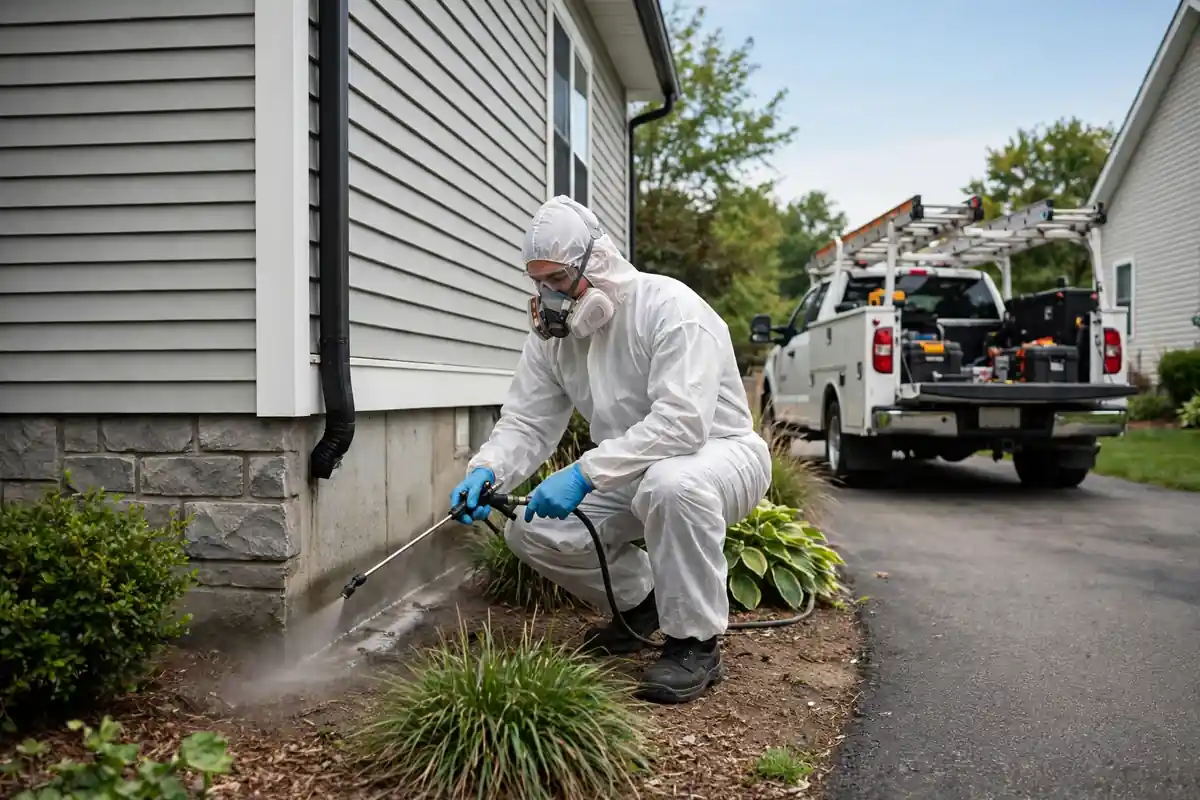
A quality first visit starts with inspection: identifying the pest, entry points, and conditions inviting them, such as moisture, food access, or clutter against the foundation. Treatment follows, targeted to the pest rather than blanket spraying, and a good technician explains what was used and where.
Between-visit guarantees are a hallmark of reputable plans: if pests return before the next scheduled treatment, the company retreats at no charge. Ask how that promise works in practice. Homeowners who also schedule regular upkeep, like the seasonal visits from the Somerset air conditioning team, often align pest visits into the same home-care calendar. For peace of mind about who is working around your home, pair this research with our home security services guide.
What Drives the Price Up or Down
- Home size and layout: more square footage and multiple structures mean more product and time.
- Infestation severity: a few ants cost less than an established colony or widespread German roach problem.
- Access: cluttered attics, tight crawl spaces, and nests at height slow the work.
- Region: labor markets and pest pressure differ; warm, humid regions often need more frequent service.
- Method: heat treatments, fumigation, and exclusion work cost more than standard applications.
Budgeting for these variables is easier with a household plan, and the approach in our beginner budgeting guide helps you fold seasonal home services into one realistic number. Some homeowners also hold broader coverage like the Constellation home service plans for appliances and systems, though pest control is normally arranged on its own.
DIY vs. Professional Pest Control
Store-bought sprays and traps handle minor, early problems: a few ants at a window or a single mouse. DIY fails when the problem is established, hidden, or structural: termites inside walls, bed bugs across rooms, or rodents breeding in an attic. In those cases, months of product purchases can exceed a professional’s fee while the damage grows.
Professionals bring identification skills, commercial-grade products, and a plan. Misidentifying a pest wastes money on the wrong treatment, which is why the inspection step matters so much. For rental and resale situations, documented professional service also reassures buyers, complementing the property research habits in our Aweigh Real Estate guide. Households focused on overall wellbeing, as in our profile of Epic Home Health Services, often treat pest management as part of a healthy home environment rather than a cosmetic extra.
How to Save Money Without Cutting Corners
- Fix the invitations: seal cracks, repair leaks, store food in sealed containers, and trim vegetation off the house. Prevention lowers how much treatment you need.
- Compare plans, not visits: a cheaper quarterly plan with a real re-service guarantee beats a pricier one without it.
- Ask about bundling: some companies discount when general pest and mosquito or termite monitoring combine.
- Prepare properly: following prep instructions the first time avoids paid repeat visits for problems like bed bugs.
- Act early: almost every pest is cheaper in week one than month three.
Questions to Ask Before You Sign
Ask what pests are covered and, just as importantly, which are not, since termites, bed bugs, and wildlife are commonly excluded from base plans. Confirm whether interior treatment is included or exterior only, how re-service requests work, and whether the contract locks you in or can be cancelled. Request the product names used and any safety guidance for children and pets. Clear answers, given in writing, are the sign of a company worth the fee.
Preparing Your Home Before and After Treatment
A little preparation makes every dollar of pest control work harder. Before a visit, clear clutter from baseboards and under sinks, vacuum thoroughly (the vibration can draw pests out of hiding, which actually helps treatments work), and store pet food in sealed containers. Move pet bowls and children’s toys away from treatment areas, and plan for any re-entry times the technician specifies for indoor applications.
After treatment, resist the urge to deep-clean treated surfaces immediately, since mopping baseboards can remove the residual barrier you just paid for; your technician will say how long to wait. Then keep the habits going: wipe up crumbs and standing water, fix the dripping faucet, and take trash out on schedule. These small routines, close cousins of the healthy-home habits in our GoldenGoalPress wellness guide, are what turn a single treatment into lasting protection rather than a monthly emergency.
Finally, keep a simple log of visits, products used, and what you noticed between appointments. Patterns in that log, like ants returning to one bathroom after rain, help your technician target the real source next time instead of repeating a general application.
Frequently Asked Questions
Is a pest control contract worth it?
For general pests in most climates, yes. Recurring barrier treatments prevent the infestations that make one-time visits expensive, and the guarantee smooths out surprises.
How long does a treatment last?
Exterior barrier treatments are typically designed to hold for roughly a season, which is why quarterly visits are standard. Heavy rain and landscaping work can shorten that window.
Are treatments safe around kids and pets?
Licensed technicians apply products according to label directions and will tell you how long to keep children and pets away from treated areas. Always ask, and follow the guidance exactly.
Do I need to leave the house during treatment?
For routine exterior-focused service, usually not. Fumigation and some interior treatments do require leaving for a set period, and your company will explain the timing in advance.
One more budgeting note: if you are choosing between a one-time treatment now or a plan that starts today, remember that plans usually include the first treatment at a lower effective price, plus the guarantee. For homes with recurring ant or spider pressure, that math favors the plan in most cases.
The Bottom Line
So, how much does pest control cost? Expect a few hundred dollars for one-time general treatment, less per visit on a recurring plan, and four figures for termites or bed bugs. The pest, your home’s size, and how early you act decide where you land. Get the inspection, compare guarantees rather than headlines, and fix the conditions inviting pests in, and you will spend less for a calmer, cleaner home.