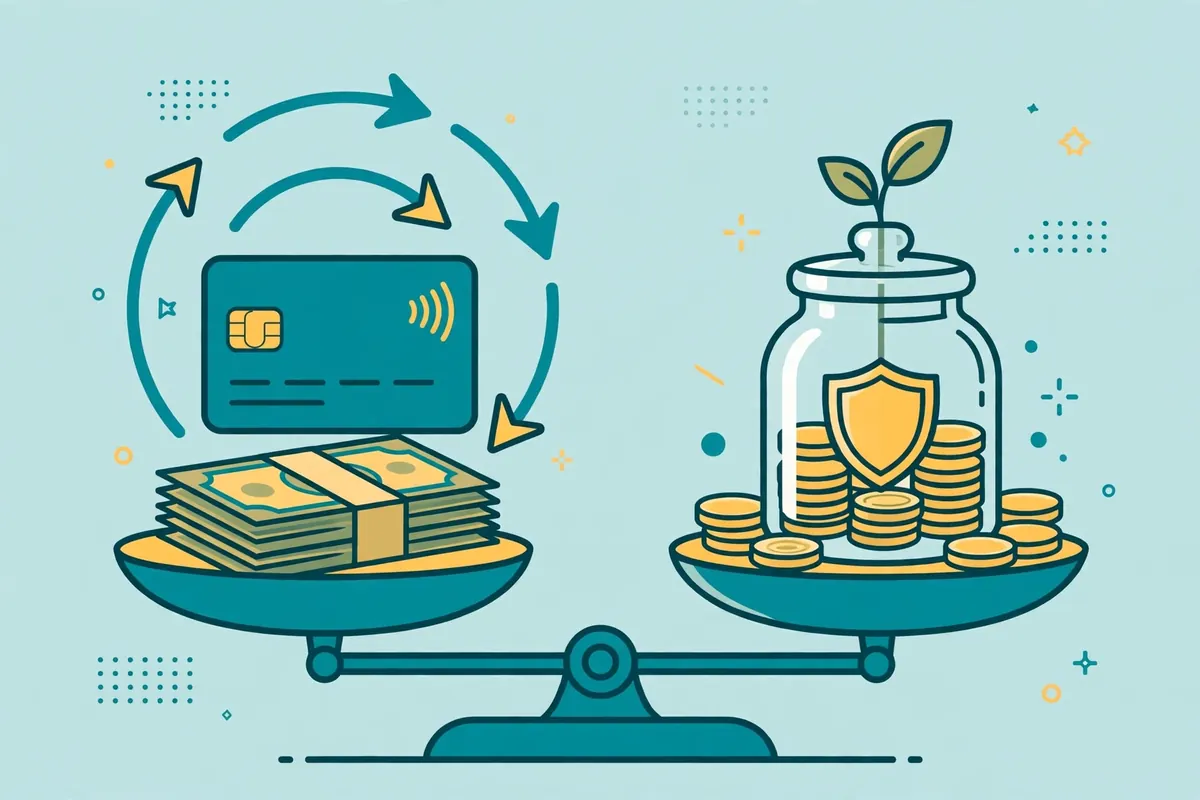
Customers reach for a card by default now, and a business that cannot take one loses sales it never hears about. The good news is that accepting cards has never been simpler or cheaper to start, whether you sell at a market stall, in a store, or from your kitchen table.
This guide explains how to accept credit card payments as a small business, covering in-person, online, and invoice payments. You will learn the setup steps, the real costs, and the habits that keep fees and disputes under control.
By the end, you will be able to choose the right option for your business in about an hour of setup work.
Why Card Payments Are No Longer Optional
Cards make spending easy, and customers buy more when payment is effortless. They also create a record of every sale, which simplifies bookkeeping and makes your revenue visible to lenders later.
Businesses that add card acceptance commonly see larger average tickets, because customers are not limited by the cash in their pockets. For service businesses, cards also reduce the awkward chase for payment after the work is done.
The shift is part of the broader move examined in this article on switching to fully digital payments, and it shapes everything from your pricing to your daily routine in this guide to small business cash flow.
Your Main Options for Accepting Cards
There are three practical routes, and many businesses use more than one. The right mix depends on where and how you sell.
Payment service providers (the fastest start)
Companies in this category give you an account within minutes, simple flat-rate pricing, and apps or readers that work with your phone. You operate under their master merchant setup, so there is no individual underwriting.
This route suits new and small businesses perfectly. You can graduate to a dedicated setup later when volume makes the math worthwhile. Where settled funds should wait is a separate question, covered by this comparison of money market vs savings accounts.
A dedicated merchant account
With your own merchant account through a processor, pricing is more flexible and often cheaper at higher volumes, and your account is more stable. Approval takes longer and involves a review of your business.
Retailers, restaurants, and established service firms often land here once monthly card volume grows into the thousands.
Through your existing software
Many invoicing, booking, and ecommerce platforms include card acceptance built in. The rates may not be the lowest, but having payments inside the tool you already use saves time and reduces errors.
How to Accept Cards In Person
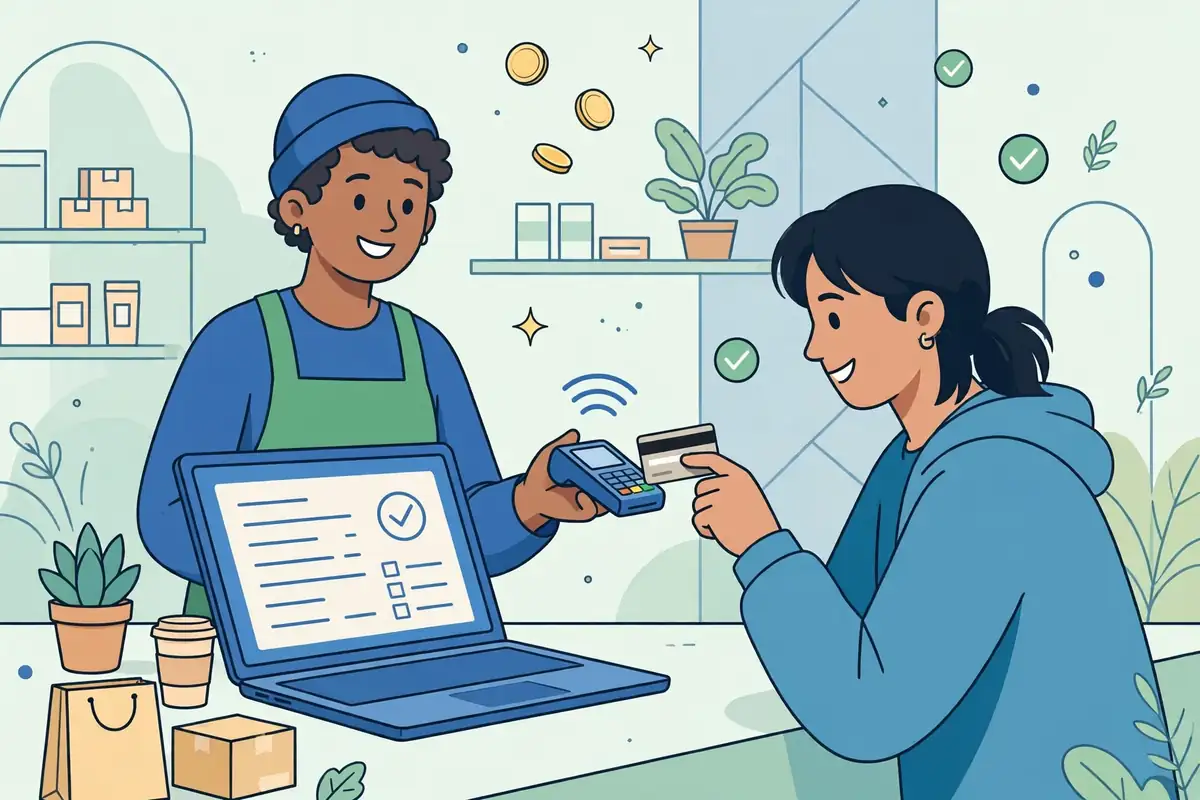
For face-to-face sales you need a way to read the card: a countertop terminal, a mobile reader paired with your phone, or a full point-of-sale system. Modern readers accept chip cards, contactless taps, and phone wallets.
Setup is simple. Create your provider account, order or buy the reader, connect it to the app, and run a small test transaction before your first real customer.
Always offer a receipt, paper or digital. Receipts reduce disputes later because they document what was sold, when, and for how much. If you operate from a physical location, keep your reader charged and your internet backup plan ready, because a dead reader at a busy moment costs real money. New retailers planning their launch will find the rest of the setup sequence in this guide to starting a business in the USA.
How to Accept Cards Online
Online acceptance starts with a payment gateway connected to your store or website. Most ecommerce platforms include this natively, so activating payments is often a matter of completing verification and entering your bank details.
For service businesses without a store, payment links and online invoices achieve the same result. You send the customer a secure page, they pay by card, and the money settles to your account.
Security is handled by the provider in most modern setups, but you still must use secure pages, keep your site updated, and never store card numbers yourself. Sellers building a full online store should pair this with the storefront steps in this guide to starting an ecommerce business.
How to Accept Cards by Invoice and Phone
Contractors, consultants, and freelancers often get paid after the work. Digital invoices with a pay-by-card button dramatically shorten the wait, because clients can pay in one click from the invoice email.
Taking cards by phone is also possible through a virtual terminal, a secure web page where you key in the customer’s details with their permission. Follow your provider’s security guidance carefully for these transactions, since they carry more fraud risk and often a slightly higher rate.
Whichever method you use, record the payment against the invoice immediately. The tidy routines in this small business bookkeeping guide prevent the classic problem of being paid twice for one job or not at all for another.
What It Costs: Fees in Plain English
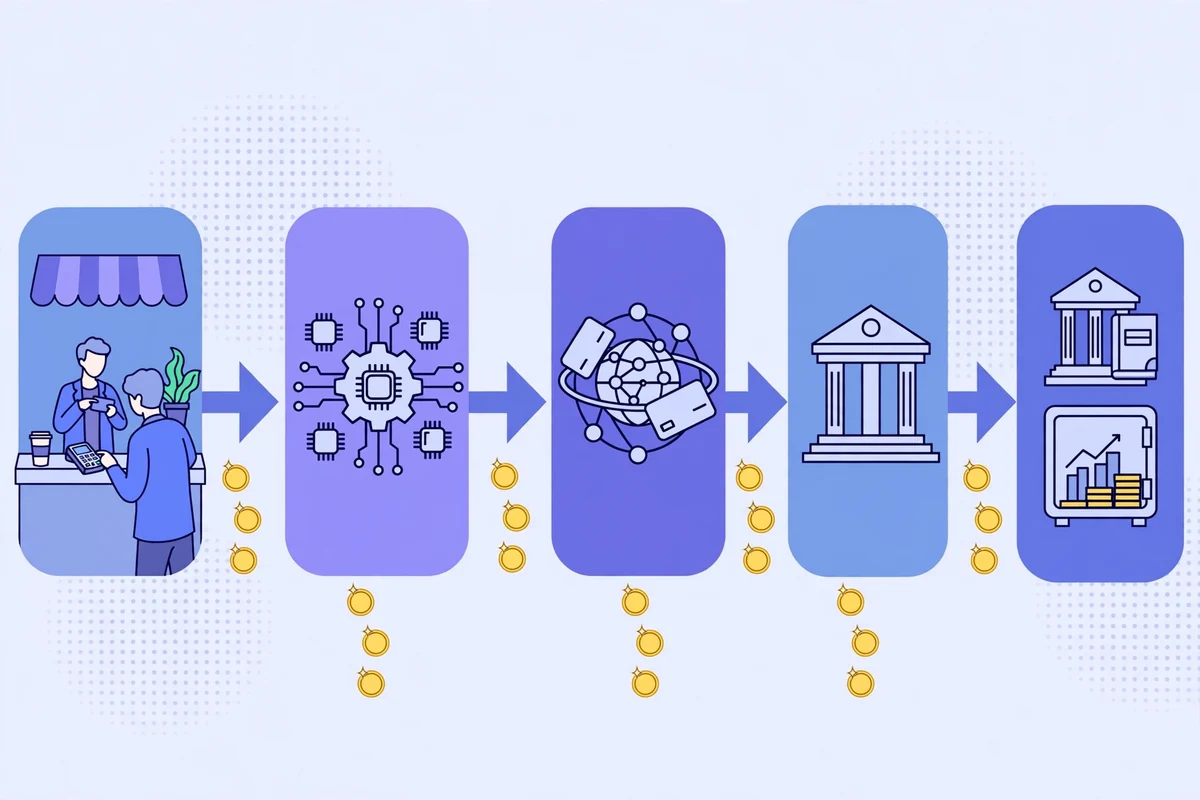
Every card payment carries a processing cost, usually a percentage of the sale plus a small fixed amount. The exact rate depends on your provider’s pricing model, the card type, and whether the card was present.
- Interchange: the base cost set by card networks, paid to the customer’s bank
- Processor markup: what your provider adds for its service
- Flat-rate pricing: one simple blended rate, common with beginner-friendly providers
- Extras: possible monthly, gateway, terminal, or chargeback fees depending on the plan
You cannot eliminate these costs, but you can manage them. Compare total cost at your expected volume, and revisit the comparison as you grow. This kind of periodic review belongs in the same routine as checking your startup and operating cost plan each quarter.
Can you pass fees to customers?
Surcharging rules vary by state and card network, and cash discount programs have their own requirements and disclosure rules. Some states restrict surcharges on credit cards. If you are considering it, check your state law and network rules first, and weigh the customer reaction carefully. Many businesses prefer to price products with card costs already included.
Step-by-Step: Getting Set Up Today
First, choose your provider based on how you sell. In-person sellers prioritize readers and POS features. Online sellers prioritize gateway and platform integrations. Invoice-based businesses prioritize billing tools.
Second, complete verification. You will typically provide business details, your tax ID, and bank account information for deposits. Having your registration documents ready speeds this up, including your structure decision from this comparison of LLC vs sole proprietorship.
Third, connect your equipment or website, run test transactions, and confirm a test deposit lands in your bank account. Fourth, train anyone who takes payments on refunds, receipts, and end-of-day batching. Then you are ready to sell, and to record it all cleanly from day one.
Protect Yourself From Fraud and Chargebacks
Most disputes are preventable. Use a clear business name as your billing descriptor so customers recognize the charge on their statement. Ship with tracking for physical goods. Keep proof of delivery and of customer communications.
For in-person sales, prefer chip and tap over manual entry, because card-present transactions carry stronger protections. For online sales, use your provider’s fraud filters and be cautious with unusually large first orders.
When a dispute does arrive, respond before the deadline with organized evidence. A calm, documented response wins many cases, and a healthy payment history supports everything from supplier terms to the financing options in this guide to small business loans.
Taking Deposits and Partial Payments Without Friction
Service businesses often need money before the work is finished: a deposit to book the date, progress payments on a long job, and the balance on completion. Card payments make each stage simple when your process is clear.
State the schedule in your agreement before the first charge: the deposit amount, what it reserves, when further payments fall due, and your refund policy for cancellations. Then send each request as a clean invoice with a pay button, so the customer never has to read card numbers over the phone or hunt for a payment page.
Deposits also protect your calendar. Clients who have paid something show up, reschedule less, and take the engagement seriously. For many small firms, adding a modest deposit policy improves cash flow more than any rate negotiation, because it moves money earlier without raising prices at all.
Frequently Asked Questions
Do I need a business bank account to accept cards?
Providers deposit to the account you designate, and a dedicated business account is strongly recommended. It keeps records clean, looks professional, and supports your applications when you start building business credit.
How fast will I receive my money?
Most providers deposit within one to a few business days after the sale settles. Some offer faster or instant payouts for an extra fee. Check the schedule before choosing, because timing affects payroll and supplier payments.
What if my business is brand new with no history?
Beginner-friendly payment providers approve new businesses every day with minimal paperwork. Start there, process cleanly, and your history becomes an asset when you negotiate better pricing later, just as described for new founders in this piece on becoming an entrepreneur.
Final Thoughts
Learning how to accept credit card payments is a one-time setup with permanent benefits: more sales, faster payment, cleaner records, and happier customers. Pick the route that matches how you sell, run your test transaction today, and let every future customer pay the way they prefer.