Your business earns money in one account and spends from the same place, and by tax season nobody can tell what anything was for. That single-account tangle is exactly what the business checking vs savings account decision is meant to fix.
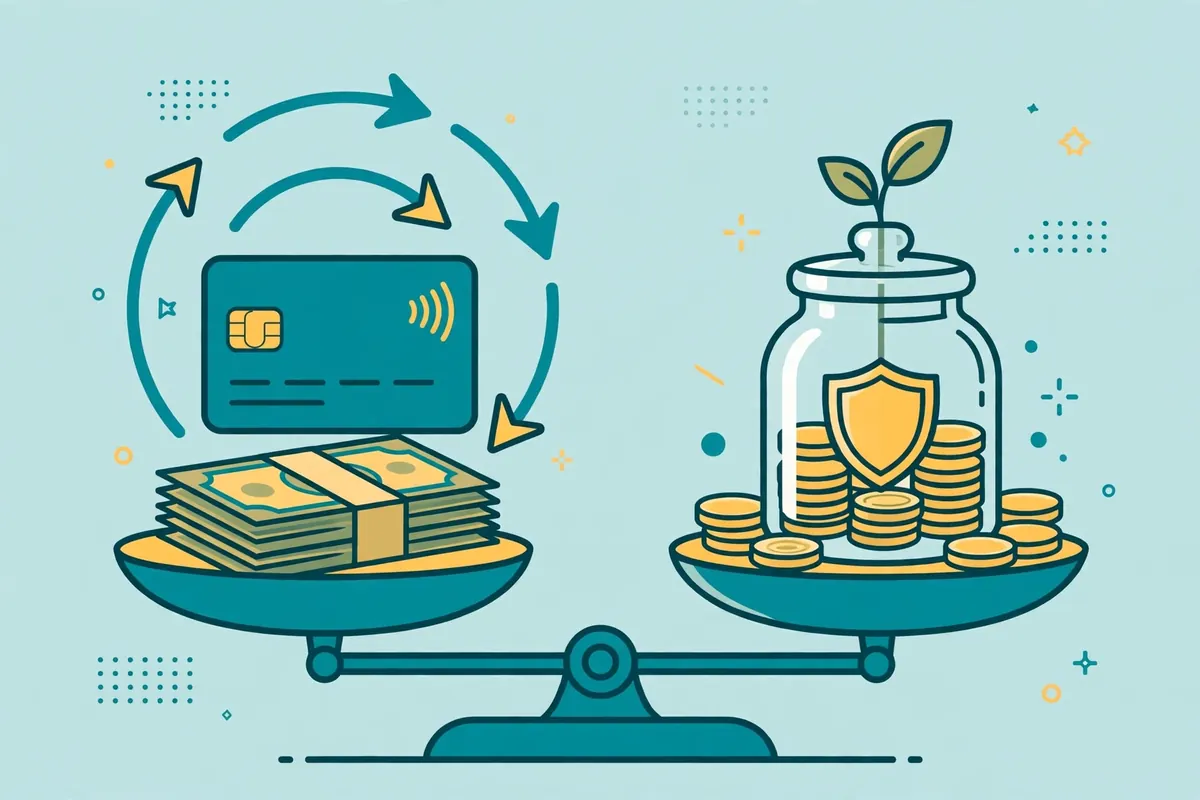
Each account does a different job. Checking is your operating hub for daily money in and out. Savings is your holding area for money you will need later, from taxes to a planned equipment purchase.
This guide compares the two honestly: features, fees, interest, limits, and a simple two-account system any small business can run.
The Job of a Business Checking Account
Checking is built for movement. Deposits from customers, card settlements, bill payments, payroll, and supplier transfers all flow through it, usually without monthly transaction caps at most modern banks and fintechs.
Because money moves constantly, checking accounts typically pay little or no interest. You accept that trade because liquidity and convenience are the point.
Look for low or no monthly fees, free or generous transaction allowances, easy mobile deposits, and integrations with your accounting and payment tools. If card settlements land here, and the move toward digital tools described in this look at switching to a digital payment wallet will shape your daily balance rhythm.
The Job of a Business Savings Account
Savings is built for parking money with a purpose. Taxes owed, quarterly insurance premiums, a future hire, or a slow-season cushion all belong somewhere they will not be spent by accident.
In exchange for fewer withdrawals, savings accounts usually pay interest. Rates vary widely between traditional banks and online banks, so shop around rather than accepting the default offer attached to your checking account.
Some owners add a third holding option once reserves grow. This comparison of money market vs savings accounts explains when a money market account’s blend of interest and access makes sense.
Business Checking vs Savings Account: The Differences That Matter
Access and transactions
Checking allows frequent, unlimited-style use: debit card purchases, transfers, bill pay, and checks. Savings accounts are designed for occasional transfers out, and some banks still limit monthly withdrawals or charge for excess activity.
Interest
Savings usually pays noticeably more than checking, especially at online banks. On a growing tax reserve, that difference quietly becomes real money over a year.
Fees
Both can carry monthly maintenance fees, often waived with a minimum balance. Checking may add fees for cash deposits or extra transactions on basic plans. Always compare the fee schedule against how you actually bank, using the same total-cost thinking as this analysis of startup costs.
Purpose
The simplest summary: checking is for this month’s business, savings is for future obligations and goals. If you remember nothing else from business checking vs savings account comparisons, remember that.
A Simple Two-Account System That Works
Open both accounts, ideally at the same bank for instant transfers. Route all income into checking. Pay all operating expenses from checking.
Then set a standing rule: every time money arrives, move a fixed percentage into savings for taxes, and a second slice for your reserve goal. Percentages keep the system automatic, so a great month builds reserves and a slow month still adds something.
This is the same discipline behind the reserves in this emergency fund guide and the timing habits in this small business cash flow guide. Owners who automate transfers rarely face surprise tax bills.
What belongs in savings
- Income and sales tax you expect to owe
- Quarterly or annual bills like insurance and licenses
- A cushion of one to three months of core expenses
- Savings toward a specific purchase, such as equipment or a vehicle
What stays in checking is simpler: enough to cover the next few weeks of operations, plus a small buffer so a late customer payment never causes an overdraft.
How Much Should You Keep in Each?
There is no universal number, but a practical pattern helps. Keep roughly one month of operating expenses in checking as your working floor. Sweep anything above that floor into savings on a set day each week or month.
Your tax percentage depends on your structure and state, so confirm a sensible set-aside rate with your tax professional. The record habits in this bookkeeping guide make that conversation quick and accurate.
Review the split quarterly. As revenue grows, both balances should grow with it, and your savings goals can expand from taxes to genuine investment in the business, such as the growth steps in this guide to building business credit.
Choosing the Right Bank for Both Accounts
Traditional banks offer branches and relationship lending. Online banks often offer higher savings rates and lower fees. Credit unions can offer a member-focused middle ground.
Judge on five practical points: total fees at your balance level, the savings rate, transfer speed between your own accounts, software integrations, and customer support quality. Branch access only matters if you deposit cash regularly.
If your business is new, you can open both accounts during the same setup week as your registration and payment tools, following the sequence in this complete guide to starting a business in the USA. Pairing the accounts with the funding readiness in this guide to small business loans gives you a complete money-in, money-out system.
Common Mistakes With Business Accounts
- Running the whole business from one account and sorting it out at tax time
- Leaving a full year of reserves in checking where they earn nothing and get spent
- Ignoring minimum balance rules and paying avoidable monthly fees
- Mixing personal and business money, which clouds records and liability protection
- Never raising the savings rate as income grows
Each mistake is a habit problem, not a knowledge problem. Fix the habit with automatic transfers and a monthly fifteen-minute review, the same review rhythm recommended in this piece on how to budget.
How Business Savings Rates Actually Differ
Two accounts can both be called savings and pay very different rates. Traditional branch banks often pay modest rates on business savings, while online banks frequently pay several times more because their costs are lower. The gap feels small on a tiny balance and significant on a year of tax savings.
Read the conditions behind any headline rate. Some apply only up to a balance cap, require linked checking activity, or last for an introductory period. A slightly lower rate with no conditions often beats a promotional rate you quietly stop earning.
Also confirm how interest is credited and whether transfers out are limited each month. Your savings account must serve the tax calendar first; the rate is the reward for money that was going to sit there anyway. Chasing basis points at the expense of reliability is a poor trade for operating reserves.
Keeping Balances Protected as You Grow
Deposit insurance has limits, and growing businesses eventually brush against them. Federal coverage protects deposits up to the standard limit per depositor, per insured bank, per ownership category. A business holding a large tax reserve plus a growing cushion in one bank should know exactly where it stands.
If balances approach the limit, options include spreading funds across more than one insured institution or using account structures your bank offers for larger balances. The goal is boring safety: reserves exist to remove risk from your business, not to add a new kind.
Review this once a year alongside your account split. Growth changes the right answer, and a fifteen-minute check keeps your protection matched to your balances.
Signs Your Account Setup Needs an Upgrade
A setup that fit your first year may strain in your third. Warning signs include bumping into transaction allowances every month, holding balances large enough that foregone interest becomes a real cost, and needing same-day transfers your bank cannot provide.
Another sign is complexity: payroll, multiple revenue streams, and a growing team all argue for stronger tools and clearer separation. Upgrading might mean a better checking tier, a higher-yield savings home for reserves, or a second savings account dedicated to a single goal such as a vehicle or a lease deposit. Treat the review like any other system in the business: when the numbers change, the structure should change with them.
Frequently Asked Questions
Can I open a business savings account without a checking account?
Many banks allow it, but the pair works best together. Transfers between accounts at the same bank are usually instant, which makes the percentage system effortless. If your savings sits elsewhere for a better rate, confirm transfer times so tax payments are never late.
Are business accounts insured?
Deposits at FDIC-insured banks and NCUA-insured credit unions are protected up to the standard limits per depositor and institution. Confirm your bank’s coverage on its official disclosures, especially as balances grow.
When should I add a money market account?
Once your reserves exceed your near-term tax and cushion goals, a money market account can offer a middle ground of interest and access. Compare it with savings using this money market vs savings comparison before moving money.
Final Thoughts
The business checking vs savings account question is really a systems question. Checking runs the present, savings protects the future, and automatic transfers connect the two. Set the pair up this week, choose your percentages, and your business finances will feel calmer within a single month.