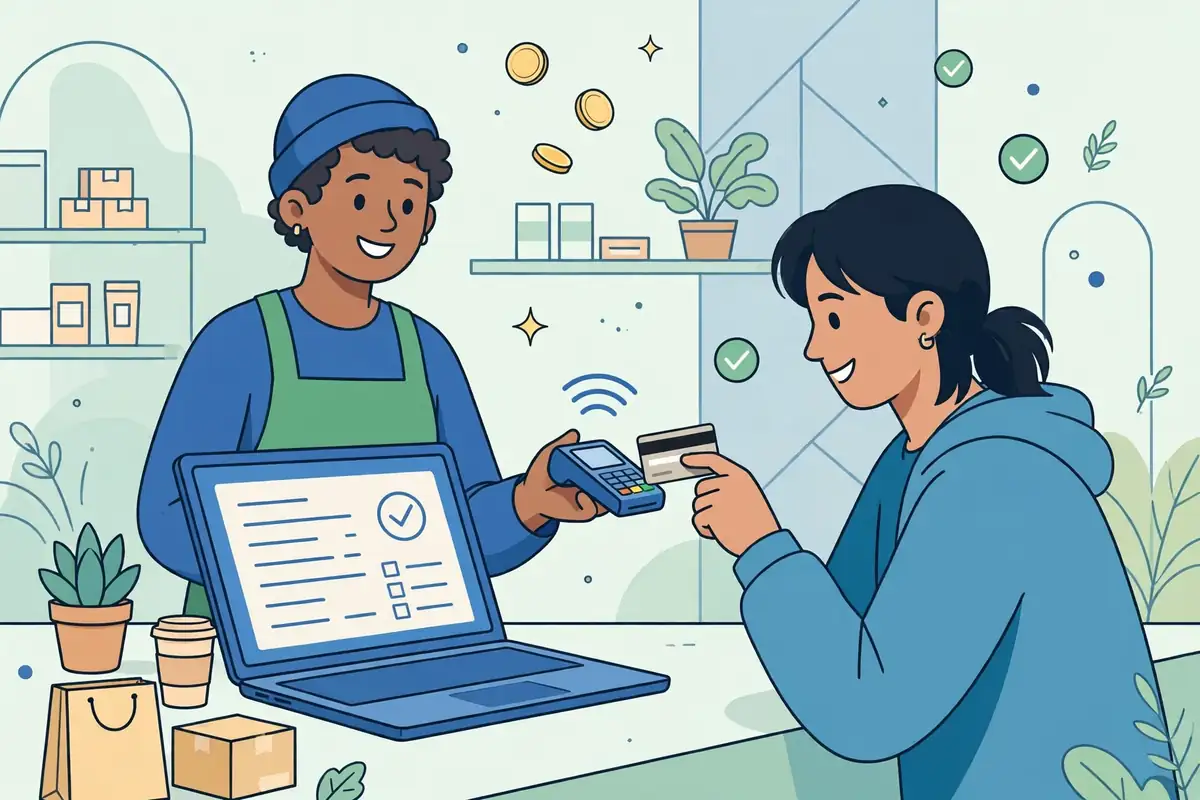
Every time a customer taps a card at your counter or pays on your website, a quiet chain of companies moves that money into your bank account. At the center of that chain sits one tool many new owners have heard of but never had explained: the merchant account.
This article answers what is a merchant account in plain language. You will learn how it differs from a payment processor, how a transaction actually travels, what the fees really pay for, and how to choose a provider without overpaying.
Understanding this system helps you negotiate better rates and avoid the frozen funds and surprise charges that frustrate so many small businesses.
What Is a Merchant Account, in Simple Terms?
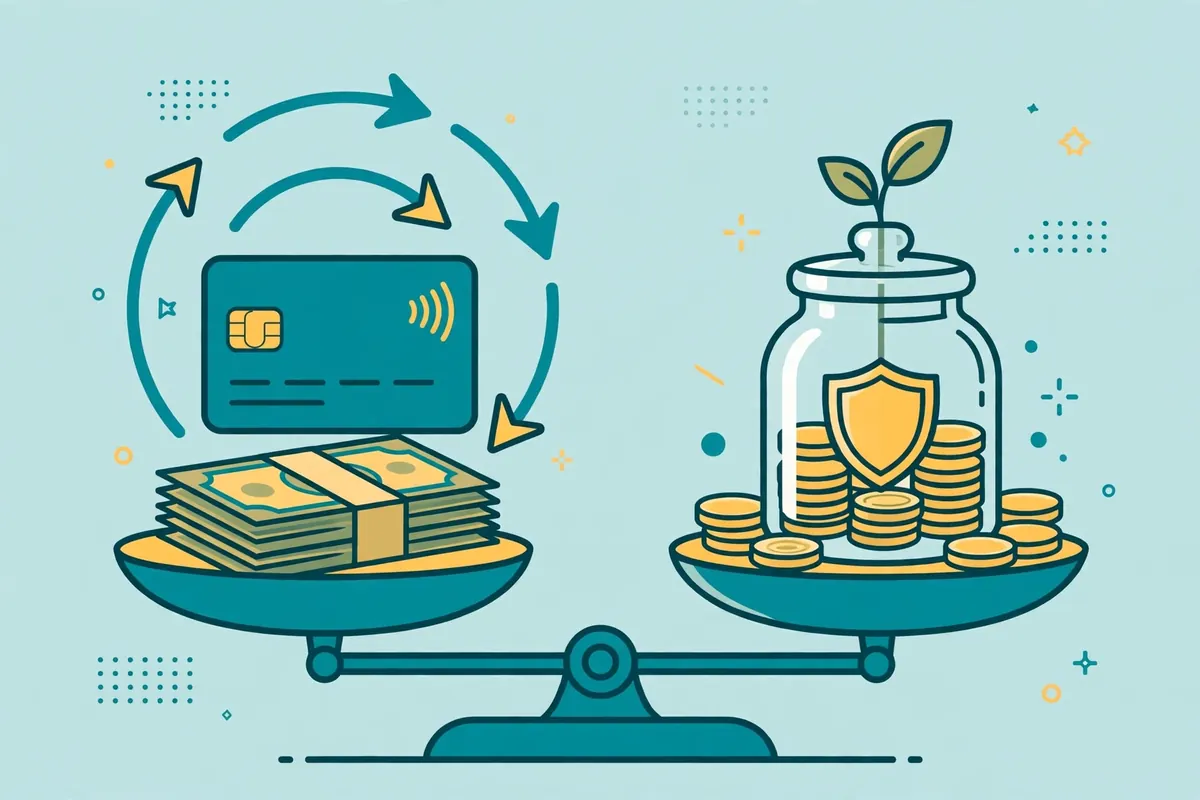
A merchant account is a special type of business bank account that lets you accept credit and debit card payments. It is not where your money lives long term. It is a holding and clearing account that receives card payments, verifies them, and then transfers the settled funds to your regular business bank account.
You cannot open one at just any bank branch counter the way you open checking. Merchant accounts are provided by acquiring banks and their processing partners, and approval involves a review of your business type, history, and risk.
Think of it as a secure waiting room for card money. Funds pause there while the card networks confirm the transaction is legitimate, then move on to the account you actually spend from, as outlined in the money management approach in this guide to small business cash flow.
Merchant Account vs. Payment Processor vs. Payment Gateway
These three terms get mixed up constantly, so here is the clean version. The merchant account holds and settles your card funds. The payment processor is the technology and service company that moves transaction data between your business, the banks, and the card networks. The payment gateway is the secure doorway that captures card details online and passes them to the processor.
In a physical store, your card terminal plays the gateway’s role. Online, the gateway is software built into your checkout page.
Many modern providers bundle all three into one service and one application, which is why the distinction feels invisible. It still matters when something goes wrong, because the company holding your funds, the company moving the data, and the company behind your checkout may be three different parties. Owners comparing accounts will also benefit from this breakdown of money market vs savings accounts when deciding where settled funds should sit.
How a Card Payment Actually Moves
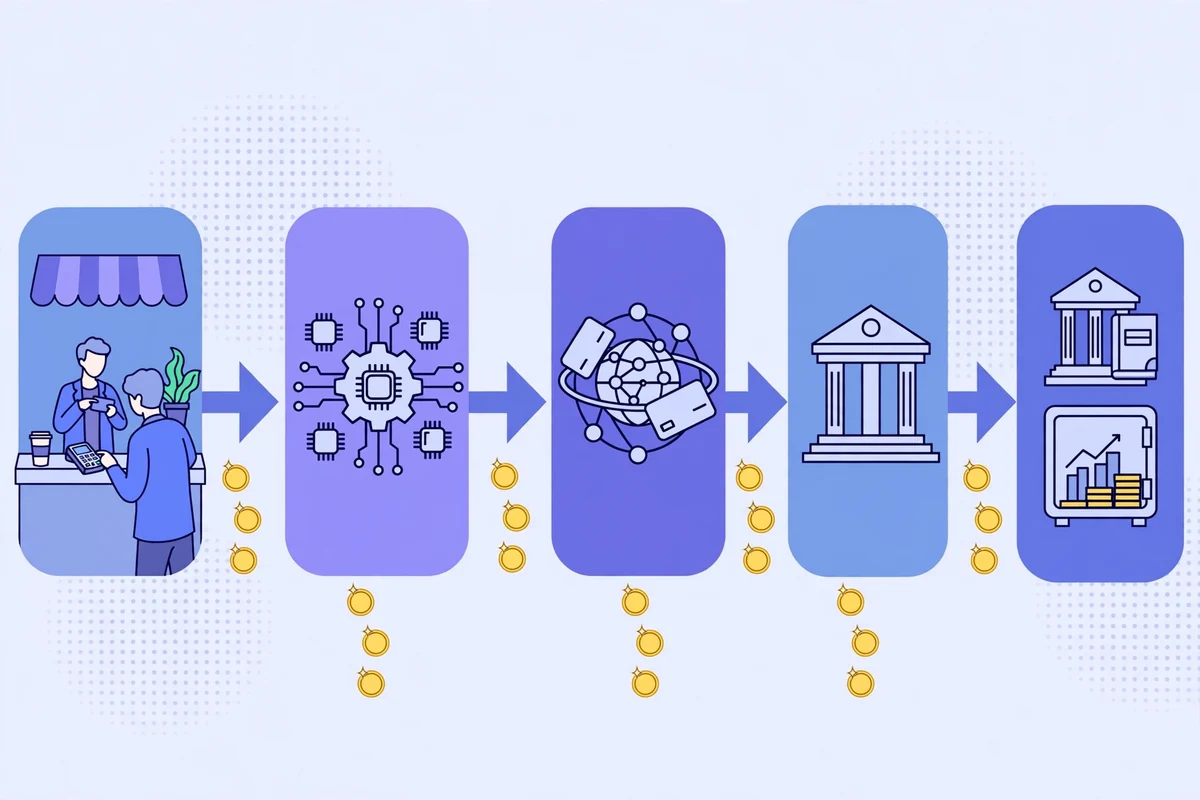
A single tap sets off a journey that finishes in seconds at the counter and in days at your bank. Here is the path in plain steps.
Authorization
The customer presents the card. Your terminal or gateway sends the details through the processor to the card network, which routes the request to the customer’s issuing bank. The issuer checks the balance or credit limit and fraud signals, then approves or declines. This round trip usually takes a few seconds.
Settlement
Approved sales collect in a batch. At settlement, the processor routes the batch through your merchant account, the networks calculate their fees, and the net amount is deposited into your business bank account, commonly within one to a few business days.
This delay is normal, and planning around it is part of healthy operations. It is also why separating your accounts and tracking deposits with the routines in this small business bookkeeping guide keeps your books accurate instead of confusing.
The Main Fees You Will Pay
Card acceptance is never free, and the fee structure explains where the money goes. Most of each transaction’s cost is the interchange fee, set by the card networks and paid to the customer’s bank. On top of that come network assessment fees and your processor’s markup.
Pricing models differ. Interchange-plus pricing shows you the true cost plus a clear markup, which makes it the most transparent option for most businesses. Tiered pricing bundles transactions into qualified and non-qualified buckets that can quietly cost more. Flat-rate pricing charges one simple percentage, which is easy to understand but often pricier as your volume grows.
Beyond per-transaction fees, watch for monthly fees, gateway fees, chargeback fees, and early termination clauses. A low headline rate with heavy add-ons is not a bargain, a budgeting lesson that applies across the expenses in this analysis of startup costs.
Do You Still Need a Traditional Merchant Account?
Not always. Payment service providers, often called aggregators, let you accept cards under their master merchant account. You skip the individual application and underwriting, start faster, and pay a simple flat rate.
The trade-off is control. Aggregators can freeze or close accounts quickly when their risk systems react to unusual activity, and their flat rates grow expensive at higher volume.
Many businesses start with an aggregator and graduate to their own merchant account once sales are steady. That progression mirrors the growth path in this guide to starting a business in the USA: simple first, sturdier as the stakes rise. If you sell online, compare both routes against the options in this guide to starting an ecommerce business.
What Providers Look at When You Apply
For a dedicated merchant account, providers review your business type, expected monthly volume, average ticket size, and how you sell, whether in person, online, or by invoice. Higher-risk industries face more questions and sometimes higher rates or rolling reserves.
New businesses are approved every day, but preparation helps. Have your business registration, EIN, bank details, and a clear description of what you sell ready.
A track record of clean finances also supports your application over time, which is one more reason to build business credit deliberately rather than by accident.
Chargebacks: The Fee Nobody Warns You About
A chargeback happens when a customer disputes a sale with their bank instead of asking you for a refund. The amount is pulled back from your account, a fee is added, and you must prove the sale was legitimate if you want to fight it.
Too many chargebacks can raise your rates or end your account entirely. The card networks monitor dispute ratios, and processors react quickly when a business crosses the lines.
Prevention is mostly communication: clear billing descriptors so customers recognize the charge, honest delivery estimates, easy refunds, and fast support replies. These habits pair with the customer trust principles in this piece on switching to a digital payment wallet, where clarity keeps users confident.
How to Choose the Right Provider
Start with your real numbers: monthly volume, average sale, and the share of sales that happen online versus in person. Then compare total monthly cost across providers, not just the advertised rate.
- Ask for interchange-plus pricing in writing once your volume justifies it
- Confirm there is no early termination fee or equipment lease lock-in
- Check how fast deposits arrive and whether weekends are included
- Test support quality before you sign, not after a problem
- Verify the provider integrates with your store, invoicing, or POS software
Read the contract’s reserve and termination language carefully. The cheapest offer that can hold your funds without explanation is rarely the cheapest in practice. If paperwork feels overwhelming, remember that these are the same foundations covered step by step in this business plan guide: know your numbers, know your risks, then commit.
Red Flags to Watch for in Processor Contracts
Not every processing offer deserves your signature. Some contracts hide the costs that matter most, and a careful read protects years of margin.
Watch for long terms with heavy early termination fees, equipment leases that cost far more than buying the terminal outright, and vague language allowing the provider to hold funds or raise rates with minimal notice. Be cautious with tiered pricing summaries that never show the underlying interchange cost.
Ask direct questions before signing: What is my total effective rate at my expected volume? When exactly do deposits land? What triggers a reserve? A trustworthy provider answers in writing. If answers stay verbal and vague, treat that as information too, and keep looking until the numbers are as clear as the sales pitch.
Frequently Asked Questions
Is a merchant account the same as a business bank account?
No. A merchant account only receives and settles card payments before forwarding them. Your business bank account is where money accumulates and from which you pay bills, staff, and taxes. You need both, and they work as a pair.
How long until card money reaches my bank account?
Most businesses see deposits within one to a few business days after settlement. Timing depends on the provider, the card types, and your account history. Weekend and holiday batches usually settle on the next business day.
Can a brand-new business get approved?
Yes. New businesses are approved routinely, especially in low-risk industries. If a dedicated account is difficult at first, an aggregator can bridge the gap while you build processing history, and many owners follow exactly that path while becoming an entrepreneur.
Final Thoughts
Now you know what is a merchant account and how the companies behind your card reader share the work and the fees. Choose transparent pricing, protect yourself from chargebacks, and revisit your costs as volume grows. The right payment setup quietly supports everything else your business does, from daily sales to long-term planning like the strategies in this guide to getting a small business loan.