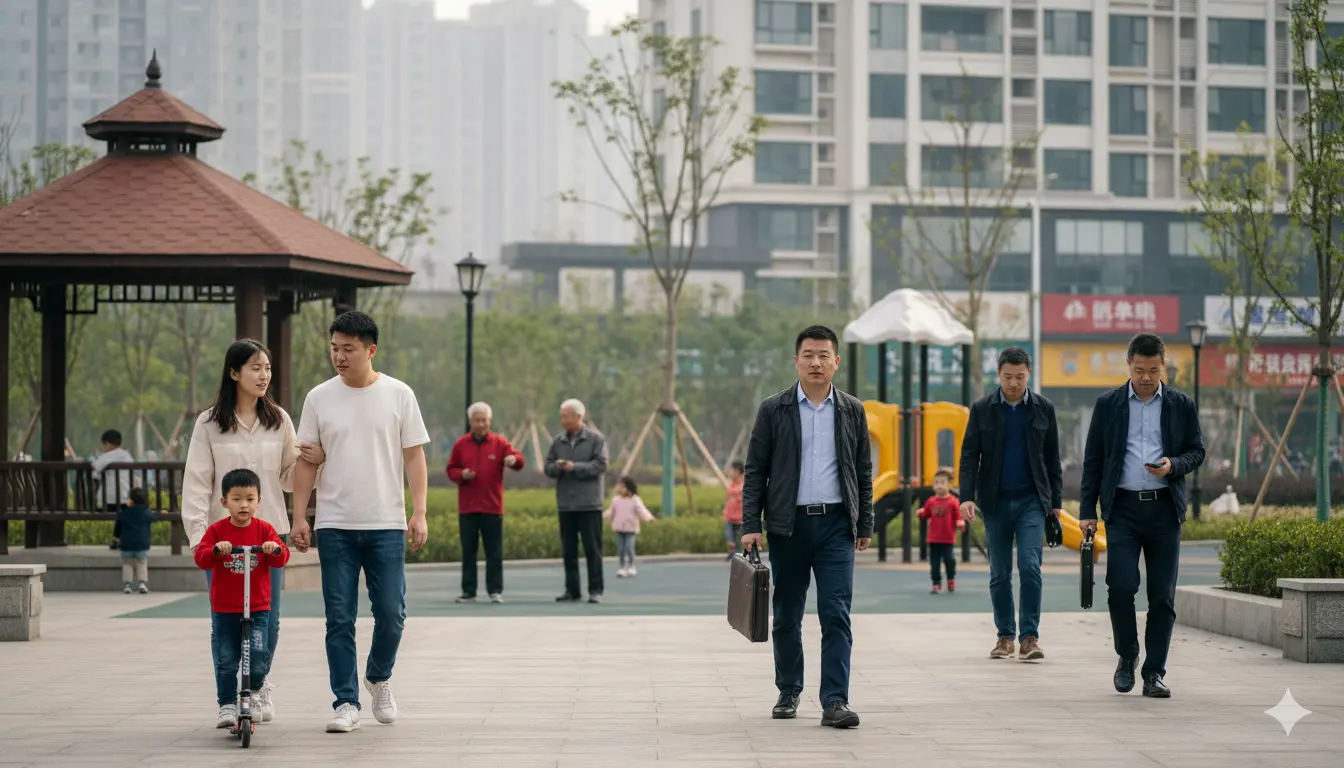
China’s demographic landscape is undergoing a historic shift. In 2025, the country’s population declined by 3.39 million people, marking a worrying continuation of a decades-long trend of falling birth rates. This unprecedented drop has far-reaching implications for China’s economy, social structure, and global standing.
Population Decline and Birth Rate Crisis
Official data from China’s National Bureau of Statistics (NBS) reveals that 2025 saw a record-low number of births, with fewer families choosing to have children amid rising living costs, career pressures, and social changes. Analysts note that this is the sharpest annual population decrease since the founding of the People’s Republic in 1949.
China’s fertility rate has fallen below the replacement level of 2.1 children per woman for years, now averaging around 1.0–1.1, reflecting the reluctance of younger generations to start families. Experts warn that without immediate intervention, the population could shrink further in the coming decades.
Factors Behind the Decline
Several factors contribute to the ongoing demographic challenges:
- Economic Pressures: Rising housing costs, education expenses, and healthcare costs discourage young couples from having children.
- Aging Population: With a growing elderly population, a smaller workforce and fewer young adults exacerbate the natural decline.
- Urbanization and Lifestyle Choices: Many urban dwellers prioritize careers over family, delaying or foregoing childbirth.
- Aftereffects of the One-Child Policy: Despite the policy’s relaxation, social and economic habits established over decades continue to influence family planning.
Implications for China’s Economy
A declining population directly affects China’s labor force, potentially slowing economic growth. Key impacts include:
- Labor Shortages: Industries may face shortages of workers, particularly in manufacturing and technology sectors.
- Increased Dependency Ratio: More retirees relative to working-age adults could strain social welfare and pension systems.
- Consumer Market Contraction: Fewer young families may reduce demand for housing, education, and child-focused products.
Economists predict that unless fertility rates rise, China could face long-term demographic stagnation, threatening its position as a global economic powerhouse.
Government Measures to Address the Decline
The Chinese government has implemented several strategies to encourage childbirth, including:
- Relaxed Family Policies: Couples are now allowed to have up to three children, with legal incentives to support larger families.
- Financial Incentives: Some cities provide subsidies, tax breaks, and housing benefits to families with children.
- Support for Working Parents: Policies promoting parental leave and childcare services aim to reduce the burden on families.
Despite these measures, experts argue that changing societal attitudes and economic realities may slow the impact of policy interventions.
Global Significance of China’s Population Drop
China’s population decline is not just a national issue but also has global ramifications:
- Trade and Manufacturing: A shrinking labor force may affect global supply chains and manufacturing output.
- Geopolitical Influence: Population size is closely tied to national influence; a decline may shift regional power dynamics.
- Environmental Impact: Fewer people could reduce resource pressure and environmental degradation in the long term.
FAQs: China’s Population Decline
Q1: By how much did China’s population decrease in 2025?
A: China’s population fell by 3.39 million people in 2025.
Q2: What is the main cause of the population decline?
A: The decline is largely due to record-low birth rates and ongoing demographic trends.
Q3: How does this affect China’s economy?
A: Fewer working-age adults can lead to labor shortages, higher dependency ratios, and slower economic growth.
Q4: What measures is China taking to encourage childbirth?
A: The government allows up to three children per couple, offers financial incentives, and provides childcare and parental support programs.
Q5: Could China’s population continue to decline?
A: Yes, analysts warn that without major changes in fertility trends, the population may shrink further over the coming decades.
Conclusion
China’s population drop of 3.39 million in 2025 amid record-low births highlights a critical demographic challenge. With an aging population, low fertility, and societal shifts, the country faces economic, social, and geopolitical consequences. While government policies aim to encourage larger families, long-term solutions will require structural changes in society, economy, and culture.
Addressing this population decline is crucial not just for China’s domestic growth but also for its role on the global stage in the coming decades