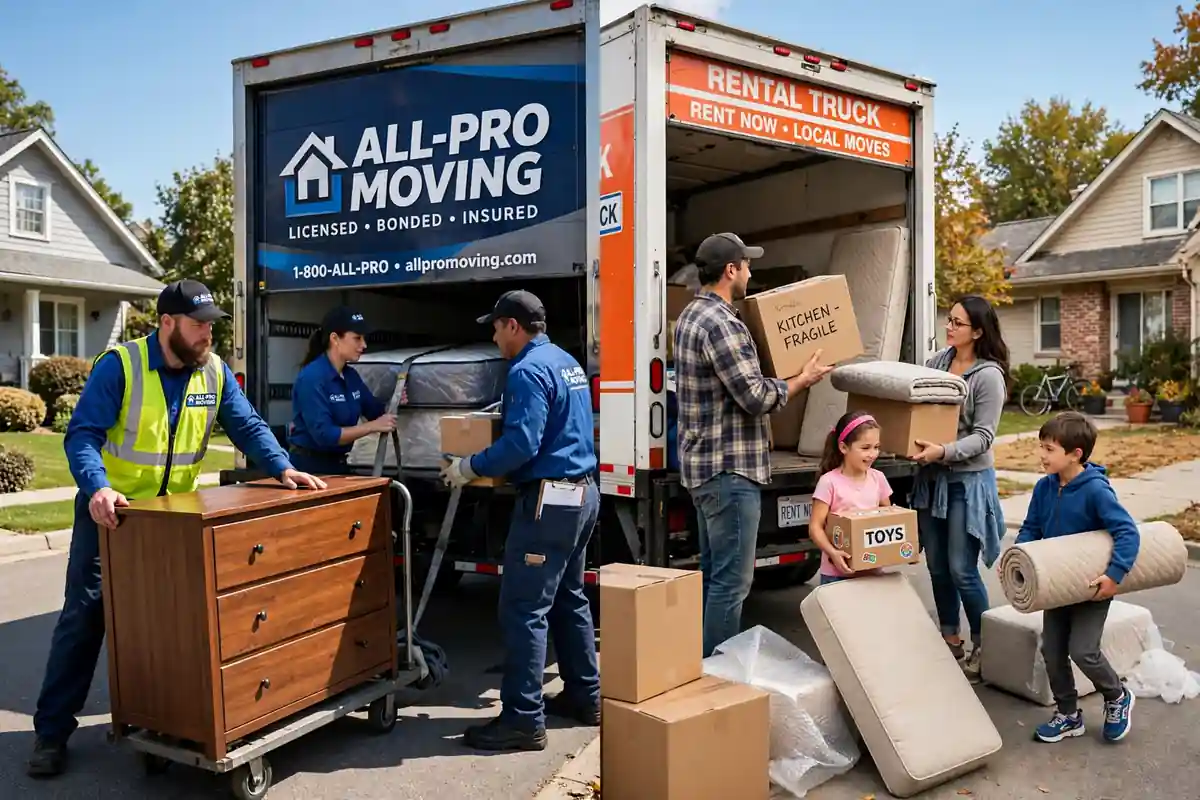
Moving is one of life’s most expensive chores, and the biggest decision shapes everything else: do you hire professionals or handle it yourself? Comparing a moving company vs DIY move cost is not as simple as glancing at two numbers. The truck rental looks cheap until you add fuel, insurance, equipment, food for your helpers, and the value of your own weekend. This guide compares the real costs of both routes so you can choose with open eyes.
The True Cost of Hiring a Moving Company
Professional movers charge based on distance, weight or volume, and the services you include. A local move within the same city is usually billed by the hour for a crew and truck. A long-distance move is typically priced by weight and mileage, and it often costs several thousand dollars for a full household. Full-service options — packing, loading, transport, unloading, and even unpacking — sit at the premium end but remove nearly all the labor from your shoulders.
What many people forget is what the price buys beyond muscle. Professional movers carry liability coverage for your belongings, bring the right equipment for pianos, safes, and oversized furniture, and finish in hours what might take you days. They also know how to protect floors, doorways, and the home you are leaving, which matters when a security deposit or a closing inspection is on the line.
Get at least three written, in-home or video-survey estimates. Binding estimates protect you from surprise increases; non-binding ones can grow. Checking how providers earn their reputations, as in these Triumph Home Services reviews, is a useful model for vetting any home service company before you hand over your belongings.
The True Cost of a DIY Move
The DIY column starts with the truck. Rental pricing depends on truck size, distance, and demand, and weekends and month-ends cost more. Then the add-ons begin: mileage fees on some rentals, fuel for a large truck that drinks gasoline, insurance coverage, dollies, furniture pads, straps, boxes, tape, and packing paper. None of these is huge alone; together they can double the headline rental price.
Then there is the hidden currency: your time and your body. Packing a household takes most people far longer than expected. Loading heavy furniture without training risks injuries and damaged pieces, and a strained back costs more than a moving crew. If friends help, you owe them food, drinks, and a future favor. If the move runs long, you may pay for an extra rental day, a hotel night, or overlap rent between two homes.
Planning the move inside a monthly money system, like the one described in this guide on how to budget in 2026, helps you see the DIY total honestly. Some households also build the moving fund gradually in a money market account versus a savings account, choosing whichever keeps the cash accessible while earning a little interest, or they compare the best CD rates of 2026 when the move is still a year away.
Side-by-Side: Moving Company vs DIY Move Cost
Local Moves (Under 50 Miles)
For a short local move, DIY often wins on pure cash cost, especially for a studio or one-bedroom home with strong helpers available. Professional crews win on speed and safety, and for larger homes the hourly crew cost is frequently closer to the true DIY total than people expect once truck add-ons and a full lost weekend are counted.
Long-Distance Moves (500+ Miles)
Distance changes the math. Driving a large rental truck across several states means fuel, tolls, hotels, and meals for multiple days, plus the stress of piloting an unfamiliar vehicle. Professional long-distance movers consolidate freight and drive those routes daily. For multi-bedroom homes, the professional quote is often competitive with the honest DIY total, and it arrives with insurance and far less exhaustion.
The Hybrid Option
Many households land in the middle. You can pack your own boxes (the most time-consuming part) and hire professionals only for loading, driving, and unloading. Portable storage containers offer another hybrid: you load at your own pace, and the company handles transport. Labor-only services, hired by the hour for loading and unloading your rental truck, are one of the best bargains in moving.
Costs People Commonly Forget
- Overlap costs: Paying rent or mortgage on two homes during the transition week.
- Cleaning: A move-out clean, whether you hire a service like Happy Home Cleaning Services or spend your own final day scrubbing.
- New-home setup: Utility deposits, locks, and the services discussed in this overview of Constellation home service plans for the systems in the new place.
- Security: Setting up home security services at the new address and cancelling them at the old one.
- Storage: A month of storage if closing dates do not line up.
- Replacement items: The lamp, mirror, or TV that does not survive the trip — a bigger risk in DIY moves.
How to Decide for Your Situation
Choose professionals if you have a large home, heavy or valuable furniture, a long distance, a tight timeline, or any physical limitation. Choose DIY if your home is small, your distance is short, your schedule is flexible, and you genuinely have able helpers. Whichever route you take, build the plan early, keep an emergency fund for the surprises every move produces, and book trucks or crews weeks ahead in the busy summer season.
Money timing matters too. If the move follows a job change, this guide on how to negotiate your salary can help you ask about relocation assistance — many employers offer it, but only to candidates who ask. And if the move frees up a tight budget, channeling what you save into one of these side hustle ideas for extra income can rebuild your cushion faster.
Decluttering: The Step That Pays for Itself
Whichever route you choose, the cheapest move is moving less. Long-distance professionals charge by weight, rental trucks charge by size, and your own energy is spent per box. In the weeks before the move, sell, donate, or discard anything you have not used in a year. Furniture that will not fit the new home’s rooms should go first — it is the most expensive category to transport and the easiest to replace later.
Decluttering also produces cash and breathing room. Selling quality items offsets truck rental or crew costs directly, and donation receipts may have tax value. Start with storage areas, where forgotten boxes multiply, and work toward daily spaces last so the home stays livable. Families who declutter seriously often drop a full truck size, which can be the single largest saving in the entire moving budget.
Timing: When You Move Changes What You Pay
Moving demand peaks in summer, on weekends, and at the start and end of each month, when leases turn over. Prices for both rental trucks and professional crews follow that demand. If your schedule allows a midweek, mid-month move in a quieter season, both options get cheaper, and availability improves dramatically. Even shifting by a few days — closing on a Tuesday instead of a Friday, for example — can change quotes and reduce the chaos of competing for elevators, parking, and utility appointments.
Book early whatever you choose. Trucks in popular sizes sell out in peak season, and reputable moving crews schedule out weeks ahead. Last-minute movers pay premium prices for whoever is left, which is how a planned DIY bargain quietly turns into the most expensive option of all.
Protecting Your Belongings in Transit
Damage risk is the cost category nobody prices until something breaks. Professional movers include basic liability coverage in most contracts, with fuller protection available as an add-on; read the valuation terms carefully, because basic coverage pays by weight, not by value. In a DIY move, your belongings are protected only by how well you pack and load. Fragile items need real materials — dish packs, wardrobe boxes, and furniture pads are not upsells; they are the difference between a safe arrival and a box of shards.
Photograph valuables before the move, keep jewelry, documents, and medications with you personally, and label boxes by room and fragility. Load heavy items low and tight so nothing shifts on the road. Whether you hire a crew or drive the truck yourself, an hour spent on packing standards saves more money than any other hour in the moving process.
Frequently Asked Questions
What is the cheapest way to move long distance?
Usually a hybrid: pack yourself, declutter aggressively so you ship less, and compare portable container and labor-only options against full-service quotes. Decluttering is the single biggest saver, since long-distance pricing follows weight and volume.
How much should I tip professional movers?
Tipping is customary for good service. Many people tip per mover based on hours worked and difficulty — stairs, heavy items, and great care justify more. Cash at the end of the job is standard.
When is the cheapest time to move?
Weekdays in the middle of the month, outside the summer peak, are typically cheapest for both truck rentals and professional crews.
The Bottom Line
The moving company vs DIY move cost comparison has no universal winner. Add up the full, honest cost of each route — money, time, risk, and energy — and the right answer for your household usually becomes clear. Whichever you choose, plan early, get quotes in writing, and protect a buffer for surprises.