A garage door that will not open can trap your car, expose your home, and ruin your morning in one move. When homeowners call for help, the first question is always the same: what will the garage door repair cost be? The honest answer depends on which part failed. This guide breaks down the common repairs — springs, openers, and panels — explains what drives the price of each, and helps you decide when repair makes sense and when replacement is the smarter spend.
Average Garage Door Repair Cost by Problem
Minor fixes, like realigning safety sensors or replacing worn rollers, sit at the affordable end of the scale. Mid-range repairs include cable replacement, opener motor work, and single panel replacement. The most involved jobs are spring replacement on heavy doors and full opener replacement, especially when new safety features or smart controls are added.
Most reputable companies charge a service or diagnostic fee that is often applied to the repair if you proceed. Emergency and after-hours calls usually cost more. As with any home repair, having an emergency fund for repairs ready means a broken door is an inconvenience, not a crisis.
Spring Repairs: The Most Common Big-Ticket Fix
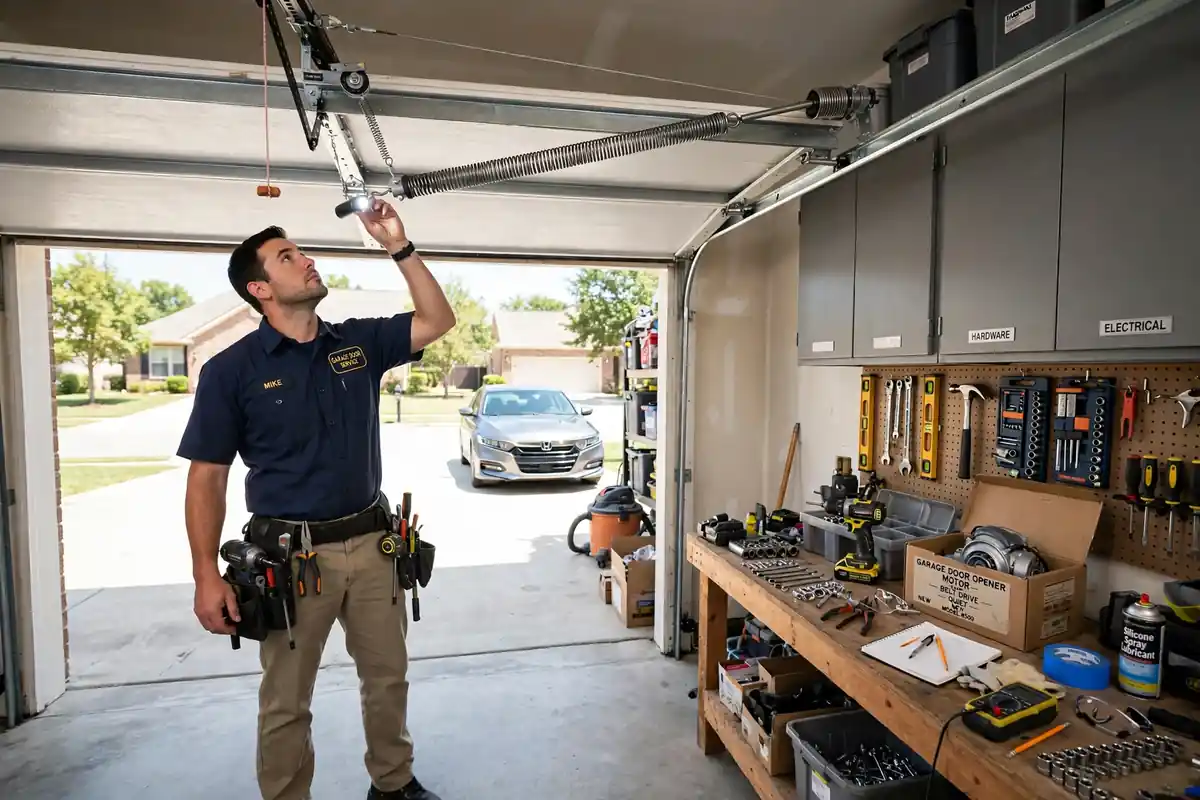
Garage door springs do the heavy lifting every time the door moves. Torsion springs, mounted above the door, typically last for tens of thousands of cycles, while extension springs along the sides have a shorter life. When a spring snaps, the door may refuse to open, hang crooked, or slam shut with alarming force.
Spring replacement is priced by the pair more often than by the single spring, because both springs have usually worked the same number of cycles, and replacing only one invites a second service call soon after. Heavy insulated doors and double doors need stronger springs, which cost more. One firm rule: never try to replace torsion springs yourself. They are wound under extreme tension, and a slip can cause serious injury. This is professional work, full stop.
Homeowners comparing providers can learn a lot from detailed reviews, such as these Triumph Home Services reviews, which highlight the value of technicians who explain spring ratings and warranty terms instead of just handing over a bill.
Opener Repairs and Replacement
The opener is the motor unit on your ceiling, and its failures look different from spring problems. If the motor hums but the door does not move, the issue may be a stripped gear or a disconnected trolley. If nothing happens at all, check the power supply, the remote batteries, and the safety sensors before assuming the worst.
Repairing an opener is worthwhile when the unit is relatively young and the fault is a simple part like a gear kit, a logic board, or a sensor pair. Replacement makes more sense when the opener is old, loud, or missing modern safety features. Today’s openers add battery backup, smartphone control, and cameras, which tie neatly into broader home security services — a real benefit, since the garage is one of the most common entry points into a house. Regional service patterns matter too; coverage of air conditioning repair services in Shelby shows how local companies bundle seasonal home services, and garage door specialists in many areas work the same way.
Panel Damage: Repair or Replace?
A dented or cracked panel is sometimes just cosmetic, and sometimes it bends the track alignment and strains the opener. Replacing a single panel is possible when the door model is still in production and the color can be matched. On older doors, the matching panel may no longer exist, which pushes homeowners toward a full door replacement.
Full replacement costs considerably more than any single repair, but it also resets the clock on springs, tracks, and weather seals, and it can noticeably improve curb appeal. If your door is near the end of its life and needs a panel plus a spring plus an opener, run the combined math before approving repairs one at a time. Three separate repairs can quietly add up to most of a new door.
Other Common Repairs and Their Cost Drivers
- Cables: Frayed or snapped cables usually get replaced in pairs, often alongside the springs they work with.
- Rollers: Worn rollers make a door loud and jerky. Upgrading to nylon rollers is a modest cost with an outsized noise benefit.
- Tracks: Bent tracks from a vehicle bump may be straightened; badly damaged sections get replaced.
- Weather seals: Bottom seals and perimeter weatherstripping are inexpensive and cut drafts and pest entry.
- Sensors: Misaligned or failed safety eyes are among the cheapest fixes and one of the most common service calls.
Some homeowners spread these costs through a home service plan, though garage doors are covered less often than HVAC or plumbing, so read the fine print. Budgeting a small monthly amount for home repairs, as outlined in this guide on how to budget for 2026 goals, is the more reliable strategy. Keeping that reserve in a money market account instead of a savings account can earn a bit more while keeping the money accessible.
How to Avoid Overpaying for Garage Door Repair
Get the quote in writing before work begins, and ask the technician to show you the failed part. Beware of companies that advertise an unusually cheap service call and then discover thousands of dollars of urgent work on a door that was fine yesterday. A second opinion is cheap insurance on any large quote. Seasonal maintenance — lubricating moving parts, testing the auto-reverse safety feature, and tightening hardware — prevents many breakdowns, and it pairs naturally with other seasonal tasks covered in these Somerset home comfort tips. Industry watchers note that demand for skilled local technicians keeps growing, a trend visible in this look at the economic impact of digital marketing on San Jose’s HVAC industry, where home service companies compete on responsiveness and reviews.
Repair Now or Replace the Whole Door?
The hardest calls come when several parts are aging together. Use total system age as your guide. A door under ten years old with a sound structure is almost always worth repairing, even for a spring and an opener in the same year. A door in its late teens with rust, warping, failing panels, and a tired opener is a different story: each repair buys less time than the last, and the combined spend approaches replacement territory quickly.
Replacement also brings benefits repairs cannot. Modern doors offer far better insulation, which matters when the garage shares a wall with living space or sits under a bedroom. New doors include current safety features, quieter operation, and a visible boost to curb appeal that appraisers and buyers notice. If replacement is likely within a few years anyway, saving toward it deliberately — for instance, timing a deposit with the best CD rates for 2026 so the money matures when you plan the project — beats funding a chain of emergency repairs.
Simple Maintenance That Prevents Expensive Repairs
Most garage door failures announce themselves early. Once or twice a year, run through a short routine: tighten visible hardware, lubricate springs, rollers, and hinges with a garage-door-rated lubricant, and wipe the safety sensor lenses. Test the balance by disconnecting the opener and lifting the door halfway by hand; a balanced door stays in place, while one that slams or shoots up is telling you the springs are wearing out. Test the auto-reverse by placing a roll of paper towels under the closing door — it should reverse on contact.
Catch problems at this stage and they are adjustments. Ignore them and they become the mid-range repairs described earlier, usually at the least convenient moment. Renters of their time as much as their money should treat the garage door like the front door, because for many families it is the entrance used most often — and the one whose failure disrupts the day fastest.
Frequently Asked Questions
How long do garage door springs last?
Standard springs are commonly rated for around 10,000 cycles, which works out to several years of typical family use. Higher-cycle springs last longer and can be worth the upgrade if you plan to stay in the home.
Why does my garage door reverse right before closing?
Usually the safety sensors are misaligned or dirty, or the close-force setting needs adjustment. Clean the sensor lenses and check that both lights are steady before calling for service.
Is it worth repairing an old garage door?
If the door itself is solid and the repair is a single component, yes. If the door is rusting, warping, or needs several major parts at once, replacement usually delivers better value.
The Bottom Line
Your garage door repair cost comes down to which part failed and how old the system is. Springs and openers are the big-ticket items; sensors, rollers, and seals are minor. Get written quotes, insist on seeing the failed parts, and maintain the door once a year. Handled that way, the hardest-working door in your home stays safe, quiet, and dependable.