A dead tree leaning toward your roof is not a problem you can ignore for long. Yet when homeowners ask how much does tree removal cost, they often get wildly different quotes for what sounds like the same job. One company offers a low price over the phone; another visits and quotes three times as much. This guide explains what actually drives the price of cutting down a tree, what is usually included, and how to hire safely without overpaying.
The Average Tree Removal Cost in the USA
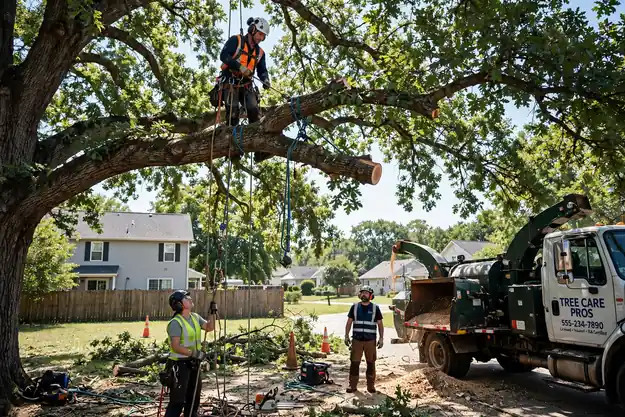
For a typical suburban tree, total removal commonly falls in a broad range from a few hundred dollars for a small tree to several thousand for a very large or difficult one. Small trees under about 30 feet are the cheapest to remove because a crew can often fell them in one piece. Medium trees require climbing and roping down sections. Large trees over 60 feet, especially those near houses, fences, or power lines, demand the most skill, equipment, and time, and the quotes reflect that.
Stump grinding is usually priced separately. Some quotes bundle it in; others treat it as an add-on. Always ask which you are getting, because a cheap removal quote that leaves the stump behind is not directly comparable to a full-service quote. Paying from a prepared emergency fund for home projects makes these decisions calmer, since you can choose the right scope instead of the cheapest partial job.
What Affects the Price of Cutting Down a Tree?
Tree Size and Species
Height and trunk diameter are the biggest pricing factors. A tall oak with a wide canopy takes far longer to dismantle than a slim pine. Wood density matters too. Hardwoods are heavier and slower to cut and haul, while softwoods come down faster. Multi-trunk trees and trees with wide, spreading branches over structures add complexity and cost.
Location and Access
Where the tree stands changes everything. A tree in an open front yard with truck access is straightforward. A tree in a fenced backyard, on a slope, or squeezed between a house and a neighbor’s garage must come down in small pieces, often with a crane. Crane work adds equipment cost but dramatically improves safety. Crews also charge more when debris has to be carried a long distance to the truck.
Tree Condition
Dead, diseased, or storm-damaged trees are more dangerous to remove because the wood is unpredictable. A hollow or rotting trunk cannot support a climber the way healthy wood can, so crews use extra rigging or machinery. Ironically, waiting until a tree is fully dead rarely saves money; it often makes removal riskier and more expensive.
Additional Services
Beyond the cut itself, you may pay for stump grinding, log splitting, debris hauling, and cleanup. Some homeowners keep the wood for firewood to save on hauling. Others ask the crew to chip branches into mulch for garden beds. Each choice moves the final price up or down, so decide what you want before requesting quotes.
What a Professional Quote Should Include
A trustworthy quote is written, itemized, and specific. It should state whether stump grinding, hauling, and cleanup are included, how long the job will take, and how the crew will protect your lawn, driveway, and nearby plants. Ask for proof of liability insurance and workers’ compensation coverage. Reviews of providers like those in these Triumph Home Services reviews show how much weight homeowners place on clear paperwork and communication, and tree work deserves the same standard.
Be cautious with a quote that is dramatically lower than the rest. Uninsured operators can undercut licensed companies because they skip the protections that keep you safe. If an uninsured worker is hurt on your property, or a falling limb damages your neighbor’s roof, the liability can land on you. Reading up on how coverage works, through resources such as this overview of Vave insurance or this profile of ARI Mutual Insurance Company, helps you understand why that insurance certificate matters so much.
Permits, Utilities, and Other Hidden Costs
Some cities and homeowners associations require a permit before removing a tree, especially for large or heritage trees. Fees are usually modest, but fines for unpermitted removal are not. If the tree is near power lines, your utility company may handle part of the work or require coordination. Call your local utility before scheduling.
Also consider what comes after removal. You may want to grind the stump below grade, fill the hole, reseed the lawn, or plant a replacement tree. A home service plan will not cover tree removal, but planning these follow-up costs in advance, using a simple system like this guide on how to budget in 2026, keeps the whole project predictable.
DIY Tree Removal: Is It Ever a Good Idea?
For a small, healthy tree in an open area, an experienced homeowner with the right equipment can sometimes handle removal safely. For anything tall, dead, leaning, or near a structure, DIY is a false economy. Chainsaw injuries and falling limbs send many people to emergency rooms every year, and a tree that falls the wrong way can cause damage worth far more than a professional quote. The same caution applies to rental equipment: a rented lift does not come with a trained operator.
There are safer ways to save money. You can handle your own cleanup after the crew fells the tree, keep the firewood instead of paying for hauling, or schedule work in late fall or winter, when many tree companies offer off-season pricing. Pair the project with other yard work and a seasonal visit from a service like Happy Home Cleaning Services for the inside of the house, and you reset the whole property in one coordinated push.
How Tree Removal Protects Your Home’s Value
Removing a dangerous tree is not just an expense; it is protection. A falling tree can destroy a roof, and insurers and buyers both notice dead trees during inspections. Broader market coverage, such as this analysis of the policy shift that could change the U.S. housing crisis, underlines how property condition and maintenance feed into home values over time. Meanwhile, securing the property overall — from the yard to the locks, as described in this guide to home security services — is part of the same ownership mindset.
How to Get and Compare Quotes the Smart Way
Start by deciding exactly what you want done: removal only, removal plus stump grinding, debris hauled away or left, and wood kept or removed. Give every company the identical scope, or the quotes will not be comparable. Ask each company whether a site visit is included — phone quotes for tree work are guesses, and the final price often changes once the crew sees access and lean in person.
When quotes arrive, compare more than the number. Check that each includes proof of insurance, a timeline, and a cleanup standard. Ask who will be on site and whether the work is subcontracted. A mid-priced quote from a certified arborist with strong local references is usually better value than the lowest bid from an unknown operator. Some homeowners offset part of the cost creatively, too: seasoned firewood from a hardwood removal has real value, and ideas from this list of side hustle ideas for extra income show how households turn one-off windfalls like that into meaningful money. Finally, put the deposit terms in writing. Reputable tree companies rarely ask for full payment upfront; paying on completion is the common arrangement for residential work.
Emergency and Storm-Damage Removals
After a major storm, prices and wait times both spike, and the risk of scams rises with them. If a tree has fallen on your home, document the damage with photos before any work begins, and contact your insurer early — emergency mitigation is often treated differently from elective removal. Beware of door-to-door crews demanding cash on the spot, and never sign a contract with the price left blank. If the tree is stable and not threatening the house, waiting a few days for established local companies to clear their backlog usually produces fairer quotes and safer work than hiring the first truck that passes.
Frequently Asked Questions
Does homeowners insurance pay for tree removal?
Policies often cover removal when a tree falls on a covered structure due to a covered event, like a storm. Removing a standing dead tree as prevention is usually the homeowner’s expense. Check your specific policy before assuming either way.
How long does tree removal take?
A small tree may come down in under an hour. A large tree near structures can take a full day, including rigging, cutting, and cleanup.
What time of year is cheapest for tree removal?
Late fall and winter are often the least busy seasons for tree companies in colder states, and some offer lower rates. Dormant trees are also easier to assess without leaves.
The Bottom Line
So, how much does tree removal cost? It depends mainly on size, location, condition, and the services you bundle in. Get at least three written quotes, verify insurance, and ask exactly what is included. Paying a fair price to a qualified crew protects your home, your neighbors, and your wallet far better than gambling on the cheapest offer.